How did the reflecting telescope impact astronomy?

The earliest attempts to magnify the heavens relied on glass lenses, a technology inherited from spectacles and microscopes, which naturally created certain unavoidable problems when scaled up for serious astronomical study. [7] Refracting telescopes, which use lenses to bend light to a focal point, suffered from a fundamental optical flaw: chromatic aberration. [2][6] White light, which is composed of different colors (wavelengths), is refracted at slightly different angles by glass. This means that an image viewed through a simple refractor would always be surrounded by distracting, colored halos—a fuzzy edge of blues and reds—because the colors simply would not focus at the exact same point. [2][6] While early astronomers attempted to minimize this issue by making lenses extremely long, this approach introduced a new set of practical nightmares. [7] A telescope tube that needed to be hundreds of feet long to compensate for the aberration was unwieldy, susceptible to bending and vibration, and incredibly difficult to manufacture with the necessary precision. [3]
# Refractor Limits
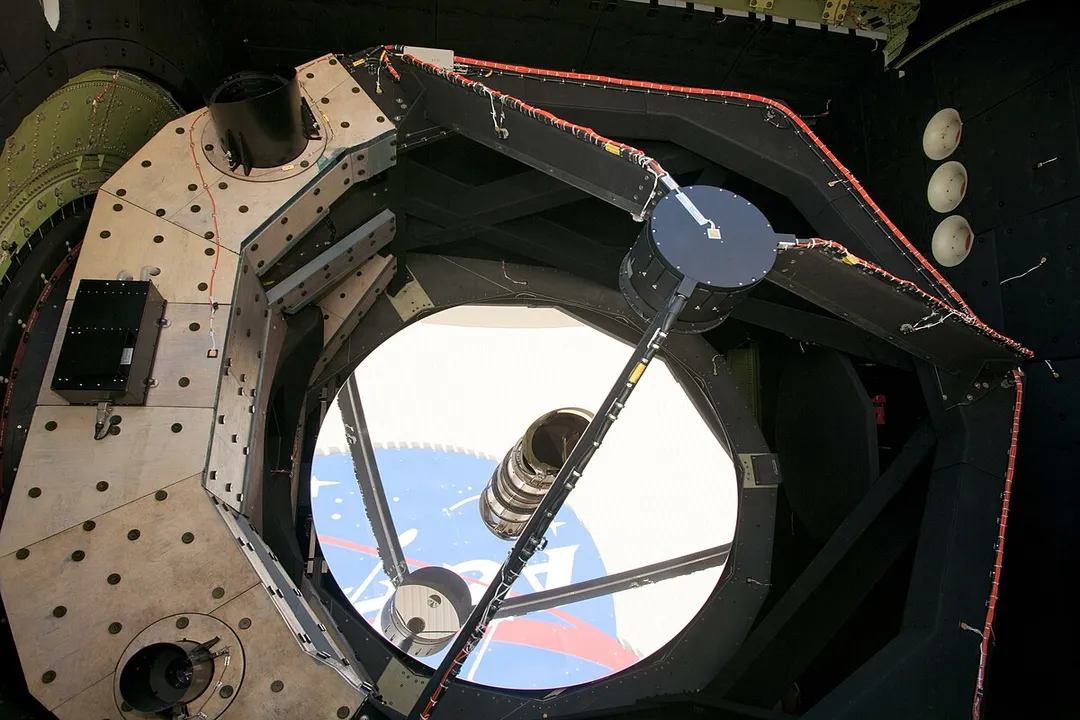
The issue of size compounded the problem. For refracting telescopes, the objective lens—the main lens gathering light at the front—must be supported only around its edges. [2] If the lens becomes too large, its own weight causes it to deform or sag, introducing distortions that ruin the image quality, regardless of how well it was initially ground. [2] This mechanical limitation placed a hard ceiling on how large an astronomer could practically build a light-gathering instrument using the lens technology of the 17th and 18th centuries. [2][7] Effectively, the ambition of astronomers was constrained by the physical properties of glass and gravity. [3]
# Newton's Mirror
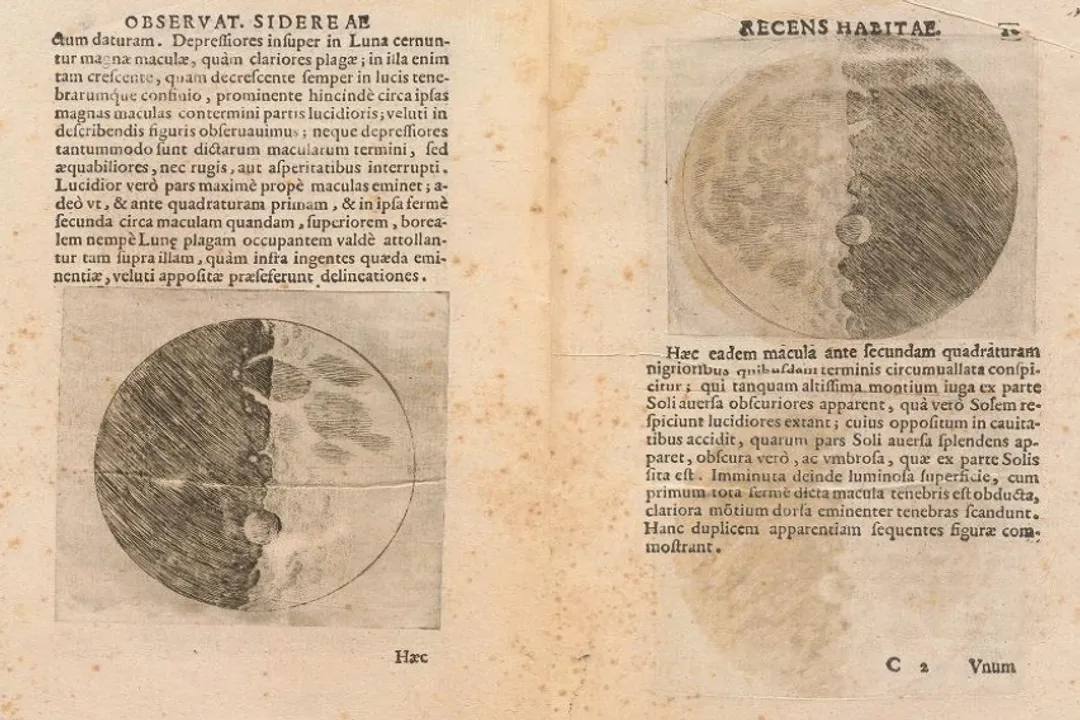
The breakthrough arrived not from improving glass, but from abandoning it as the primary light-bending element entirely. [7] In the late 1600s, Isaac Newton conceived of and built the first successful reflecting telescope. [3] His core insight was to substitute the objective lens with a curved, polished metal mirror—the primary mirror—to gather and focus the incoming starlight. [1][3] Light reflects off this mirror rather than passing through glass. [2][7] Because the reflection of all colors of light off a mirror occurs at the same angle, this design completely eliminated chromatic aberration, allowing for much cleaner, sharper views of celestial objects. [2][6]
Newton's first working model, completed around 1668, was small, only about six inches in length, but it was powerful enough to resolve the rings of Saturn and the moons of Jupiter, demonstrating its superiority over the refractors of the day. [3] The genius of the design was that the light path was significantly shortened, producing a more compact instrument. [3] Instead of a lens at the front, the light travels down the tube, strikes the concave primary mirror at the base, and is reflected back up the tube to a smaller, flat secondary mirror near the front opening, which then directs the focused light to an eyepiece located on the side of the tube. [1][5] This configuration, known as the Newtonian reflector, solved the twin problems of color fringing and structural instability inherent in large refractors. [3]

# Aperture Gains
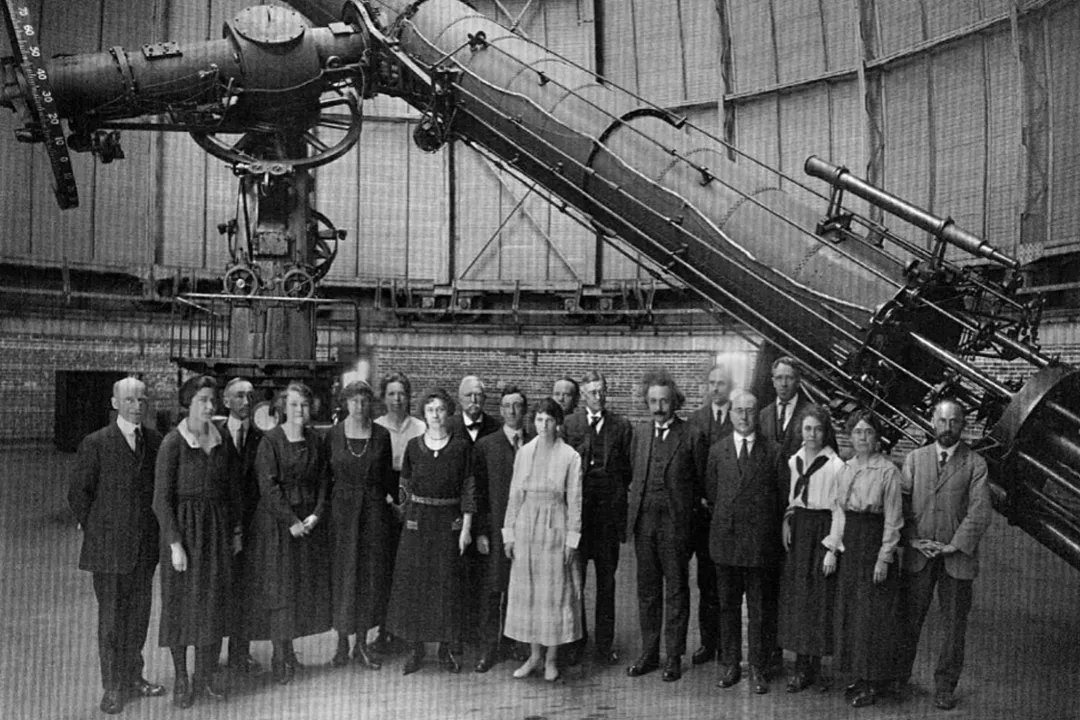
The advantage of replacing the lens with a mirror became even more pronounced as the size of telescopes increased, shaping the entire field of observational astronomy thereafter. [7] The ability to build larger apertures—the diameter of the main light-gathering element—is the single most important factor in improving an astronomical instrument's power, allowing it to see fainter objects. [4][6]
Reflecting telescopes offer several key structural benefits that enable this scaling:
- No Chromatic Distortion: As mentioned, mirrors do not suffer from the color separation issues that plagued lenses, resulting in sharper images. [1][2]
- Support and Weight: Unlike a large lens, which must be supported only around its edges, a primary mirror can be supported from behind across its entire surface area. [2][5] This prevents the mirror from deforming under its own weight, meaning that the size of the mirror is limited primarily by the ability to grind and polish it accurately, rather than by its sheer physical strength. [2][9] This opened the door to creating far larger instruments than were ever possible with refractors. [7]
- Focal Length Control: In a refractor, the focal length is fixed by the curvature and refractive index of the lens glass. In a reflector, the focal length is determined by the curvature of the primary mirror, but the final focal point can be altered simply by changing the position or size of the secondary mirror. [6] This allows for greater flexibility in design, enabling configurations like the Cassegrain or Ritchey-Chrétien. [1][5]
Considering the manufacturing effort, grinding a large mirror to a precise parabolic shape for an astronomical instrument is arguably less technically challenging than producing a flawless, distortion-free achromatic objective lens of the same diameter. [9] A practical comparison is this: even today, for the largest ground-based telescopes, the primary element is always a mirror because glass lenses of even 1-meter diameter are too heavy and prone to sagging to be economically mounted and used effectively for professional astronomy. [6]
# Design Variations

While Newton established the principle, the reflective design has seen numerous important refinements over the centuries, adapting the basic concept of light reflection to suit specific scientific needs. [1][5] Different configurations place the eyepiece or detector at different locations along the optical path. [6]
For instance, the Cassegrain reflector modifies Newton's design by using a convex secondary mirror that reflects the light back through a hole cut in the center of the large primary mirror. [1][5] This creates a very long focal length in a relatively short physical tube, making the instrument compact and manageable for observation. [5] The Ritchey-Chrétien telescope is a specialized, widely used variation of the Cassegrain that employs hyperboloid mirrors instead of spherical ones, which corrects for coma—another type of off-axis aberration—offering a wider field of view suitable for modern wide-field astronomical surveys. [1]
Even the smaller, simpler Newtonian design remains incredibly popular among amateur astronomers due to its relative ease of construction and excellent image quality for visual observation. [3][5] However, professional observatories, which require the ability to image vast areas of the sky with high precision, heavily favor variations like the Ritchey-Chrétien for their large research telescopes. [1]

# Cosmic View Scaling
The impact of the reflecting telescope on the scale of astronomical inquiry cannot be overstated. By overcoming the size limitations of refractors, the reflector allowed astronomers to push the boundaries of what could be seen. [7] Larger aperture means more light collected, which directly translates to the ability to detect dimmer, more distant objects. [4] This jump in capability allowed astronomy to transition from mapping objects within our solar system and immediate stellar neighborhood to probing the deep universe. [7]
Imagine an early 18th-century observer looking through the largest available refractor versus a contemporary looking through a large reflecting telescope built a century later. The difference in faintest visible magnitude would be stark. This increased light-gathering power, made possible by massive mirrors, enabled the detailed study of nebulae, galaxies, and faint stars that were simply inaccessible before. [5][7] This ability to gather more photons, even from objects billions of light-years away, is the foundation upon which modern cosmology is built. [4]
One helpful way to visualize this is to consider the necessary physical scale. If we wanted to build a high-performance, aberration-free refractor with a 10-meter aperture—a common size for major modern research scopes—the lens would weigh many tons, require flawless support across its circumference, and would likely be impossible to manufacture without internal stress fractures. [6] A 10-meter primary mirror, however, is supported from below, and while its manufacturing is demanding, it is achievable, as proven by instruments like the Keck Telescopes. [1][6] The very act of shifting to reflection allowed the aperture race to begin in earnest.
# Beyond Visible Light
While the initial revolution was in visible-light astronomy, the success of the reflector laid the groundwork for multiwavelength astronomy. [7] Optical telescopes, whether they use lenses or mirrors, are fundamentally designed to observe light in the visible spectrum. [4] However, the design principle of reflection—using a precisely shaped surface to direct energy—is agnostic to the wavelength of that energy. [9]
Modern astronomy routinely requires observing in infrared, ultraviolet, X-ray, and radio wavelengths. [7] The reflective mirror design proved highly adaptable to these needs. [9] For instance, many space-based observatories, such as the Hubble Space Telescope, use variations of the Cassegrain design because the mirrors can be polished to reflect a wide range of wavelengths effectively, and they function perfectly well in the vacuum of space where thermal expansion and gravity are less of an issue for support. [1][7] The structural superiority that allowed for large visible-light telescopes simply became the standard blueprint for building telescopes that look at the universe in ways the human eye cannot perceive. [7]

# Observational Strategy Shift
The profound increase in aperture offered by reflectors also subtly changed how astronomers approached discovery. Early telescopic work often focused on identifying what was in the sky—discovering new planets, moons, or comets. The reflector, with its capacity for deep viewing, shifted the focus to characterizing those objects. [7]
When you can see objects ten times fainter than your predecessor, you stop looking for simply where the next star is, and start asking what that faint smudge in the Andromeda constellation actually is—is it a star cluster, or is it an entire separate galaxy? [5] This shift in capability fundamentally drove the realization that the universe was vastly larger and more populated with structure than previously imagined. [7] The reflector didn't just make things look bigger; it made the observable universe infinitely deeper and more complex, compelling the development of astrophysics as a discipline focused on understanding the physical properties of these newly revealed, distant worlds.
The legacy of the reflecting telescope is not just a specific type of instrument but a paradigm shift in optical engineering, one that favored robust mechanical support and the simple physics of reflection over the complex challenges of large-scale glass refraction. This principle continues to govern the design of almost every major modern ground-based and space telescope, ensuring that the clarity and scale achieved by Newton centuries ago remain central to humanity's view of the cosmos. [1][6]
#Citations
Reflecting telescope - Wikipedia
Telescope - Reflecting, Astronomy, Optics | Britannica
How Newton's Telescope Changed the World - Insight Observatory
Telescopes 101 - NASA Science
Reflecting Telescopes - Las Cumbres Observatory
[PDF] Reflecting Telescopes - Caltech Astronomy
Newton's Reflecting Telescope | Multiwavelength Astronomy - eCUIP
Telescope | Smith | Encyclopedia of the History of Science
The Ultimate Guide To Reflecting Telescopes - Band Optics