How did the telescope impact society?
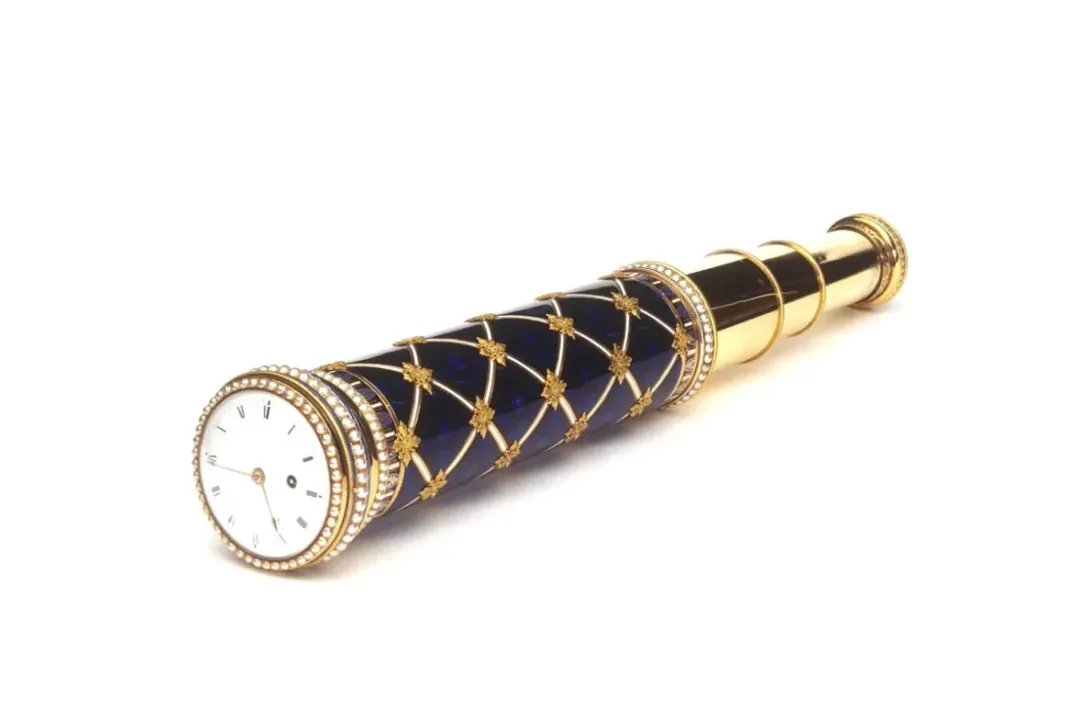
The invention of the telescope didn't just offer a better view of the sky; it fundamentally fractured the established framework through which humanity understood its place in the universe. Suddenly, what had been accepted as universal, immutable truth, derived from ancient philosophical texts, was subject to direct, observable contradiction. Before this optical device made its mark, the heavens were considered perfect, crystalline spheres rotating around a stationary Earth, a model that had dominated thought for centuries. [8][5] The telescope acted as the crucial technological mediator, replacing abstract reasoning with tangible evidence gathered through an instrument. [6]
# Early Invention
The earliest practical versions of the telescope appeared around 1608 in the Netherlands, often attributed to spectacle makers like Hans Lippershey, though its precise origin remains somewhat debated. [9] These initial instruments were simple refractor devices, essentially tubes holding two lenses. [9] The immediate societal impact was less astronomical and more military or commercial—it offered an advantage in seeing distant ships or troops. However, it was the redirection of this simple tube towards the celestial sphere that would spark an intellectual conflagration. [2]
# Galileo's View
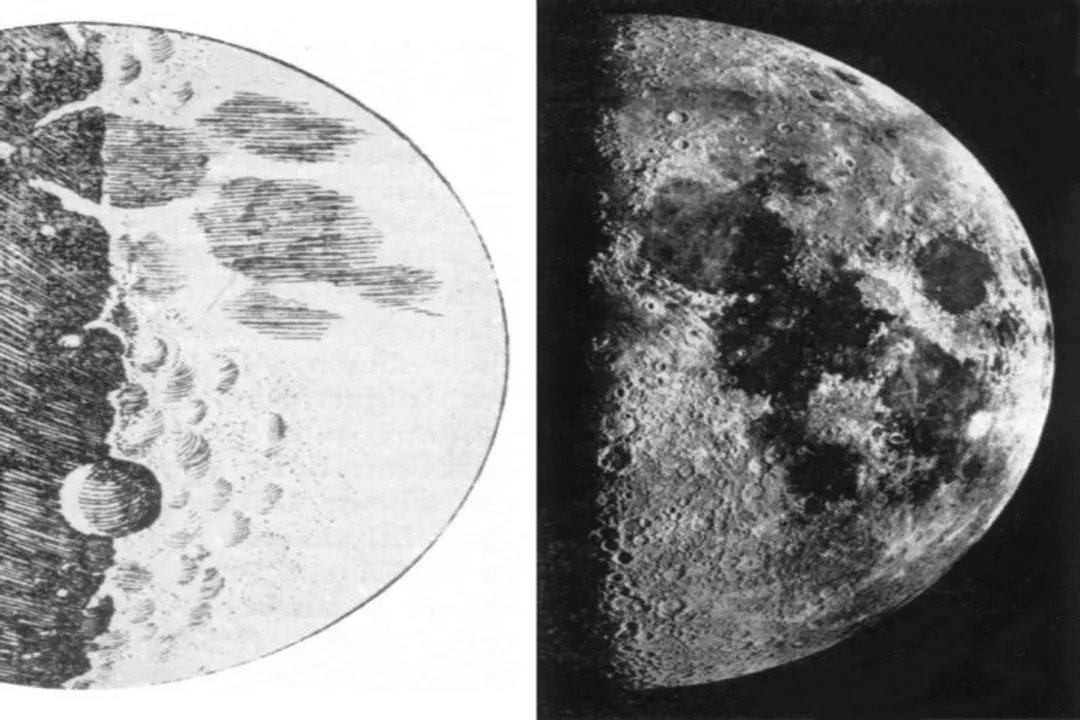
It was Galileo Galilei who, upon hearing of the invention, quickly improved the design and turned it skyward, forever changing its destiny. [9][5] What Galileo saw in 1609 provided the first concrete, observational challenges to the prevailing geocentric worldview. [8][1] He observed that the Moon was not a smooth, perfect orb as Aristotle had described, but possessed mountains and valleys, exhibiting imperfections similar to Earth. [1][5] This simple observation chipped away at the perceived divine perfection of the celestial realm.
Even more destructive to the established cosmology were the movements of Jupiter’s satellites. [1] Galileo spotted four points of light orbiting Jupiter—what we now call the Galilean moons. [1][5] This directly demonstrated that not everything in the heavens orbited the Earth, providing powerful empirical evidence supporting the Sun-centered, or Copernican, model of the solar system. [8] Furthermore, observing the phases of Venus—which could only be explained if Venus orbited the Sun inside Earth’s orbit—sealed the case against the old structure. [1][5] The telescope made the theoretical mathematics of Copernicus verifiable reality for those who looked through the glass. [8]
The speed with which this new knowledge spread, thanks in part to the printing press, meant that societal structures built upon the old cosmology were rapidly undermined. When information that directly contradicts deeply held institutional beliefs is presented not as an argument but as a documented seeing, the resistance is immense, yet the dissemination is swift. [2] This was an early, clear demonstration of how a new technology could force a public paradigm shift faster than tradition could adapt.
# Cosmic Shift
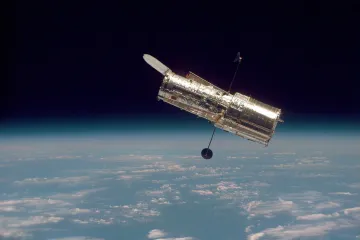
The impact on human philosophy and theology was immense, marking a true turning point in the Scientific Revolution. [8][2] If the Earth was not the fixed center of creation, where was humanity? The telescope stripped away the sense of cosmic centrality that defined the Western worldview for over a millennium. [7] We were moved from the privileged center of the cosmos to a small world orbiting a medium-sized star among countless others. [7]
It is fascinating to consider that while the initial discovery moved the Earth from the center of the known universe, the subsequent advancements revealed our world to be merely one speck among trillions. [7] Early astronomers, like Galileo, were focused on proving Earth was not the center; later generations, equipped with more powerful instruments, were preoccupied with proving how insignificant our specific location actually is. [7] This dual realization—the displacement from the center, followed by the realization of statistical anonymity—presents a continuous, powerful challenge to human ego, mediated entirely by how effectively we can gather distant light. [6]
# Technological Refinement
The impact wasn't purely philosophical; it drove rapid technological improvement. The early lenses used in refractors, such as Galileo’s, suffered from a defect called chromatic aberration—the light passing through the lens would separate into colors, causing fuzzy images with colored halos around bright objects. [9] The pursuit of clearer views necessitated engineering solutions.
A significant breakthrough came in 1668 when Isaac Newton devised and built a fundamentally different kind of telescope: the reflecting telescope. [9][10] Instead of relying solely on lenses, Newton used a curved mirror to gather and focus the light. [10] Because mirrors reflect all colors of light equally, this design effectively eliminated the color fringing that plagued refractors. [10] Newton’s design demonstrated that the instrument itself was not a static tool but an evolving piece of science, where solving an optical problem (like aberration) opened up new observational territories. [9] This technological evolution meant that subsequent generations could examine celestial objects with far greater fidelity than Galileo ever could have imagined. [10]
# Modern Instruments
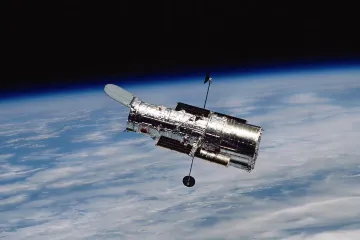
The principle established by Newton—that the limitations of observation are tied to the technology used to collect light—remains the driving force today, albeit expanded far beyond visible light. [3][4] Modern telescopes, such as the Chandra X-ray Observatory, are essentially specialized light collectors designed to see parts of the spectrum that the human eye (and the original telescopes) could never perceive. [4]
The societal impact has shifted again. Where Galileo challenged religious dogma, modern instruments challenge our physical understanding of the universe’s structure and history. [3] Chandra, for example, allows scientists to detect high-energy radiation from phenomena like black holes and supernova remnants, viewing events that are invisible in optical light. [4] This reveals a dynamic, violent cosmos fundamentally different from the static, orderly one described by early observers. [4] The sheer range of data gathered across the electromagnetic spectrum underscores that the telescope’s impact is ongoing, continually rewriting the physics textbooks. [3]
# Information Access
The widespread availability of astronomical images and data also transformed general public education and engagement with science. [2] While the initial impact was felt among scholars and religious authorities, the democratization of sight via later, more accessible telescopes—and eventually, through public outreach—made the cosmos a shared experience. [2] Consider the shift in public consciousness: in the pre-telescope era, the heavens were conceptually vast but practically unreachable and knowable only through authority. [6] Now, thanks to both the historical instrument and its descendants, the scientific method itself is validated in the public eye every time a new, stunning image is released from an observatory like the Harvard-Smithsonian Center for Astrophysics. [3] The public learns to value seeing confirmed by rigorous methodology over inherited belief.
This modern accessibility creates an interesting feedback loop. For instance, when amateur astronomers use consumer-grade reflecting telescopes (following Newton's foundational design) to locate the rings of Saturn, they are not just engaging in a hobby; they are participating, however tangentially, in the very empirical tradition that Galileo initiated. [9] They are using a technology that demands observational proof, reinforcing a societal mindset accustomed to evidence-based conclusions across many fields, not just astronomy. The telescope, in its historical and modern forms, didn't just change astronomy; it helped forge the expectation of empirical validation in all areas of knowledge acquisition. The development from a simple, handheld tube to complex space-based observatories shows that every incremental improvement in light-gathering power forces a revision of our perceived reality, confirming that technology is not just a tool but an agent of cultural redefinition. [6][2]
#Citations
The Telescope – Science, Technology, & Society: A Student-Led ...
How the Telescope Revolutionized Our World and Ignited…
Telescopes | Center for Astrophysics | Harvard & Smithsonian
Q and A of the Day: How Have Telescopes Changed Things?
Galileo and the Telescope | Modeling the Cosmos | Digital Collections
The Telescope – Science Technology and Society a Student Led ...
[PDF] - How Telescopes Changed our Understanding of our Universe
The Telescope & the Scientific Revolution
How Newton's Telescope Changed the World - Insight Observatory
The history of the telescope | Royal Museums Greenwich