How do turbine control systems manage wind speeds exceeding the rated speed?
Answer
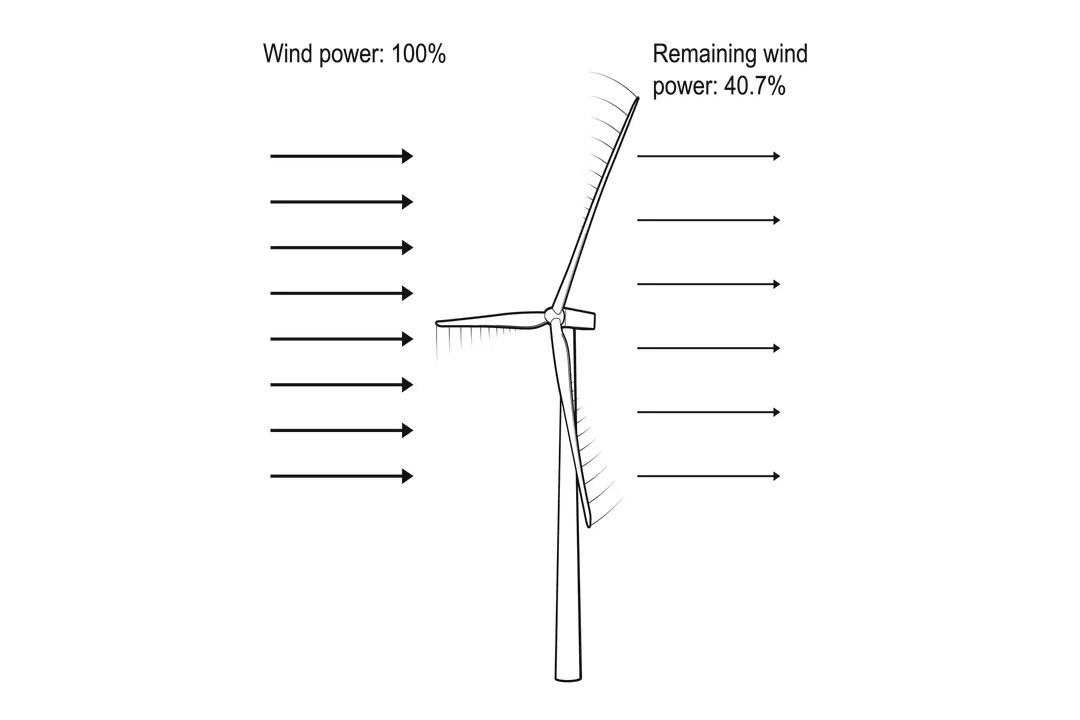
By pitching the blades to intentionally reduce $C_p$ and limit output
Control systems actively reduce efficiency by pitching blades out of the optimum angle above rated speed to prevent mechanical overload, generator failure, or damage from excessive aerodynamic force.
#Videos
The Betz Limit: Why All Wind Turbines are Less Than 59.24% Efficient
Related Questions
What is the theoretical upper bound for energy capture by any wind turbine, known as the Betz Limit?What causes the fundamental restriction defined by the Betz Limit?How is the power available in the wind mathematically related to the wind speed (v)?What metric quantifies the relationship between the speed of the blade tip and the incoming wind speed?Which aerodynamic issue involves air detaching from the blade surface, causing significant drag and a sharp drop in $C_p$?What is the typical range for the peak Power Coefficient ($C_p$) achieved by modern, highly efficient wind turbines?In turbines with gearboxes, what is the primary source of energy loss in the drivetrain section?What efficiency measure encompasses all limitations—Betz, aerodynamic, mechanical, and resource availability—over an entire year?How do turbine control systems manage wind speeds exceeding the rated speed?What significant efficiency reduction is imposed on downwind turbines within a wind farm due to upstream machines?Why is the operational speed of some turbines deliberately set below the TSR that yields the absolute maximum $C_p$?