Do larger stars shine brighter?

The immediate impression when gazing at the night sky is one of varying brilliance; some pinpricks of light seem intense, while others are faint whispers against the black. This visual difference naturally leads to the question of whether the physical size of a star dictates how brightly it shines. In the grand scheme of stellar physics, the answer is a resounding yes, but with a crucial caveat involving temperature. Simply put, bigger stars generally are much brighter, but a star's absolute radiance is a sophisticated dance between its physical dimensions and how hot its surface happens to be.
# Intrinsic Radiance
When astronomers discuss how brightly a star shines, they are usually referring to its luminosity, which is the total amount of energy—light and heat—it radiates into space every second. This intrinsic property is independent of how far away the star is from an observer on Earth. What we see with our naked eyes, the apparent brightness, is the result of that intrinsic luminosity diminished by vast intervening distance.
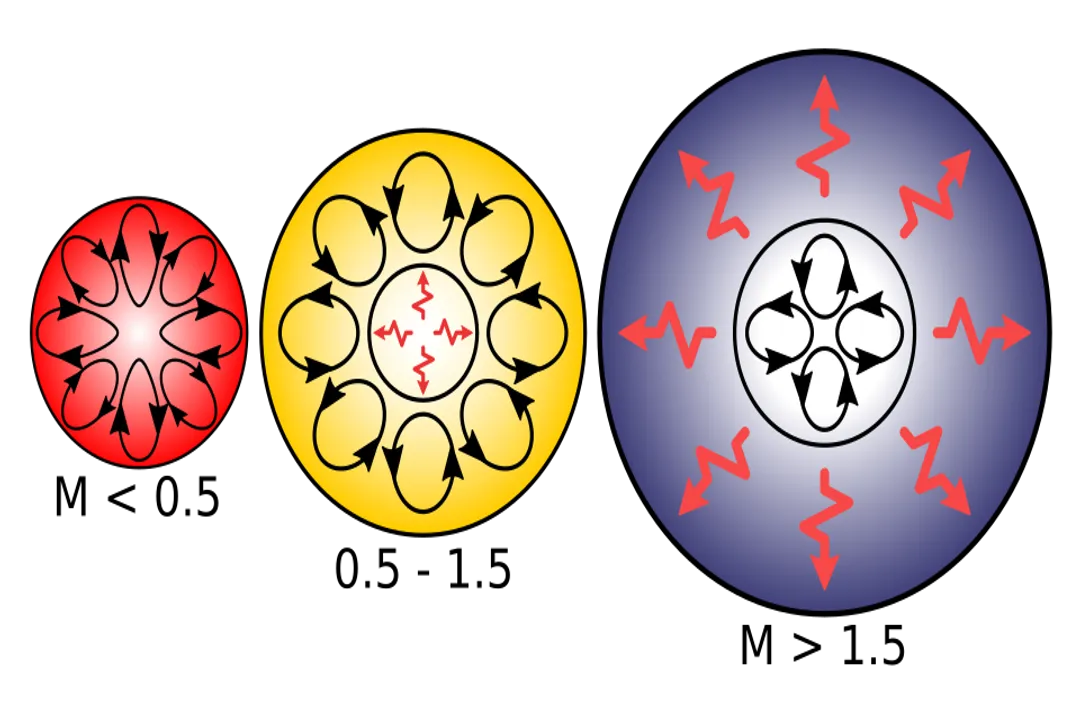
For a star, luminosity is tied fundamentally to its mass. The more material a star contains, the greater the gravitational pressure at its core. This intense pressure drives nuclear fusion at a much more vigorous rate, meaning massive stars consume their fuel supply incredibly quickly to counteract their own immense gravity and maintain stability.
# Size and Surface Area
A star's sheer size, or radius, contributes directly to its ability to shine. Imagine two identical light bulbs, one with a tiny filament and one with a massive, coiled filament; the larger one will obviously emit more total light, even if both operate at the exact same temperature. This principle applies to stars: a star's luminosity depends on the amount of surface area it has available to radiate energy into space.
If we could somehow take two stars that had the exact same surface temperature—say, 6,000 Kelvin, similar to our Sun—the larger star would always be more luminous because it has more square meters of glowing surface pouring out photons. A giant star, being physically enormous, has exponentially more surface area than a small star like the Sun, leading to a vast increase in total energy output, even if the energy emitted per square meter is identical between the two objects.
# Mass Defines Destiny
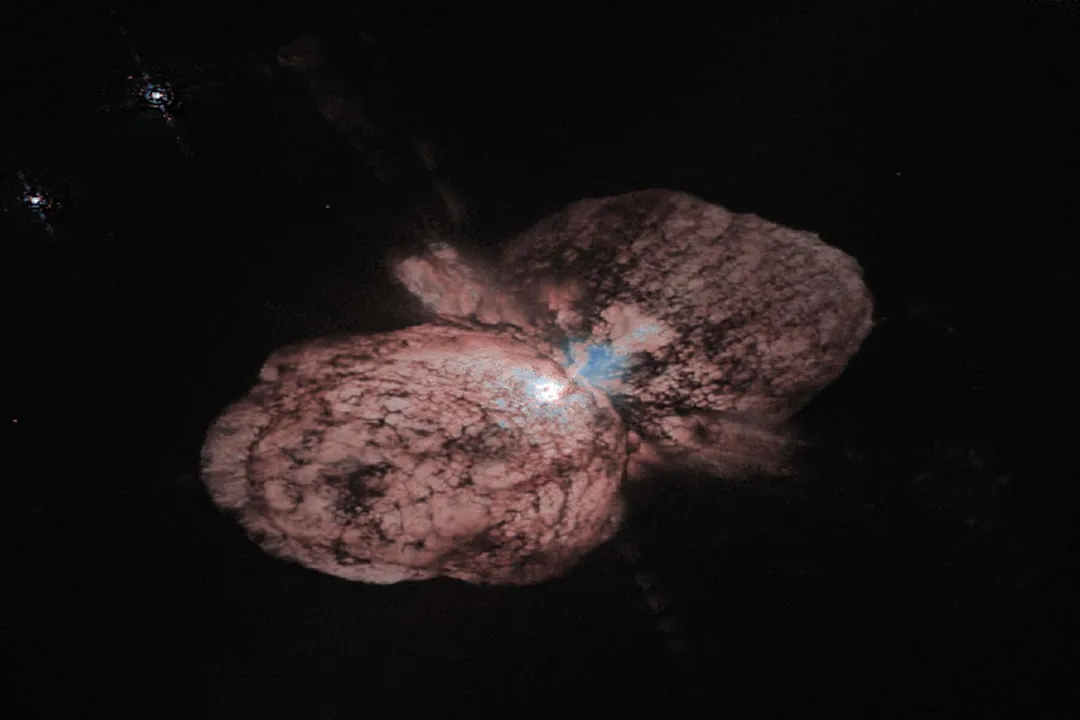
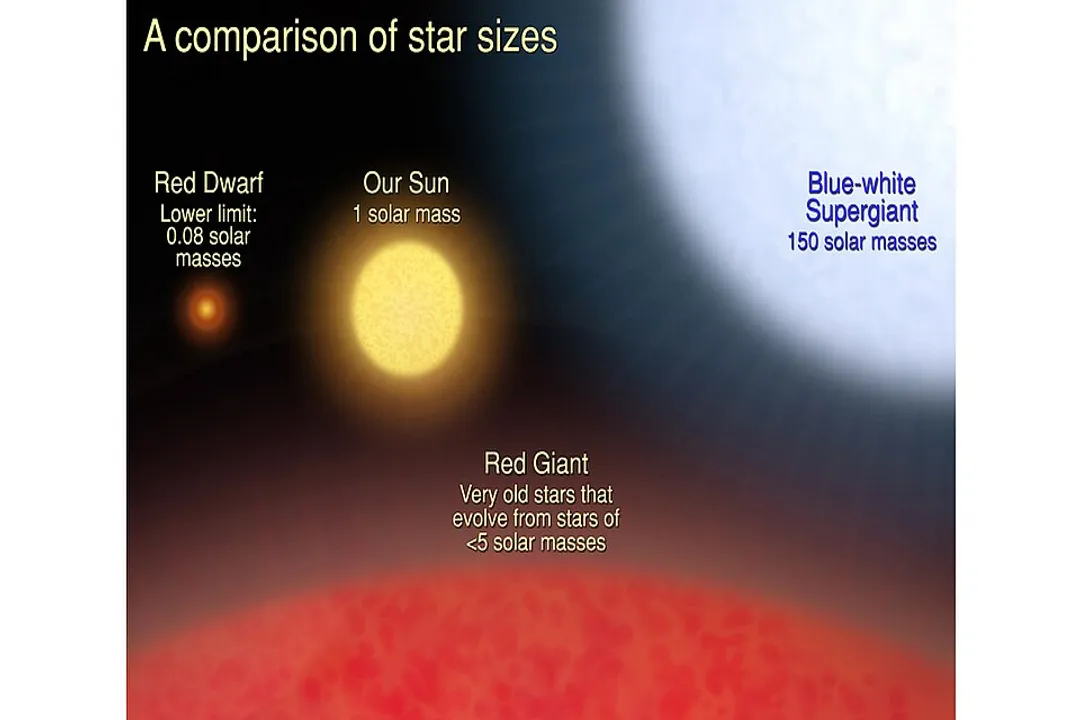
The relationship between a star’s mass and its lifespan is perhaps the most dramatic aspect of stellar evolution. Our Sun is a relatively average, mid-sized star, providing a useful yardstick. Stars much more massive than the Sun live short, brilliant lives. They become incredibly luminous, shining thousands or even millions of times brighter than the Sun, but they burn through their hydrogen fuel in mere millions of years. In contrast, smaller, less massive stars, known as red dwarfs, sip their fuel very slowly and can last for trillions of years, though they are individually very dim.
Consider the difference between a massive blue giant and our Sun. A star perhaps ten times the mass of the Sun might be hundreds of thousands of times more luminous, yet its entire existence might only last for tens of millions of years before it violently ends its life. This rapid energy expenditure is the direct result of the increased pressure and temperature generated by its larger size and greater mass.
# Temperature's Independent Influence
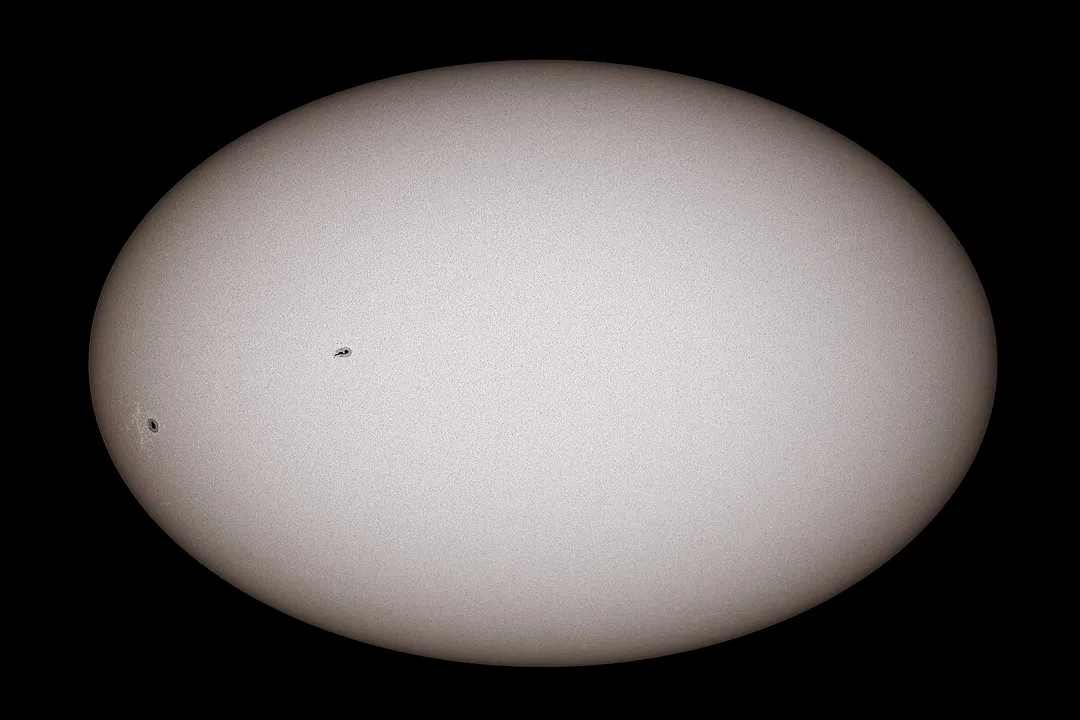
While size provides a massive platform for light emission, the intensity of that light is critically dependent on temperature. A star's surface temperature dictates the color of its light and how much energy it emits per unit of area. Hotter objects emit light much more efficiently than cooler ones. For example, a star that is twice as hot on its surface will shine much more than twice as brightly from that surface area alone.
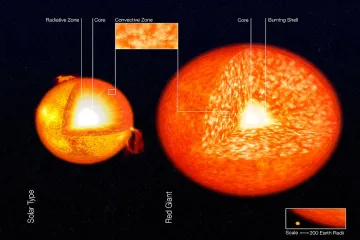
This interplay creates fascinating scenarios where size isn't the sole dictator of brilliance. A relatively small, very hot star can easily outshine a substantially larger, but much cooler, star. Think of a main-sequence star, like our Sun, compared to a Red Giant. The Red Giant is vastly larger, possessing a tremendous surface area, but its outer layers are relatively cool, giving it a reddish hue. While the Red Giant is certainly brighter than the Sun due to its massive size, a smaller star that is significantly hotter—perhaps a young, hot blue star—could easily surpass the Red Giant in total luminosity because its superior temperature compensates for its smaller radiating surface.
To grasp this interplay, we can conceptualize the relationship. If we assign a baseline luminosity to an object with the Sun's radius and temperature, increasing the radius by a factor of 10 (ten times larger) increases the luminosity by a factor of 100 (ten squared), assuming constant temperature. However, increasing the temperature by a factor of 2 (twice as hot) might increase the luminosity by a factor of 16 (two to the fourth power, following the Stefan-Boltzmann relation). This means that a star only twice the radius of the Sun, but twice as hot, would be times brighter than the Sun! This simple mental calculation illustrates why temperature can often overpower size when comparing stars that aren't vastly different in radius.
# Stellar Classifications and Brightness
Astronomers organize stars using classification systems that inherently link size, temperature, and luminosity. The Hertzsprung-Russell (H-R) diagram plots a star's luminosity against its temperature (often indicated by color). On this diagram, the main sequence represents the stage where most stars spend the bulk of their lives fusing hydrogen. Here, a clear trend exists: as you move up the main sequence (more luminous), you move toward hotter, blue stars which are also, generally, more massive and larger.
However, the H-R diagram also clearly shows stars that have evolved off the main sequence, which highlights the non-linear relationship between size and brightness.
| Star Type | Relative Size (vs. Sun) | Relative Luminosity (vs. Sun) | Key Factor |
|---|---|---|---|
| Red Giant | Much Larger (10s to 100s) | Highly Luminous (100s to 1000s) | Huge Surface Area |
| Main Sequence Star (like the Sun) | ~1 | 1 | Balanced Fusion Rate |
| White Dwarf | Very Small () | Very Dim | Small Surface Area (High Temp*) |
Note: White dwarfs are very hot but small, resulting in low overall luminosity.
The table above underscores that while a Red Giant is larger and luminous, its luminosity comes from an immense surface area despite a relatively low surface temperature, whereas a hot main-sequence star achieves its brightness through high energy output per square meter combined with a decent size.
# Apparent Brightness From Home
For the casual observer, the distinction between intrinsic luminosity and apparent brightness can be misleading. Our night sky is dominated by stars that are intrinsically moderate in size and output but are simply closer to us. The fact that a star looks bright doesn't necessarily mean it’s a massive giant; it might just be a neighbor.
Consider a very large, extremely luminous star located thousands of light-years away. Its colossal energy output is spread so thin by the time it reaches our telescopes that it might appear as faint as a nearby, less powerful star. Conversely, the Sun, a modest star, appears overwhelmingly bright because it is practically on our doorstep.
When looking at the constellations, you can practice a simple mental exercise to apply this knowledge. If you identify a star that is distinctly blue or white (indicating high surface temperature), and it appears quite bright, you can infer it is likely both large and hot, perhaps on the upper end of the main sequence or evolved into a giant, because its brightness is amplified by two factors: a large radiating area and high surface energy output. If you see a star that is distinctly orange or red, even if it appears relatively bright in the sky, you can safely assume it must be physically enormous—a supergiant or giant—to overcome its relatively low surface temperature and still register as a bright beacon from our distance.

# The Limits of Stellar Mass
The relationship between size, mass, and brightness has physical limits determined by the processes that govern a star's life. Stars are generally stable when the outward pressure from fusion balances the inward crush of gravity. This balance dictates the star's size and luminosity path.
The smallest stars, red dwarfs, are very small and dim, burning fuel slowly for enormous stretches of time. On the opposite end of the scale, the most massive stars we observe are hundreds of times the mass of the Sun and are fantastically luminous, radiating energy equivalent to millions of Suns. They exist near the theoretical upper boundary for stable stars. If a star were significantly more massive than this upper limit—say, over 150 times the Sun's mass—the internal radiation pressure would become so intense that it would likely blow its outer layers away in a catastrophic event, unable to maintain hydrostatic equilibrium. Therefore, the range of "very large" stars is constrained by the physics of gravitational collapse and radiation pressure, meaning there is a defined ceiling on how large and how bright a stable star can become.
In summary, the intuition that larger stars shine brighter holds true because size translates directly into a greater surface area for radiating energy. However, this physical scale must always be interpreted alongside the star's surface temperature. A star's true shine, its luminosity, is the product of both its vast physical dimensions and the intensity of the energy generated within its core, making a small, extremely hot star a potential rival to a much larger, cooler one in the cosmic brightness contest.
#Videos
Why Would The Size Of A Star Affect Its Luminosity? - Physics Frontier
Related Questions
#Citations
What makes a relatively small star more luminous than a large one?
Why Would The Size Of A Star Affect Its Luminosity? - Physics Frontier
How does size affect the brightness of a star? - Quora
Why Are Some Stars Brighter than Others?
Why Is Our Sun So Big and Bright? - NSTA
Ask an Astrophysicist - Imagine the Universe! - NASA
Can you tell me why one star is brighter than the other? - Facebook
The Brightness of Stars | Astronomy - Lumen Learning
Star - Wikipedia