Are all stars in the sky already dead?
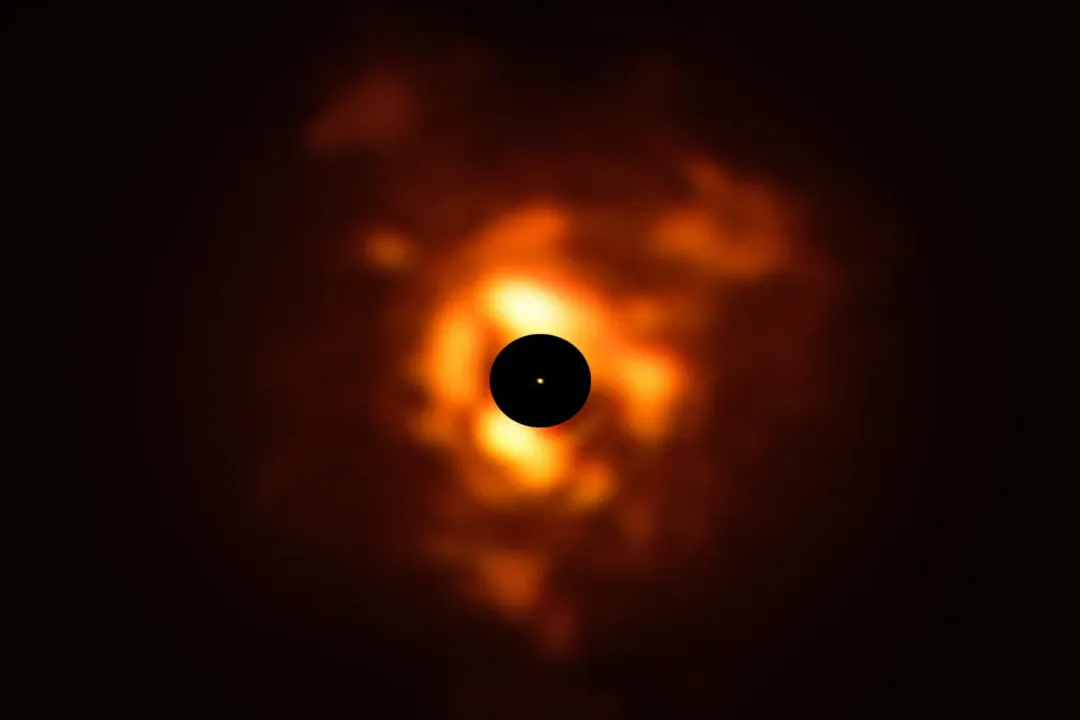
When you look up into the crisp, dark night sky, you are gazing across the vastness of space and, perhaps more accurately, across the vastness of time itself. [8][2] The brilliant pinpricks of light that have inspired awe for millennia are not just distant suns; they are snapshots from the past. [3][5] This realization leads to a profound, almost unsettling question: Are the stars we see already gone?
The short answer, which is perhaps the least satisfying, is some are, and most are not. [3] Whether a star that appears in your night sky has actually winked out of existence depends entirely on how far away it is and how long it takes for its light to cross the gulf between it and your eyes. [8][5] Because light travels at a finite speed—approximately $299,792$ kilometers per second—every object we see in the universe is subject to a time delay. [2][6]
# Speed Limit Reality
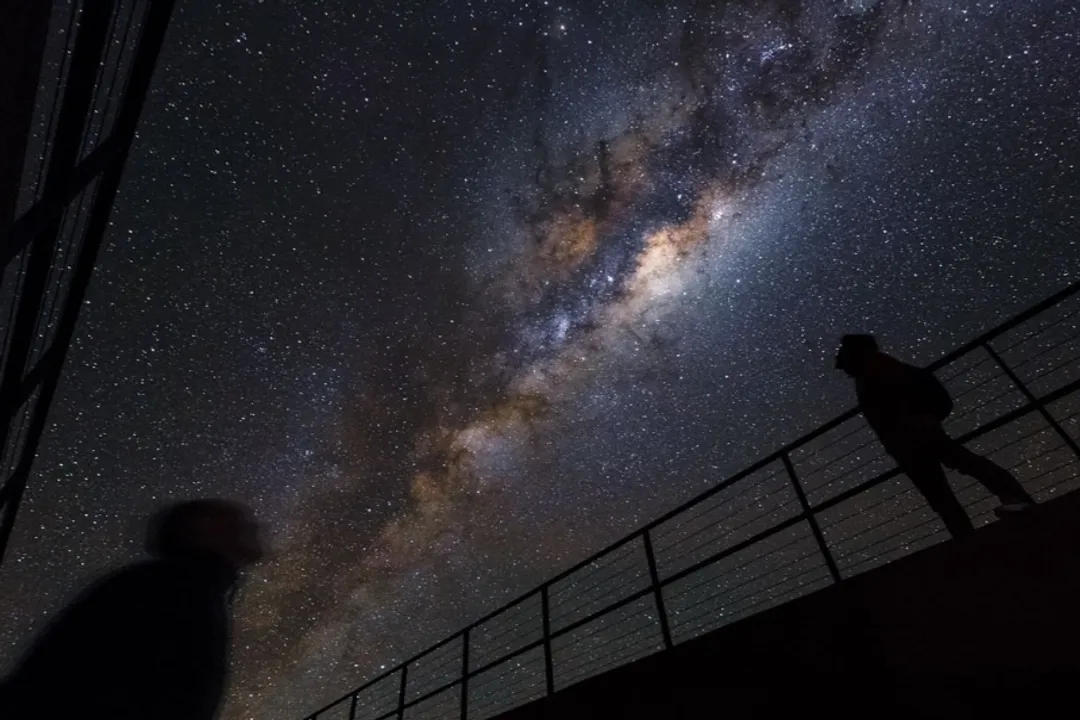
Light speed acts as the universe's ultimate speed limit, and this limit is the key to understanding the age of the light reaching us. [2] When we discuss distance in astronomy, we often use the unit light-year, which is the distance light travels in one Earth year—about $9.46$ trillion kilometers. [2] If a star is $100$ light-years away, the light hitting your retina right now began its journey a century ago. [8][5] If that star were to instantly vanish, we wouldn't know about it for another $100$ years. [1][3]
Consider the closest star system to us, Proxima Centauri. It sits about $4.24$ light-years away. [8] If, by some cosmic bad luck, Proxima Centauri ceased shining right now, we would still see its familiar dim glow for over four years. [2] For stars that make up the beautiful constellations we recognize, the distances are much greater. [8] Stars visible to the naked eye can be anywhere from a few light-years away to thousands of light-years away. [5][4]
The very closest star visible to the unaided eye, Sirius, the brightest star in the night sky, is only about $8.6$ light-years away. [8] This means the light we see is only $8.6$ years old. [8] While this is a noticeable delay, it is a tiny fraction of the lifespan of a star like Sirius. [5]
# Stellar Clock Comparison
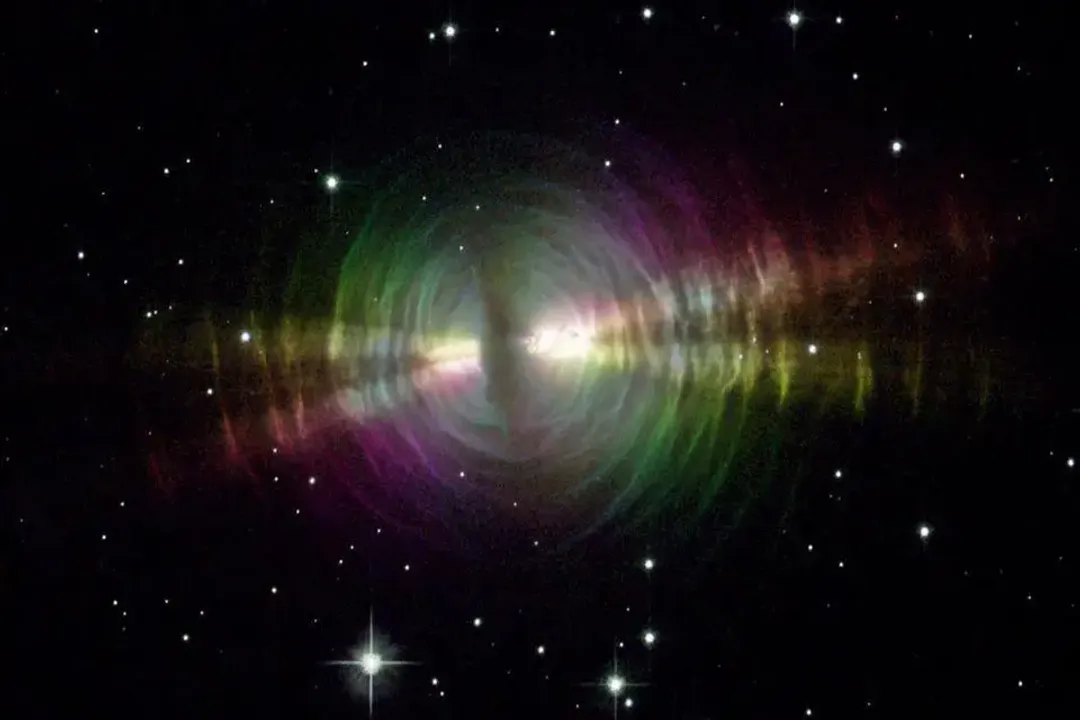
To determine if a visible star is dead, we must compare the light travel time (its distance in light-years) against the typical lifespan of that type of star. [3] Stars spend the vast majority of their existence fusing hydrogen into helium in their cores, what astronomers call the main sequence. [5] This phase is where stars like our Sun live for billions of years. [5]
The lifespan of a star is inversely proportional to its mass: the bigger and brighter a star is, the faster it burns through its fuel and the shorter its life. [5]
Sun-like Stars (Medium Mass): Stars similar to our Sun are expected to shine for roughly $10$ billion years. [5] If a Sun-like star is $500$ light-years away, its light is $500$ years old. Since its total main-sequence lifespan is $10$ billion years, the odds that it has already expired are incredibly low. [5]
Massive Stars (Blue Giants): These stars are the cosmic flashbulbs, shining incredibly brightly but burning out quickly. [5] A star $20$ times the mass of the Sun might only last a few million years. [5] If a massive star is $10,000$ light-years away, and it lived for only $5$ million years, then the light we are seeing now must have left it when the Earth was still in the late Pleistocene epoch. [3] In this scenario, if that massive star died recently (within the last few million years), we would still see it shining brightly in the sky tonight. [1][5]
The stars that are most likely to be "dead" are the most distant ones that we can still resolve with our eyes. [3] If a star is, say, $15,000$ light-years away, we know its light is $15,000$ years old. [5] For a star of that distance to still be alive, it must have a lifespan significantly longer than $15,000$ years, which almost all stars do, even the massive ones. [5] However, the window for when a star's death would have occurred without us knowing yet is defined by that distance barrier. [1]
# The Faint Majority
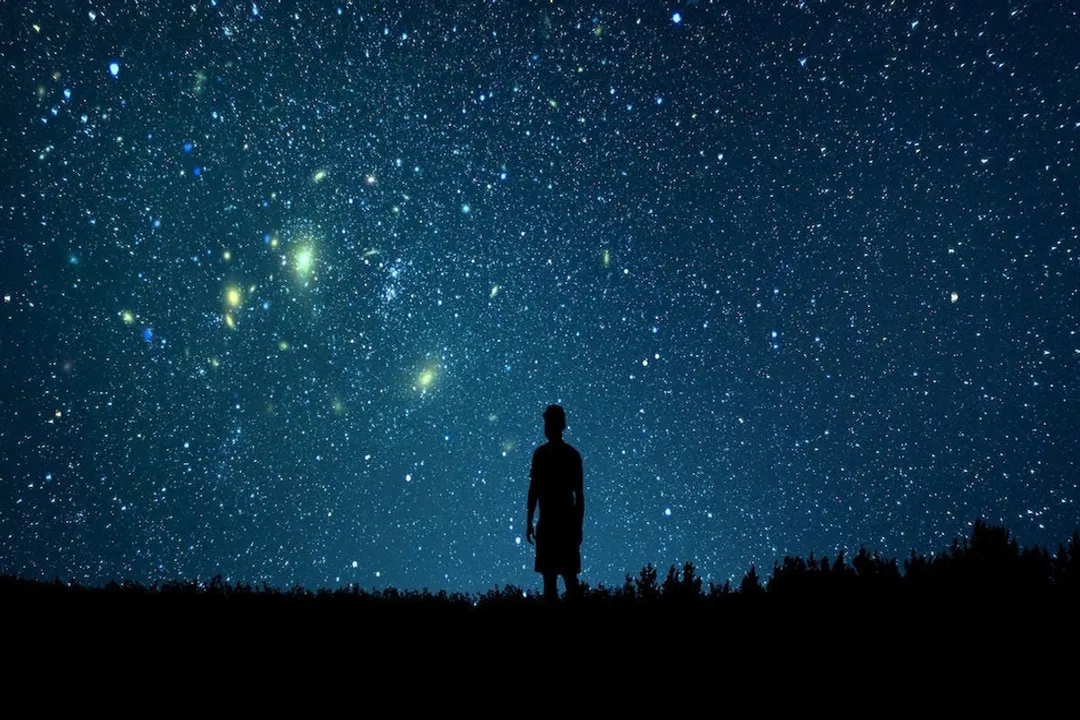
The number of stars bright enough to be visible to the naked eye is surprisingly small, perhaps around $9,000$ across the entire celestial sphere, though only about half of those are visible from any single location on Earth at one time. [8] These visible stars tend to be relatively close to us, or they are intrinsically very luminous stars that simply outshine their farther cousins. [4]
Most of the stars we observe in the night sky are within a few hundred light-years. [4] Given that even the largest, fastest-living stars last for millions of years, the proportion of naked-eye stars that are already dead is likely very small, though not zero. [4][3] One estimate suggests that perhaps less than $1%$ of the stars visible to the naked eye might already be dead, but pinpointing an exact figure is impossible without knowing the precise distance and evolutionary stage of every single visible star. [4] The more commonly discussed scenarios involve the most distant, faint stars that just make the cut for naked-eye visibility, which could be thousands of light-years away. [3]
If you consider the faintest stars visible under perfect, dark-sky conditions, the light travel time extends further, increasing the probability that one of those dimmer, more distant points of light is actually a ghost. [4] Imagine a hypothetical star at $50,000$ light-years that happened to be a massive, short-lived star; there is a real chance its light is showing us its final moments, even though its actual demise occurred tens of thousands of years ago. [3][5]
# Observing Cosmic History
The fact that starlight carries ancient information has practical implications for astronomical observation and even for our sense of place in the cosmos. [8] For example, the light from the Andromeda Galaxy, which is visible to the unaided eye, has traveled about $2.5$ million years to reach us. [8] When we look at Andromeda, we are seeing it as it existed when early hominids were just beginning to walk the Earth. [8] This is a much clearer case of seeing a system that has almost certainly changed significantly, even if the vast majority of its stars are still shining. [6]
For individual stars, the time delay means that if a massive star in a nearby cluster were to go supernova tonight, an observer on Earth would not see the spectacular explosion for potentially hundreds or thousands of years, depending on the cluster's distance. [1] We are always lagging behind cosmic events; our view of the universe is necessarily historical. [2]
This concept is fundamental to how we map the Milky Way. When astronomers use powerful telescopes to look at the very distant stars—the ones too faint for the naked eye—the time scales jump from thousands of years to millions or billions of years. [6] This is how we can study the evolution of galaxies, by viewing them as they were in their youth, a process that relies entirely on the speed of light being a fixed constant. [6]

# Reaching the Faint Boundary
One fascinating aspect to consider is the difference between the stars we know are massive and short-lived, and the general population of visible stars. [5] Astronomers have cataloged many of the nearest, brightest stars, and their current evolutionary status is generally well-understood, making it unlikely that Alpha Centauri or Betelgeuse are secretly dead. Betelgeuse, for instance, is massive, but it’s relatively close (around $550$ to $640$ light-years) and is not expected to go supernova for at least another $100,000$ years, though an unexpected collapse could happen sooner. [8]
However, the sheer volume of faint stars that merge into the hazy band of the Milky Way makes a definitive census impossible for the casual stargazer. [4] If you are looking at a dim star in the constellation Cygnus, which might be $5,000$ light-years distant, you are seeing an image from the time of the early Mesopotamian civilizations. [5] While the star is probably still there, the uncertainty inherent in that time jump means you cannot rule out that it died $1,000$ years ago, or $3,000$ years ago. [1]
This leads to a thought experiment: if a supernova event in a star $10,000$ light-years away is visible to the naked eye, it appears as a "new" star in our sky. [3] We see the light from the explosion, not the light of the star before it exploded. The actual physical event occurred $10,000$ years prior. [1] The challenge for astronomers is spotting the subtle changes before the catastrophic end, which requires continuous, high-precision monitoring over decades, something far beyond human visual inspection. [3]
Here is a practical way to frame the observation experience: Think of your eye as a very slow-motion camera with an exposure time measured in millennia for the most distant visible points. [8] Our current visible stellar population is a mix of stars that are relatively young in their life cycle (like the closest ones), and stars that are old but massive and therefore have very short total lifespans (the most distant ones that are still visible). [5]
# Personal Observation Context
For the average person looking up from a city or suburban location, the number of truly distant, faint stars visible is significantly reduced due to light pollution. [4] An observer in a city might only see a few hundred stars, which are overwhelmingly the brightest and closest ones. [4] For this subset, the probability of seeing a dead star approaches zero, as the light travel times are usually in the hundreds of years, far shorter than the main-sequence lives of the stars responsible for that brightness. [5][8]
If you manage to get to a truly dark location—perhaps a remote desert or high mountain—you will see thousands more stars, including many fainter ones. [4] It is in this richer field of view that the possibilities of observing the ghosts of long-dead, short-lived stars become real, even if they remain statistically insignificant compared to the living majority. [4]
If we were to create a rough, illustrative table summarizing the risk based on distance for naked-eye visibility (assuming the star is not an intrinsically long-lived Red Dwarf, which can burn for trillions of years, but a typical main-sequence star):
| Example Distance (Light-Years) | Light Arrival Age | Potential for Star to be Dead Now (If Lifespan Million Years) |
|---|---|---|
| $100$ | $100$ years | Extremely Low |
| $1,000$ | $1,000$ years | Negligible |
| $10,000$ | $10,000$ years | Low (Most stars live longer than this) |
| $50,000$ | $50,000$ years | Moderate (If the star was massive and lived million years, the chance of recent death rises) |
| $100,000$ | $100,000$ years | Higher (Requires a lifespan significantly exceeding this for it to still be shining) |
This simplified comparison highlights that while the light from even the most distant visible star is ancient by human standards, it is often not ancient enough relative to the star's entire, multi-billion-year existence to confirm its death. [5] The stars we are most certain about seeing alive are the ones closest to us, whose light arrival time is only a few decades old. [8]
# The Ghostly Sky
Ultimately, the stars we see are echoes. They are the past made visible. [2] Whether those echoes carry news of a living source or an ancient obituary is a matter of astronomical statistics weighted by distance. [1][3] We live under a sky that is currently populated by stars that, on average, died long before recorded history began, but the specific stars visible to us right now are overwhelmingly still burning hydrogen, sending their ancient, steady light across the gulf. [5] The phenomenon serves as a continuous, humbling reminder that the universe operates on scales of time that dwarf human comprehension. [6] The next time you gaze upward, remember you are participating in a time machine, viewing light that has traveled further than any object made by humanity ever could. [2][8]
#Videos
Are All The Stars Really Dead? - YouTube
#Citations
Are there known dead stars we see in the sky? : r/Astronomy - Reddit
Are the stars you see in the sky already dead?
Are many visible stars dead? - BBC Science Focus Magazine
What percent of the stars that we see in the sky are already dead?
Have any stars visible to human eyes already died? - Medium
Are All The Stars Really Dead? - YouTube
Are the Stars We See in the Sky Actually 'Dead'? - Consensus
When you wish upon a star, is it already dead? - EarthSky
Have any stars visible to human eyes already died? - Big Think