What is the core of a dead star?
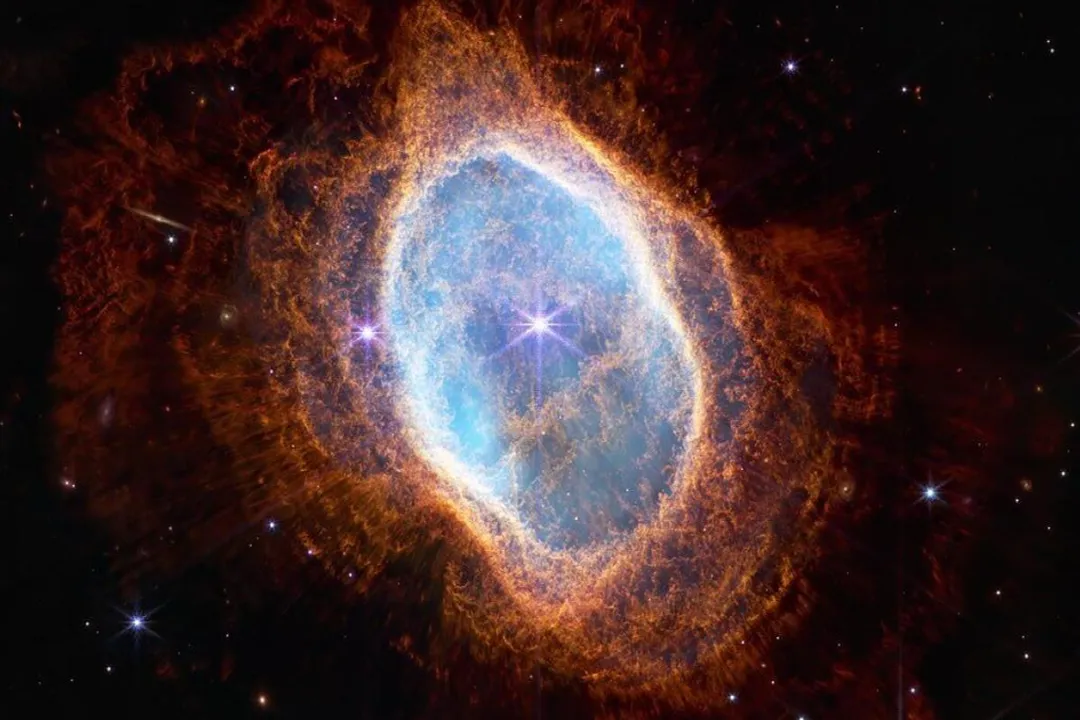
The stellar remnants left behind when stars die are not singular entities; rather, they represent a spectrum of physical states dictated entirely by the mass of the original star. When a star exhausts its nuclear fuel, the outward pressure generated by fusion ceases, and gravity begins a final, catastrophic squeeze on the remaining material. What forms at the very center—the core of the dead star—is determined by how much mass survives this gravitational collapse, leading to objects ranging from the relatively gentle fading embers of sun-like stars to the most exotic, dense objects in the known universe. [1][4]
The death of a star is fundamentally an exercise in the balance of forces. For stars like our Sun, the end stage involves a gentle puffing away of outer layers, leaving behind a hot, dense corpse. For the most massive stars, the collapse is far more violent, resulting in a supernova explosion that briefly outshines entire galaxies, leaving behind a hyper-dense core remnant. [4] Understanding the core means understanding these different endpoints.
# Mass Determines Fate
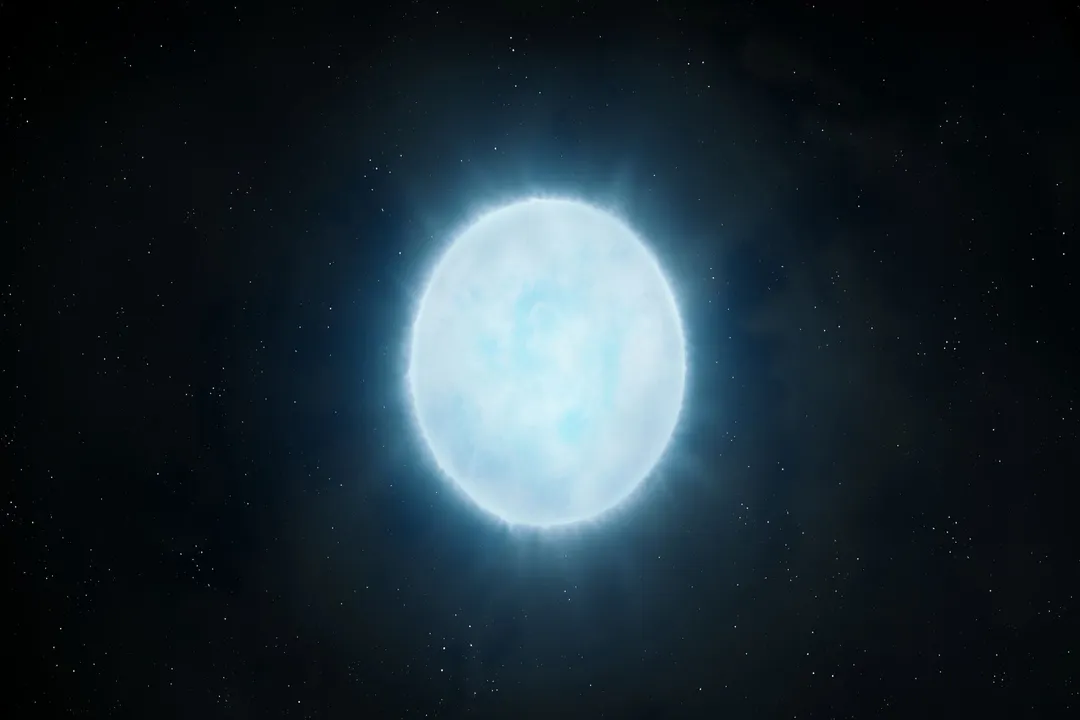
A star’s mass is the master variable that dictates its entire life cycle and its final resting state. [4] Stars that have masses up to about eight times that of the Sun follow a path where their final core mass is insufficient to overcome the fundamental repulsive forces that can arise from quantum mechanics. After shedding their outer layers, these lower-mass stars leave behind a white dwarf. [4]
Conversely, stars with much greater initial mass—those many times the mass of the Sun—suffer a total core collapse when fusion stops. If the remaining core mass is between roughly $1.4$ and $3$ solar masses, the collapse is halted by a different quantum effect, resulting in a neutron star. [1] If the remaining mass exceeds this higher limit, gravity completely overwhelms all known forces, and the core collapses into a black hole, an object whose singularity has no defined core material in the traditional sense. [1][4]
# Fading Remnants
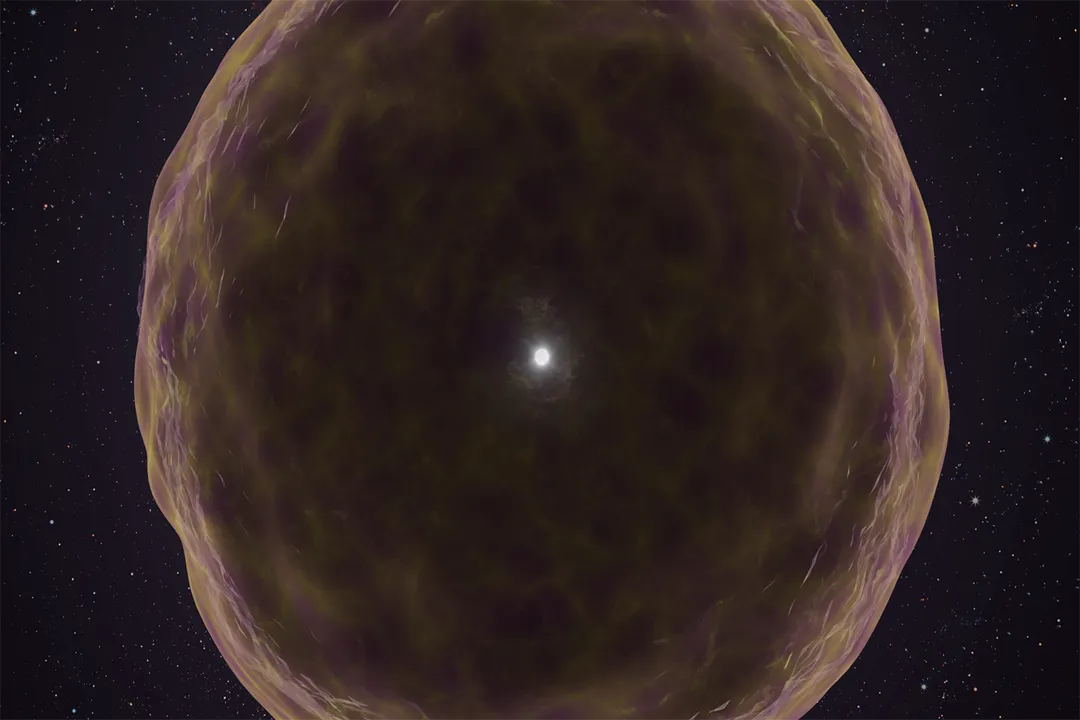
The core of a star that dies quietly, like our Sun, becomes a white dwarf. [4] This dense object is primarily composed of the heavier elements created during the star's life, usually a degenerate soup of carbon and oxygen nuclei, along with some leftover helium or neon. [1] The true wonder of the white dwarf core is not its composition, but what keeps it from collapsing further. It is supported against gravity by electron degeneracy pressure. [1] This pressure arises because the Pauli exclusion principle prevents electrons from occupying the same quantum state, forcing them into higher energy levels, which provides the necessary outward push to counteract gravity. [1]
Consider the sheer compression at work here. If you took the mass of the Earth and compressed it into a volume roughly the size of our planet, you would approximate the density of a white dwarf. [9] However, this density is relatively low compared to the other remnants. A white dwarf core will not last forever in its current form. Over incredibly vast timescales—far exceeding the current age of the universe—the white dwarf will radiate away all its remaining heat, eventually fading into a cold, dark black dwarf. [3] This slow cooling process means that the white dwarf core is essentially a hot, dying ember slowly losing its energy. [3]
# Neutron Stars
When a massive star collapses and undergoes a supernova, the immense gravitational force crushes the material with a power that electron degeneracy pressure simply cannot resist. [4] The electrons are forced into the atomic nuclei, combining with protons to form an ocean of neutrons. [8] The resulting object, a neutron star, is supported by neutron degeneracy pressure, a much stronger force that keeps the neutrons from occupying the same state. [1]
The density achieved here is staggering. A typical neutron star packs about $1.5$ times the mass of the Sun into a sphere only about $20$ kilometers across. [1] To put this into perspective: if you were to take a teaspoon—about $5$ cubic centimeters—of neutron star material, it would weigh more than all the buildings in a major city combined, perhaps weighing around a billion tons. [9] This radical density shift from a white dwarf core to a neutron star core represents a fundamental change in the state of matter, moving from a state where atoms are ionized to one where the strong nuclear force and the Pauli principle governing neutrons dominate. [1]
# Exotic Matter
While the outer layers of a neutron star are thought to consist of a crust of iron nuclei sitting atop a sea of neutrons, the very core presents a theoretical puzzle. [8] The pressure in the center is so extreme that the assumption that the core is purely neutrons may break down. Some theories suggest that under these crushing conditions, neutrons themselves might break down into their constituent parts, known as quarks, leading to a theoretical quark star. [8] Other possibilities include the formation of exotic particles like hyperons, which contain strange quarks. [8]
What makes the study of these cores so challenging is that we cannot directly sample them. We must rely on observing the aftermath of the violent events that create them or the subtle gravitational and electromagnetic signals they emit today. [6] For instance, recent observations of supernovae have provided astronomers with glimpses into the explosive nucleosynthesis occurring as the star dies, offering confirmation of how elements heavier than iron are forged in these extreme environments, confirming long-held theories about the r-process. [2][6] Furthermore, specific remnants, like the one imaged by NASA's NuSTAR telescope, show evidence of highly radioactive material that is the product of this intense core processing. [5]
# Remnant Signatures
Even without direct access, we can infer the structure and state of these dead cores through observational evidence. The magnetic fields and rapid rotation of neutron stars (pulsars) generate intense beams of radio waves that we detect as precise pulses. [1] These measurements constrain the size and density of the neutron star core with remarkable precision. [1]
A recent, unique supernova observation allowed astronomers to study the dying star's inner processes in a way never before documented, which is crucial for understanding the formation of heavy elements that populate the universe. [6] Observing a supernova that provides such a clear view of the collapsing interior effectively gives us a 'snapshot' of the conditions that lead to the formation of a neutron star core, linking the explosive death to the resulting structure. [6] This observational campaign confirms theoretical models about how the heaviest building blocks of planets and life are manufactured in the final moments of massive stellar lives. [2]
# Eternal Cores
The longevity of these stellar cores varies dramatically, which is itself a consequence of their composition and state. [3] White dwarfs, being essentially dense carbon/oxygen blocks, will cool indefinitely until they cease emitting any detectable light or heat, becoming black dwarfs. [3] Neutron stars, while incredibly hot initially, also cool over eons, though their cooling rates are complex due to their extreme density and the potential presence of exotic, energy-releasing particles in their interior. [3]
The one core that does not cool or fade is the black hole, the remnant of the most massive collapses. [3] A black hole represents a point of infinite density—a singularity—where gravity has won completely. [1] From an informational perspective, the difference between a white dwarf and a black hole core is the difference between a system approaching a minimum, stable thermal equilibrium (the black dwarf) and a region where the laws of physics, as we currently describe them for matter, completely break down, preventing any information about its internal state, other than mass, spin, and charge, from escaping. [3] The slow thermodynamic decay of the white dwarf core, heading toward absolute zero over cosmic timescales, stands in stark contrast to the stable, information-trapping environment of the black hole's core, representing the two extreme, final chapters in stellar evolution.
#Videos
Scientists See What's Inside a Dying Star: Supernova's Secrets ...
#Citations
What's Inside a 'Dead' Star? - NASA Science
Astronomers have glimpsed the core of a dying star
Do the cores of dead stars exist forever? - Space
Death of a Star: What Happens When Things Go Dark
Radioactive Core of a Dead Star - NuSTAR - Caltech
First-of-its-kind supernova reveals inner workings of a dying star
Scientists See What's Inside a Dying Star: Supernova's Secrets ...
ELI5:What's the core of a neutron star made of? - Reddit
The Death of a Star - How Stars Work - Science | HowStuffWorks