Would a purple star be the hottest?
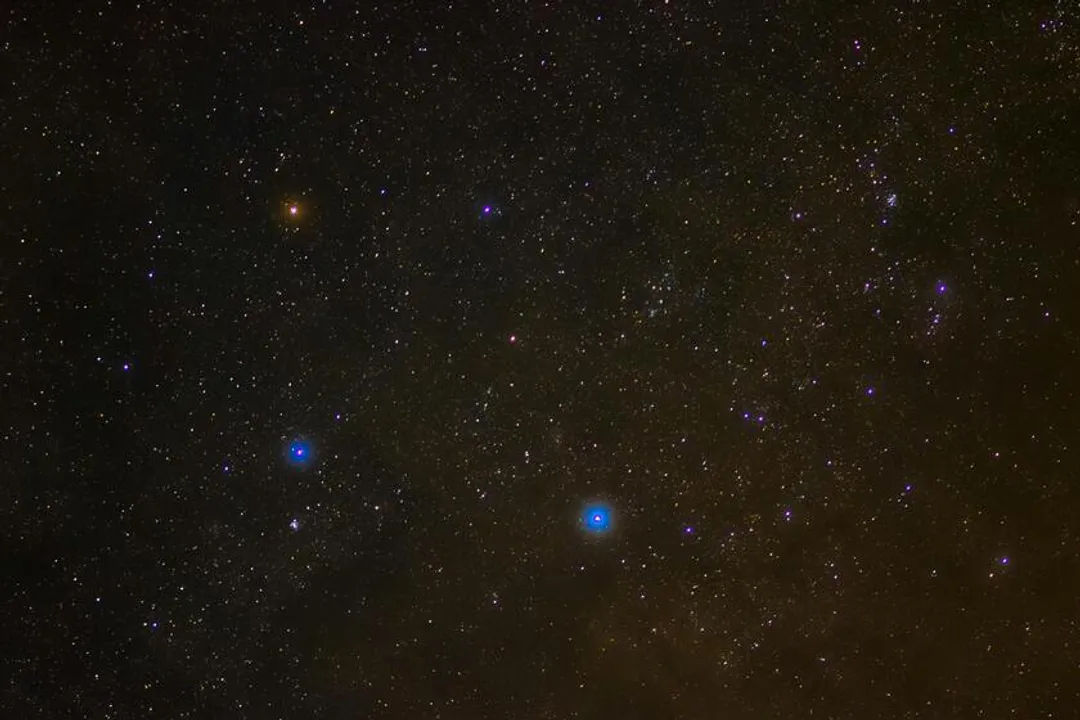
The visual spectrum of stars presents a fascinating palette, leading many to wonder about the theoretical extremes, such as the hottest possible color. If one were to arrange colors linearly, like in a simple rainbow—moving from red through yellow, green, blue, and into violet/purple—it seems intuitive that the color on the "hotter" end, purple, should signify the maximum temperature a star can achieve. [1] However, the physics governing starlight tells a far more complex story than a simple ROYGBIV progression allows, meaning the answer isn't a straightforward "yes". [2][4]
# Star Color Physics
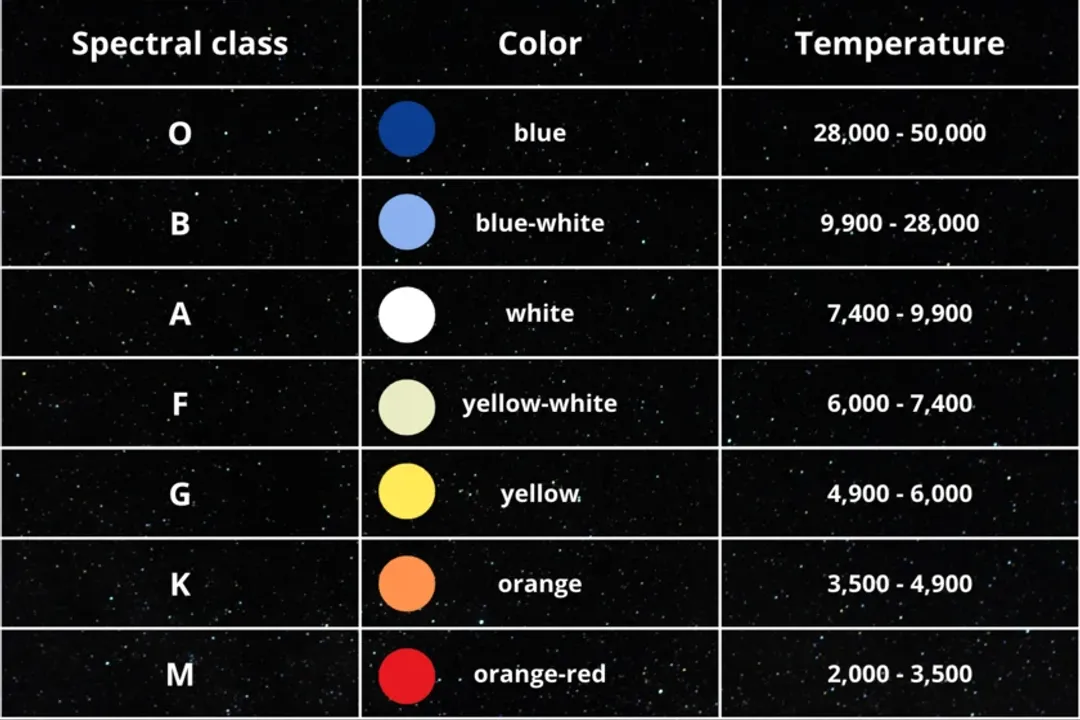
The relationship between a star's color and its surface temperature is one of the most fundamental concepts in astrophysics. This connection is governed by the laws of black-body radiation, specifically Wien's displacement law, which dictates the wavelength at which an object emits the most intense radiation based solely on its temperature. [2][4]
Cooler stars radiate most of their energy at longer wavelengths, which our eyes perceive as red light. As a star gets hotter, its peak emission shifts toward shorter wavelengths. Stars with intermediate temperatures, like our own Sun, peak in the yellow-green part of the spectrum. [2][6] Stars that are significantly hotter shift their peak emission into the blue and then into the invisible ultraviolet (UV) region. [4][5] The hottest known stars fall into the spectral classes O and B, characterized by their intense blue or blue-white appearance. [5][6]
# Hottest Blue Stars
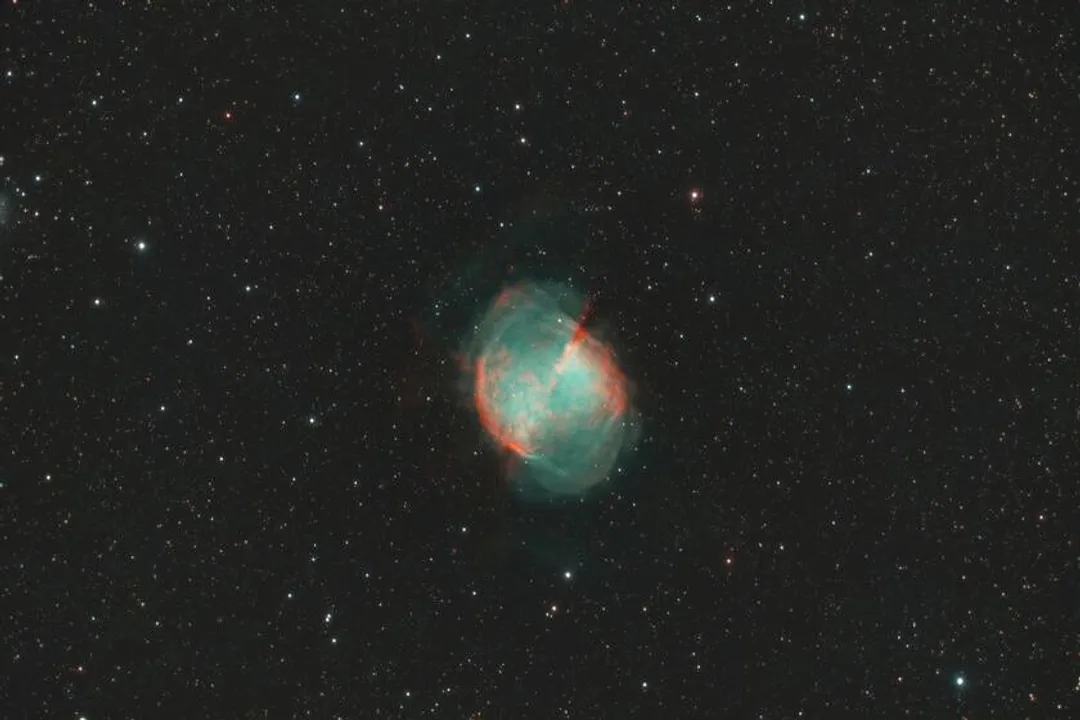
The celestial champions of heat are unequivocally blue or blue-white. [4][6] These massive, short-lived giants blaze with surface temperatures exceeding $25,000$ degrees Fahrenheit. [6] Because their emission curve peaks deep into the blue and ultraviolet, the light that reaches us is overwhelmingly blue, or a mix of blue and other visible wavelengths that the eye averages to blue-white. [4][5] These stars represent the upper boundary of what we can observe as visible stellar color because any further increase in temperature pushes the peak emission further into the high-energy UV spectrum, where blue light is still dominant but declining relative to the UV output. [1]

# Missing Spectral Colors
The question of purple stars naturally leads to another common query: why don't we see any green stars? The explanation for both missing colors—green and purple—stems from the same principle: stars do not emit light only at one wavelength; they emit across a broad spectrum. [2][4]
For a star to appear distinctly green, its emission peak would need to fall squarely within the green part of the visible spectrum, like the Sun's. [2] However, because the star is also radiating significant amounts of light in the adjacent red, yellow, blue, and violet regions, our eyes integrate all these inputs simultaneously. For the Sun, this integration results in the perception of white or slightly yellowish light, despite the green peak. [2][6]
A similar effect prevents us from seeing truly purple stars. If a star were hot enough for its peak emission to land in the violet/purple range—a region just before the blue—it would also be radiating enormous amounts of energy in the blue and ultraviolet bands. [4] The sheer intensity of the blue output, combined with the broad nature of the light, would cause our eyes to perceive the star as blue or blue-white, effectively masking any specific purple hue the violet peak might suggest. [2][4]
# The Physics of Violet
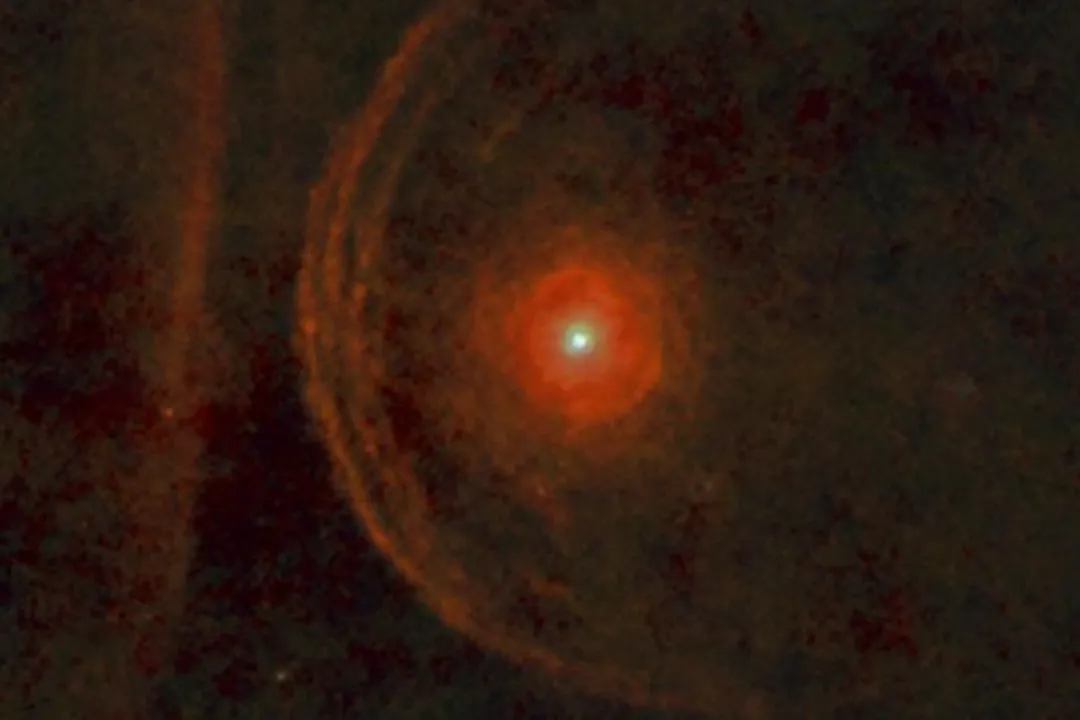
Conceptualizing a "purple star" requires understanding where violet sits relative to blue on the electromagnetic spectrum. Violet is the shortest visible wavelength, followed only by ultraviolet. [4] In the context of a typical spectrum, violet/purple follows blue, suggesting it should be hotter. [1]
If we consider a hypothetical scenario where a star’s entire observable emission profile was shifted such that the visual perception was purple, this would imply a spectral peak right at the edge of visible light. [4] This would place it just shy of the absolute hottest blue/UV-peaking stars. While incredibly hot, it is unlikely that a star would emit light with a visible peak in the violet without the associated high-energy blue/UV output that would dominate the visual appearance, classifying it as a blue star instead. [2][4] A true purple peak, while hotter than a yellow peak, would likely be slightly cooler than the pure blue/white stars that dominate the upper temperature range, or its color would be visually swamped by the blue component. [4]
To better contextualize where the human eye sees the star relative to its physical peak, we can map out the common spectral types:
| Spectral Class | Approximate Surface Temp (K) | Peak Emission Range | Perceived Color |
|---|---|---|---|
| O | $>30,000$ | Deep UV / Blue | Blue / Blue-White |
| B | $10,000 - 30,000$ | UV / Blue | Blue-White |
| A | $7,500 - 10,000$ | Blue / Violet | White |
| F | $6,000 - 7,500$ | Green / Yellow | White to Yellowish |
| G (Sun-like) | $5,200 - 6,000$ | Green / Yellow | White / Yellow |
| K | $3,700 - 5,200$ | Yellow / Orange | Orange |
| M | $<3,700$ | Red / Infrared | Red [5] |
Self-Correction Note: While our standard spectral charts show the Sun (G-type) peaking near green, its color is white because the total light output across the spectrum is what the eye processes. A hypothetical star peaking in the violet would occupy a space near the A or early B classes, but its appearance would be dictated by how much of the UV/Blue spectrum it still outputs, which is substantial for stars that hot [2][4].

# Visual Perception Versus Emission
The reason we rarely see pure colors in the sky relates to the difference between an artificial light source and a massive ball of superheated plasma. Laboratory light sources or LEDs can be engineered to emit light extremely narrowly at a single wavelength, allowing for the creation of saturated, pure colors, including magenta or purple. Stellar emission, however, is continuous and broad, governed by thermal physics. [2][4]
When we look at a star, we are seeing an integrated spectrum, not a single line from a prism. The human visual system then interprets this integrated signal. For the hottest stars, this means the strong blue and UV radiation overpowers any subtle violet peak, resulting in the perception of blue or bright white light. [6] This reliance on our visual processing is a key factor in why the "purple star" remains firmly in the realm of theory. The physical reality is that the mechanism required to create a star hot enough to peak in the violet region is the same mechanism that creates the hottest blue stars. [4]
If we were to view starlight using instruments sensitive only to specific narrow bands—or if we could somehow filter out all the blue and UV light from a massive star—we might isolate a violet component, but the star's intrinsic hottest classification would still be based on its overall radiative power, which peaks in the blue end of the visible spectrum for the most energetic stars. [1][5] Therefore, the hottest stars are classified by their strong blue output, not a purple one. The color purple, as understood in common language, is better represented by mixing red and blue light, a process that doesn't naturally occur through the simple thermal emission of a single star. [1]
# Theoretical Limits
The search for the hottest star color is fundamentally a search for the highest surface temperature. Since stellar color moves from red (coolest) to blue (hottest) as temperature increases, the hottest star must be the bluest star possible before its peak emission shifts entirely out of the visible range into the extreme ultraviolet. [5][6]
The fact that we do not observe stars classified as "purple" is not due to a physical barrier preventing them from existing, but rather an observational and perceptual limitation rooted in the physics of light emission. A star could theoretically peak in the violet, but its temperature would place it right alongside the very hottest blue stars, and the resultant visual signal would be dominated by the shorter wavelengths that our eyes translate into blue or brilliant white. The term "purple star" remains a fascinating concept derived from linear color theory, but it does not correspond to a distinct, observable stellar temperature class hotter than the existing blue giants. [4][2] The hottest classification belongs firmly to those stars that maximize their visible output in the blue/UV boundary region.
#Videos
What Is The Hottest Color Star? - Physics Frontier - YouTube
Why are there no Purple Stars? or Green Stars? - YouTube
Related Questions
#Citations
If a purple star was possible, would it be hotter than a blue star?
Why are there no green or purple stars? : r/AskPhysics - Reddit
Temperatures of Different Stars - Facebook
visible light - Why are there no purple stars? - Physics Stack Exchange
The Colors of Stars
Why Are There No Purple or Green Stars | Star Colors - Live Science
What Is The Hottest Color Star? - Physics Frontier - YouTube