Why is the sky blue and sometimes orange?
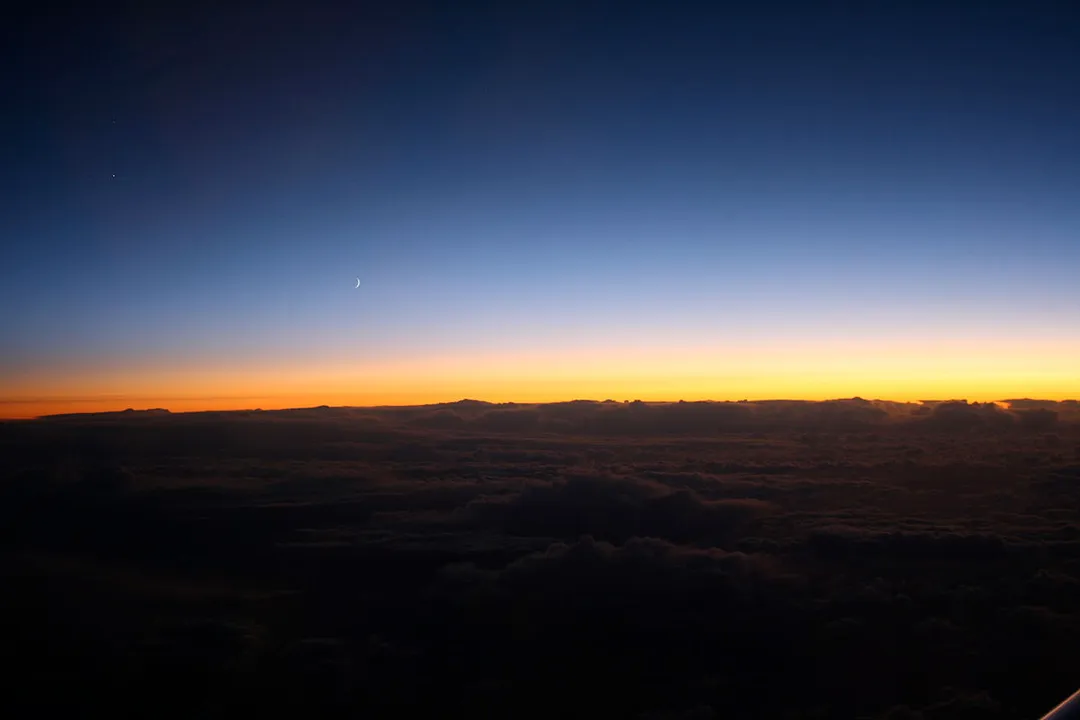
The color we see when we look up at the daytime sky seems simple enough: it’s blue. Yet, this familiar color shifts dramatically during sunrise and sunset, painting the horizon in shades of gold, orange, and deep red. Understanding this daily light show requires looking closely at what sunlight is made of and how that light interacts with the air surrounding our planet.
Sunlight, before it enters our atmosphere, appears white, which is a combination of all the colors of the visible spectrum—red, orange, yellow, green, blue, indigo, and violet. Think of the light as an ocean wave, where each color has a different wavelength; red light has the longest wavelengths, while blue and violet light have the shortest. The key to the sky’s color lies not in what the light is, but what happens to it when it collides with the atmosphere.
# White Light
When we look directly at the Sun when it is high in the sky, the light reaching our eyes appears slightly yellowish-white, even though it contains all colors. If the Sun were viewed from space, where there is no air to interfere, it would appear dazzlingly white. The Earth’s atmosphere, a blanket primarily composed of tiny nitrogen () and oxygen () molecules, acts as a scattering agent for this incoming solar radiation.
# Molecular Interaction
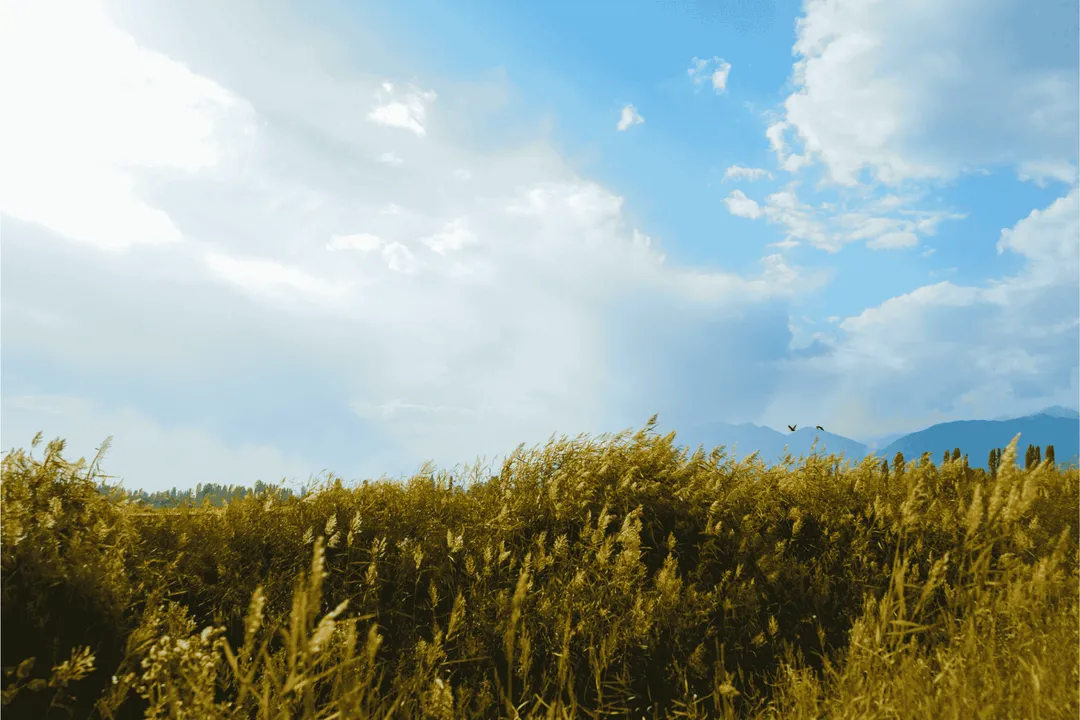
The phenomenon responsible for the blue sky is called Rayleigh scattering. This type of scattering occurs when light encounters particles that are much smaller than the light's wavelength, which perfectly describes the gas molecules in our atmosphere. Rayleigh scattering is highly dependent on the wavelength of the light; specifically, it is inversely proportional to the fourth power of the wavelength ().
What this mathematical relationship means in practical terms is that shorter wavelengths are scattered much more effectively than longer ones. Since blue and violet light have the shortest wavelengths in the visible spectrum, they are scattered across the sky far more intensely than the longer-wavelength reds and oranges. The ratio of scattering between the shortest (violet) and longest (red) visible wavelengths is substantial, meaning the atmospheric molecules act like tiny pinballs, preferentially knocking the blue light in every direction.
# Overhead Light
When the Sun is high overhead, perhaps near noon, the light rays travel the shortest possible distance through the atmosphere to reach our eyes. Because the path is relatively short, only a small fraction of the blue light is scattered away before it reaches us directly from the Sun. However, the light that is scattered by the air molecules above and around us—the light coming from directions other than the Sun itself—is predominantly blue. When we look away from the Sun, this scattered blue light washes the entire dome of the sky, making it appear blue.
Though violet light has an even shorter wavelength than blue and is scattered slightly more intensely by the atmosphere, the sky does not appear violet for two primary reasons. First, the Sun emits less violet radiation than it does blue radiation. Second, and perhaps more importantly, human eyes are significantly less sensitive to violet light than they are to blue light. Our visual system averages the intensely scattered blue and the slightly less intensely scattered violet, resulting in the perception of a bright, clear blue sky.
If you are ever near the edge of our atmosphere, perhaps looking out from a high-altitude aircraft or the International Space Station, you might notice the sky transitions quickly to black just above the thin blue line of the atmosphere, illustrating how completely dependent this blue color is on the presence of air molecules to perform this scattering action.
# Long Path
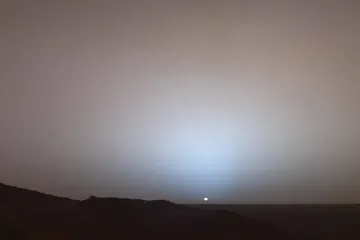
The stunning color changes at sunrise and sunset occur because the geometry of the light path changes drastically. When the Sun is near the horizon, its light must travel through a much greater volume of the Earth’s atmosphere before it reaches an observer on the ground. This extended path length has a dramatic filtering effect.
As the light travels this longer distance, nearly all the short-wavelength blue and violet light is scattered away out of the direct line of sight. It gets scattered so thoroughly that very little of it remains to color the light beam coming directly toward you. What is left are the longer wavelengths—the yellows, oranges, and reds—which scatter the least and are able to bore through the thick atmosphere to reach our eyes.
Consider the difference in atmospheric depth: at noon, the light passes through a thickness of air roughly equivalent to a single layer directly above you. As the Sun sinks toward the horizon, the path lengthens substantially. It's an interesting exercise to visualize this; for light passing nearly parallel to the ground, the path length can easily increase by a factor of ten or more compared to the overhead path. This huge amplification of the scattering effect is what allows the deeper reds to dominate the visual impression as the Sun dips below the horizon.
# Particle Size
While the blue sky is a product of Rayleigh scattering by gas molecules, the intensity and exact shade of orange or red at sunset can be modified by larger airborne particles. This relates to a different type of scattering called Mie scattering, which occurs when light interacts with particles closer in size to the wavelength of the light itself, such as dust, pollen, water droplets, or smoke.
Unlike Rayleigh scattering, Mie scattering is not strongly dependent on the wavelength. When larger particles are abundant—such as during a hazy summer day, or after a volcanic eruption or wildfire—they scatter all colors more equally. This tends to wash out the deep blues during the day, making the sky look paler or whitish-blue, closer to the color of the Sun itself. At sunset, while the blue is still filtered out by the long path, the presence of these larger particles can sometimes enhance the reds and oranges, or, conversely, if the particles are very dense, they might block so much light that the sunset appears muted or dull. A truly spectacular sunset, those deep crimsons, often requires a specific mix: enough atmosphere to scatter the blue away, but not so many large aerosols that they block all the light.
If you notice the sky remaining a persistent, pale white or washed-out light blue even when the Sun is high, it often suggests higher concentrations of larger aerosols or humidity in the lower atmosphere, a visual signal that the air quality isn't perfectly clear, even if the color isn't dramatically shifted to red yet.
# Looking Ahead
The beautiful, ever-changing color of our sky is a constant, visible demonstration of fundamental physics happening millions of times per second across the globe. It is a direct consequence of the way electromagnetic radiation interacts with the specific composition and density of our planet’s gaseous envelope. From the brilliant blue above to the fiery reds painting the horizon at twilight, the sky offers a free, dynamic lesson in optics every single day.
#Videos
Rayleigh Scattering Explained in Simple Words for Beginners
Related Questions
#Citations
Why Is the Sky Blue? | NASA Space Place – NASA Science for Kids
ELI5: why is the sky blue in the day but then orange in the evening
Why is the sky blue at times and orange at times too? - Quora
Rayleigh scattering - Wikipedia
Rayleigh Scattering Explained in Simple Words for Beginners
Why does the sky change color? Why is the sky blue during the day ...
Color of the Sky Explained: Simple Science Behind Light Scattering
Why is the sky Blue?
Why the sky appears blue - Facebook