Why don't Americans use SI units?
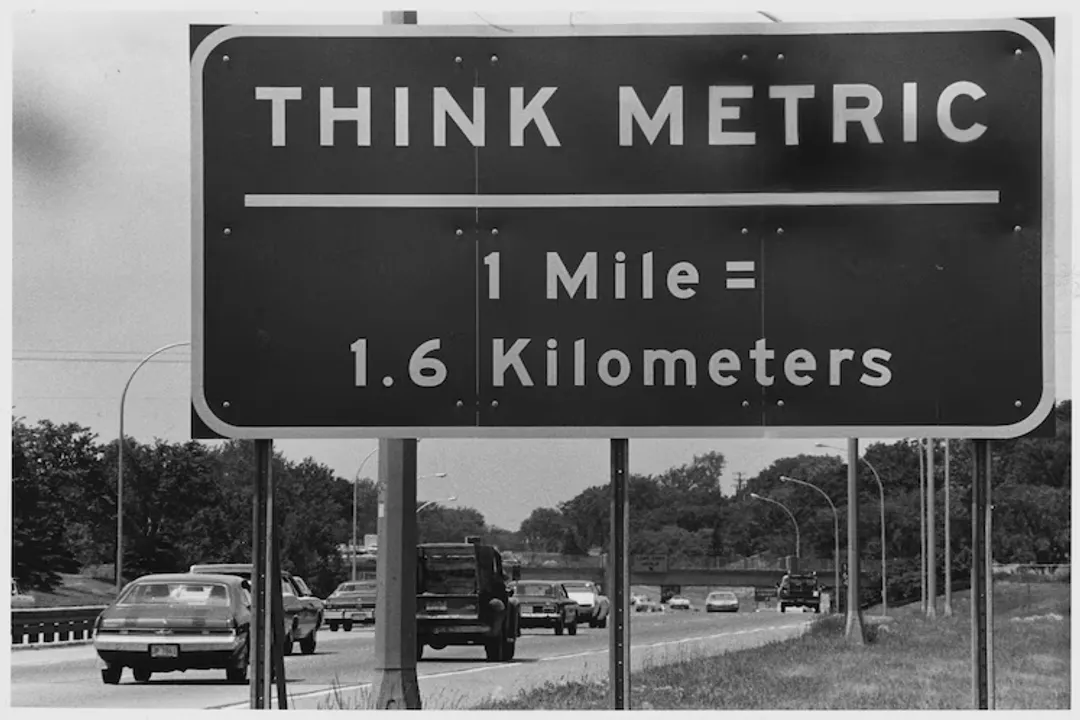
The question of the United States’ unique relationship with measurement units is less about stubbornness and more about a complex history of missed opportunities, significant economic inertia, and deep cultural entrenchment. While nearly every other nation on earth operates primarily under the International System of Units (SI), or the metric system, Americans continue to think in feet, pounds, and Fahrenheit. [5][7] This isn't due to a formal, permanent rejection of the metric system; rather, it stems from a series of legislative decisions that favored voluntarism over mandate, allowing decades of customary practice to solidify into an unbreakable habit. [5]
# Colonial Inheritance

The roots of this divide trace back to the nation’s founding era. When the United States declared independence, it inherited the British Imperial System, which was already the standard for trade, law, and daily life in the colonies. [7] When the French Revolution introduced the systematic, base-ten metric system shortly thereafter, America had a distinct opportunity to adopt it. The French even attempted to send scientist Joseph Dombey to the U.S. in the late 1790s to promote the new system, but his ship was blown off course and he was captured by pirates. [5] That accident of history meant the US missed the early window when the metric system was gaining initial traction abroad, allowing the familiar Imperial, or U.S. Customary System (USCS), to become even more deeply woven into the nascent nation’s fabric. [5][7]
# Legal Ambiguity
Despite the early historical divergence, the U.S. government has repeatedly acknowledged the metric system's superiority and legality. A key piece of early legislation was the Metric Act of 1866, which officially recognized the metric system and declared it "lawful in all courts of the United States for the recovery of any contract made or to be performed with reference to the measurement of length, area, volume, weight, or currency". [5] This made the metric system legal for commerce, but it did not make it mandatory. The system was sanctioned, not substituted. [2]
This pattern continued through the 20th century. The Metric Conversion Act of 1975 was perhaps the most significant governmental effort to shift the nation's measurement paradigm. This act formally declared the metric system as the "preferred system of weights and measures for United States trade and commerce" and established the U.S. Metric Board to coordinate voluntary conversion efforts across the country. [2][5] The operative word here, however, was voluntary. Unlike nations such as Canada or the United Kingdom, which eventually mandated deadlines for switching over infrastructure and labeling, the American approach relied on persuasion and education. [4]
The board was ultimately defunded in 1982, largely due to a lack of public enthusiasm and political will, effectively pausing the federal government's dedicated push for metrication. [4][5] Today, the legal reality is a confusing duality: the USCS remains the "preferred system of weights and measures for U.S. trade and commerce," even as the metric system enjoys legal standing for contracts and general use. [2] This legal framework enshrines the status quo, where inertia holds more sway than legislative preference. [5]
# The Cost Barrier
When discussing the difficulty of switching, the sheer scale of infrastructure and industry in the United States becomes the central obstacle. Converting a nation where everyday life is steeped in USCS—from road signs measuring distance in miles to grocery shelves stocked by the pound—requires an immense financial undertaking. [1][3]
Consider the manufacturing sector. While large multinational corporations often adopt metric standards for international sales, smaller domestic manufacturers face significant capital expenses to retool machinery, update software, and retrain staff for a system that their local suppliers and customers might not be using. [1][4] The cost argument centers on the immediate, tangible expense of ripping out the old versus the abstract, long-term benefit of aligning with global standards. [3] For a small business owner, changing every wrench in the shop, reprinting every blueprint, and rewriting decades of internal manuals feels like an unnecessary burden when their local market operates perfectly well with inches and ounces. [1]
A powerful, though perhaps exaggerated, example of the cost of not switching is the infamous Mars Climate Orbiter incident in 1999. NASA lost the $125 million spacecraft because one engineering team used imperial units (pounds of force) while another used metric units (Newtons) in a critical calculation, leading to the probe entering the Martian atmosphere at too low an altitude and disintegrating. [1][4] This failure starkly illustrates the hidden, high-stakes risks inherent in maintaining dual measurement systems in highly technical fields where precision is paramount.
# Cultural Inertia Versus Technical Necessity
The most formidable barrier is undeniably cultural. Americans learn to estimate weight by the pound, temperature by the Fahrenheit scale, and volume by the gallon almost before they learn to read. [3] This deep-seated familiarity creates cognitive resistance to change. Asking someone to suddenly visualize the length of a meter instead of a yard, or to calculate cooking ingredients in grams instead of cups, requires retraining the intuition built over a lifetime. [1]
This cultural attachment often manifests in public discourse, where the metric system is sometimes portrayed as foreign or overly complex, even though the metric system is arguably more logical due to its base-ten structure. [4] For instance, while the U.S. military and scientific communities have widely adopted SI units—because interoperability with NATO and the global scientific community is essential—that adoption rarely trickles down to the average citizen’s daily interactions. [1][5][6] The weather report still gives the high in degrees Fahrenheit, and the local diner still serves a cup of coffee. [6]
If we look at a typical American homeowner undertaking a project, they confront this dual reality immediately. When buying lumber, they measure in feet and inches; when buying fasteners, they might be forced to buy metric-sized screws because the imported hardware market is more metric-friendly, leading to frustration when trying to match an old fitting. [1] This localized friction is often more powerful than any argument about international trade agreements.

# The Unspoken Truth of Partial Adoption
An insightful way to view the current American situation is not as a complete rejection of metric, but as an example of selective, necessity-driven adoption. The US isn't entirely unmetricated; it's selectively metricated. [5]
| Area of Life | Predominant System | Why? |
|---|---|---|
| Daily Consumption (Gas, Groceries) | US Customary (Gallons, Pounds) | Cultural familiarity; local market standardization. |
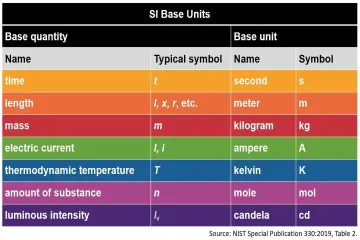
| Science, Medicine, R&D | SI (Metric) | Global standardization; mathematical simplicity; international collaboration. |
| Road Travel | US Customary (Miles, MPH) | Historical infrastructure; massive signage replacement cost. |
| Automotive Manufacturing | SI (Metric) | Necessity for global export and international supply chains. |
The data shows that industries deeply embedded in international supply chains—like automotive manufacturing and electronics—made the switch successfully years ago because the cost of not being metric exceeded the cost of conversion. [1] They gained efficiency by standardizing inputs from global suppliers. However, sectors that primarily serve a domestic market, like residential construction or local food preparation, face no such immediate competitive pressure to abandon USCS. [1][4]
This leads to an interesting internal analysis: the cost of change is only perceived as too high when the immediate return on investment is low or non-existent for the user base. For the average consumer, the perceived benefit of calculating their distance to the next town in kilometers rather than miles is zero, while the effort required to learn that conversion is a small negative cost.
# Education's Role and Future Friction
The educational system attempts to bridge this gap, often teaching both systems, but this can lead to confusion rather than mastery. Students might be adept at calculating the area of a rectangle in square feet, but struggle to convert those results to square meters because the learning is often treated as an abstract academic exercise rather than a practical skill for their daily lives. [4]
An area where this educational lag creates ongoing, quiet friction is in the interface between the skilled trades and modern engineering. A seasoned plumber trained solely on imperial pipe diameters might struggle when ordering specialized components sourced from overseas, forcing them to rely on younger, freshly graduated colleagues who might be more comfortable thinking in millimeters. [6] This creates an unintentional, skill-based generational divide within the same workplace, forcing conversations to happen in two languages of measurement simultaneously.
The push for metrication has never truly stopped, but it has become subtler. Federal regulations now often require metric labeling on certain imported consumer goods, and the National Institute of Standards and Technology (NIST) continues to promote SI usage. [2] Yet, without a compelling, nationally unified mandate or a severe international trade crisis predicated on measurement confusion, the momentum stalls.
Ultimately, the U.S. uses SI units in the precise areas where precision and global communication are non-negotiable—science, medicine, and high-tech manufacturing—while stubbornly clinging to the familiar Imperial system everywhere else. [5][6] The story of American measurement isn't a failure to convert; it's a story of successful, albeit messy, dual-system coexistence driven by cost, culture, and context. The system won’t change suddenly; it will continue to evolve as the global economy slowly forces the metric hand in one sector after another, leaving the common citizen perfectly comfortable measuring their backyard in acres while ordering their imported car parts in millimeters.
#Videos
The Strange (Logical) Reason Americans Refuse the Metric System
Why Doesn't America Use the Metric System? - YouTube
Related Questions
#Citations
Why doesn't the US adopt the metric system? - Reddit
The Reason the U.S. Doesn't Use the Metric System | NIST
Why does the United States not use the SI unit? - Quora
Why Doesn't the United States Use the Metric System?
Metrication in the United States - Wikipedia
The Strange (Logical) Reason Americans Refuse the Metric System
Here's the real reason the U.S. doesn't use the metric system
Why Doesn't the U.S. Use the Metric System? - The ANSI Blog