Why do we see the same sky every night?
The night sky, to the casual observer, appears to be a fixed, dependable ceiling above us. We learn the shapes of the familiar constellations—Orion, Ursa Major, Cassiopeia—and they seem to hold their positions, wheeling overhead night after night, season after season. This consistency is so profound that it often leads to a common, intuitive question: If the Earth is constantly moving, traveling millions of miles in its orbit around the Sun every year, why aren't we looking out at a completely different panorama of stars six months later? The answer lies in the sheer, mind-boggling scale of the cosmos combined with the difference between Earth's two primary motions: its daily spin and its annual path. [2][7]
# Earth's Two Spins
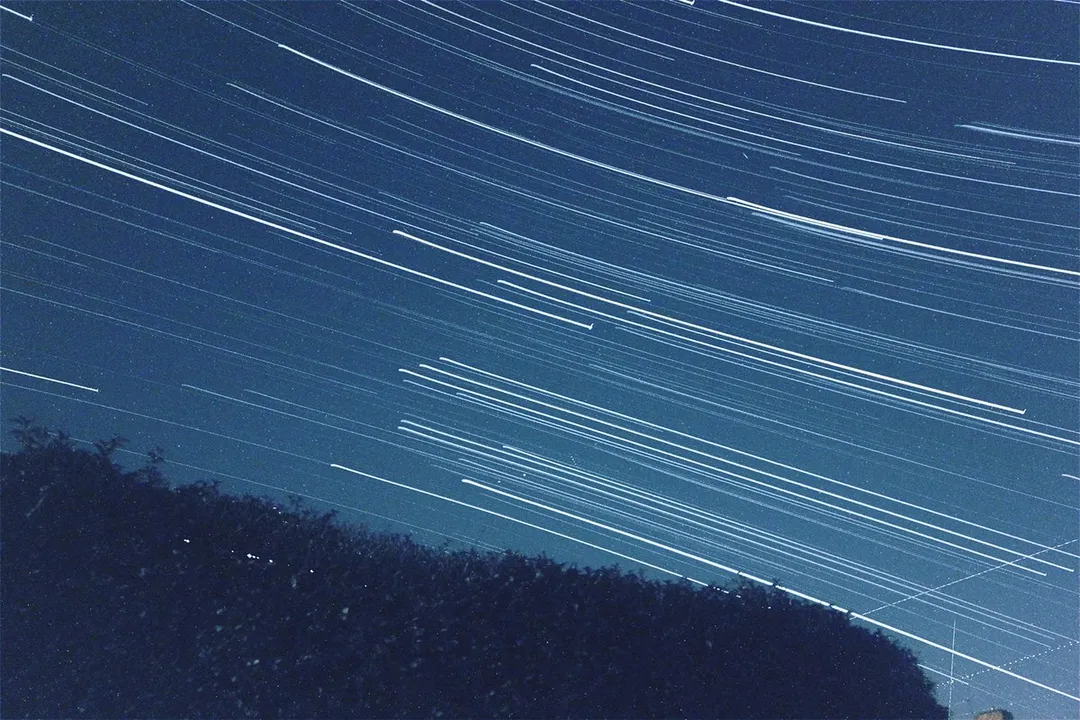
To understand the sky’s apparent stability, we must first separate Earth’s two fundamental movements. The first is rotation, the spinning of our planet on its axis, which takes approximately 24 hours. [8] This rotation is responsible for the daily cycle of day and night and causes the stars to appear to rise in the east and set in the west throughout the course of a single evening. [8] If you watch the sky for several hours, you absolutely see the stars move; they are just moving in unison due to our platform beneath them rotating. [9]
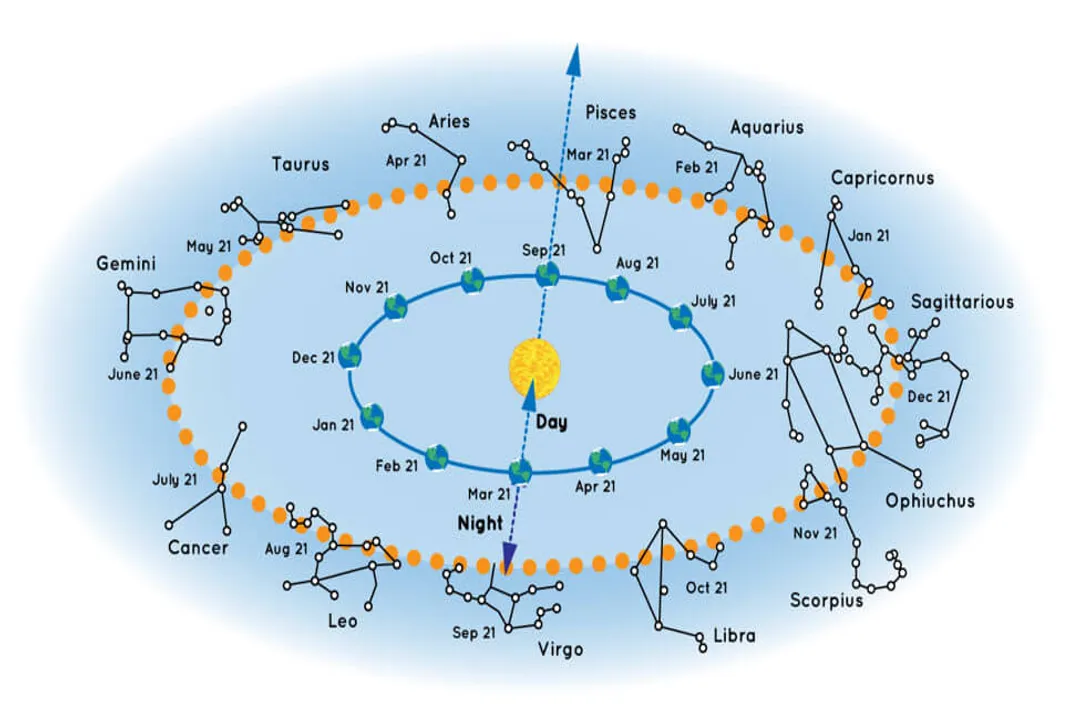
The second, and far more relevant movement to the yearly consistency question, is revolution, which is the Earth’s orbit around the Sun, taking about 365.25 days to complete. [2][7] As our planet circles the Sun, our vantage point in space is constantly changing. In January, we are on one side of the Sun, looking generally in one direction from our solar system; by July, we are on the opposite side, looking in the opposite direction relative to the Sun's location. [2] Logically, this massive shift in position should reveal a different set of stars, yet the bulk of the familiar patterns remains stubbornly in place. [6][7]
# Cosmic Scale
The reason the yearly shift in our viewing angle doesn't immediately expose a new universe lies in the concept of distance. [1] Stars, unlike the Moon or even the planets in our own solar system, are unimaginably far away. [9]
When we observe the constellations, we are looking at stars that are light-years away. A light-year is the distance light travels in one year—a truly enormous distance—and stars are often tens, hundreds, or thousands of light-years distant. [3] Consider the Earth's orbit. The diameter of Earth's orbit, the maximum distance we swing between our summer and winter positions, is roughly 300 million kilometers (about 186 million miles). [2] This distance sounds immense by human standards; it’s a journey that takes half a year to cover.
However, when compared to the distance to, say, the star Sirius (about 8.6 light-years away) or the stars in the Big Dipper (hundreds of light-years away), 300 million kilometers is a tiny, negligible shift in perspective. [1] Imagine a person standing near a flagpole in the center of an enormous sports stadium. If that person walks a few feet to one side, the distant upper deck seats will appear virtually unchanged in their relative positions. The apparent shift in the angle of view for the distant stars, caused by Earth's orbit, is simply too small to register from night to night. [1][2]
To truly appreciate the effect of the Earth's orbit, we can use a thought experiment involving scale. Picture the Sun as a large, bright lantern in the center of a vast, circular field. The Earth travels around this lantern over the course of a year. Now, imagine the stars are tiny pinpricks of light embedded in a colossal sphere enclosing the entire field, many miles away. When the Earth moves a few hundred million miles along its path, that distance is effectively zero compared to the multi-mile distance to the enclosing sphere. The pattern traced by the pinpricks remains functionally identical from our vantage point, just as standing on one side of a football field versus the other changes your view of the skyscrapers miles beyond the stadium, but not the relative position of the floodlights around the stadium itself.
# Seasonal Patterns
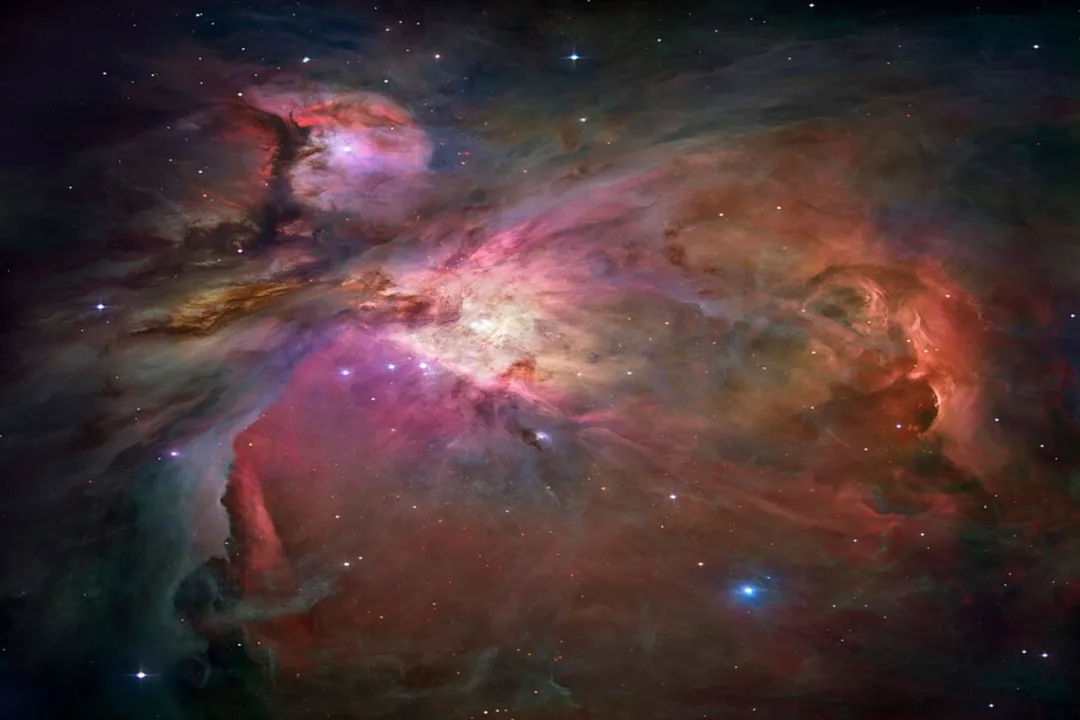
While the entire sky doesn't change daily, the revolution does cause a noticeable difference over the course of six months. [2][6] The stars that are visible at night change seasonally because, as the Earth orbits the Sun, the daytime side of Earth blocks our view of the stars behind the Sun. [2]
When we are on one side of the Sun, the night sky faces a particular sector of space. Six months later, we are on the opposite side, and our night sky faces the opposite sector of space. [6] This means the constellations that were visible in the winter sky will be hidden by the glare of the Sun during the summer months, and vice versa. [2] This is why people often associate certain constellations with specific times of the year; these are the constellations that become seasonally "occluded" by our own star, the Sun. [6]
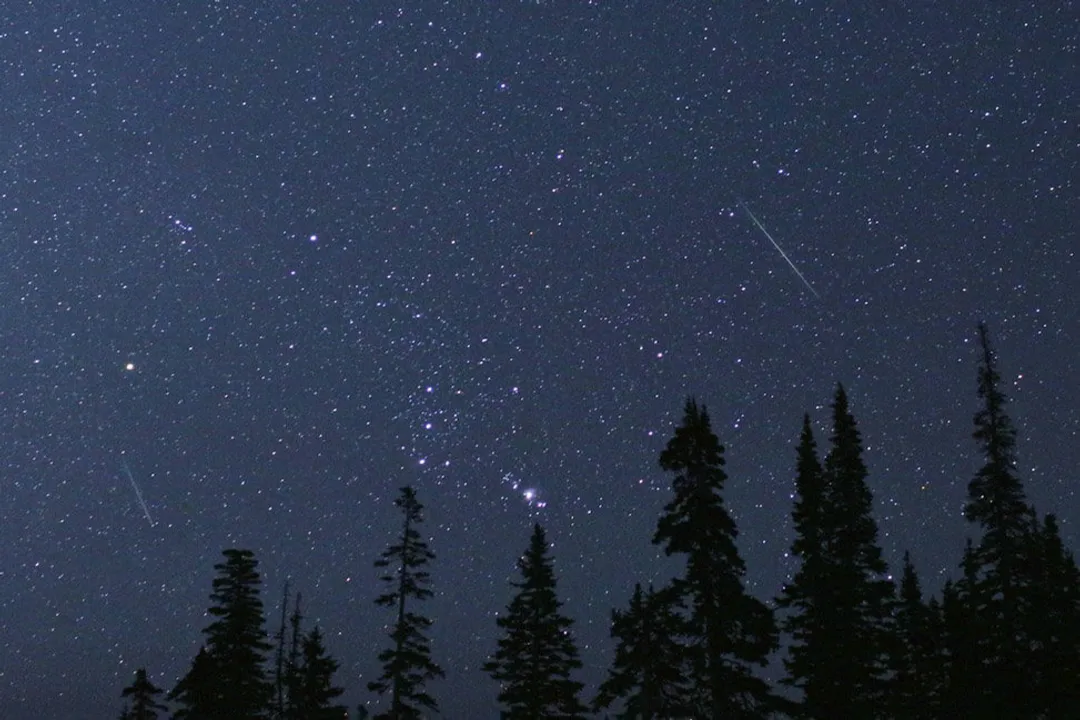
For example, the famous constellation Orion is a prominent winter constellation in the Northern Hemisphere because when the Earth is positioned such that Orion is in our night sky, it means we are on the side of our orbit looking away from the Sun during that time of year. By summer, the Sun has carried the Earth to the other side of its orbit, placing Orion in the daytime sky, making it invisible to us. [2]
This seasonal viewing provides a practical way to confirm the Earth's motion. A dedicated observer can make a conscious effort to track this shift, moving past the night-to-night illusion of sameness.
# Confirming Orbital Shift
If you are keen to personally observe the effect of the Earth's annual movement, consistency in time of night is key, but date is more important.
- Choose a Target: Select a moderately bright star or constellation that is clearly visible at, say, 10:00 PM in the early winter (e.g., December). Note its exact position relative to a fixed landmark on the horizon, like a distant tree line or building.
- Wait Six Months: Return to the same spot on a clear night, again at 10:00 PM, but now in early summer (e.g., June).
- Observe the Shift: You will find that the entire winter sky, including your target constellation, has been replaced by a completely different set of stars, which now occupy the region where Orion once shone in December. The winter stars have moved to the daytime side of the sky, and the summer stars are now visible at night. [6] This stark contrast confirms that our orbital position dictates which part of the distant universe we can view. [2]
The stars that are always visible from a specific location, such as those near the celestial poles, are those that never dip below the horizon because they are always above the Earth's axis of rotation relative to that viewing latitude. [3]
# Nearby Objects
The reason the stars appear stationary relative to each other, while objects like the Moon seem to zip across the sky daily, is entirely a matter of proximity. [9] The Moon orbits the Earth, meaning it is relatively close—just over 384,000 kilometers away. [9] Because it is so near, its apparent position changes significantly every night as it orbits our planet, moving against the background of the more distant stars. [9]
Planets, while much farther than the Moon, are still part of our Solar System and are comparatively close to Earth. They also exhibit noticeable movement against the background stars over days or weeks, a phenomenon known as retrograde motion, because they too are orbiting the Sun, albeit at different speeds and distances than Earth. [9] The stars, however, are the distant anchors of the universe, so far away that their relative positions appear locked in place for millennia. [3] Their light travels across such vast gulfs that the 300-million-mile displacement of our home planet is essentially insignificant to our viewing angle night after night. [1]

# Constellations Fixed Shapes
The stars forming patterns like the constellations appear fixed because the vast distances involved create an illusion of permanence. [3] The stars that make up the shape of the Big Dipper, for instance, are not physically clustered together in space; they simply happen to lie along almost the same line of sight from our current location on Earth. [3]
If you were able to travel millions of light-years away from our solar system, the constellations you know would completely dissolve. The stars that form the handle of the Dipper might suddenly appear scattered across the sky because the shape is purely an artifact of our specific, local viewpoint. [3] This perspective effect is why the orientation of the constellations relative to one another remains constant from one clear night to the next, regardless of the Earth's rotation or its annual orbit. [1]
In summary, the sky seems the same every night because the nightly change is due to Earth's spin, which simply rotates the fixed pattern. The yearly change, caused by Earth's orbit, is real but generally imperceptible night-to-night because the sheer scale of interstellar distances dwarfs the 300-million-mile path the Earth traces around the Sun. [1][2] The seasonal changes are the only immediate proof that our planet is indeed moving through space, albeit against a backdrop so enormous that our movements feel utterly trivial to it. [6]
#Videos
And Why The Stars Change With The Seasons" 5 min. version
#Citations
Why don't we see different stars when we're at the opposite side of ...
How come we see the same stars entire year, even though ... - Quora
What Are Constellations? | NASA Space Place
Why do we see the same stars every night - Facebook
And Why The Stars Change With The Seasons" 5 min. version
How Earth's orbit affects our view of the night sky
As the earth revolves round the sun. And also on its axis. Why do we ...
Why Do We See the Same Stars in the Sky? Explained - TikTok
Why don't stars move in the night-sky as the moon does?