What did Galileo see in the sky?
The simple act of pointing an improved spyglass toward the heavens transformed our understanding of the cosmos, thanks entirely to the observations made by Galileo Galilei. He did not invent the telescope—that credit belongs elsewhere—but he was the first to systematically refine it and turn its lens toward the night sky with scientific purpose. [5] This was not just about seeing things farther away; it was about seeing them differently, revealing celestial bodies that contradicted centuries of established, Earth-centered dogma. [3] What Galileo saw shattered the Aristotelian vision of a perfect, unchanging crystalline sphere system.
# Lunar Surface
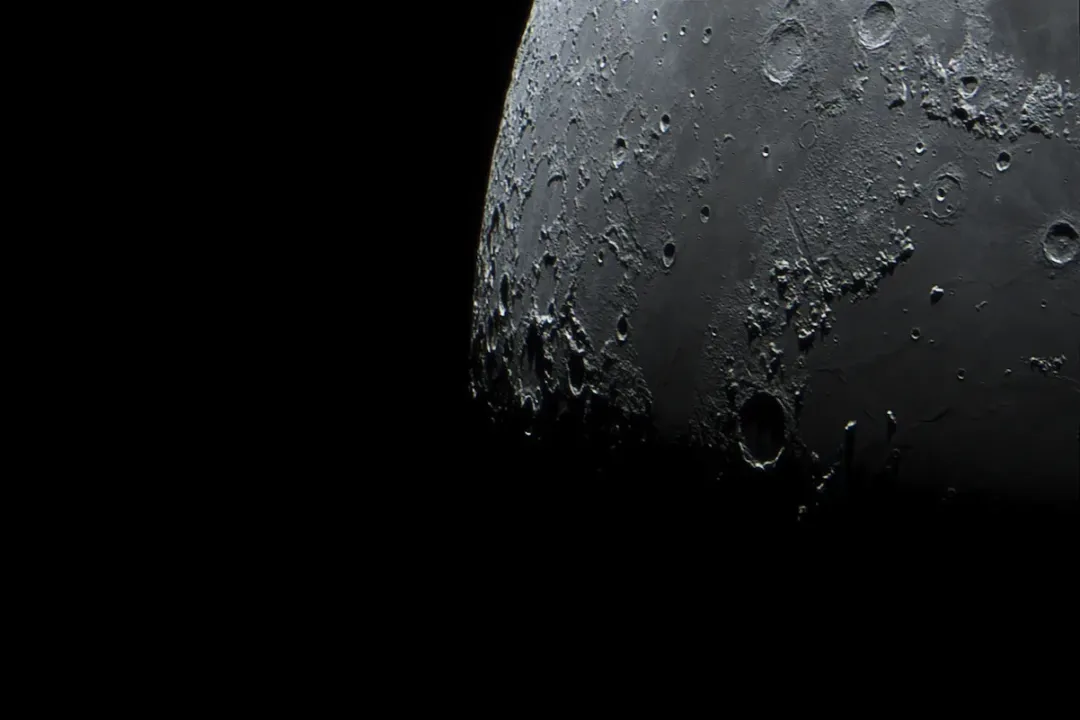
Perhaps the most immediate and shocking revelation concerned our nearest celestial neighbor, the Moon. For Aristotle and his followers, the Moon, like all heavenly bodies, was supposed to be a perfect, smooth sphere made of an incorruptible quintessence. [9] Galileo’s telescopic views made this idea instantly untenable. He saw that the lunar surface was mottled, marked by shadows that clearly indicated topography. [2] He discerned mountains, valleys, and craters, much like those found on Earth. [1][9] These features were not subtle; the shadows cast by the lunar mountains as the terminator line swept across the surface were dramatic proof of an imperfect, rugged world hanging in the sky. [9] If the Moon was scarred and imperfect, then the heavens were not fundamentally different from Earth, undermining the sharp cosmological division between the terrestrial and the celestial realms. [2] While we often see the Moon today as a soft, pearly white disc from Earth, peering through Galileo’s rudimentary but powerful instrument must have been like looking at a rough, alien landscape, demonstrating that perfection was a matter of perspective, not physical reality. [5]
# Four Moons
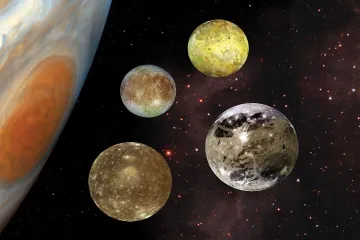
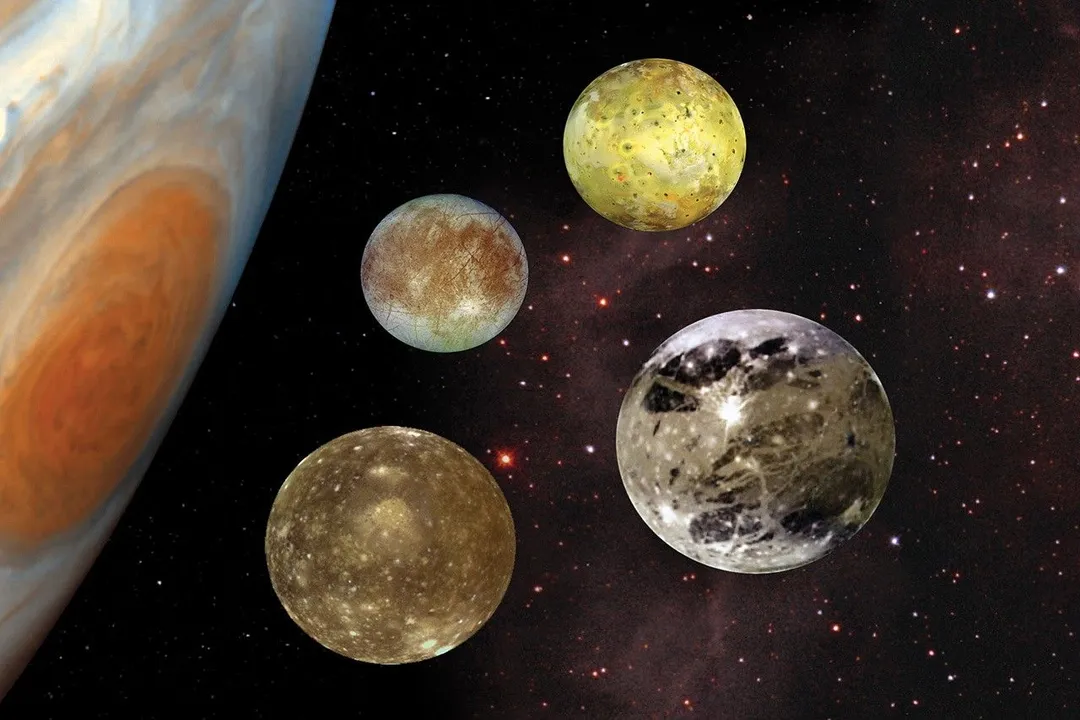
Galileo's gaze then settled on the giant planet Jupiter, and in January 1610, he observed three tiny, bright "stars" situated in a straight line near the planet. [6] Over subsequent nights, he tracked their movements, realizing quickly that these were not distant stars at all, but rather satellites orbiting Jupiter itself. [2][5] He initially called them the Medicean Stars in honor of his patron, Cosimo II de' Medici. [2] These four major moons—now known as Io, Europa, Ganymede, and Callisto—were the first objects discovered orbiting a celestial body other than Earth. [6][5] This observation was crucial because it provided tangible proof that the Earth was not the center of all motion in the universe. [3] If Jupiter had its own system of orbits, then the idea that everything must revolve around the Earth was demonstrably false. This provided powerful observational evidence supporting the new, Sun-centered (Copernican) model, where Jupiter, like Earth, was simply another planet moving around the Sun, dragging its own companions along for the ride. [7]
# Venus Phases
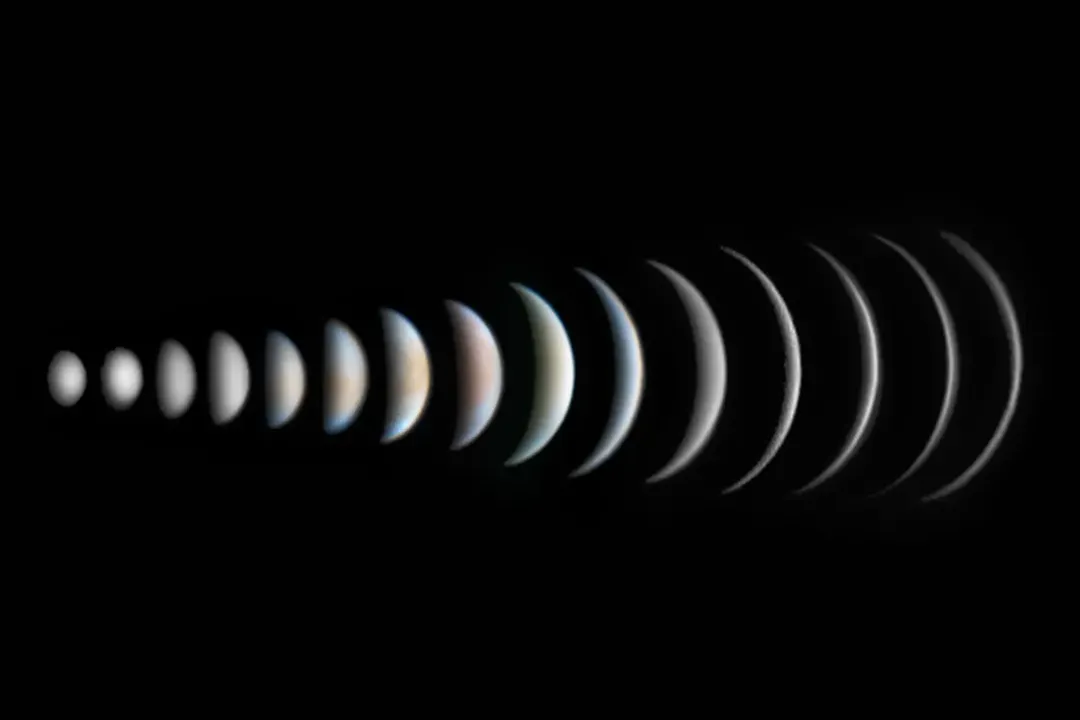
The study of the planet Venus offered another critical piece of evidence against the established Ptolemaic system. The ancient model predicted that Venus, being closer to the Earth than the Sun, should only ever appear as a crescent or perhaps a full circle when it was on the far side of the Earth from the Sun—but even then, it should appear smaller. [9] What Galileo observed through his telescope was a complete cycle of phases, analogous to those of the Moon. [1][2] He saw Venus progress from a slender crescent to a gibbous shape, and eventually, when it was on the far side of the Sun relative to Earth, he saw it as nearly full. [5][9] The fact that Venus showed a full phase meant that the planet must be orbiting the Sun, allowing Earth observers to see the sunlit side of Venus when it passed behind the Sun from our viewpoint. [5] This observation was definitive; it directly contradicted the predictions of the geocentric model and strongly favored a heliocentric arrangement. [9]
# Sunspots Seen
The Sun, long held as the very definition of divine perfection and immutability, was next subjected to Galileo’s scrutiny. [2] By carefully observing the Sun—often projecting its image through the telescope onto a surface to protect his eyes—Galileo noticed dark blemishes appearing on its surface. [1][9] These were sunspots. [5] Tracking these spots over time allowed him to determine that they moved across the Sun’s face, demonstrating that the Sun itself was rotating. [2] This discovery was profoundly subversive. It implied that the Sun, like the Moon, was not a perfect, ethereal orb but a mutable, imperfect body subject to change and blemishes. [1][9] The ancient idea that celestial bodies were unchanging was replaced by the reality of a dynamic solar system. One fascinating aspect that modern study confirms, which Galileo inferred from his tracking, is the speed of this rotation; though the exact timing is complex due to solar physics, the fact that these spots traversed the visible disk in a matter of days showed rapid motion in the center of the cosmos. [2]
# Starry Depths
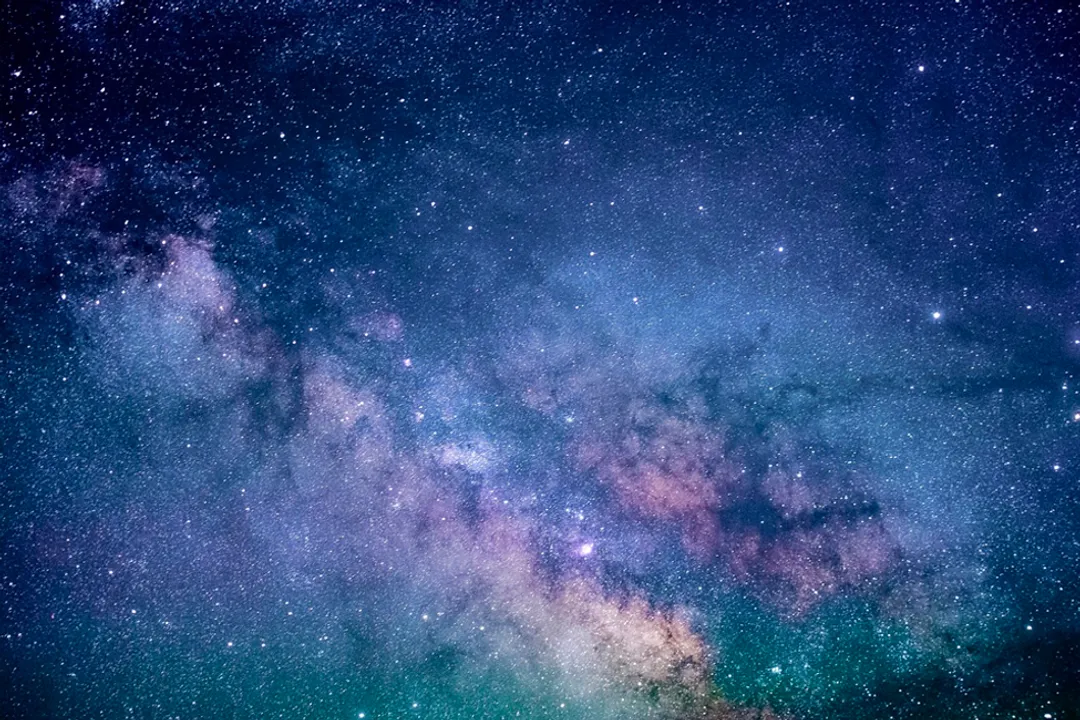
Galileo’s improved vision extended to the fainter, more distant objects as well. The sheer number of stars he could resolve was astonishing, forcing a complete reconsideration of the structure of the heavens. [1] For instance, when he turned his telescope toward the Pleiades star cluster, he saw not just the handful of stars visible to the naked eye, but a multitude of fainter ones clustered around them. [10] This revealed that the seemingly empty spaces between the brighter stars were actually teeming with illumination. [10] Similarly, he turned his instrument toward the Milky Way, which to the unaided eye appears as a faint, milky band across the night sky. [1] Through the telescope, this band resolved itself into an uncountable collection of individual, distinct stars, suggesting the galaxy was immensely deeper and more populated than anyone had previously conceived. [1] These views suggested a universe far vaster than the neat, limited spheres previously imagined. [3]
# New Perspectives
The compilation of these distinct sightings—the mountainous Moon, the orbiting satellites of Jupiter, the full phases of Venus, and the imperfect, rotating Sun—was not just a series of separate interesting facts. They formed a collective, undeniable body of observational evidence. [2] If the Moon was rough, the Sun blemished, and Jupiter had companions, then the entire underlying physical model of the universe needed complete revision. [9]
It is interesting to compare the state of observation before and after Galileo. Before 1609, astronomy relied on mathematics and philosophical deduction based on ancient premises; after 1610, it rested upon verifiable, reproducible optical evidence. [7] For instance, an ancient astronomer, using only the naked eye, could perfectly measure the apparent position of Mars over time, leading to complex epicycles required by the Ptolemaic model. Galileo’s telescope, however, revealed the phases of Venus, which rendered those complex epicycles unnecessary, offering a simpler, more elegant geometric explanation in the heliocentric system. [5][9]
Furthermore, the quality of the instruments, though crude by modern standards, cannot be overstated in their impact. While some sources note that one might see Jupiter’s moons with powerful modern binoculars today, [5] Galileo achieved this with early instruments that magnified perhaps 20 or 30 times. [3] The key was not just the magnification, but the precision he achieved in grinding the lenses and the dedication to applying that precision night after night to confirm what he saw. [4] His dedication to recording, publishing, and defending these findings in Sidereus Nuncius cemented their place in history, shifting astronomy from speculation to empirical science. [7] The universe Galileo revealed was structured, observable, and, critically, governed by the same physical rules across its diverse members.
#Videos
Galileo's Revolutionary Observation - YouTube
Related Questions
#Citations
Galileo's Observations of the Moon, Jupiter, Venus and the Sun
What did Galileo discover? | Royal Museums Greenwich
Galileo Galilei - Wikipedia
Galileo's Revolutionary Observation - YouTube
4 Objects Galileo Discovered with His Telescope that You Can See ...
Galileo Discovers Jupiter's Moons - National Geographic Education
Space Science after Galileo
We figured out exactly what Galileo saw when he discovered the ...
Observations of the Heavens: Galileo – Introduction to Astronomy
GALILEO AND THE STARS