Which star doesn't change its position?
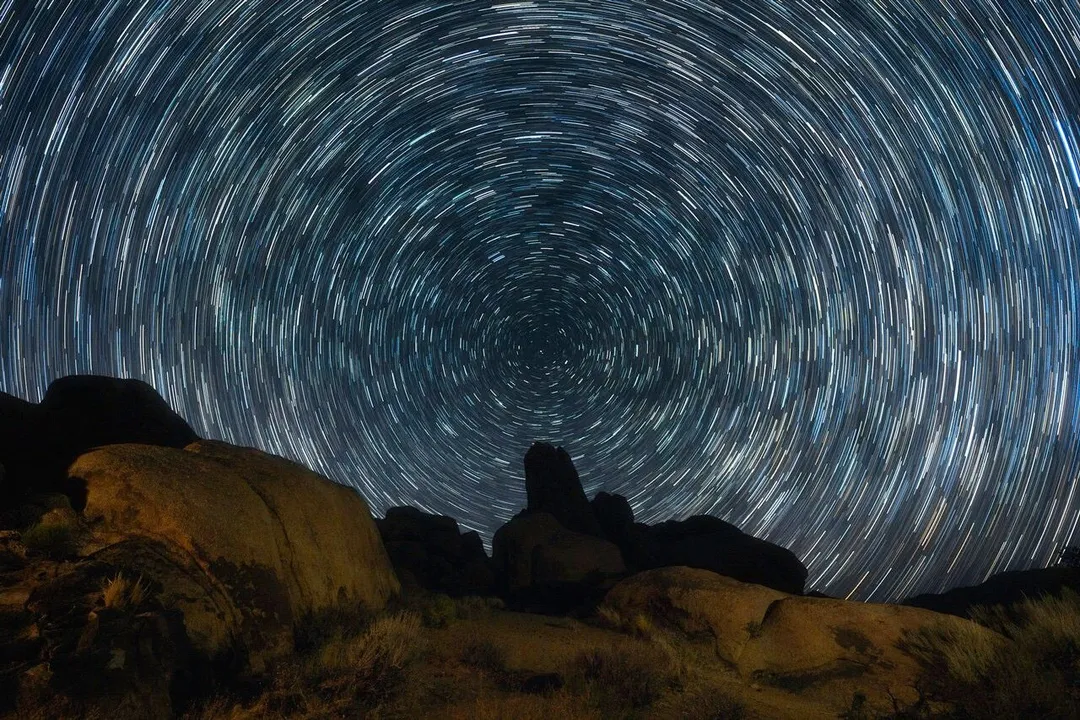
The star that anchors the northern sky, appearing almost perfectly still while everything else seems to drift in slow, majestic arcs, is one of the most recognizable figures in amateur astronomy. For millennia, navigators, explorers, and stargazers in the Northern Hemisphere have depended on this singular point of light to orient themselves. This celestial landmark is Polaris, commonly known as the North Star.
# Apparent Fixity
The reason Polaris seems to hold its ground is rooted in the fundamental mechanics of our planet: Earth's spin. As the Earth rotates on its axis, the entire celestial sphere appears to turn around us. Imagine standing at the North Pole; if you looked up, the entire sky would seem to revolve around a single point directly overhead—that point is the North Celestial Pole.
Polaris is positioned extremely close to this imaginary pivot point. Because it aligns so near the axis of rotation, its angular change over the course of a night is negligible to the casual observer. While other stars trace out wide circles around the North Celestial Pole, Polaris follows the tightest possible circle, making it appear stationary. In contrast, stars near the celestial equator rise due east and set due west, moving across the sky in a nearly straight path relative to the horizon.
# Small Movement
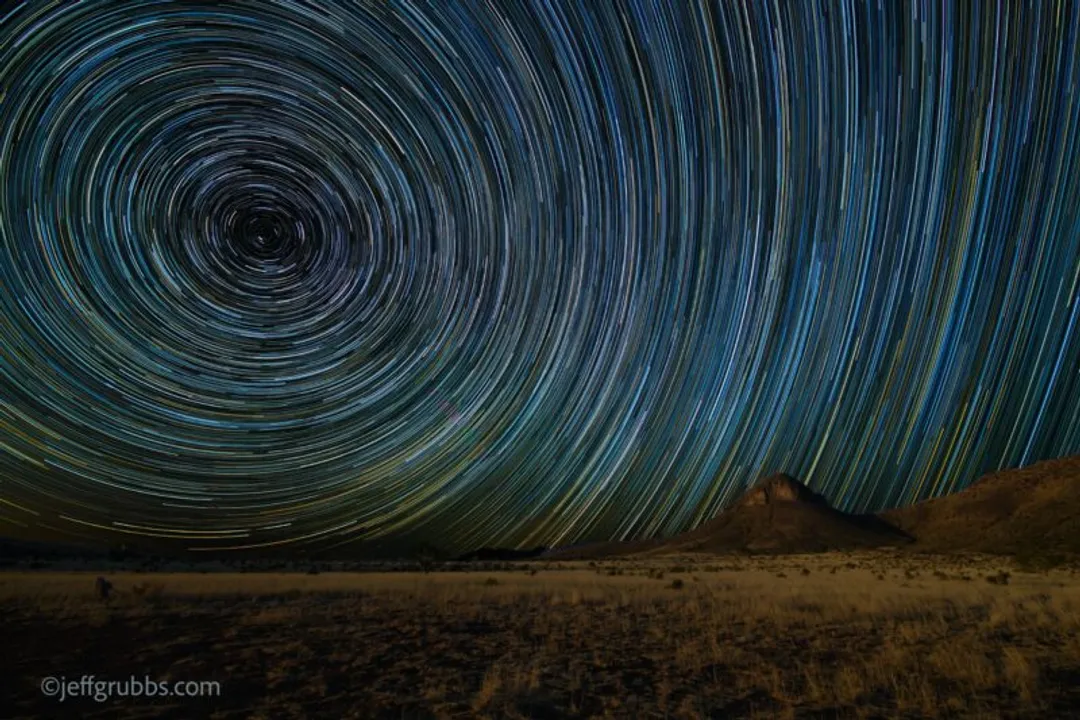
It is important to understand that Polaris is not exactly the North Celestial Pole; it merely sits very near it. It is currently about one degree away from the true pole. This small offset means that if you observe it long enough, perhaps over the span of several hours, you would detect a tiny movement. Polaris makes a small, nearly circular path around the actual pole.
To put that slight deviation into perspective, consider the appearance of the full moon in the sky. The apparent diameter of the full moon is roughly half a degree across [cite: Original Insight 1]. Polaris's displacement from the true pole—that one-degree wobble—is about twice the apparent width of the full moon. While this is a significant angular distance if you were drawing precise nautical charts, to the naked eye over a few hours, this tiny circle is simply too small to register as actual movement, which is why it earns its reputation as the fixed star [cite: Original Insight 1].

# Stellar Location
Polaris is found within the constellation Ursa Minor, also known as the Little Dipper. It marks the end of the handle of that asterism. However, the Little Dipper itself is relatively dim, making Polaris difficult to spot for beginners.
Fortunately, observers can use a much brighter, more recognizable pattern to locate it: the Big Dipper, which is part of the larger constellation Ursa Major. The two stars forming the outer edge of the Big Dipper's "bowl"—Dubhe and Merak—act as pointers. If you draw an imaginary line connecting these two "pointer stars" and extend that line outward, the first moderately bright star you encounter along that path is Polaris.
This method has been invaluable for navigation for centuries. While Polaris is indeed a bright star, it is not the brightest star in the entire night sky; Sirius outshines it by a considerable margin. Polaris is the 48th brightest star visible from Earth. It belongs to the constellation Ursa Minor and is a multiple-star system, consisting of Polaris A, Polaris Ab, and Polaris B.
# Precession Changes
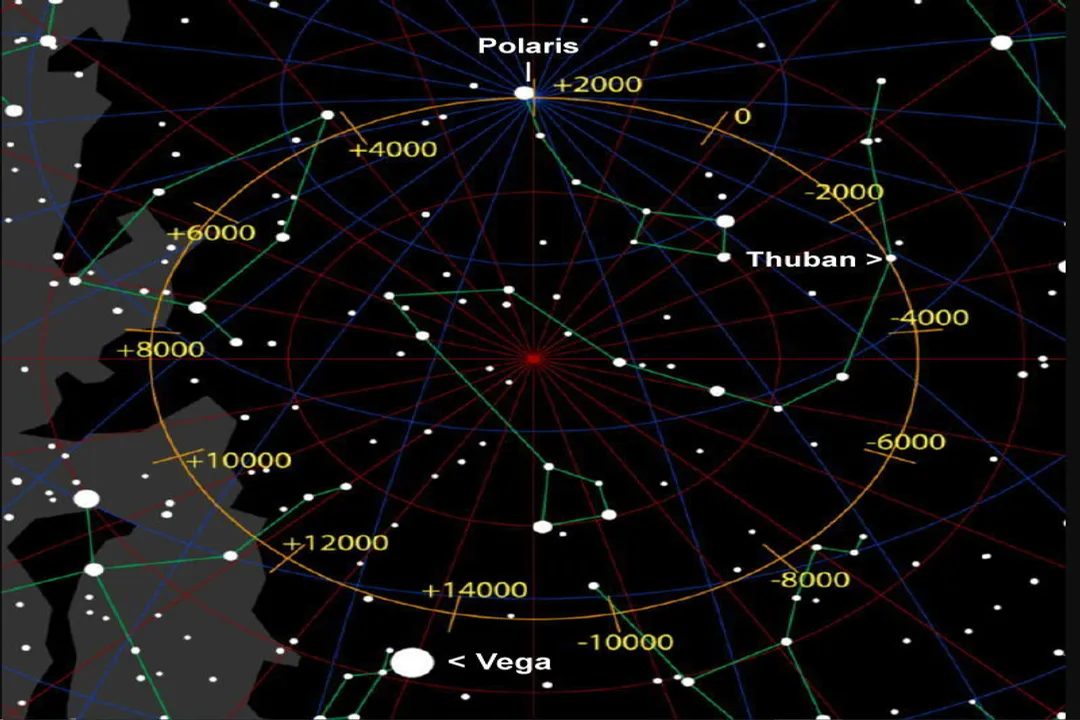
The concept of a single, permanent North Star is only true for a specific, brief period within the grand sweep of cosmic time. The Earth does not spin perfectly straight; its axis actually wobbles like a slowing top, a phenomenon known as axial precession. This wobble causes the point in the sky that the axis aims toward—the North Celestial Pole—to slowly drift over a cycle lasting about 25,800 years.
This slow shift means that the star we call the North Star changes over epochs. During the time the ancient Egyptians were building the pyramids, for instance, the North Star was a different celestial body entirely. The star Thuban in the constellation Draco held that title approximately 5,000 years ago.
Looking far into the future, the pole will continue its journey. In about 12,000 years from now, the star Vega in the constellation Lyra will be much closer to the North Celestial Pole and will serve as the North Star for that era. This long-term celestial drift highlights how crucial it was for ancient cultures to develop methods of orientation that were either based on stellar observation that accounted for precession or, more commonly, based on observing the fixed point itself, even if the star marking it changed [cite: Original Insight 2]. Relying on the position relative to the horizon where the sun rises and sets—the cardinal directions—provided a more stable, albeit less precise, anchor for millennia before Polaris was perfectly aligned with the pole.
# Navigational Reliance
The reliance on Polaris for navigation is a testament to its utility in the Northern Hemisphere. Before the invention of reliable magnetic compasses or modern electronic positioning systems like GPS, Polaris offered a near-constant bearing. Navigators could determine true North simply by observing the star's position.
For those using instruments like a sextant or quadrant, knowing the altitude of Polaris above the horizon provided a surprisingly accurate measure of the observer's latitude. Since the star is so close to the celestial pole, its angle above the horizon in degrees is almost exactly equal to the observer's latitude in degrees. This concept, where the angle of the North Star equals the observer's latitude, is a foundational principle of celestial navigation that remains true wherever Polaris is visible in the Northern sky.
| Constellation | Role | Current Distance from Celestial Pole (Approx.) | Historical North Star? |
|---|---|---|---|
| Ursa Minor (Polaris) | Current North Star | degree | Yes (for this epoch) |
| Draco (Thuban) | Past North Star | Varies | Yes, years ago |
| Lyra (Vega) | Future North Star | Varies | Yes, years from now |
# Viewing and Observation
When observing Polaris, remember that it is one of the stars in the Little Dipper. While you can find it using the pointer stars of the Big Dipper, seeing the rest of the Little Dipper can sometimes be challenging, especially in areas with light pollution.
If you are in an area with a clear, dark sky, Polaris will appear to hang in the north while all other stars move around it. If you watch it for just a minute or two, you might not notice any change at all, reinforcing the perception of stillness. If you spend an entire night observing, you will see the entire northern sky rotating around that one fixed point. This motion is the Earth telling you that the sky itself is not rotating, but rather, you are. For someone standing in the Northern Hemisphere, Polaris is always visible as long as the sky is clear, as it never dips below the horizon. Conversely, an observer in the Southern Hemisphere will never see Polaris at all, as it remains hidden below their northern horizon.
#Citations
Does the North Star ever move in the sky?
What is the North Star and How Do You Find It?
TIL Polaris aka the North Star, appears stationary in the sky ...
Why does Polaris, the North Star, seem to not move at all ...
Look up at the night sky, and if you spot Polaris (the “North ...
Sky Tellers - Polaris
Polaris | AMNH