What was Galileo's big discovery?
The great shift in humanity’s view of its place in the cosmos didn't begin with a new philosophical treatise or a radical new mathematical model alone; it began with an instrument—a modified spyglass turned toward the heavens. [1][7] Galileo Galilei, the Italian natural philosopher, astronomer, and mathematician, did not invent the telescope, but he refined it with such purpose that his subsequent observations became the empirical foundation for a revolution that shook the established order. [2][3] His big discovery was not a single item, but the accumulated, irrefutable evidence gathered through his enhanced optics that dismantled the ancient, Aristotelian picture of a static, Earth-centered universe. [2][4]
# Telescope Refinement
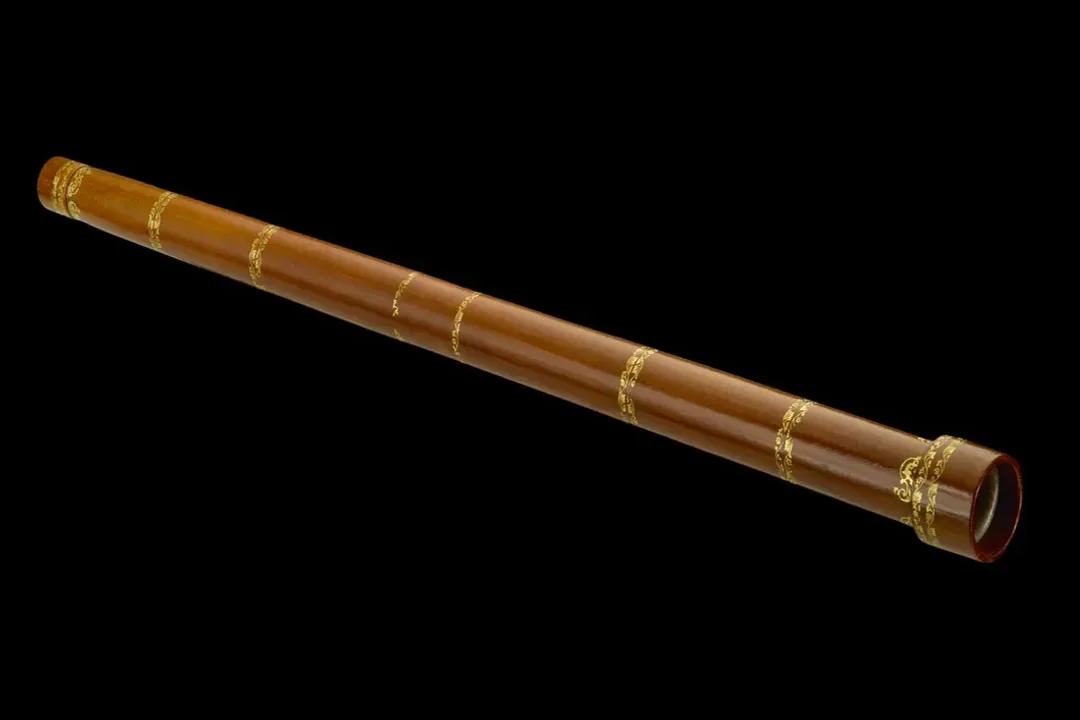
By the close of the 16th century, the principles of optics were known, leading to the appearance of crude "perspective glasses" in the Netherlands in $1608$. [1] Galileo, hearing about this device, which made distant objects appear closer, quickly reverse-engineered the concept. [1][4] He began experimenting with lens grinding and making his own version of the instrument. [2][3] The initial Dutch designs offered only a threefold magnification. [1] What set Galileo apart was his relentless drive to improve the mechanism. [1][2] Through meticulous effort, he managed to create instruments capable of eight, then twenty, and eventually thirty times magnification. [1][2] This leap in optical power was the crucial prerequisite; without this technological edge, the revolutionary evidence he soon gathered would have remained unseen by the wider learned community. [1]
# Celestial Imperfections
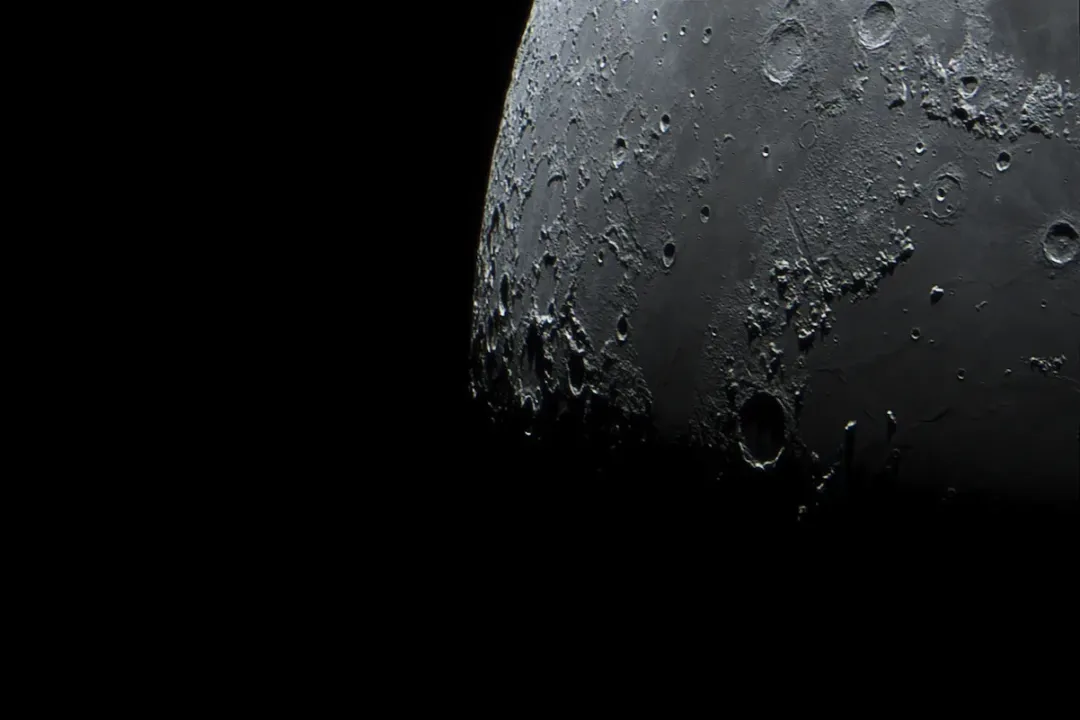
Galileo’s initial target was the Moon, an object the established cosmology held to be a perfect, smooth, crystalline sphere, eternally unchanging. [1][3] When he turned his improved telescope on it in late $1609$, the prevailing view shattered. [2][4] He did not merely see a slightly larger Moon; he saw mountains, valleys, and deep pits. [3][4] Using his training in Renaissance art and his understanding of chiaroscuro—the technique of shading light and dark—he was able to sketch the shadows cast by these features and even estimate their heights. [1] This demonstrated that the Moon possessed a rugged, uneven topology, much like Earth itself. [1][3] The heavens were apparently subject to the same imperfections found on our world, directly contradicting the philosophical division between the corruptible Earth and the perfect celestial realm. [1][2] It is worth noting that English astronomer Thomas Harriot actually made the first recorded telescopic observations of the Moon a month before Galileo in July $1609$, and his later map was more detailed, but Harriot did not widely distribute his work. [1] Galileo’s genius was intrinsically linked to the dissemination of his findings. [1]
The need for rapid and persuasive communication was paramount, and Galileo mastered this aspect of the scientific process better than his contemporaries. [1] In March $1610$, he published his initial findings in a brief but explosive astronomical treatise titled Sidereus Nuncius (The Sidereal Messenger). [1] The fact that over five hundred copies were printed and sold immediately ensured his observations became part of the international conversation, cementing his legacy even as others, like Harriot, had prior claims to the raw data. [1] This speed in sharing and interpreting data, rather than merely collecting it, defines the revolutionary nature of his work in this period. [1]
# Jupiter Satellites
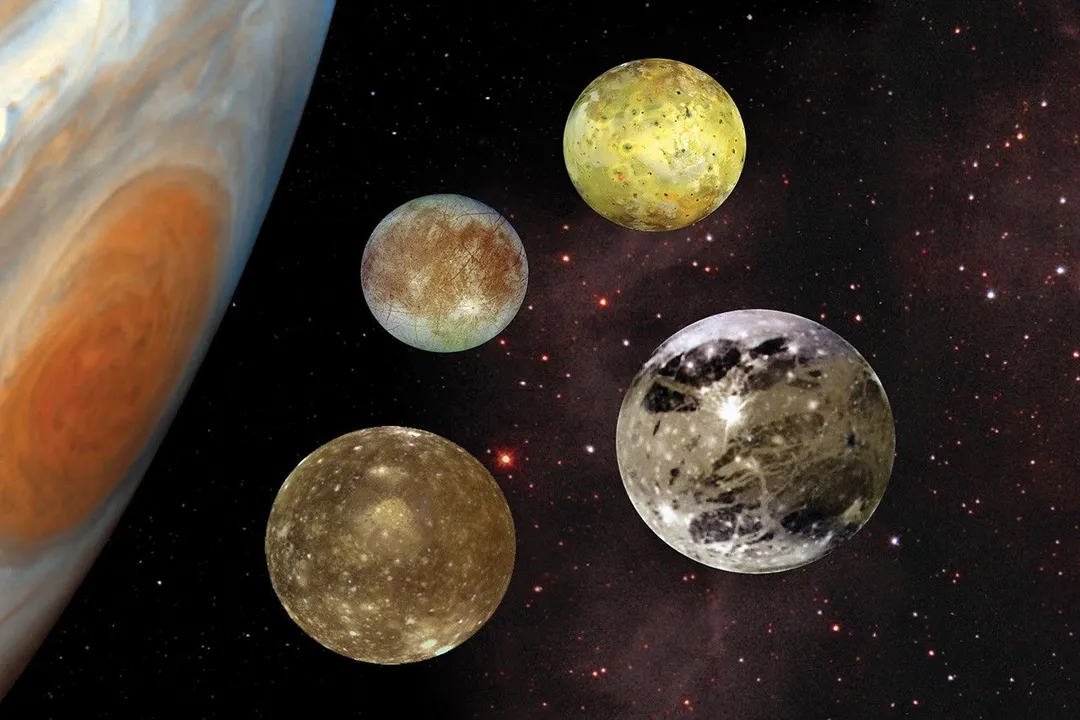
If the Moon's ruggedness was a blow to Aristotelian perfection, the next discovery was a decisive blow against the Ptolemaic system’s central organizing principle: that everything orbited the Earth. [1][3] When Galileo aimed his telescope at Jupiter, he initially noted three, and soon four, tiny "fixed stars" near it. [1][4] Over several nights of observation, he realized these "stars" were not fixed at all; they were moving in tandem with Jupiter, clearly orbiting it. [1][3] These were the four largest moons of Jupiter, now known as the Galilean moons (Io, Europa, Ganymede, and Callisto). [2][4] The discovery of moons orbiting another planet directly countered a major objection to the Copernican system. [1] Critics of Copernicus argued that if the Earth were moving around the Sun, it would somehow drag the Moon out of its regular path through the heavens. [1] Since Jupiter was demonstrably in motion while simultaneously retaining satellites in orbit around it, this proved that having more than one center of motion in the celestial realm was entirely possible. [1][2] This offered a clear, visual refutation of a core critique leveled against the Sun-centered model. [1]
# Phases of Venus
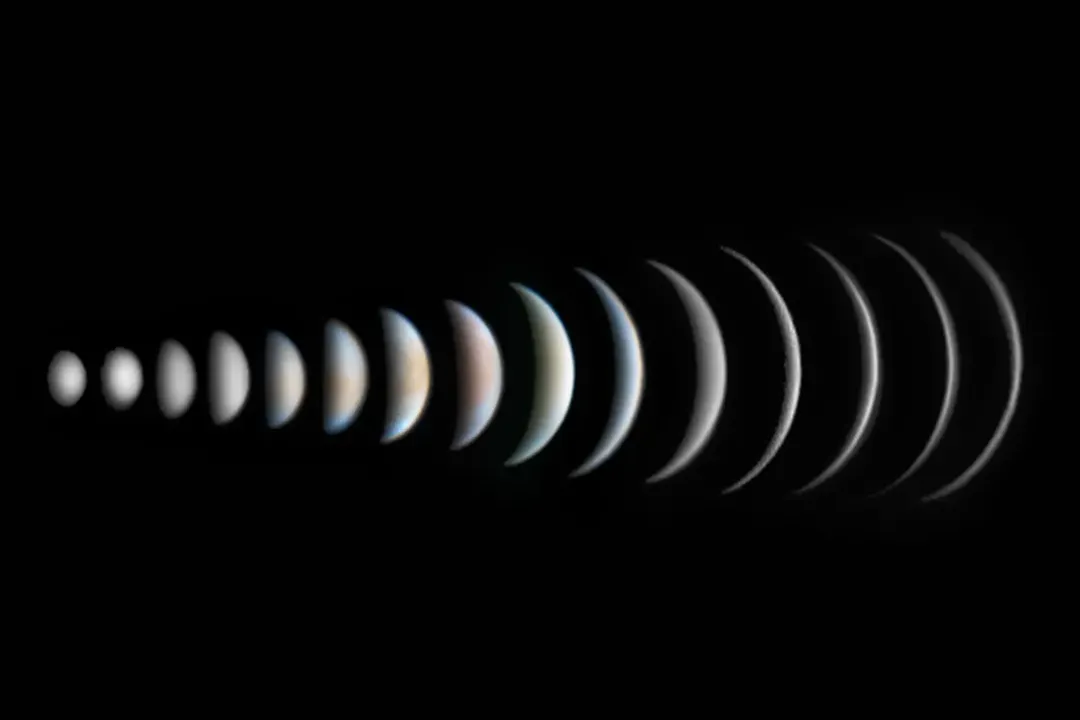
Galileo’s gaze later turned to Venus, one of the brightest objects in the sky. [4] Through his improved scope, he observed that Venus exhibited a sequence of phases, changing from a crescent to gibbous, much like our own Moon. [1][2][3] Under the existing geocentric model, Venus would always appear between the Earth and the Sun, meaning only crescent and new phases should ever be visible from Earth. [2] The observation of full phases, or phases nearing full, could only be logically explained if Venus orbited the Sun from an orbital path inside the Earth’s orbit around the Sun. [1][2] While this observation was also consistent with the blended Tychonic system, it was utterly incompatible with the pure Ptolemaic view and provided powerful, undeniable support for the Earth being one of several planets revolving around the Sun. [1][2]
# Solar Imperfections
Following his work on the Moon, Galileo turned his attention to the Sun, an act later understood to be incredibly dangerous to his eyesight. [4] He observed what he termed "imperfections" on its surface: sunspots. [1][4] Furthermore, by tracking these spots over time, he concluded that the Sun itself was rotating. [1][3] Like the Moon, the Sun was revealed to be imperfect, a finding that further dismantled the required celestial perfection demanded by ancient philosophy. [1][2] This finding led to public debates, notably with Christoph Scheiner, who tried to save the Sun’s perfection by claiming the spots were merely satellites orbiting it, an argument Galileo refuted with his detailed observations published in Letters on Sunspots ($1613$). [2]
The accumulated evidence—mountains on the Moon, moons around Jupiter, phases of Venus, and spots on the Sun—collectively pointed to one inescapable conclusion for Galileo: the Sun, not the Earth, was the center of the planetary motions observed. [1][4]
# Cosmic Support
The importance of Galileo's telescopic work extends beyond the cataloging of these individual celestial facts; it was the collective weight of this empirical data that provided the necessary evidence to shift the accepted model of the cosmos. [7]
When we look at the impact of these observations, it is easy to focus only on the change in orbital mechanics—the shift from Ptolemy to Copernicus. [1][3] However, a more profound, perhaps even greater, discovery lay in the destruction of quality in the heavens. [2] For centuries, a core tenet of Western thought, rooted in Aristotle, held that the sublunar world (Earth and its atmosphere) was composed of corruptible, transient elements, while the celestial bodies were made of perfect, unchanging quintessence. [1] Galileo’s telescope blurred this line irreversibly. [2]
Here lies an area for deeper reflection: the true, underlying discovery was the affirmation that nature operates under universal, consistent laws. [2] If the Moon has mountains and the Sun has blemishes, then the material components of the heavens are not fundamentally different from Earth's own composition. [1] This implies that the entire cosmos, from the lowest dust motes to the highest stars, is governed by the same mathematical principles. [2] Galileo famously believed that the "book of nature was written in the language of mathematics," and his observations provided the first extensive, undeniable field data supporting this view, moving natural philosophy from a qualitative account to a quantitative, mathematical one through verifiable experimentation. [2] While proving the Earth moved was controversial enough to earn him house arrest, [2][3] demonstrating that the heavens were mortal and material was perhaps the more fundamental philosophical shockwave. [1]
This new physical understanding paved the way for the later work of Sir Isaac Newton, who would formulate the universal law of gravity that tied all these motions together. [2] Galileo’s insistence on observation and experimentation, even in the face of institutional authority, became a hallmark of modern science. [2][3] He provided the crucial empirical bridge between the theoretical model proposed by Copernicus decades earlier and the acceptance of that model by the scientific world. [1][7]
Even outside of astronomy, Galileo was a rigorous thinker concerning mechanics. During his earlier academic life, before the telescope, he had already been working on the science of motion, determining that the distance a body falls is proportional to the square of the time elapsed—the law of falling bodies—which also directly contradicted Aristotelian physics. [2] Furthermore, he is credited with designing a major component for the first pendulum clock, known as the Galilean escapement, though it wasn't built in his lifetime. [3] These diverse investigations into motion and observation underscore that his "big discovery" was not singular, but rather the successful application of a new, mathematically grounded, evidence-based method to the natural world. [2][3]
To put the impact into a comparative perspective, consider the legacy: while Galileo was refining his telescope in $1609$ to see lunar mountains, other thinkers, like the German theologian David Fabricius and his son, were independently observing and even publishing on sunspots in $1611$, though their work remained obscure. [1] Yet, it was Galileo who synthesized these disparate observations, recognized their immediate and total implications for cosmology, and published them with such impact that his name became synonymous with the telescope itself. [1][3] His greatest insight was not just seeing the objects, but understanding the monumental shift these observations necessitated in human understanding of reality. [1]
#Citations
What did Galileo discover? | Royal Museums Greenwich
Galileo's Observations of the Moon, Jupiter, Venus and the Sun
Galileo | Biography, Discoveries, Inventions, & Facts - Britannica
Scientific Discovery | galileo - The Middlebury Sites Network
Galileo and the Telescope | Modeling the Cosmos | Digital Collections
Galileo Galilei - New Mexico Museum of Space History
History | The Galileo Project