What significant discovery did Galileo make about Jupiter?
The night of January 7, 1610, marked an almost unimaginable shift in humanity’s understanding of its place in the cosmos. Using his recently refined telescope, Galileo Galilei turned the instrument toward Jupiter, not expecting anything more than a slightly larger view of the familiar planet. Instead, he saw something that defied centuries of accepted astronomical doctrine: three small, bright points of light aligned in a straight line near the planet. He initially mistook these new sights for fixed stars. This was not just a new celestial object; it was evidence that the heavens were not as simple, or as Earth-centered, as everyone believed.
# First Glimpse
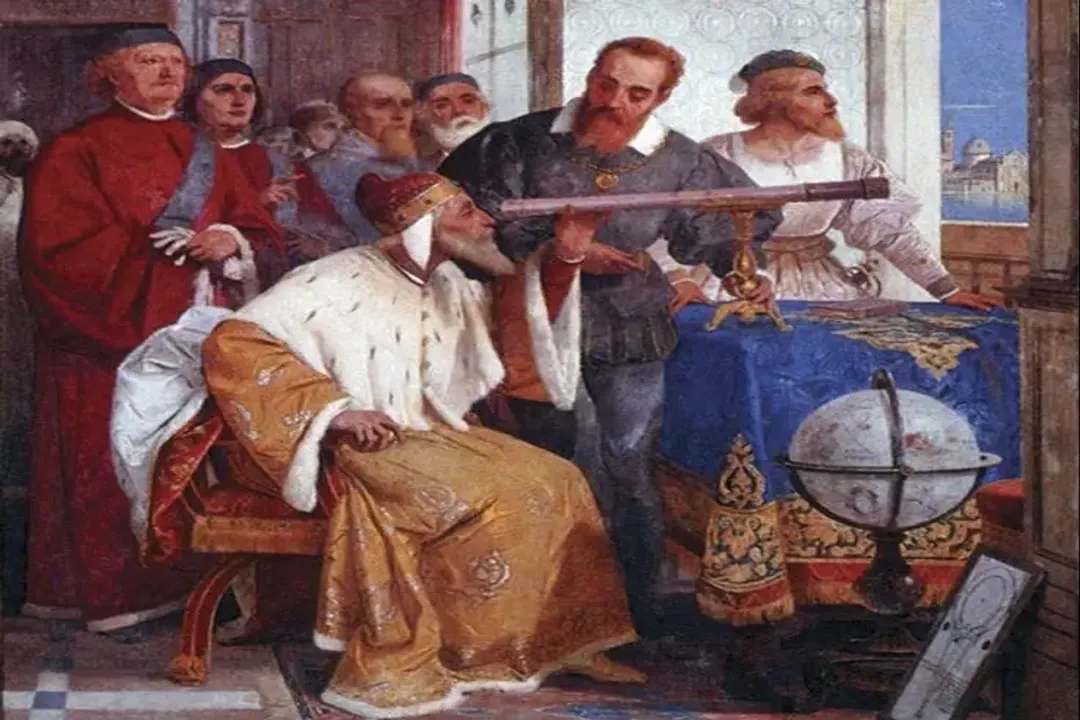
Galileo’s discovery was founded upon the use of an instrument that gave him an unprecedented view of the universe. While we now associate Jupiter with its spectacular Great Red Spot, for Galileo, the immediate prize was the discovery of what became known as the Medicean Stars, or today, the Galilean moons. He recorded his observation in his journal, noting these new companions to Jupiter. Crucially, this was not a one-time event. The true significance of the observation became apparent when he looked again a few nights later.
# Celestial Clues
The real breakthrough came through patient, systematic observation over several nights. After the initial sighting on January 7th, Galileo continued tracking the three objects near Jupiter. When he observed them on January 10th, he noticed something startling: two of the stars had vanished, and the remaining one had shifted its position relative to Jupiter. Later observations confirmed that these were not fixed stars at all, but rather objects orbiting the planet itself, moving in complex paths around their primary body. By January 13th, he had identified a fourth companion.
It’s easy, looking back, to assume that such large bodies orbiting Jupiter would have been visible to the naked eye, especially since Jupiter itself is bright. However, the key differentiator was the telescope. Even a well-sited observer looking with the naked eye would see only the planet, a bright, uninteresting disk in the sky. The moons are too faint and too close to the overwhelming glare of Jupiter for our eyes to resolve them separately. Galileo’s apparatus, while primitive by modern standards, provided the necessary angular resolution to separate these tiny points of light from their parent planet. It's a powerful testament to observational skill: the difference between seeing a smudge and seeing a new solar system in miniature lay in optical magnification, not in the location of the observer.
Galileo spent the next several months meticulously charting the positions of these four objects—which he correctly deduced were satellites—relative to Jupiter. The observations were recorded and detailed in his seminal work, Sidereus Nuncius, or The Starry Messenger, published in 1610.
# A New System
The discovery's significance transcended mere cataloging of new celestial bodies; it struck at the very heart of the established cosmological model of the time, the Ptolemaic or Aristotelian view. This Earth-centered model held that the Moon, the Sun, and all the known planets orbited the Earth. While observers like Copernicus had proposed a Sun-centered system, it largely remained a mathematical tool until direct evidence could be presented against the Earth-centric view.
The satellites of Jupiter provided that direct evidence. If these four bodies clearly orbited Jupiter, then the principle that everything in the heavens orbited the Earth was demonstrably false. This realization gave tremendous observational weight to the Sun-centered, or heliocentric, model advocated by Copernicus. Jupiter and its new retinue became, in effect, a small, observable model of the solar system itself, with a central body orbited by smaller satellites. This was an empirical refutation of the ancient physical structure of the universe.
Galileo’s observations essentially proved that there existed at least one other center of motion in the heavens besides the Earth. This idea was revolutionary and deeply threatening to the prevailing philosophical and theological structures built upon the geocentric understanding.
Here is a comparison illustrating the immediate observational difference between Galileo's discovery and the pre-telescopic understanding:
| Feature | Pre-Telescopic View (Geocentric) | Galileo's Observation (1610) |
|---|---|---|
| Jupiter Appearance | A bright, steady "wandering star" | A disk with four distinct points of light nearby |
| Celestial Motion | All celestial bodies orbit Earth | Objects clearly orbit Jupiter |
| Number of Centers | One (Earth) | At least two (Earth and Jupiter) |
| Publication | Based on ancient texts | Based on direct, new observation |
# Naming The Wanderers
The motivation behind the names Galileo chose for his new satellites speaks as much to the politics of the early 17th century as to the astronomy itself. To secure patronage and protection for his radical work, Galileo dedicated the discovery to his wealthy and powerful sponsor, Cosimo II de' Medici, the Grand Duke of Tuscany.
He initially named the moons the Medicean Stars (or Sidera Medicea). This public dedication was a strategic move, linking his scientific breakthrough directly to the prestige of the powerful Medici family. While this pleased his patrons, the name did not stick across the broader astronomical community. Over time, the tradition established by the astronomer Simon Marius, who was observing Jupiter concurrently, won out. Marius suggested names derived from the mythology of Jupiter (Zeus in Greek tradition) and his lovers: Io, Europa, Ganymede, and Callisto. This nomenclature, rooted in classical literature, is what we use today, though the historical nod to the Medicean patronage remains an important piece of the discovery's context.
# Lasting Legacy
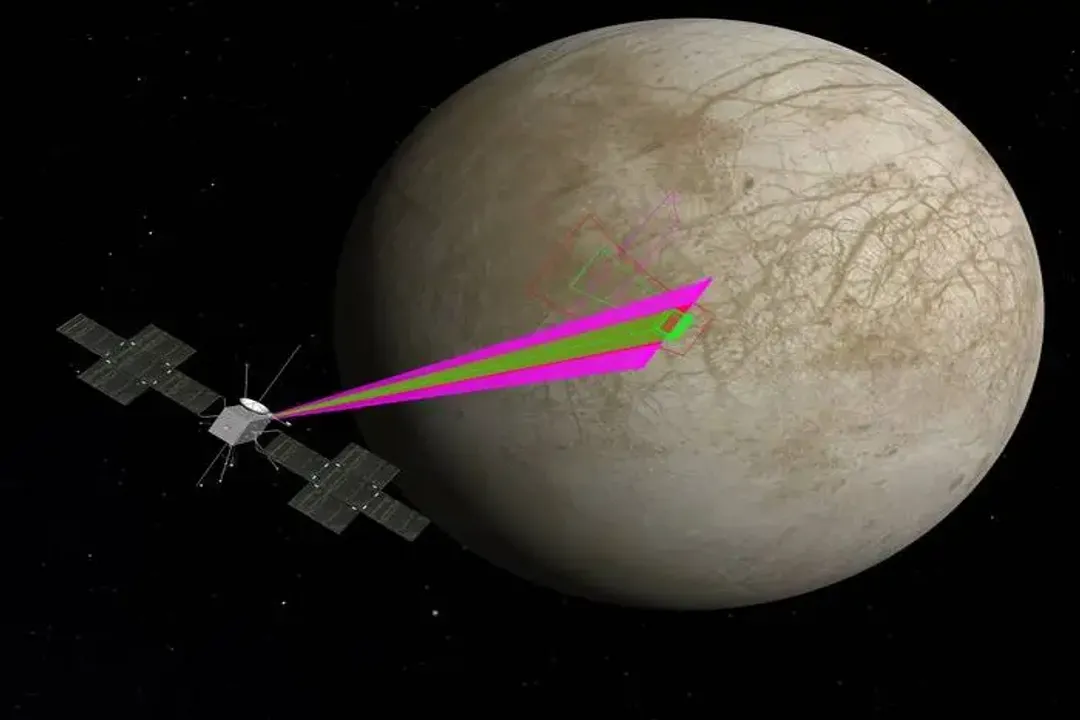
Galileo’s discovery about Jupiter was not an isolated event; it was a critical data point that allowed the scientific revolution to gain traction. The moons are still vital to modern science, far beyond their historical context. For instance, the moon Europa is now considered one of the most promising places in the solar system to search for extraterrestrial life due to strong evidence suggesting it harbors a vast subsurface ocean of liquid water beneath its icy crust. Modern probes and orbiters continue to study the dynamics of the four Galilean moons, investigating everything from Io’s intense volcanism—fueled by tidal stresses from Jupiter and the other moons—to the sheer scale of Ganymede, which is larger than the planet Mercury.
What Galileo gave us was more than just a count of Jupiter's companions; he provided the first clear, repeatable, visual proof that Earth was not the center of all motion. This was a profound epistemological shift. The telescope, the planet Jupiter, and its four small satellites became tangible proof that observations, rather than solely ancient authority, should dictate our model of the universe. This foundational principle—that we should trust what we can observe and test—is the true, enduring discovery that sprang from those cold January nights in Padua.
#Citations
410 Years Ago: Galileo Discovers Jupiter's Moons - NASA
Galileo Discovers Jupiter's Moons - National Geographic Education
Galilean moons - Wikipedia
What Does Galileo's Discovery of Jupiter's Moons Tell Us About the ...
[PDF] In the Footsteps of Galileo: Observing the Moons of Jupiter
Why Did Galileo Need a Telescope to Discover the Moons of Jupiter?
Satellites of Jupiter - The Galileo Project | Science
Space history: Galileo takes the plunge into Jupiter's atmosphere
On Jan. 7, 1610, Galileo discovered the four largest moons of Jupiter ...