What were two of Galileo's discoveries?
The intellectual landscape of the early 17th century was built upon foundations laid down by ancient Greek philosophers, particularly Aristotle, which posited a perfect, unchanging cosmos with the Earth firmly fixed at its center. To Galileo Galilei, an Italian natural philosopher, mathematician, and astronomer, this inherited wisdom was simply a hypothesis awaiting rigorous testing. He did not seek to merely reinterpret old texts; he sought empirical evidence against them, and his path to revolutionary insight was paved by the continuous improvement and application of the refracting telescope. While his subsequent conflicts with religious authorities often dominate his biography, the core of his lasting fame lies in what he saw through that instrument—observations that did not just add to knowledge but fundamentally rearranged humanity’s perception of its place in existence.
# Lunar Imperfection
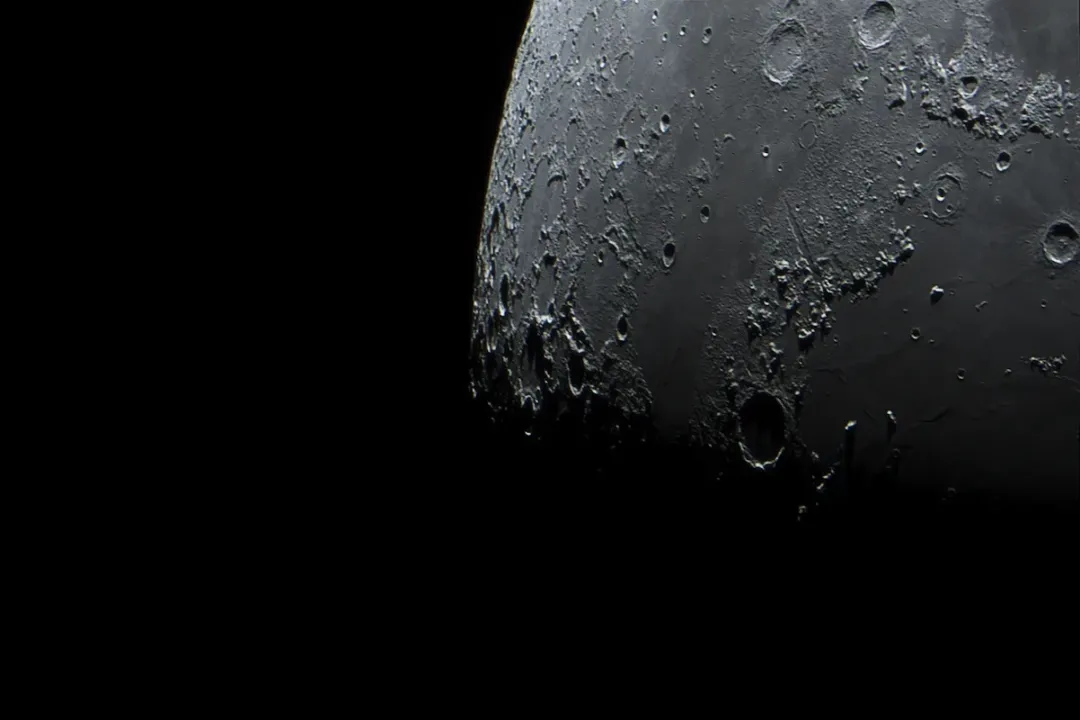
Before delving into the two most cosmically disruptive discoveries, one must appreciate the immediate shock delivered by Galileo’s first sustained use of his enhanced telescope on the Moon, beginning in late 1609. For centuries, accepted cosmology dictated that celestial bodies were flawless, crystalline spheres, utterly distinct from the marred, corruptible Earth. Galileo’s observations shattered this dualism immediately. He meticulously charted shadows cast by mountains and craters on the lunar surface, showing that the Moon was not a smooth, ethereal pearl but a world with topography, possessing peaks and valleys similar to Earth’s own mountains. By measuring the length of these shadows against the changing position of the Sun, he could even estimate the height of these lunar mountains. This single act—demonstrating that the heavens were subject to imperfections analogous to our own—was a profound philosophical blow to the prevailing Aristotelian view, which mandated a fundamental division between the terrestrial and celestial realms.
# Jupiter's Companions
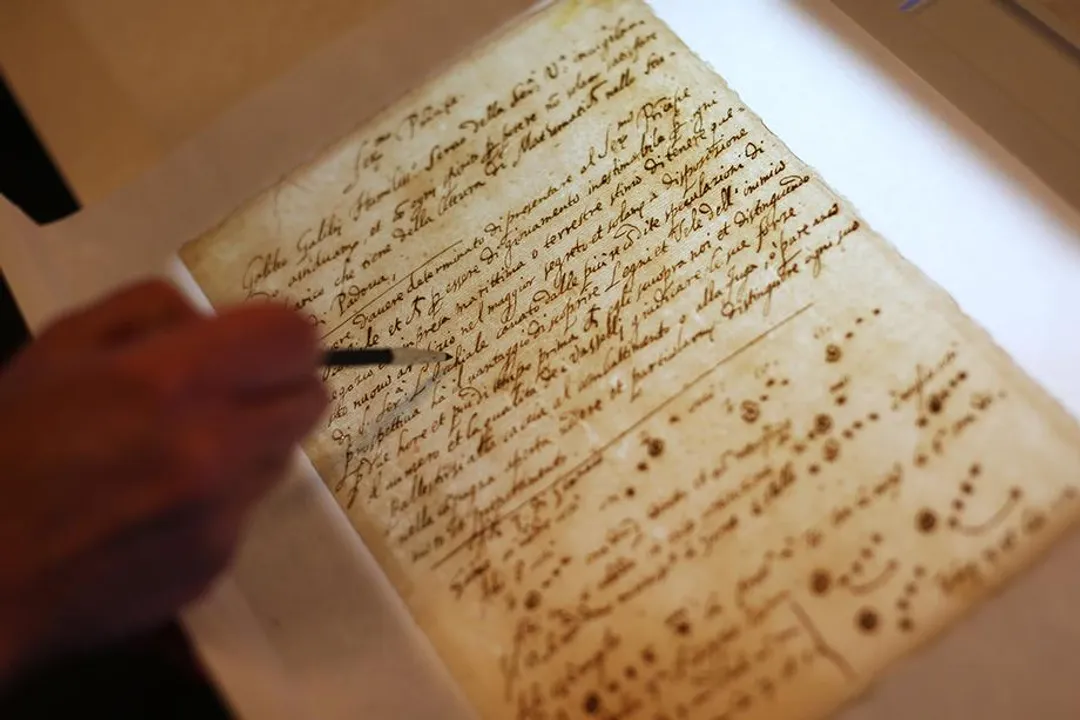
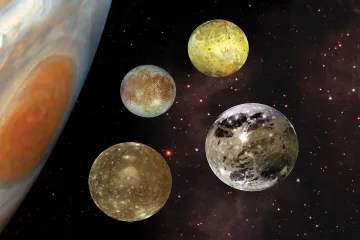
If the Moon's rough surface suggested earthly qualities in the heavens, Galileo’s next major telescopic observation provided irrefutable proof that the universe possessed more than one center of motion. On January 7, 1610, while observing the planet Jupiter, Galileo noticed three small "fixed stars" aligned near it. Over subsequent nights, his precise tracking revealed that these points of light were not background stars at all, but rather satellites that moved in tight attendance around Jupiter itself. By January 15, he was certain: he had found three, soon to be identified as four, moons orbiting another planet. He recorded these findings in his short but explosive treatise, Sidereus Nuncius (The Starry Messenger), published shortly thereafter. He dedicated this work to his patron, Cosimo II de’ Medici, naming the satellites the Sidera Medicea (Medicean Stars) in honor of the family, though modern usage rightly honors him as the discoverer.
The discovery of these Jovian companions was a direct contradiction to the Ptolemaic, Earth-centered model, which demanded that everything must circle the Earth. In the established view, if a body orbited Jupiter, then the Earth was clearly not the sole center around which all celestial motion occurred. It is here, in the practical aftermath of this realization, that we see Galileo’s unique contribution—the ability to immediately recognize the actionable scientific and even commercial consequence of an astronomical observation. He immediately recognized that the predictable, recurring eclipses of these moons—which happened frequently and could be calculated with remarkable accuracy—offered a potential solution to the most pressing navigational challenge of the era: determining longitude at sea. A ship’s captain needed to know the time difference between their location and a fixed meridian, and Galileo proposed using the precise timings of the Jovian moon events, recorded on tables, as a kind of universal clock to synchronize timekeeping across vast distances. While the difficulties of making delicate telescopic observations from a pitching ship proved too great for immediate maritime use, the concept was later successfully employed for large-scale land surveys, such as the remapping of France. This linkage between abstract observation and practical, world-changing utility—a mathematical framework solving an engineering problem—is a hallmark of his genius that often gets overshadowed by the controversies he later faced.
# Venus’s Shifting Appearance
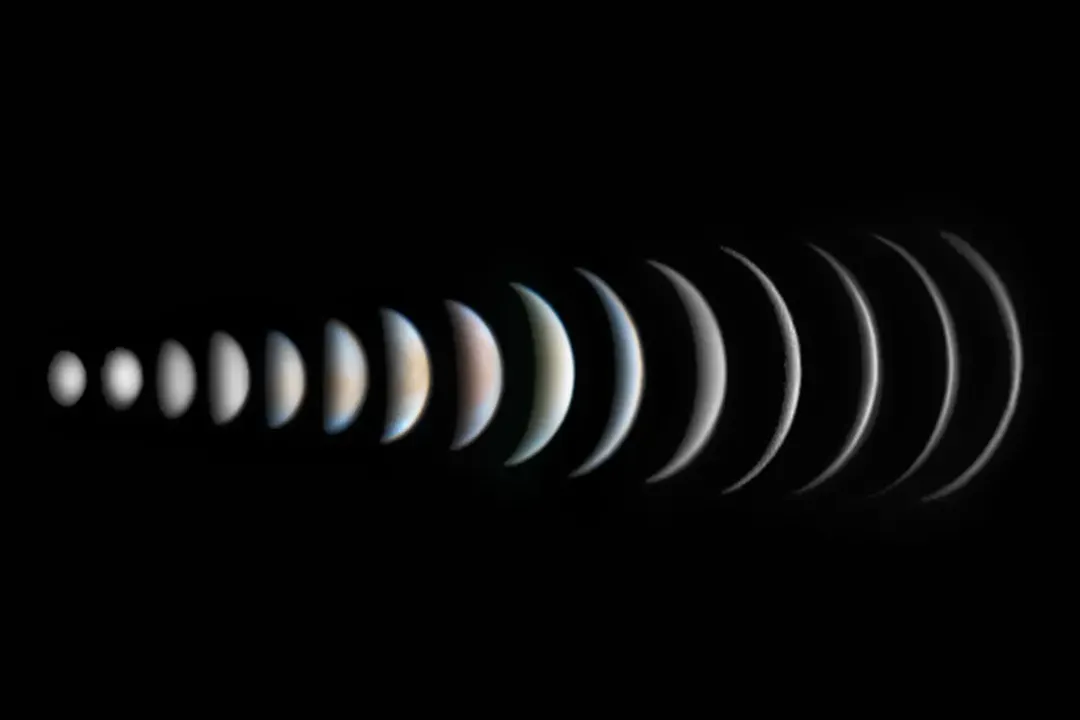
The second monumental discovery that dealt a fatal blow to the geocentric view involved the planet Venus. Starting in September 1610, Galileo observed that Venus exhibited a complete set of phases, much like our own Moon—ranging from crescent to gibbous and eventually full. This phenomenon simply could not be reconciled with the traditional Ptolemaic system. In that model, Venus’s orbit was strictly placed between the Earth and the Sun, meaning observers on Earth could only ever see Venus as a crescent or a "new" phase, because the Sun-facing side would always be partially or entirely hidden from view. For Venus to display a full phase, it must be possible to view it on the far side of the Sun relative to the Earth.
This configuration—Venus appearing full when on the opposite side of the Sun—is exactly what the mathematics of the Copernican, Sun-centered system predicted. It proved that Venus orbits the Sun, not the Earth. While some intermediary models, like the Tychonic system, could technically account for the phases, the accumulation of evidence—moons orbiting Jupiter and the phases of Venus—made the strictly Earth-centered picture untenable for the majority of working astronomers. This confirmed what Galileo had likely believed for some time: the Earth was just another planet revolving around the Sun.
# The Mathematical Language of Nature
Galileo’s accomplishments were not limited to what he saw, but how he interpreted it. His insistence that the "book of nature was written in the language of mathematics" marked a crucial evolution in natural philosophy. Many before him described phenomena qualitatively; Galileo demanded mathematical certainty derived from controlled experimentation. His work on motion, for instance, showed that the distance a body fell was proportional to the square of the time elapsed (), assuming negligible air resistance. This mathematical precision was not accidental; it was a deliberate departure from relying solely on authority. Think about the context: his father, Vincenzo Galilei, was a musician who established that pitch varied with the square root of string tension—a numerical relationship within music theory that was known to artisans. Galileo inherited this environment where aesthetic structure (music) was already quantified, and he applied that numerical mindset to the cosmos itself. Where ancient thinkers might prefer the elegance of perfect circles, Galileo preferred the accuracy of numbers, even if the resulting model—planets circling a star, not an Earth—seemed aesthetically clumsy or contradicted established theology. This commitment to testable, quantifiable reality, as opposed to mere verbal accounting, is why historians often credit him as the father of modern physics and observational astronomy.
Beyond these two cornerstones, his observations continued to erode old certainties. He observed sunspots, arguing they were features on the Sun, further proving the celestial sphere was corruptible, not perfect. He also noted Saturn appeared triple-bodied, though he could not resolve the rings properly, mistaking them for companions that would later seem to vanish when the rings were edge-on to Earth. Even the most distant phenomena were revealed: the seemingly nebulous band of the Milky Way resolved under his lens into thousands of individual, distinct stars, revealing an unimaginable depth to the heavens.
Galileo’s legacy rests on these discoveries—the moons of Jupiter and the phases of Venus being prime examples—because they were witnessed facts, published first in the Starry Messenger, that could not be ignored. They provided the empirical ammunition needed to transition from a geocentric universe to a Sun-centered one, establishing a standard where observation, not ancient decree, held the final authority in matters of physical reality.
Related Questions
#Citations
What did Galileo discover? | Royal Museums Greenwich
Galileo | Biography, Discoveries, Inventions, & Facts - Britannica
Lessons from Galileo | University of Michigan Library
Galileo Galilei - Wikipedia
Space Science after Galileo