What is the scientific explanation of the Star of Bethlehem?
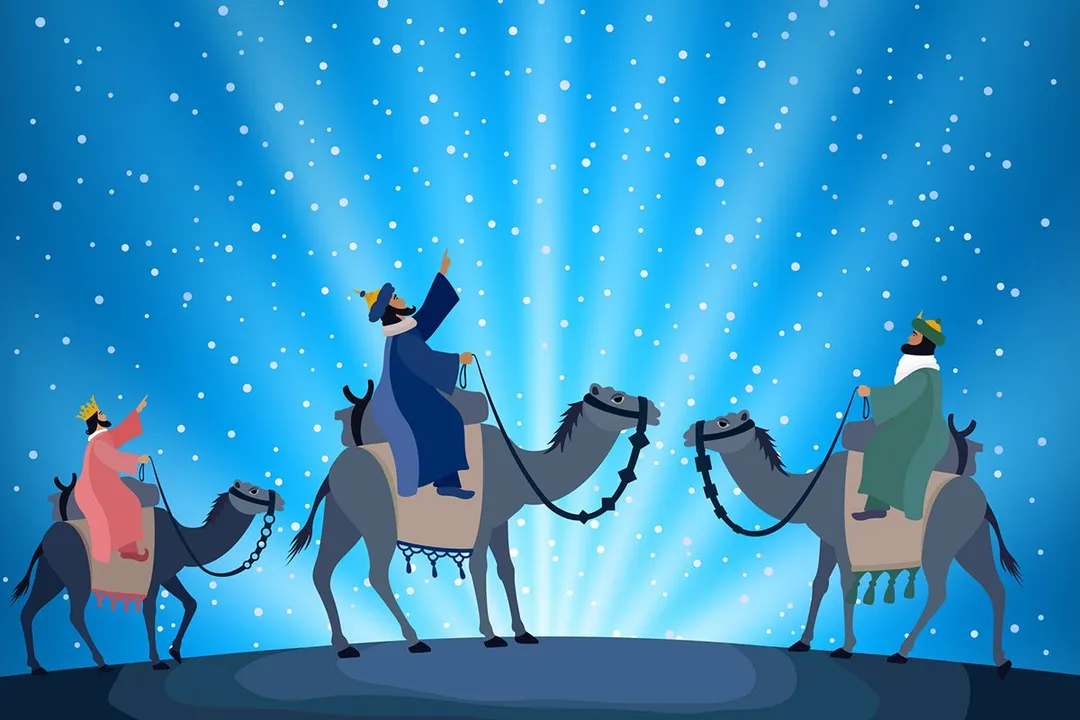
The narrative of the Star of Bethlehem, recounted solely in the Gospel of Matthew, has captivated historians, theologians, and astronomers for millennia. It describes "wise men from the East"—often identified as Magi—who observe a bright celestial sign indicating the birth of the King of the Jews, prompting them to travel to Jerusalem to pay him homage. The scientific quest is to match this ancient, religiously charged description with a verifiable, natural astronomical event that occurred around the supposed time of Jesus’ birth.
# Ancient Interpretation
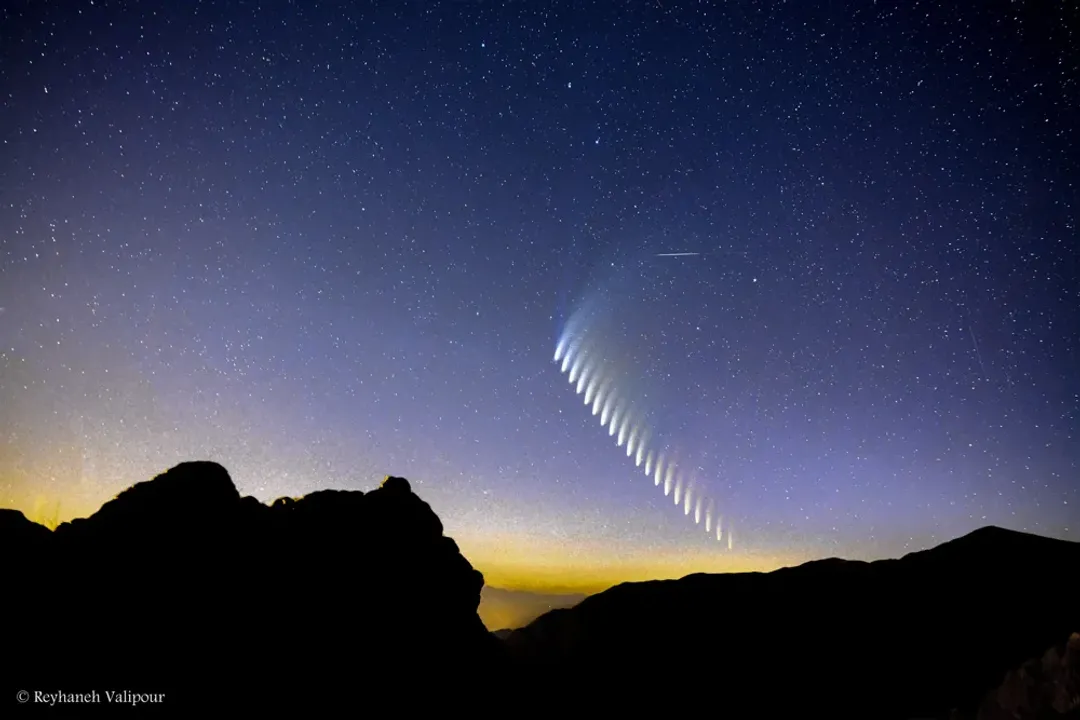
The central challenge in moving from biblical narrative to astronomical fact lies in recognizing how ancient peoples perceived the sky. For the Magi, the distinction between what modern people call astronomy and astrology—the interpretation of celestial events as portents for terrestrial affairs—was negligible; their systems were complex forms of astral divination. They would have interpreted the heavens through culturally specific lenses, much like reading a weather forecast today.
These systems, particularly the venerable Babylonian tradition, assigned significance to almost every repetitive celestial occurrence, yet the interpretation was rarely straightforward. A single event, such as a lunar eclipse, might indicate the death of a king, but contextual factors, such as cloud cover, could drastically change the reference point or alter the sign from good to bad. Consequently, identifying a phenomenon that we find remarkable today does not guarantee that the Magi would have ascribed the specific meaning of a newborn king to it. The Magi told King Herod they saw the star "when it rose" or "in the East," a phrase that may be a layman's term for a heliacal rising, or perhaps a term specific to astrological texts that modern scholars cannot perfectly reconstruct.
# Ruling Out Common Candidates
Several dramatic celestial occurrences are frequently proposed as explanations, though many carry significant baggage when scrutinized against the full biblical account.
# Fading Events
Events that flare brightly and fade quickly, like a meteor (a brief streak of light), are easily dismissed. The wise men tracked the object for a period sufficient to travel and confer with Herod, ruling out instantaneous phenomena.
A supernova, the explosive death of a star, is also deemed unlikely by many researchers. While a supernova creates a brilliant "new star" visible for weeks or months, historical records from other cultures, particularly Chinese astronomers, would likely have noted such a major event if it occurred near the turn of the era. Furthermore, telescopes have failed to find a supernova remnant that aligns chronologically with the accepted time of Christ’s birth. One supernova remnant was observed, but it dates to AD 185. Even proposals involving a distant supernova in the Andromeda Galaxy face difficulties regarding visibility and dating accuracy.
# Omens in the Sky
Comets are often suggested because they can linger for extended periods, which fits the need for the Magi to observe and travel. Halley's Comet, for instance, was visible in 12 BC, a bit early for the commonly accepted timeline. However, comets present two major interpretive problems for the Star of Bethlehem narrative.
First, in the ancient world, comets were generally associated with impending disaster or doom, making it counterintuitive for Magi to interpret one as a positive herald of a new king. Second, a standard comet's position shifts nightly due to Earth’s rotation; it would rise and set, making it impossible for it to "go before them" and "stand over" a specific location for days, as described in the Gospel.
# Planetary Alignments
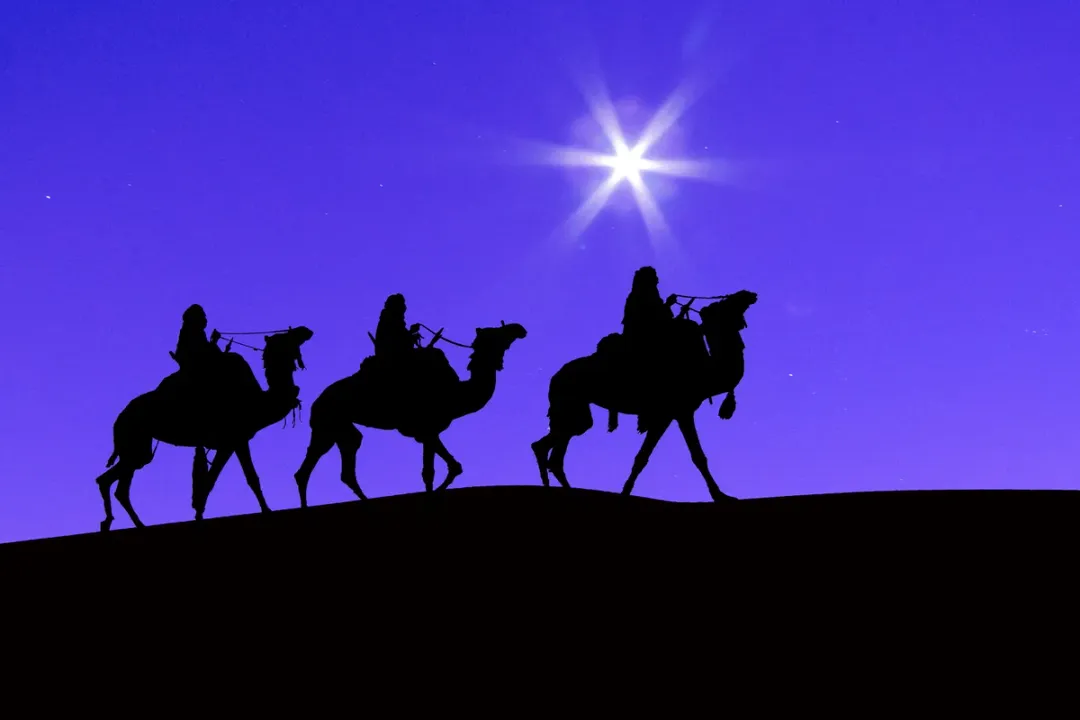
The most persistent scientific explanations center on planetary conjunctions—when two or more planets appear very close together from Earth's vantage point. While the planets are not physically near one another, the effect can be visually stunning, potentially appearing as a single, unusually bright "star".
# The Triple Conjunction
Johannes Kepler was among the first in the 17th century to suggest a conjunction, focusing on a series of three close meetings between Jupiter and Saturn in 7 BC, all occurring within the constellation Pisces. Some astronomers have argued this triple conjunction was significant enough for astrologers to note. However, modern calculations suggest the planets were separated by nearly a degree—about twice the width of the full Moon—meaning the event may not have been visually impressive enough to warrant the level of attention described.
# The King Planet and Venus
A far more striking event occurred four years later. In the summer of 3 BC, Jupiter (often associated with royalty, or Sedeq, meaning "righteousness" in Hebrew) began a series of alignments with Venus (associated with love and fertility).
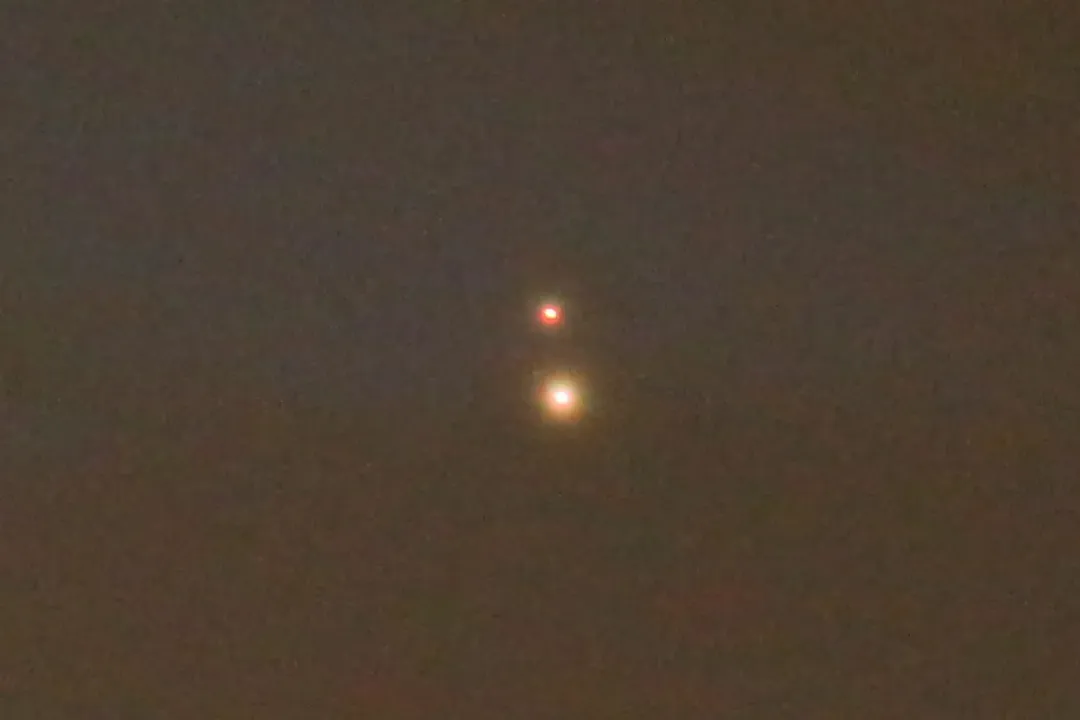
A particularly close grouping happened on June 17, 2 BC, when Jupiter and Venus were separated by only one-fifth the diameter of the Full Moon. This fusion of two bright planets would have been exceptionally rare and brilliant, possibly appearing as a single, dazzling object. An earlier conjunction between Venus and Jupiter also occurred in August of 3 BC. If the Magi were following these events, they might have interpreted the prolonged alignment across several months as a developing sign.
This 2 BC timeframe aligns with some early Christian dating traditions, which placed Jesus' birth around 3–2 BC. However, this date presents a chronological snag: King Herod I, according to historical accounts, died shortly before a Passover following a lunar eclipse, a date generally pegged to 4 BC or slightly earlier, which complicates a 2 BC birth date.
# The Stationary Light Puzzle
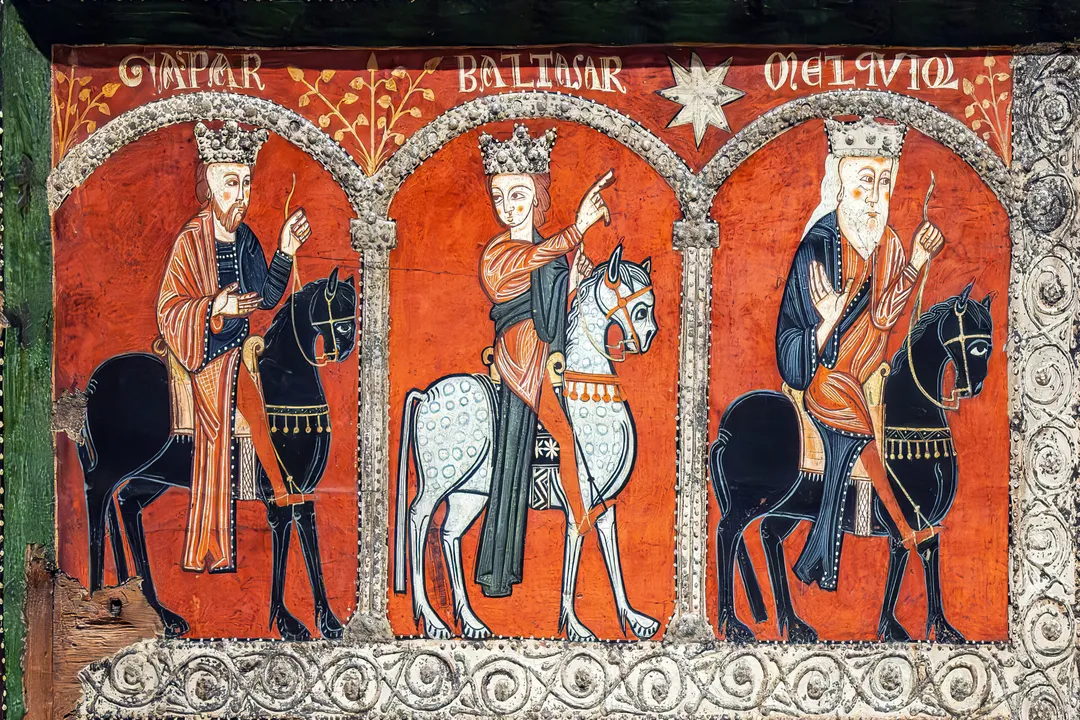
The description that the star led the Magi from the East to Jerusalem, and then "went before them, till it came and stood over where the young child was" in Bethlehem, is the most difficult feature to explain with common conjunctions. Planets generally move east to west across the sky daily due to Earth’s rotation. The Magi needed a guide that could appear stationary or move specifically toward a southern destination.
# The Occultation Theory
Astronomer Michael R. Molnar proposed a more subtle event: a double occultation of Jupiter by the Moon in 6 BC. On April 17, 6 BC, the Moon passed in front of Jupiter while the conjunction was in the constellation Aries. Astrologically, an occultation of Jupiter in Aries was interpreted by some ancient sources as a sign portending the birth of a divine king. This theory suggests the star was not a sudden, universally visible bright object, but something more subtle that Herod's advisors might not have instantly noticed, thus explaining why Herod needed to inquire diligently when the Magi arrived.
# The Comet’s Slow Dance
The most detailed scientific model attempting to reconcile all elements of Matthew’s text points back to a comet, but one whose specific orbit around the Earth created an illusion of hovering. Planetary scientist Mark Matney and his team focused on a "Broom Star" recorded by Chinese astronomers in 5 BCE, visible for over 70 days.
By modeling the orbit of this 5 BCE comet, researchers found that a sun-grazing comet with a low inclination could have passed close to Earth in early June. On the morning of June 8, as seen from Judea, the comet’s apparent angular motion would have slowed dramatically relative to the rotating Earth, creating a temporary geosynchronous effect—an illusion of near motionlessness lasting several hours.
As the Magi traveled south from Jerusalem toward Bethlehem, this effect could have made the comet appear to pause along a southward line in the sky, fulfilling the "went before them" requirement. Furthermore, as they neared Bethlehem, the comet would have gradually moved higher in the sky, reaching the zenith and appearing to stop directly overhead for several hours, matching the description of the star "standing still". To further support this theory, the model suggested the comet could have been as bright as a full Moon, visible even in daylight, allowing the Magi to travel safely during the day while still seeing their guide.
| Astronomical Candidate | Approximate Date | Key Feature Explained | Primary Conflict/Caveat |
|---|---|---|---|
| Jupiter/Saturn Conjunction | 7 BC | Triple alignment, significant to Babylonian astrology. | Not visually impressive; separation too large to look like one star. |
| Jupiter/Venus Conjunction | June 2 BC | Extremely close single object appearance; Jupiter = King. | Too late relative to Herod’s death; planets not usually called a "star". |
| Lunar Occultation of Jupiter | April 17, 6 BC | Subtle event that might surprise Herod; astrological significance. | Does not account for the prolonged visibility or directional guidance as clearly as other models. |
| Near-Earth Comet | 5 BCE | Explains the unique "stopping" and directional guidance due to apparent geosynchronous effect. | Comets were generally interpreted as bad omens rather than royal signs. |
# Historical Context and Chronology
Beyond the specific celestial event, scientific approaches attempt to anchor the story to a firm date by examining non-astronomical clues. The Gospel of Matthew states Herod ordered the slaughter of male infants two years old and younger after learning the star’s appearance time. This suggests the event occurred within a two-year window before Herod’s death.
The consensus based on the historian Josephus is that Herod died after a lunar eclipse and before the following Passover, often fixing his death in 4 BC. If this is strictly true, the birth must have occurred between 6 BC and 4 BC, favoring the 7 BC Saturn/Jupiter conjunction or the 6 BC occultation as possible starting points. However, dating Herod’s death is also debated, with some scholars suggesting a date as late as 1 BC, which would better accommodate the 2 BC planetary conjunctions. Furthermore, the Gospel of Luke references a census under Quirinius, which historical records place later, around AD 6. This disparity leads some scholars to conclude that the biblical authors prioritized symbolic or prophetic narratives over strict chronological adherence when recording events.
# The Unknowable Alignment
For many interested in the intersection of science and faith, the persistence of the mystery itself is informative. While modern astronomy offers several plausible candidates—each fitting some criteria but failing on others—the core difficulty remains the subjective nature of the Magi’s observation.
The scientific models often require a very specific set of assumptions: that the Magi were reading the sky according to Babylonian rather than, say, Persian traditions, and that they would interpret a conjunction of two planets as a single "star," or that they would willfully ignore the negative connotations associated with a comet.
It is precisely the unique demands of the text—a light that moves purposefully and then stops over a house—that challenge the neatest solutions. If the event was a planetary alignment, it likely would have been visible to others, raising the question of why only the Magi were moved to act, and why Herod was so easily surprised by their account. On the other hand, if the star was a supernatural manifestation, such as the Shekinah Glory described in the Old Testament as a visible sign of divine presence, then it was intentionally not a repeatable, predictable astronomical event, thus explaining why science cannot find a record of it. Perhaps the true wonder is not in modeling the orbit of a 5 BCE comet, but in accepting that the event, whatever its physical nature, perfectly served its narrative purpose: to direct wise travelers from the East to the Messiah's location.
#Videos
Wait… What?! Was the Star of Bethlehem a Comet? - YouTube
Related Questions
#Citations
The Star of Bethlehem: Can science explain what it really was?
What Was the Star of Bethlehem? | Answers in Genesis
Wait… What?! Was the Star of Bethlehem a Comet? - YouTube
Star of Bethlehem - Wikipedia
What Was the Star of Bethlehem? - Biblical Archaeology Society
Astronomers may finally have worked out what the Star of ...
What was the Star of Bethlehem? | Space