What is hotter than a supernova?
The sheer violence of a stellar explosion often serves as the ultimate benchmark for cosmic heat, yet the universe—and human ingenuity—holds temperatures that dwarf even the most luminous death throes of a star. When a massive star finally collapses, the resulting supernova radiates energy so intensely that for a brief period, it can outshine an entire galaxy. [7] The core temperatures achieved during this catastrophic event can soar past Kelvin, an unimaginable furnace of fusion remnants and expanding shockwaves. [2] Understanding what surpasses this astronomical fire requires looking both inward, to the realm of particle physics, and outward, to the very beginning of time.
# Stellar Eruption Heat
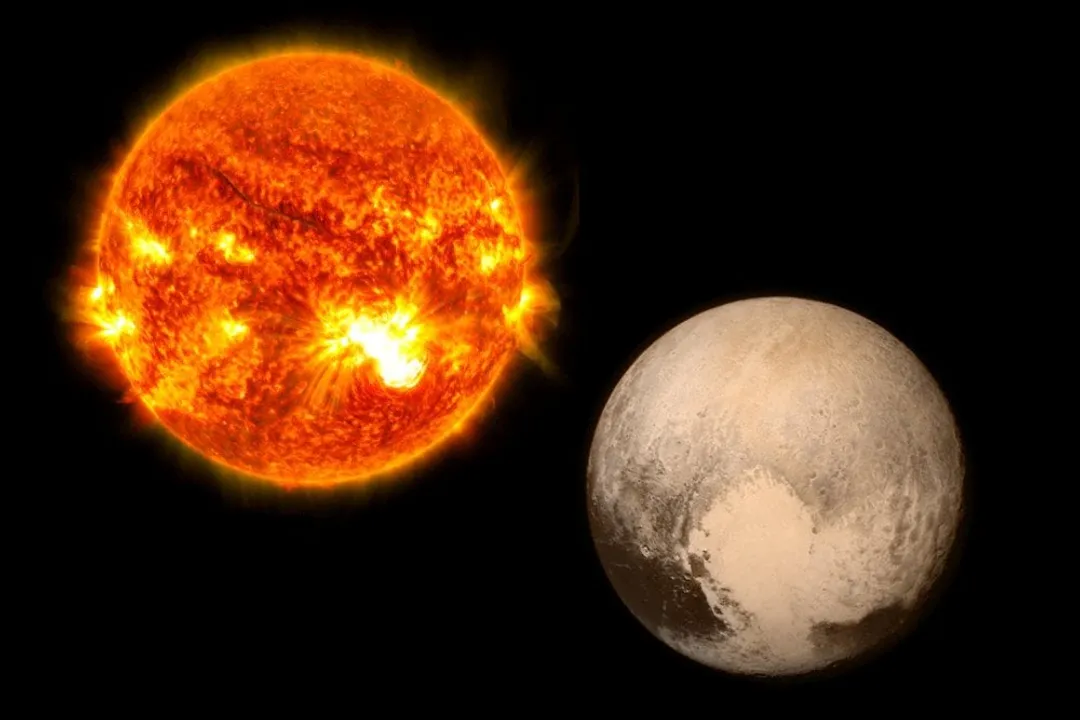
A typical supernova represents an event where material reaches temperatures orders of magnitude hotter than the surface of our Sun, which hovers around $5,800$ Kelvin. [2] The peak energy release in a standard supernova involves the core collapsing and then rebounding, briefly creating conditions that force matter into an exotic, plasma state. [7] While the term "supernova" covers a range of stellar deaths, the sustained, record-breaking thermal extremes are generally found in even more energetic phenomena.
# Greater Explosions
If a standard supernova is a cosmic explosion, a hypernova is an explosion on a scale that defies easy comparison. These events are associated with the collapse of extremely massive stars—those perhaps 25 times the mass of the Sun or more—and are thought to power the longest and most energetic Gamma-Ray Bursts (GRBs). [3] While the underlying physics remains rooted in core-collapse, the sheer scale of the initial star means that the energy release, and thus the peak temperature achieved in the resulting accretion disk or jet, is significantly higher than a standard supernova. [3] Although specific, universally agreed-upon peak temperatures for hypernovae are difficult to isolate from general supernova data, they represent the most powerful known stellar explosions in the present universe, suggesting a thermal output that comfortably exceeds the K benchmark of their less dramatic cousins. [7]
# Accelerator Temperatures
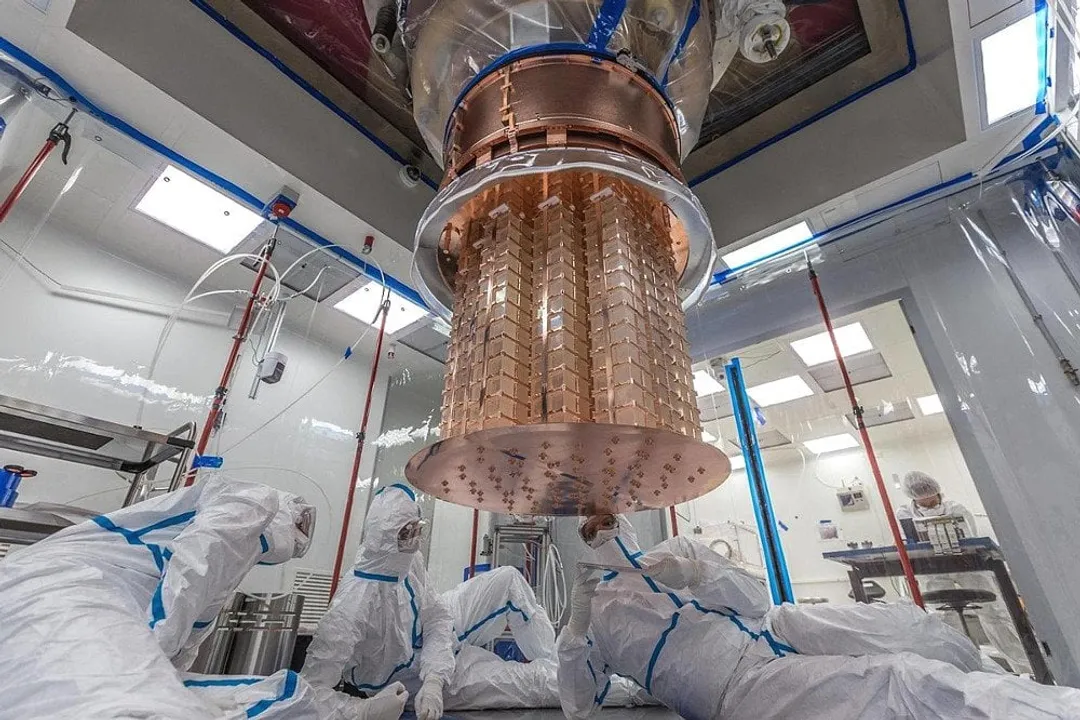
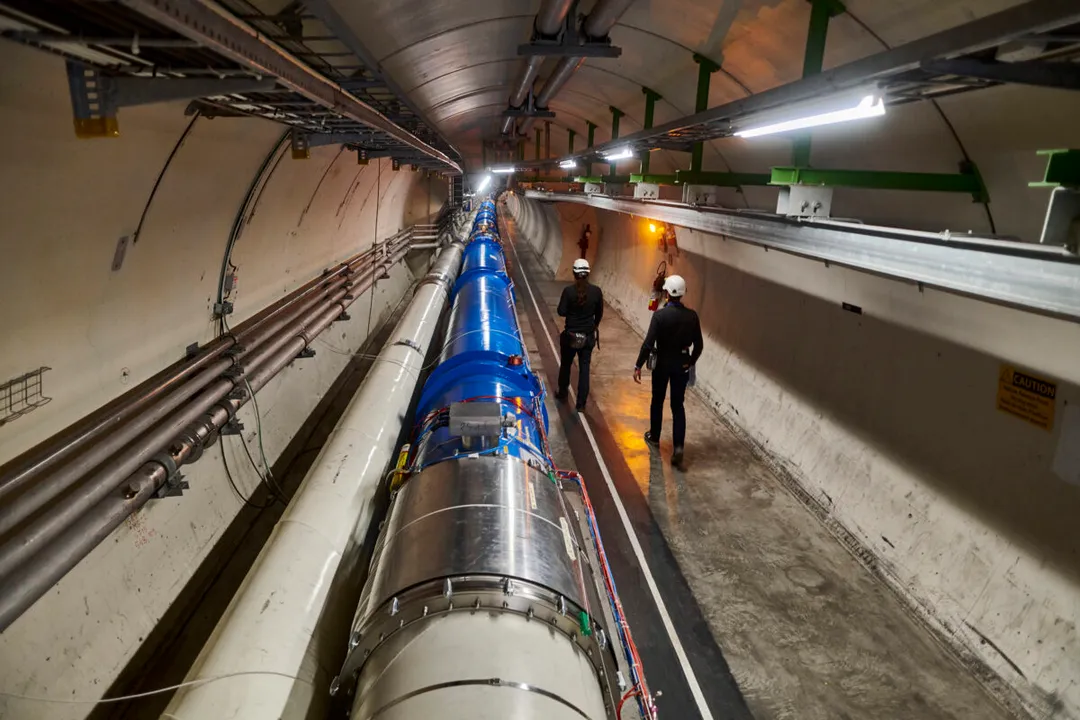
Ironically, some of the hottest, most measurable temperatures in existence are not found millions of light-years away but within underground laboratories here on Earth. Scientists at facilities like the Large Hadron Collider (LHC) at CERN or the Relativistic Heavy Ion Collider (RHIC) smash heavy ions—such as gold or lead nuclei—together at nearly the speed of light. [1][2] This focused collision recreates the conditions that existed a few microseconds after the Big Bang. [1][2]
The resulting state of matter is not a normal gas or plasma; it is a quark-gluon plasma (QGP), a state where protons and neutrons effectively dissolve into their fundamental constituents. [1] This substance, the hottest known substance in the universe that we can currently study and measure directly, has achieved temperatures approaching Kelvin ($4$ trillion Kelvin). [1][2] To put this into perspective against the stellar explosion benchmark, the heat generated in the LHC is roughly 100 to 400 times hotter than the peak temperature achieved in a typical supernova explosion. [2] This sustained, highly controlled heat source allows physicists to study the fundamental forces of nature under conditions impossible to replicate with conventional heating methods.
# Cosmic Maximum
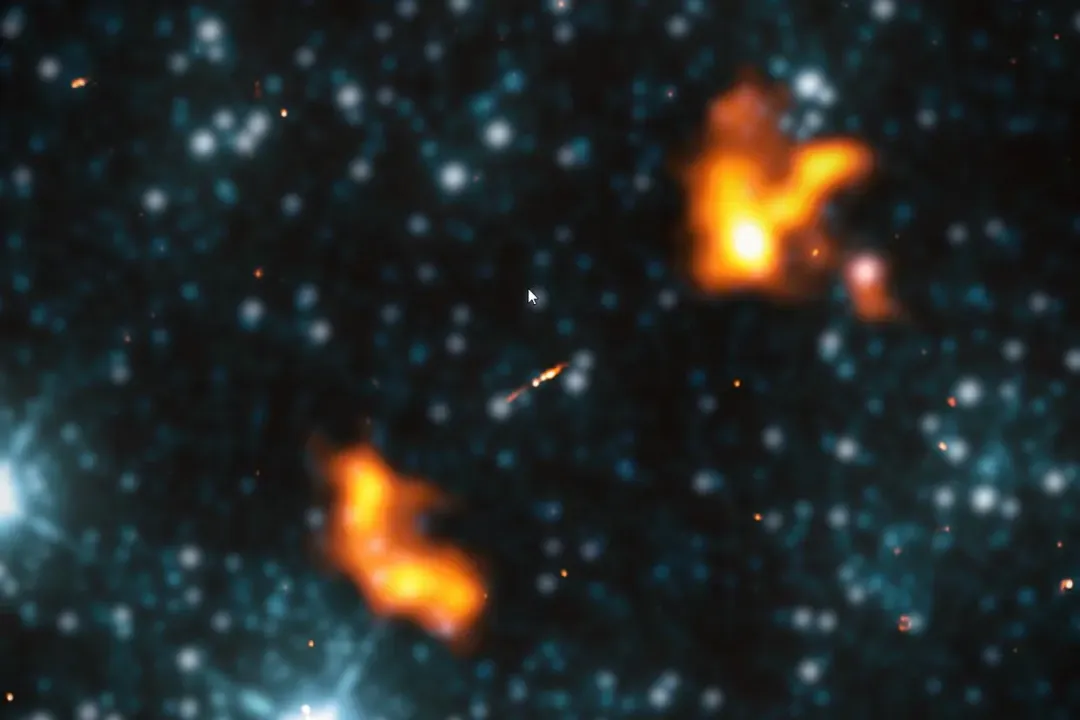
While the LHC creates a pocket of extreme heat, it is still far removed from the absolute upper limit dictated by physics. The question of the highest possible temperature leads us to the universe's first moment: the Big Bang. [5][7] During this singularity, all energy and matter were compressed into an infinitesimally small space, resulting in a theoretical temperature limit known as the Planck Temperature. [5]
The Planck Temperature is calculated to be approximately Kelvin. [5][7] This value is derived from fundamental constants—the speed of light, the gravitational constant, and Planck’s constant—and represents the point at which our current understanding of physics, specifically the incompatibility between general relativity and quantum mechanics, breaks down. [5][7] At this temperature, the energy of the particles is so high that gravitational interactions between them become as strong as the other fundamental forces, necessitating a theory of quantum gravity that we do not yet possess. [5]
The universe, at the moment of its birth, is theorized to have reached this staggering height, making the Planck temperature the single hottest measurable, albeit theoretical, point in existence. For comparison, the temperature of a hypernova is negligible against this figure.
# Thermal Scale
To illustrate the vast differences between these thermal extremes, it is helpful to place them on a scale. The temperatures generally discussed span over twenty orders of magnitude, meaning that the jump from one category to the next requires multiplying the previous value by factors often involving large powers of ten.
| Phenomenon | Approximate Temperature (Kelvin) | Comparison Factor (vs. K Supernova) |
|---|---|---|
| Surface of the Sun | ||
| Supernova Peak | $1$ (Baseline) | |
| Quark-Gluon Plasma (LHC) | times hotter | |
| Big Bang (Planck Time) | times hotter |
Considering the sheer magnitude difference between the man-made record and the cosmic one, it is insightful to think of the gap between the LHC's plasma and the Planck temperature not just as a numerical difference, but as the difference between the largest machine we can build and the fundamental structure of spacetime itself. [5][7] While a hypernova remains the hottest naturally occurring, sustained event we can observe today, the temperature of the earliest universe remains the undisputed thermal ceiling, far exceeding any observable phenomenon in the current cosmic epoch. We can only probe temperatures slightly higher than the remnants of stellar death through focused particle acceleration, but the true beginning of time remains locked behind the theoretical barrier of the Planck scale. [5]
#Citations
TIL the hottest known substance in the universe is actually created ...
What Are The Hottest And Coldest Things In The Universe?
Hypernova - Wikipedia
What is the hottest object in the universe? - Quora
Is there a highest temperature? | Hard Science Fiction
What is the hottest object in the universe?
Is there a hottest temperature possible in the universe?
What's hotter than the hottest stars in the Universe? - Big Think
What's the Highest Known Temperature in the Universe? - Futurism