What is another name for the heliocentric theory?
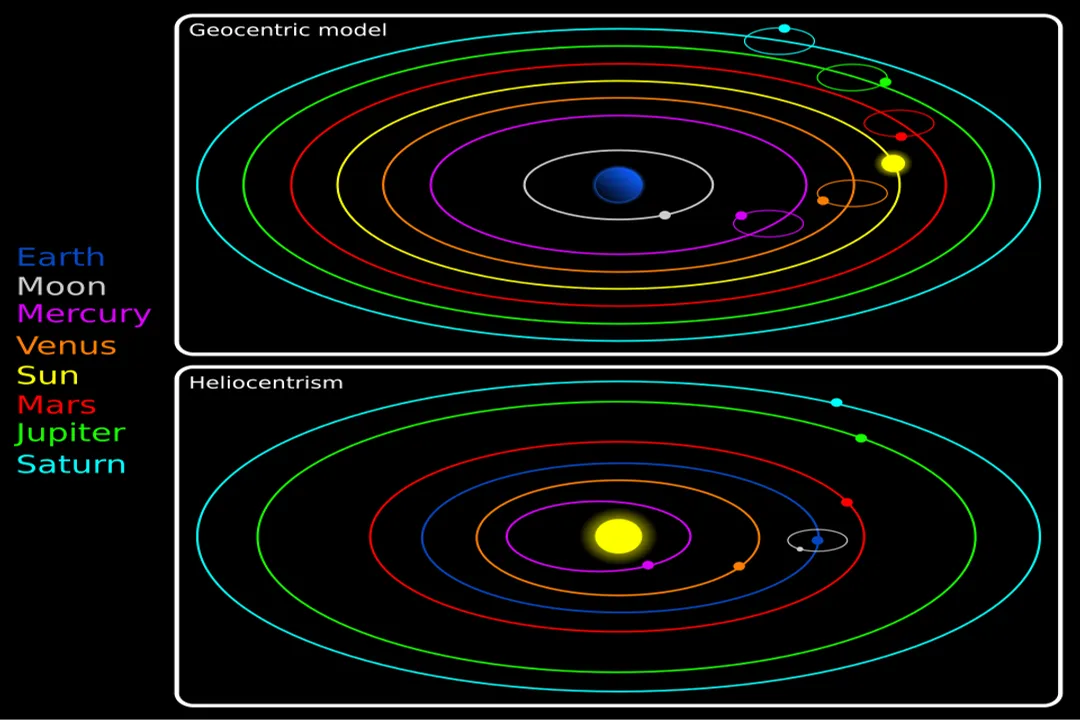
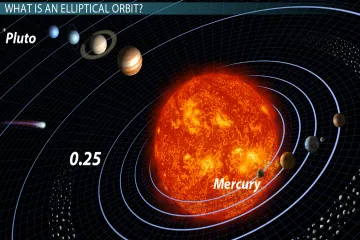
The fundamental concept of placing the Sun, rather than our own world, at the center of the planetary arrangement has several recognized names, though perhaps the most straightforward synonym is simply the heliocentric model. This term derives its root from the Greek words helios for "Sun" and kentron for "center". When we discuss this astronomical framework today, we are referring to the structure where the Earth and all the other known planets revolve around the Sun, which is positioned near the center of the Solar System. Historically, this concept was a radical departure from the millennia-old view, which is known by its own set of alternate titles, most notably the geocentric model or the Ptolemaic theory.
The concept of a moving Earth was not an invention of the Renaissance; in fact, the idea predates the common era by centuries. Long before Nicolaus Copernicus formalized his mathematics, the principle was proposed in ancient Greece. The first known proponent of a truly heliocentric system was Aristarchus of Samos around the 3rd century BC. While his original writings are lost, historical accounts, such as one by Archimedes, detail his hypotheses: the fixed stars and the Sun remained unmoved, and the Earth revolved around the Sun in a circle, with the Sun situated in the middle of the Earth's orbit. Furthermore, Aristarchus included the idea that the Earth also rotated on its own axis daily. Other ancient thinkers, like the Pythagoreans and Heraclides of Pontus, toyed with the notion of a moving Earth, sometimes revolving around a "central fire" instead of the Sun, but Aristarchus is credited with the Sun-centered arrangement.
# Geocentric Contrast
To fully appreciate what an alternative name implies, one must understand what it was intended to replace. For over fourteen centuries, the prevailing scientific description of the cosmos was the Ptolemaic system, a triumph of geocentrism where the Earth was fixed and everything orbited it. Claudius Ptolemy formalized this view in his Almagest around $150$ AD, building upon earlier geocentric ideas. This system required immense complexity—including deferents, epicycles, and the equant—to account for observable phenomena, most famously the apparent retrograde motion of the planets (where they seem to briefly reverse direction in the sky).
The sheer complexity of the Ptolemaic machinery, particularly the equant (a point about which rotation was uniform, but offset from the center), grated against the philosophical ideal of celestial perfection, which demanded uniform circular motion. This philosophical dissatisfaction, more so than any new observational data, fueled the Renaissance search for a better arrangement.
# Copernican Naming
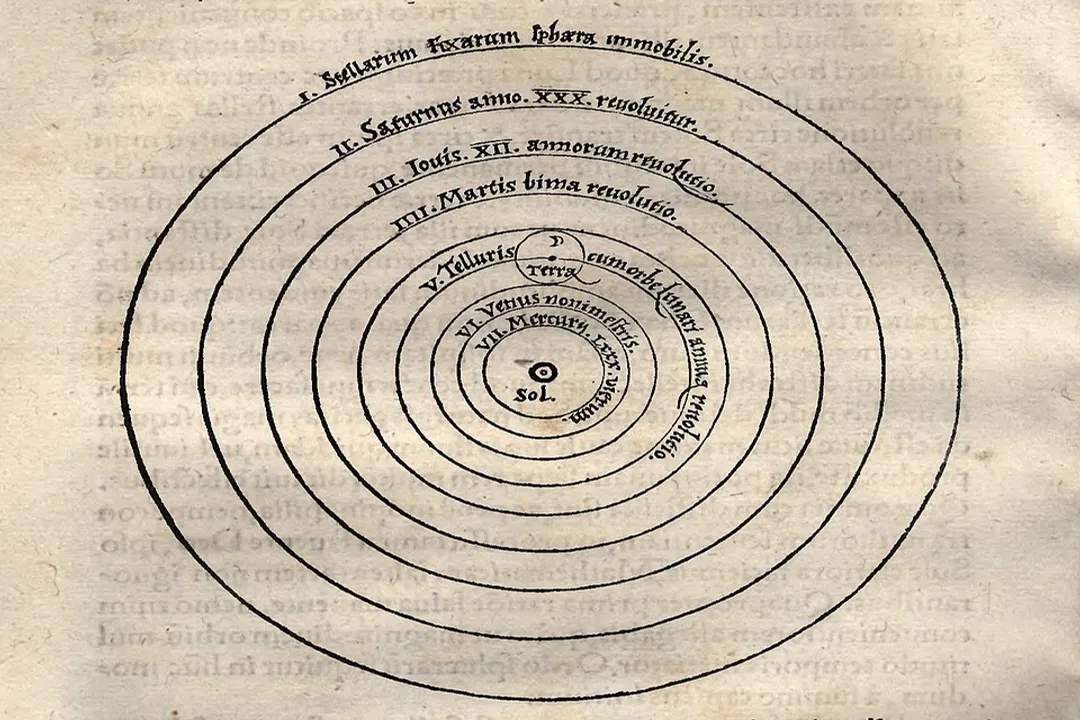
When Nicolaus Copernicus published his work, De revolutionibus orbium coelestium in $1543$, he provided the definitive mathematical structure that gave the ancient idea a modern, predictive basis. This is why the heliocentric theory is so often specifically referred to as the Copernican model or Copernican heliocentrism. Copernicus essentially deposed the Earth from its central, privileged spot, relegating it to the status of just another planet revolving around the Sun.
The Copernican System introduced several key tenets that defined it as a new name for the concept:
- The Sun sits near the center of the cosmos (though not precisely the geometric center).
- The Earth rotates daily on its axis, explaining the apparent daily motion of the stars.
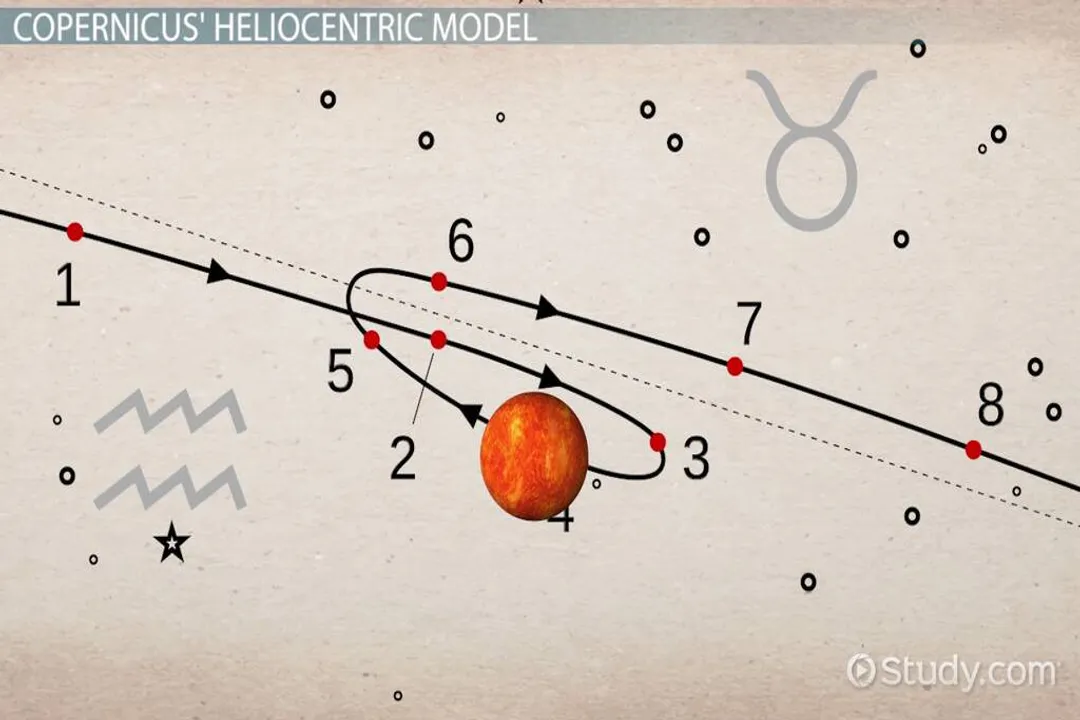
- The Earth has an annual revolution around the Sun, which naturally explains the oddity of retrograde motion as a mere parallax effect—similar to how a car you pass appears to move backward.
It is important to note that Copernicus, in his quest for elegance and to adhere to the tradition of perfect circles, actually retained some of the problematic mechanisms of the older model, such as epicycles, resulting in a system that wasn't immediately more accurate than Ptolemy's for predicting positions.
# Evolutionary Nomenclature
When discussing alternate names, the evolution of the theory itself provides context for how the nomenclature shifted. The transition from geocentric to heliocentric was not instantaneous, nor was it a single leap from one definitive idea to another. It was a protracted process involving several names describing different versions of the truth.
The earliest historical name is tied directly to its first proposer: the Aristarchian system. This name, however, rarely appears in general discourse because Aristarchus's work was largely lost, making it an academic footnote rather than a revolution.
The 16th-century shift, the Copernican Revolution, cemented the term "heliocentric" into the common lexicon, but the model itself was rapidly refined, necessitating further conceptual names based on advancements:
- Copernican Model: Still highly related to the heliocentric concept, but mathematically flawed by assuming perfect circular orbits.
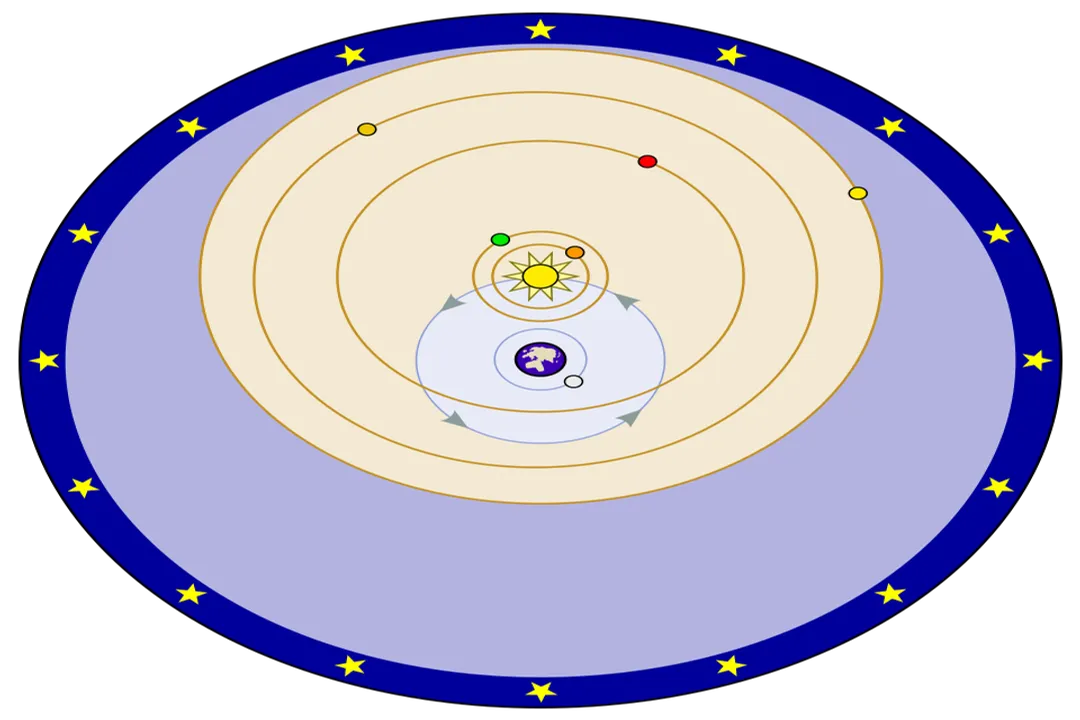
- Tychonic System: An important intermediate name, this was Tycho Brahe's geo-heliocentric compromise where the Sun and Moon orbit the Earth, but all other planets orbit the Sun. This model preserved a non-moving Earth but still centered the planetary orbits around the Sun, avoiding the physical objections against a moving Earth based on contemporary physics. It represents a hybrid model, not a true alternative name for the pure heliocentric theory.
- Keplerian System: This name arose after Johannes Kepler, utilizing Tycho's superior data, discarded the circular paths entirely. Kepler’s laws, specifically the first law stating planets move in elliptical orbits with the Sun at one focus, provided the true mathematical backbone for modern understanding of the Sun-centered system. Kepler’s model, while fully heliocentric, was far more accurate than Copernicus’s circle-based attempt.
If we consider the names based on their structure, the purest descriptive alternative to the Earth-centered view is the Sun-centered system. This term strips away the history and the mathematical baggage of epicycles and focuses purely on the cosmological arrangement—the Sun is the primary reference point for planetary revolutions.
# A Deeper Look at Terminology Evolution
It is fascinating to trace how the term "heliocentric" has been both fiercely defended and later redefined, illustrating a subtle shift in what the center actually means. Copernicus positioned the Sun near the center of the celestial spheres, but not exactly at the center of the universe. His system still relied on the philosophical notion that the center of motion was the center of Earth’s orbit, which was not where the Sun actually sat.
This historical nuance points to a critical juncture that future astronomers grasped:
The true nature of the center shifted from a philosophical one to a physical one. For the ancients and Copernicus, the center was a privileged, stationary location that required some degree of perfection (e.g., circular motion). When Galileo proved Venus had phases, that was proof the Earth orbited the Sun, but it did not address why the Sun was the center. It was only when Isaac Newton established universal gravitation that the physical reason for the arrangement was understood: the planets orbit the center of mass (the barycenter) of the entire system.
This allows for an interesting point of divergence in naming: when a modern physicist uses the term heliocentric velocity, they are operating within a reference frame where the origin is the Sun, or more accurately, the system's barycenter, which is slightly displaced from the Sun's center due to the mass of the planets. Therefore, the name heliocentric model now functions primarily as a computational reference frame for the Solar System, stripped of the philosophical weight it carried when it was first gaining traction against geocentrism.
When evaluating the historical resistance, the theological controversy often revolved around the title's implications. The rejection of the Ptolemaic theory was sometimes framed as rejecting Scripture, as passages seemed to imply the Sun moved around a stationary Earth. Thus, accepting the Copernican system required interpreting those passages as written from a terrestrial perspective, rather than as literal cosmological instructions. The fight wasn't just over a name; it was over which physical reality—the one we feel or the one that mathematically fits—held ultimate authority.
The early adoption of the Sun-centered system by thinkers like Giordano Bruno, who extended the concept to an infinite universe, shows that once the Earth was moved, the traditional model of a bounded, central cosmos collapsed entirely. While Bruno advocated for the heliocentric principle, he went far beyond Copernicus by arguing against the structure of the spheres entirely.
In short, while the most common and direct alternative name for the heliocentric theory is the heliocentric model itself, its historical context demands we also recognize the Copernican system and the descriptive Sun-centered system as valid, context-specific substitutes for the concept that irrevocably changed humanity's view of its place in space.

#Citations
Heliocentrism - Wikipedia
Heliocentric Theory & Model of Solar System - Lesson - Study.com
Copernicus's Heliocentric Model : r/Astronomy - Reddit
the copernican model of the planetary system - the heliocentric model.
Historical background - Richard Fitzpatrick
What were the precursor works to Copernicus Heliocentrism?