What was Galileo's biggest theory?
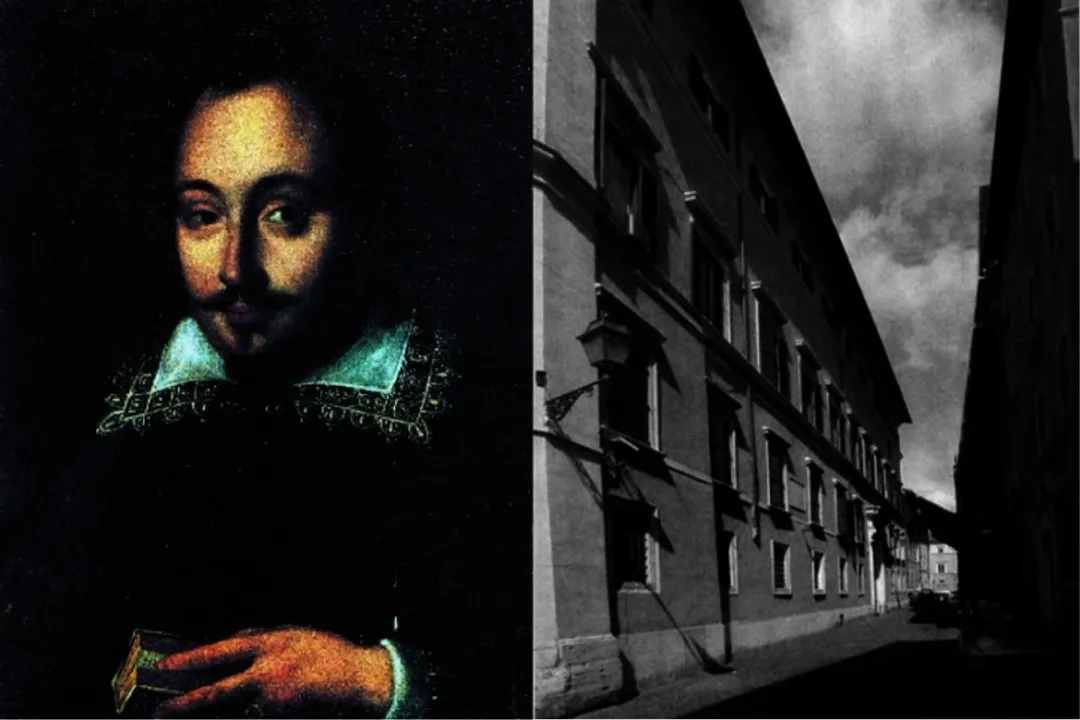
Galileo Galilei’s most significant contribution to human thought was not a single, neat formula, but rather the powerful, evidence-backed argument for the Copernican model—the idea that the Earth orbits the Sun, not the other way around. [1][6] While he made profound advances in the study of motion and dynamics, his insistence on replacing the long-held, church-supported geocentric view with a sun-centered cosmos remains the theory for which he is most famously known and for which he paid a heavy personal price. [6][8] This cosmological shift signaled a defining moment in the Scientific Revolution, moving the scientific world away from an Earth-centric understanding of the universe toward a new alignment with observable reality. [1][9]
# Cosmological Shift
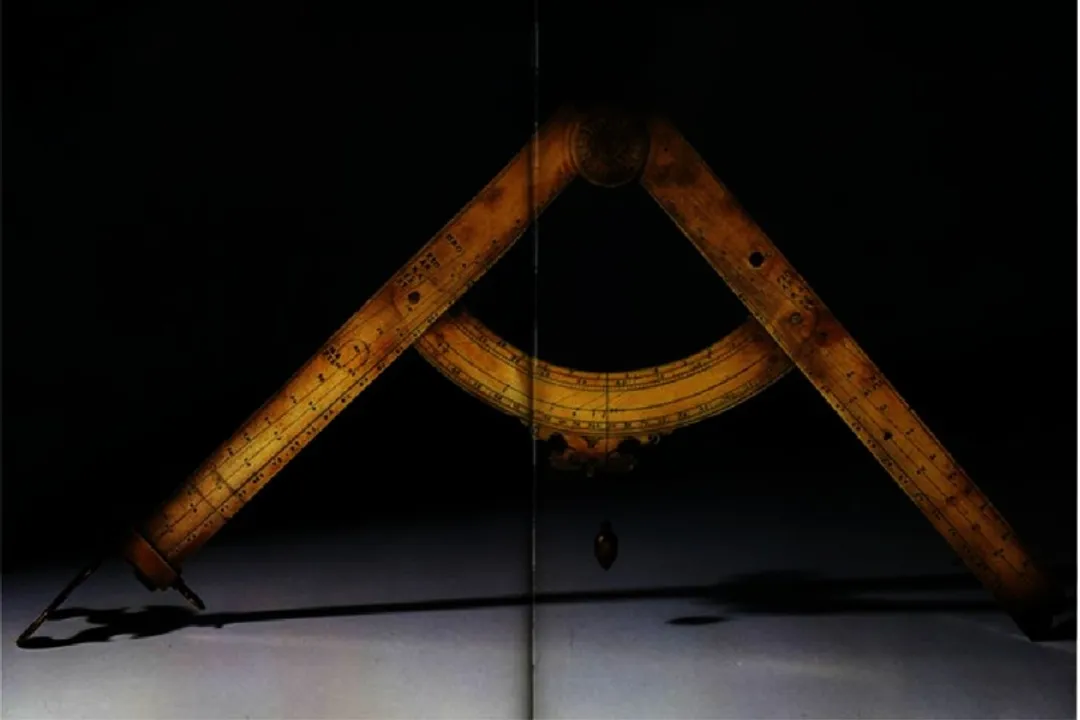
For centuries, the established view, largely aligned with Aristotelian and Ptolemaic models, placed the Earth immobile at the center of the universe. [6] Galileo, however, became a staunch proponent of the work of Nicolaus Copernicus, who proposed that the Sun held the central position in the solar system. [1] Galileo’s primary role in championing this theory stemmed from his remarkable astronomical observations made possible by his improvements to the telescope. [1][7] He was not the first to suggest heliocentrism, but he was arguably the first to gather compelling physical evidence to support it, evidence that was directly observable through his improved instrument. [9]
# Telescopic Proofs
The evidence Galileo collected fundamentally undermined the ancient models that required perfect, unchanging celestial spheres. [1] His observations were varied and devastating to the old ways of thinking. One of the most compelling discoveries was the existence of moons orbiting Jupiter. [1][7] This demonstrated that not everything in the heavens revolved around the Earth, shattering a foundational pillar of the geocentric system. [7][9]
Equally important were his observations of Venus. [1] Galileo saw that Venus goes through a complete set of phases, much like our own Moon. [7] In the Ptolemaic system, Venus was always between the Earth and the Sun, meaning observers should only ever see crescent phases. In the Copernican system, Venus orbits the Sun inside Earth's orbit, allowing for the observation of gibbous and full phases as it swings around the far side of the Sun relative to Earth. [1] Seeing Venus display a full range of phases was, for many, the visual smoking gun proving the Earth must be orbiting the Sun. [7] Furthermore, Galileo mapped the rough, cratered surface of the Moon, showing it was not a perfect, ethereal orb as previously believed, and noted the existence of sunspots, demonstrating that even the Sun was not an unchanging heavenly body. [1]
This conflict between observation and established doctrine led to Galileo's famous trial and condemnation by the Inquisition. [6] The core issue was the Church's insistence on a literal interpretation of certain scriptures that seemed to support an Earth-centered cosmos, placing theological authority in direct opposition to empirical evidence. [6]
# Model Comparison
To understand the magnitude of the shift Galileo advocated for, it helps to contrast what the two dominant models predicted regarding a key observation—the phases of Venus. The differences in expectation were absolute, which is why Galileo's findings were so revolutionary.
| Model | Earth's Position | Predicted Venus Phases Visible from Earth |
|---|---|---|
| Ptolemaic (Geocentric) | Stationary Center | Crescent and New phases only |
| Copernican (Heliocentric) | Orbits the Sun | All phases, including Quarter and Gibbous |
| [1][7] |
The fact that Galileo observed the Gibbous and Full phases directly supported the Earth revolving around the Sun, making this observational validation his most impactful theoretical achievement. [9]
# Inertia and Motion
While cosmology was the stage for his greatest public battle, Galileo simultaneously laid the groundwork for modern mechanics, a theory of motion that decisively overturned Aristotelian physics. [5] Aristotle taught that objects required a continuous force to keep moving and that heavier objects fall faster than lighter ones. [1][5] Galileo challenged this through systematic experimentation, often involving inclined planes to slow down the observation of falling objects. [5]
His work established the concept of inertia, which states that an object in motion will stay in motion with the same speed and in the same direction unless acted upon by an external force. [1][5] This concept is fundamental to all subsequent physics, including Newton's laws. [5] He also correctly described the law of falling bodies, demonstrating that in a vacuum, all objects accelerate toward the Earth at the same rate, regardless of their mass. [1] This directly contradicted the common assumption that weight dictated speed of descent. [5]
His focus was on the mathematization of nature; he insisted that the book of nature was written in the language of mathematics. [8] This methodological shift—moving from purely philosophical arguments to repeatable experiment and mathematical description—was as important as any specific finding, providing the toolset for future scientific inquiry. [8]
# Tidal Hypothesis
A fascinating aspect of Galileo's thinking, and one that stands out because it was demonstrably incorrect, was his detailed theory of the tides. [2][4] Galileo was obsessed with explaining the ebb and flow of the oceans because he believed that if he could mathematically explain tides, he would possess a powerful argument proving the Earth’s motion around the Sun. [3]
His theory rested on the idea that the tides were caused by the Earth’s rotation and its orbital speed around the Sun. [2][3] He imagined the water sloshing back and forth as the Earth sped up and slowed down relative to the Sun’s position during its orbit, essentially treating the Earth's motion as an accelerating and decelerating force acting on the water. [3] He even attempted to create a mathematical model based on this mechanism. [3]
However, Galileo fundamentally rejected the role of the Moon in causing the tides. [2][3] He simply could not reconcile the Moon's influence with his mechanical view of the Earth's movement. [3] He famously stated that if the Moon caused the tides, the tides should be strongest when the Moon was directly overhead, which was not what observation showed. [2]
This is where a subtle, yet vital, point about scientific investigation emerges. While Galileo reached the correct conclusion regarding the Earth's movement (heliocentrism), the specific physical theory he developed to support that conclusion—his tidal explanation—was wrong. [4] This illustrates that a scientist can be correct about the grand conclusion but still fail in the details of the supporting mechanics. [4] If one were examining Galileo’s body of work purely on mechanics, the tidal theory would be seen as a significant error, even though it was motivated by defending his greatest achievement. [2] The Moon's actual gravitational pull was the missing, critical component that he dismissed. [3]
It is instructive for modern thinkers to realize that even geniuses pursuing a correct paradigm can sometimes latch onto a flawed mechanism because they prioritize fitting observable data into a pre-existing, preferred conclusion rather than letting the data dictate the mechanism entirely. For Galileo, the reality of the tides was a chance to prove his cosmology, rather than a phenomenon to be explained purely on its own merits first. [3]
# Legacy of a Visionary
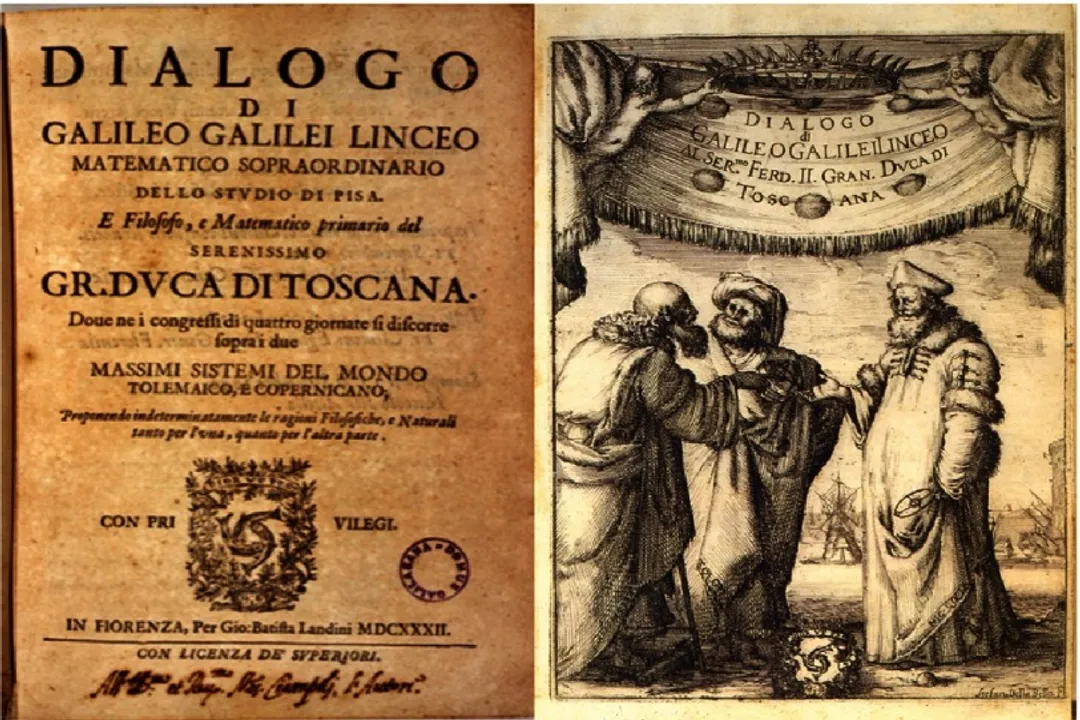
Galileo’s life illustrates the immense friction that occurs when established authority meets paradigm-shifting evidence. [6] While his observations concerning Jupiter’s moons and Venus’s phases were the observational backbone of the Copernican theory, his broader impact lies in establishing a method of inquiry. [8] He showed that nature could be understood not just through ancient texts, but through rigorous observation, measurement, and mathematical description. [8][5]
His contribution to physics, specifically the laws of falling bodies and inertia, formed the essential scaffolding upon which Isaac Newton would later build his universal law of gravitation. [5] Without Galileo establishing that objects accelerate uniformly regardless of weight (in a vacuum) and that motion requires no constant push to continue, Newton’s later synthesis would have been impossible to formulate as it was. [1][5] In this sense, his greatest theory—the defense of heliocentrism—was both an end in itself (a new universe model) and a catalyst for the mechanical laws that followed. [9] He was a figure who not only changed what people believed about the cosmos but also changed how they believed it—a powerful dual legacy. [8]
#Citations
Galileo Galilei - Wikipedia
NOVA | Galileo's Battle for the Heavens | His Big Mistake - PBS
Galileo's theory of tides - Intellectual Mathematics
Galileo's Big Mistake | PBS LearningMedia
Galileo Galilei: Science vs. faith - PMC - NIH
The truth about Galileo and his conflict with the Catholic Church
Galileo Galilei - StarChild - NASA
Galileo Galilei - Stanford Encyclopedia of Philosophy
Galileo Galilei - New Mexico Museum of Space History