What elements do super giants produce?
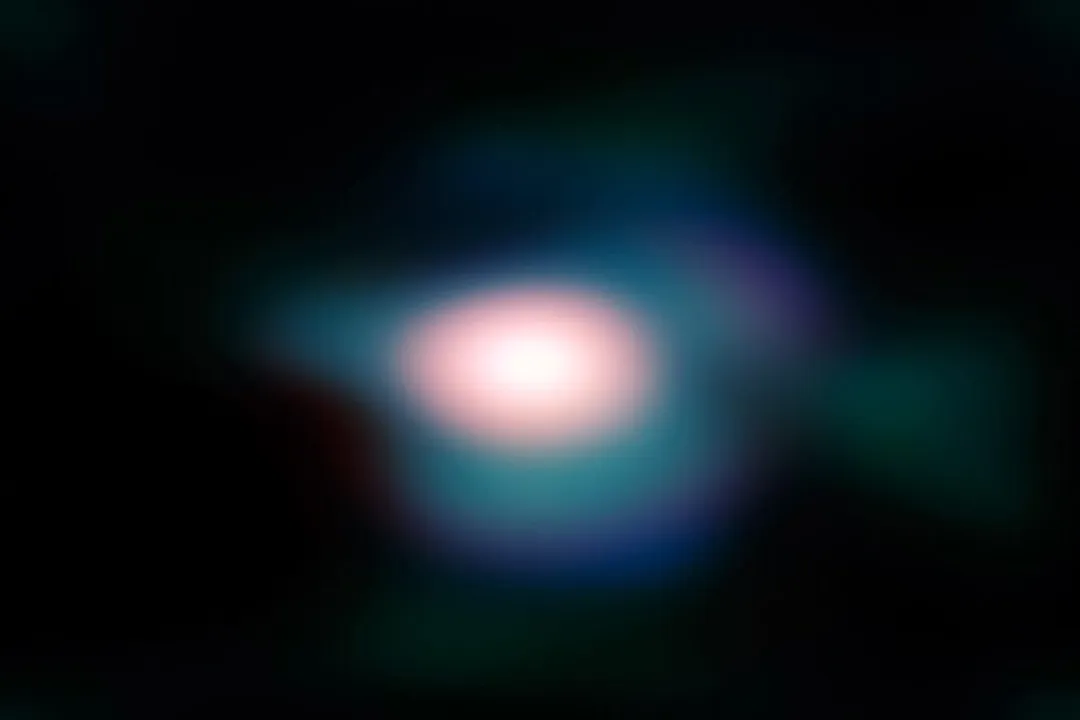
Massive stars, those born with many times the mass of our Sun, evolve into supergiant stars, representing some of the most luminous and short-lived heavyweights in the galaxy. [1][6] These stellar titans are not merely astronomical spectacles; they are fundamental cosmic engines responsible for forging and scattering nearly every element heavier than hydrogen and helium throughout the universe. [3][7] Understanding what elements they produce requires tracing their rapid, high-pressure life cycle, which culminates in a catastrophic explosion that seeds the cosmos with new chemical building blocks. [4][8]
# Stellar Birthright
When a star exhausts the hydrogen fuel in its core, stars significantly more massive than the Sun transition into the supergiant phase. [8][9] In their initial state, like most stars, their composition is overwhelmingly dominated by the simplest elements: hydrogen and helium. [5] However, the extreme mass of a supergiant allows for core temperatures and pressures that far exceed those in smaller stars, kicking off a series of advanced fusion reactions that generate progressively heavier elements. [6][8]
The life of a supergiant is a dramatic rush against gravity. Because they consume their fuel at an incredible rate due to their size, their lifespan is relatively short on astronomical timescales. [6] This accelerated burning means the internal processes that create new elements happen with incredible intensity, packing millions of years of element creation into mere millions of years of life. [4]
# Core Synthesis Chain
Inside a supergiant, nuclear fusion proceeds in concentric shells, often described as an onion-like structure, where lighter elements are fused in outer layers and heavier elements in the deeper, hotter inner core. [4][8] This process is the engine that allows the star to resist gravitational collapse for as long as it can. [6]
The sequence of fusion starts simply: hydrogen fuses into helium. [5] As the core contracts and heats, the helium ignites, fusing into carbon and oxygen. [5][8] Once the core helium is spent, the process continues its ascent up the periodic table:
- Carbon fuses into neon and magnesium. [5]
- Neon fuses into oxygen and magnesium.
- Oxygen fuses into silicon and sulfur. [5]
- Finally, silicon fuses into iron. [4][9]
This chain reaction systematically builds up the heavier elements layer by layer, with the heaviest product of this sustained core fusion being iron (). [4][6][9]
# The Iron Barrier
The formation of iron marks a crucial turning point in the supergiant's life and its ability to produce new elements through standard thermonuclear fusion. [4][9] Iron is uniquely stable among the elements created this way; fusing iron atoms together actually consumes energy rather than releasing it. [6] This means that once the core becomes pure iron, the star loses its primary internal energy source that was holding up its immense weight. [9]
Since the star can no longer generate outward pressure through fusion, gravity wins instantly, leading to catastrophic core collapse. [4][6] It is this collapse, happening in milliseconds, that sets the stage for the creation of the universe’s rarest and heaviest elements—those that follow iron on the periodic table. [7]
| Fusion Stage | Primary Elements Created | Location in Star | Energy Release |
|---|---|---|---|
| Main Sequence | Helium | Core | Exothermic |
| Advanced Shells | Carbon, Oxygen, Neon, Silicon | Inner Layers | Exothermic |
| Final Core Burn | Iron () | Innermost Core | Energy Neutral/Endothermic |
| Supernova Shockwave | Elements Heavier Than Iron | Expanding Ejecta | Highly Endothermic/Exothermic |
| [4][6][9] |
# Explosive Creation
The true element factory for the materials beyond iron is the supernova explosion itself. [2][4] When the iron core collapses, it compresses to incredible densities, rebounding violently and sending a massive shockwave outward through the star's outer layers. [4] This event subjects matter to extreme conditions—intense heat and a massive flux of free neutrons—that allow nuclei to rapidly absorb neutrons and build up masses far greater than iron. [7]
This process, often referred to as the rapid neutron-capture process or r-process, is responsible for synthesizing approximately half of all the elements heavier than iron, including essentials like gold, platinum, uranium, and thorium. [7] Without the immense energy and neutron flux provided by a core-collapse supernova of a supergiant, these elements simply would not exist in abundance in the cosmos. [7] It is a fascinating chemical dichotomy: the star builds its structure up to iron through calm, though rapid, burning, and then destroys itself to create everything heavier. [4]
# Cosmic Dispersal
The elements created within the core (up to iron) and those forged in the explosive death throes (heavier than iron) are not kept by the remnant core. The supernova shockwave blasts the star’s enriched material—all those newly minted elements—outward into the interstellar medium. [4][8] This ejected material mixes with existing gas clouds, eventually becoming incorporated into the next generation of stars, planets, and even life. [8]
Consider the fact that every atom of calcium in your bones, the iron in your blood, and the gold in your jewelry were all initially forged in the core of a massive star or during its subsequent supernova event. [3][7] The specific mix of elements released depends on the initial mass of the progenitor star and the exact details of the explosion, but the outcome is always the same: chemical enrichment of the galaxy. [4]
We can look at a hypothetical supernova remnant, like the famous Crab Nebula, and see the immediate results of this element factory shutting down. Within that expanding cloud, scientists can spectroscopically identify the signatures of newly created elements, confirming that the energy released during the collapse directly fuels the creation of the heaviest stable and unstable isotopes. [7] This cycle ensures that new star systems forming from these enriched clouds will possess the necessary building blocks for rocky planets and complex chemistry, unlike the very first stars which were almost purely hydrogen and helium. [8]
Related Questions
#Citations
Supergiant - Wikipedia
G. C. Sloan: Main Sequence Stars, Giants, and Supergiants
Large Stars - What is Your Cosmic Connection to the Elements?
Supergiants and Supernovas | CK-12 Foundation
What's the elemental composition of supergiant stars? - Quora
Stars
Extreme conditions in stars produce the universe's heaviest elements
Stellar Evolution - | The Schools' Observatory
Red Supergiant Definition, Temperature & Life Cycle - Lesson