What elements are fused in a supernova?
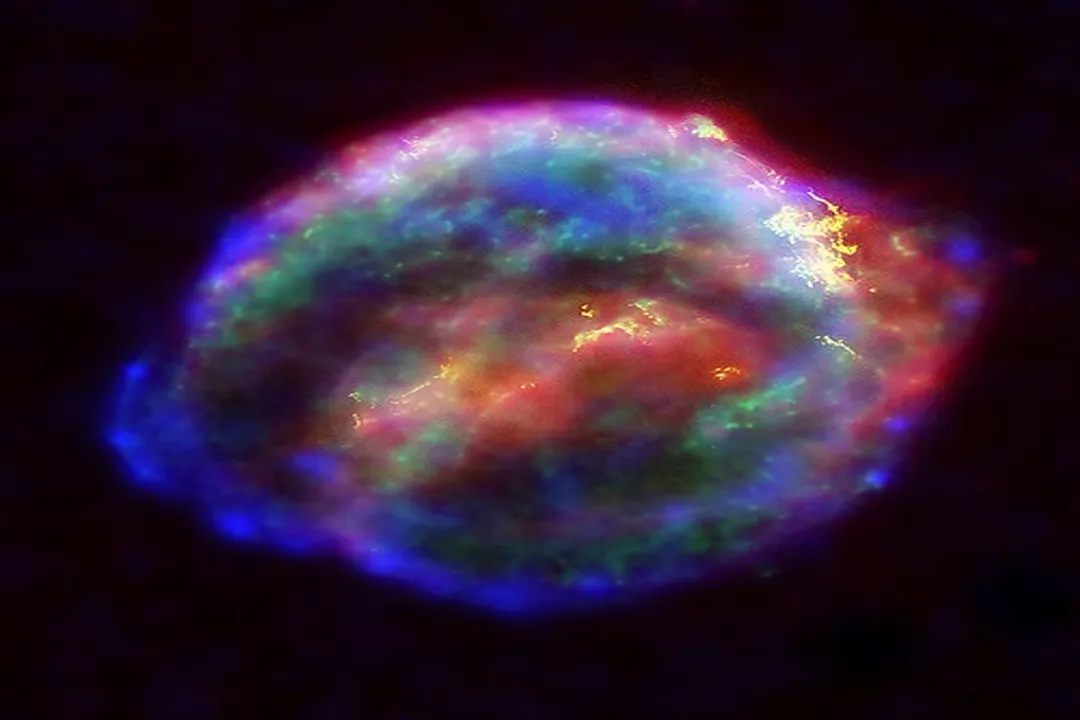
The final, catastrophic moments of a massive star are the universe’s most dramatic factories, producing nearly every element heavier than iron. While we often associate element creation with gentle, sustained burning, the supernova explosion itself is the mechanism that forges the truly heavy constituents of the cosmos. [1][2] To understand what is fused or created, we must look both at the steady work done in the star’s final years and the violent seconds of its death. [10]
The process begins long before the core collapses. In massive stars, nuclear fusion operates like a series of nested furnaces, building up heavier and heavier nuclei by smashing lighter ones together, releasing energy with each successful step. [8] This process requires immense gravitational pressure and heat, increasing as the elements get heavier. [5]
# Core Burning
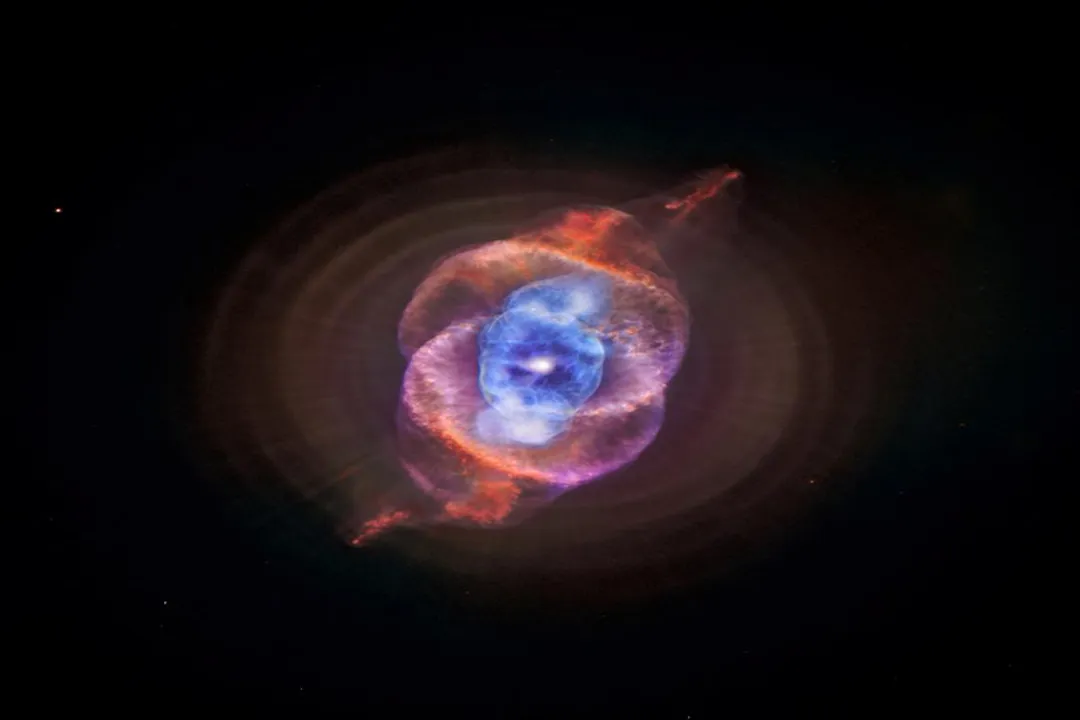
Within the burning core of a giant star, a definite sequence of fusion occurs, moving inward toward the center. [8] Hydrogen fuses into helium, helium into carbon, and so on. As fuel is exhausted in the center, the star contracts, raising the temperature enough to ignite the next heavier fuel source in the shell above it. [10]
This layered burning continues through several stages:
- Carbon Burning: Producing neon, sodium, magnesium, and aluminum. [8]
- Neon Burning: Yielding oxygen and magnesium. [8]
- Oxygen Burning: Creating silicon, sulfur, and phosphorus. [8]
- Silicon Burning: This final, rapid stage before collapse produces elements whose nuclei contain approximately equal numbers of protons and neutrons, culminating in iron () and nickel (). [8][5]
This steady, constructive fusion chain is incredibly efficient at releasing energy, sustaining the star for millions of years. However, this stellar construction project hits a hard stop at iron. [10]
# Iron Limit
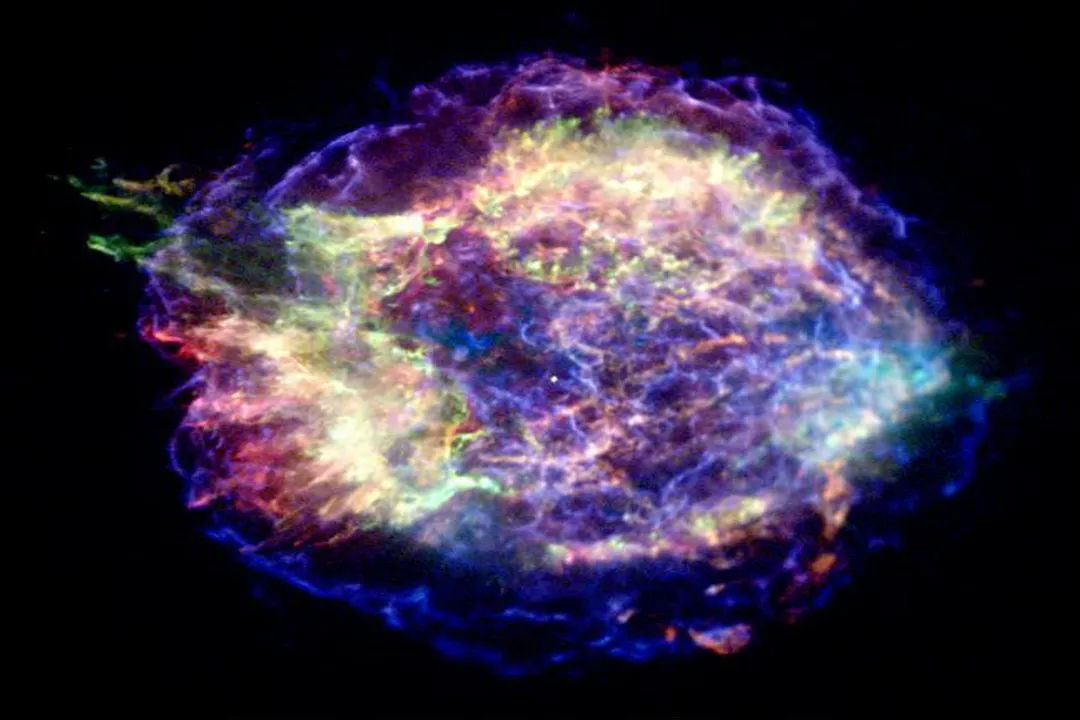
The fundamental reason fusion ceases around iron is rooted in physics: fusing elements lighter than iron releases energy, which counteracts gravity and keeps the star stable. [5] Conversely, attempting to fuse iron nuclei together consumes energy rather than producing it. [10] When the core becomes predominantly iron, the star can no longer produce the thermal pressure needed to support its massive outer layers.
Once the iron core accumulates to a critical mass—the Chandrasekhar limit, roughly $1.4$ times the mass of the Sun—gravity wins instantly. [5] There is no more energy to fight the implosion. The core collapses in mere milliseconds, compressing matter to densities greater than that of an atomic nucleus. [5][10]
# Neutron Flux
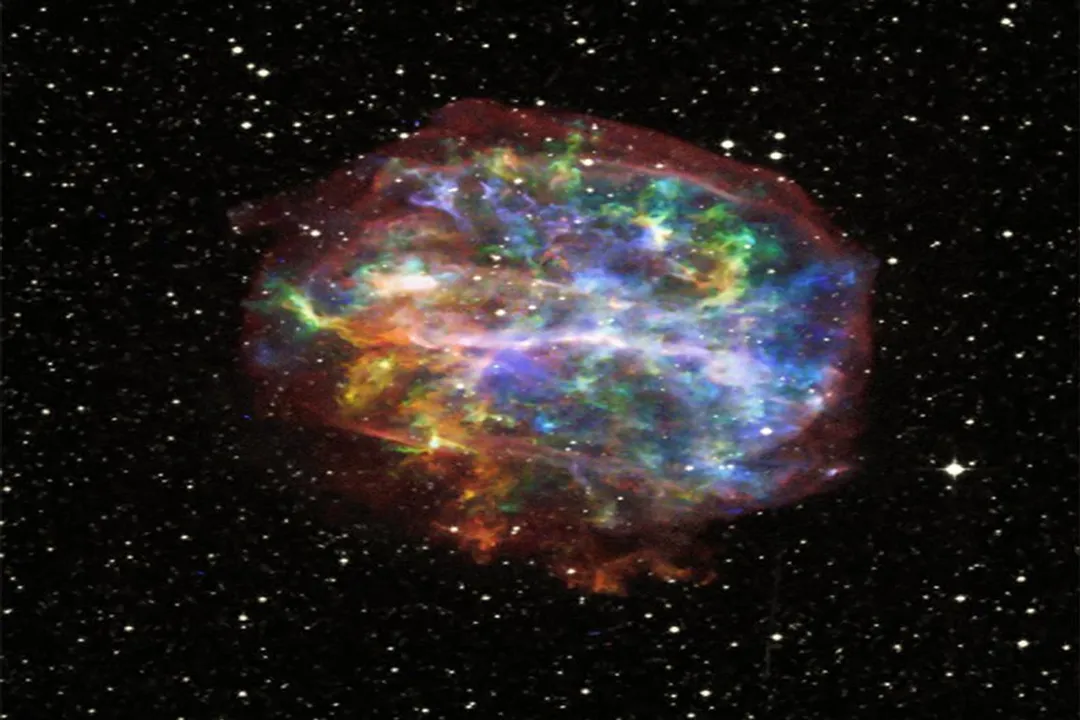
It is this core collapse and the ensuing rebound that provides the necessary conditions for elements heavier than iron to be synthesized—the essence of supernova nucleosynthesis. [1]
When the core material slams into the ultra-dense center, protons and electrons are forced together, creating a flood of neutrons and neutrinos. [1] This intense, short-lived environment is characterized by an extraordinarily high density of neutrons, which are rapidly captured by existing seed nuclei (like iron or lighter elements synthesized earlier). [1][3] This rapid process is termed the r-process (rapid neutron capture). [1]
In this high-flux scenario, a nucleus captures neutrons faster than it can radioactively decay. It quickly builds up a massive, unstable isotope that then undergoes a sequence of beta decays, transforming excess neutrons into protons, thus moving up the periodic table to form stable, heavy elements. [1] Elements like gold (), platinum (), uranium (), and thorium () are the signature products of this explosive neutron capture. [1]
# Slow Capture Contrast
It is important to distinguish the r-process from the s-process (slow neutron capture), which creates elements up to bismuth (). [1] The s-process occurs during the much quieter late stages of a star’s life, particularly in asymptotic giant branch (AGB) stars, where neutron fluxes are much lower and slower. [1] While the s-process is responsible for a good fraction of elements like barium () and strontium (), the creation of the very heaviest elements requires the extreme power of the supernova's r-process. [1]
# Material Ejection
The supernova explosion itself is the engine that scatters these newly forged elements across the galaxy. The ejected material consists of a mix of what was fused in the core before the collapse and what was freshly minted during the explosion. [4]
For massive stars undergoing core-collapse supernovae, the ejected cloud—the remnant—is rich in elements built during the star's stable life, such as oxygen (), magnesium (), and silicon (). [4][6] These elements, along with the large amount of iron () from the former core, are ejected into the interstellar medium, polluting the raw materials available for subsequent star and planet formation. [4]
If we consider a Type Ia supernova, which results from a white dwarf accumulating too much mass, the primary fusion product scattered is iron, created in the runaway thermonuclear explosion of the degenerate star. [3] The final composition of the remnant therefore depends heavily on the progenitor star system. [3]
# Element Ledger
The elements "fused" in a supernova event, therefore, spans almost the entire periodic table, depending on whether we count the pre-collapse burning or the explosion itself. It is fascinating to observe how the creation mechanism maps to the resulting element group.
| Element Origin | Primary Location/Process | Example Elements Formed | Energy Status |
|---|---|---|---|
| Light Elements ( to ) | Stable Main Sequence / Shell Burning | , , | Energy Releasing |
| Intermediate Elements | Late Stage Shell Burning | , , | Energy Releasing |
| Iron Peak | Pre-Collapse Core | , | Energy Neutral (Endothermic to fuse further) |
| Heavy Elements | Supernova Explosion (r-process) | , , | Rapid Energy/Neutron Flux |
| Medium Elements | Pre-Supernova AGB Phase (s-process) | , , | Energy Releasing (in AGB stars) |
One interesting way to look at this is through the lens of the star's internal structure just before collapse. The layers, from the outside in, represent a series of increasing temperature thresholds met over time: hydrogen fusion at the lowest temperature, followed by helium, and so on, ending with silicon fusion forming the iron core. [8] The resulting elemental distribution in the remnant gas is a direct fossil record of these temperature layers, provided the explosion mechanics efficiently mix them outward. [6] Observing the spectrum of a supernova remnant allows astrophysicists to map these ejected abundances and infer the mass and type of the star that died. [4]
A key point to grasp is that while the star builds up to iron by releasing energy, the supernova explosion itself must inject energy back into the system to drive the creation of everything beyond iron. [1][5] The sheer shockwave energy released in a core-collapse event is what powers the neutron bath required for the r-process.
# Cosmic Legacy
The elements we find around us—the silicon in the rocks, the iron in our blood, the gold in jewelry—were all synthesized either deep inside stars or during their violent deaths. [2][9] Without supernovae, the cosmos would be composed almost entirely of hydrogen and helium, with only trace amounts of carbon and oxygen. [2]
Consider the elemental budget of our own solar system. The Sun is categorized as a second-generation star because it formed from gas already enriched by previous stellar deaths. [2] If we estimate that the mass fraction of elements heavier than hydrogen and helium (often called "metals" by astronomers) in the Sun is only about $1.5$ to $2%$, [10] and knowing that a single large supernova can eject several solar masses worth of enriched material, [4] one can start to conceptualize the total number of ancient, massive stars that had to live and die over billions of years just to accumulate the necessary feedstock for terrestrial planets like Earth. It is a process of slow cosmic recycling where each explosion is a necessary, grand contribution to the next generation of chemistry.
The supernova explosion is not just destruction; it is the ultimate act of cosmic creation, seeding the galaxy with the building blocks required for complexity. [2] The specific elements fused during the final explosion—the heavy r-process elements—are the rarest and arguably the most significant signature of the catastrophic event itself. [1]
Related Questions
#Citations
Supernova nucleosynthesis - Wikipedia
Supernova explosions - Las Cumbres Observatory
Is it still believed that heavy elements are produced in supernovas?
Background: Dispersion of Elements - Imagine the Universe! - NASA
Chandra :: Educational Materials :: Investigating Supernova Remnants
Fusion of elements inside heavy stars - Astronomy Stack Exchange
How many elements are formed in a star before a supernova? - Quora
Supergiants and Supernovas | CK-12 Foundation
Supernovas and the Periodic Table of Elements
ESO Supernova Exhibition — How did the first elements form?