What elements form from a supernova shockwave?
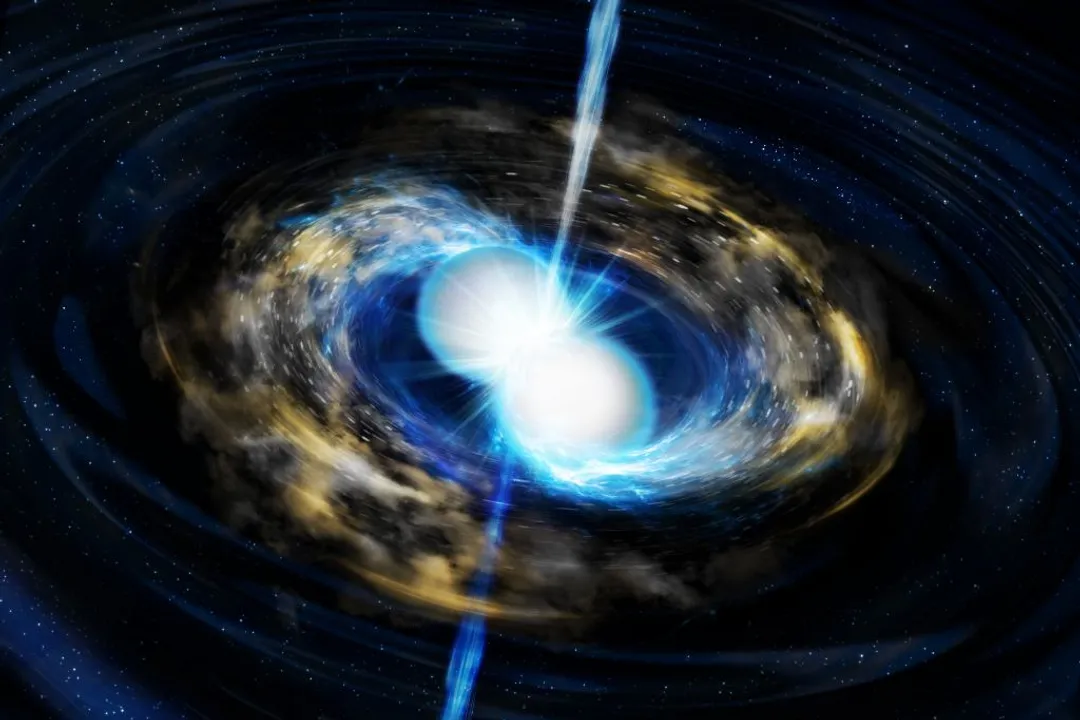
The dramatic end of a massive star, a supernova, is far more than just a spectacular light show; it is the universe’s most powerful engine for forging new atomic material. When these stellar titans expire, the resulting explosion sends a violent shockwave ripping through the surrounding space, carrying with it the ashes of the dead star and the newly created elements synthesized in its final moments. Understanding what elements result requires tracing the process both before the final collapse and within the explosion itself, as the shockwave plays a distinct role in distribution rather than initial creation for the heaviest species.
# Stellar Fusion
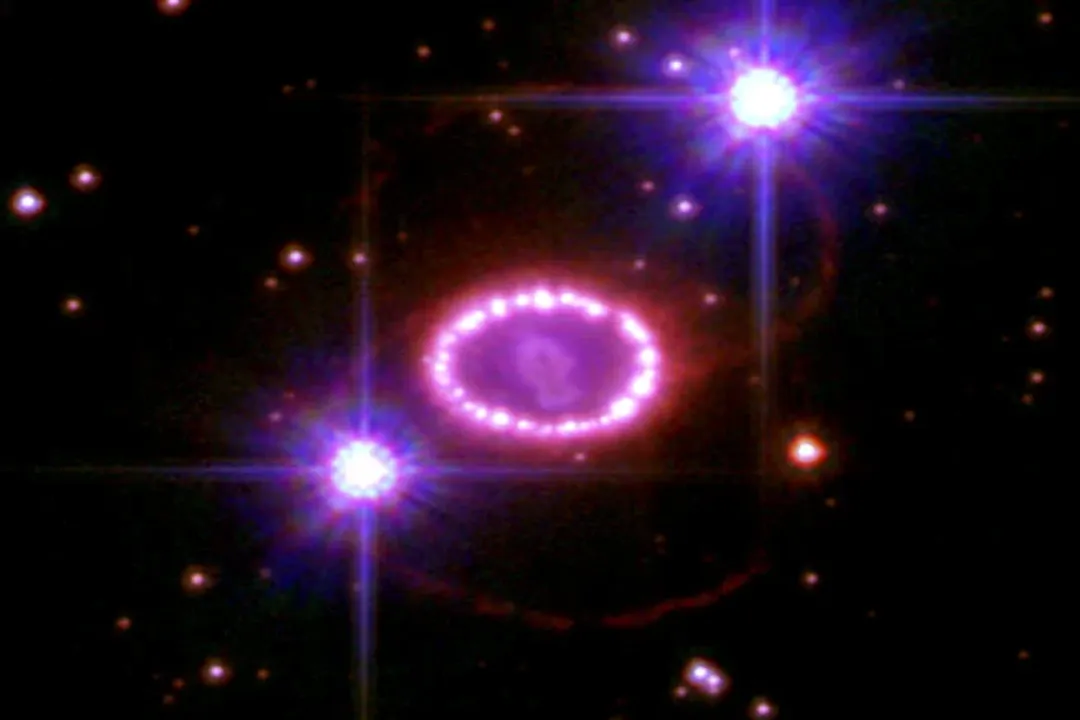
Before the cataclysm, a star spends most of its life burning lighter elements into heavier ones through nuclear fusion in its core. This process systematically builds up the periodic table, moving from hydrogen to helium, then carbon, oxygen, and so on. This normal stellar life cycle manages to create most of the elements up to, but not beyond, iron (). Iron is the critical turning point because fusing iron consumes energy rather than releasing it, making further energy generation through fusion impossible for a star of sufficient mass. Once the core is mostly iron, the outward pressure supporting the star vanishes, leading to the inevitable gravitational collapse that triggers the supernova.
# Heavy Element Birth
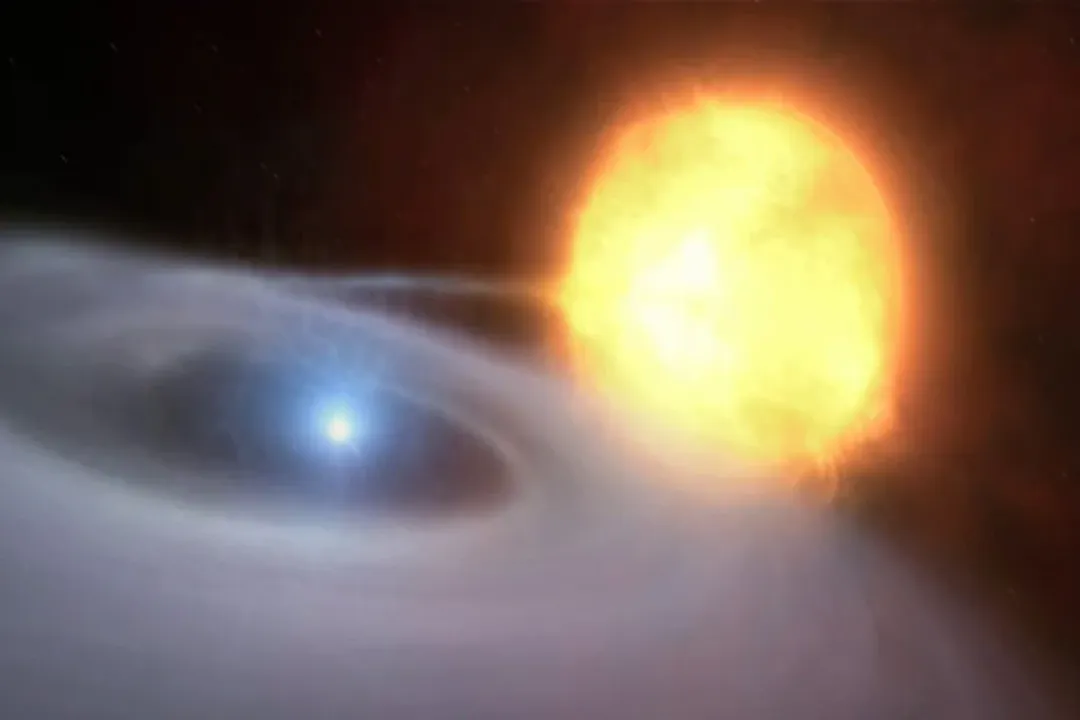
The conditions required to synthesize elements heavier than iron are extreme, far exceeding what happens in the stable fusion phases of a star's life. These elements, which make up a significant fraction of the material we see today, are formed during the supernova explosion itself—a process known as supernova nucleosynthesis.
This creation occurs primarily through neutron capture processes, which happen when atomic nuclei are bombarded by a massive flux of neutrons. The most important mechanism for the truly heavy elements, such as gold, uranium, and lead, is the r-process, or rapid neutron capture. During the immediate core collapse and rebound, the intense shock and sheer density provide the necessary environment: an abundance of neutrons is suddenly available, allowing nuclei to rapidly capture many neutrons before they have time to undergo radioactive decay. This swift addition of neutrons builds up very heavy, unstable isotopes, which then decay into stable, heavy elements. The explosion, not just the subsequent shockwave moving outward, is the factory floor for these heavy components.
It is important to note that elements slightly lighter than iron, such as Nickel-56, are also synthesized in prodigious amounts during the supernova explosion itself. While iron and elements up to iron are made before the collapse, Nickel-56 is a key product of the explosive burning phase. This radioactive nickel quickly decays into cobalt and then to stable iron, representing a large fraction of the newly formed heavy mass ejected into space.
# Shockwave Distribution

If the core is where elements are formed, the shockwave is the mechanism that spreads that material across the galaxy. The shockwave that expands outward from the stellar remnant acts like a colossal cosmic broom, sweeping up the newly synthesized debris—the stellar ejecta—and accelerating it outward into the interstellar medium (ISM). This ejected material contains everything from the initial hydrogen and helium to the newly minted iron-group elements and the heaviest r-process products.
The motion of the shockwave itself does not generally create new elements in the way the core collapse does; rather, it is the energetic transmission line. As the shock wave propagates, it violently compresses and heats the surrounding gas, including the ejected stellar material, to millions of degrees. This heating is crucial because it causes the shocked gas to glow intensely, particularly in X-rays, which is how astronomers can later locate and study the aftermath, such as in the case of the famous Cygnus Loop remnant.
A subtle point arises when considering detection versus creation. While the elements are formed within the explosion, the extreme heat and ionization created by the shockwave as it moves through the surrounding gas allow us to observe specific emission lines in X-ray spectra. For instance, the presence of highly ionized elements is a direct signature of the intense energy deposited by the passage of this shock front, giving us observational proof of the material born in the fireball. It’s like getting a thermal receipt for the material that was just cooked.
# Remnant Glow
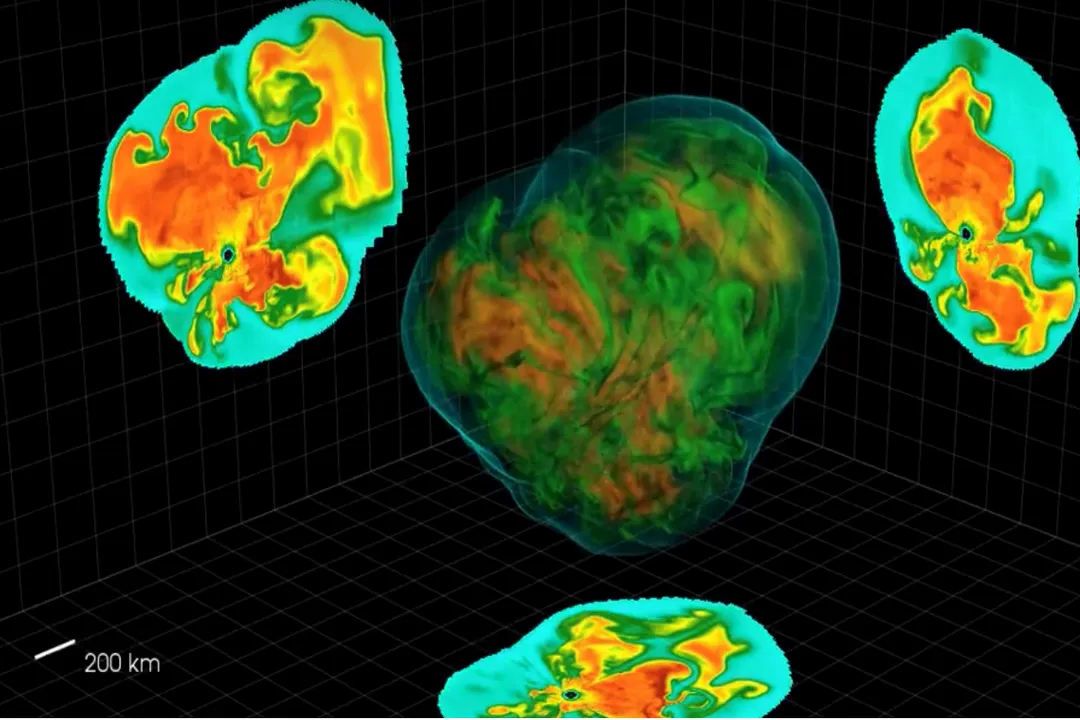
When astronomers analyze the gas within a supernova remnant, they are essentially reading a chemical ledger of the explosion. The composition of the expanding cloud reveals what the star was made of and what the explosion managed to forge.
The specific X-ray emission lines observed from these remnants tell a precise story about the elemental makeup. For example, observations can reveal the presence of elements like magnesium, silicon, sulfur, and iron, which are common products of stellar evolution and the explosion itself. By carefully measuring the energy of the emitted X-rays, scientists can determine the abundance of specific elements present in the expanding shell of material.
If we consider the relative speeds of material movement, we can make an interesting internal check on the process. Elements formed deep in the core during the collapse, like the heavy r-process materials, are often launched outward at higher velocities initially compared to the slower-moving layers of processed material closer to the star’s surface. The shockwave catches and homogenizes this mixture, but the initial velocity distribution provides another clue about the physics that occurred at the exact moment of core death.
| Stage of Element Formation | Primary Elements Created | Mechanism | Location |
|---|---|---|---|
| Main Sequence / Giant Phases | H, He, C, O, up to Fe () | Normal Stellar Fusion | Stellar Core |
| Supernova Explosion (Initial) | (decays to Fe) | Explosive Burning | Inner Core/Rebound |
| Supernova Explosion (High Energy) | Elements heavier than Fe () | Rapid Neutron Capture (r-process) | Extreme Density Region |
| Shockwave Propagation | N/A (Acts as Distributor) | Kinetic Energy Transfer | Interstellar Medium (ISM) |
The fact that virtually every atom heavier than helium in our solar system, including the calcium in our bones and the iron in our blood, owes its origin to these violent stellar deaths provides a profound connection between ancient astronomical events and our daily physical reality. When considering the composition of Earth, the heavy elements we rely on were not created in the quiet fusion processes of our Sun, but were delivered here via these interstellar clouds seeded by these massive explosions long ago. Our very existence is predicated on the shockwave successfully carrying its precious cargo across cosmic distances.
Related Questions
#Citations
Supernova explosions - Las Cumbres Observatory
Background: Dispersion of Elements - Imagine the Universe! - NASA
DOE Explains...Supernovae - Department of Energy
It is during a supernova that most of the elements heavier than iron ...
The Cygnus Loop Supernova Remnant | Center for Astrophysics
Some Elements Arrived on Earth by Surfing Supernova Shock Waves
Supernovae - Astronomy 1101 - The Ohio State University
Supernova Nucleosynthesis → Term
Do heavier elements breakdown during supernova?