What color is blood in a vacuum?
The color of blood when divorced from the familiar confines of the human body and exposed to the near-perfect void of space is a fascinating topic that often sparks debate. If you were to expose a sample of human blood to a vacuum—say, by an astronaut getting a leak in their suit—its appearance would be dictated by its inherent chemical composition, primarily the presence of hemoglobin, and the absence of environmental light scattering effects that usually influence our perception. Simply put, blood remains fundamentally red. The notion that it might turn blue or black is a common misconception, often rooted in confusion about why our veins appear blue through our skin.
# Inherent Blood Color
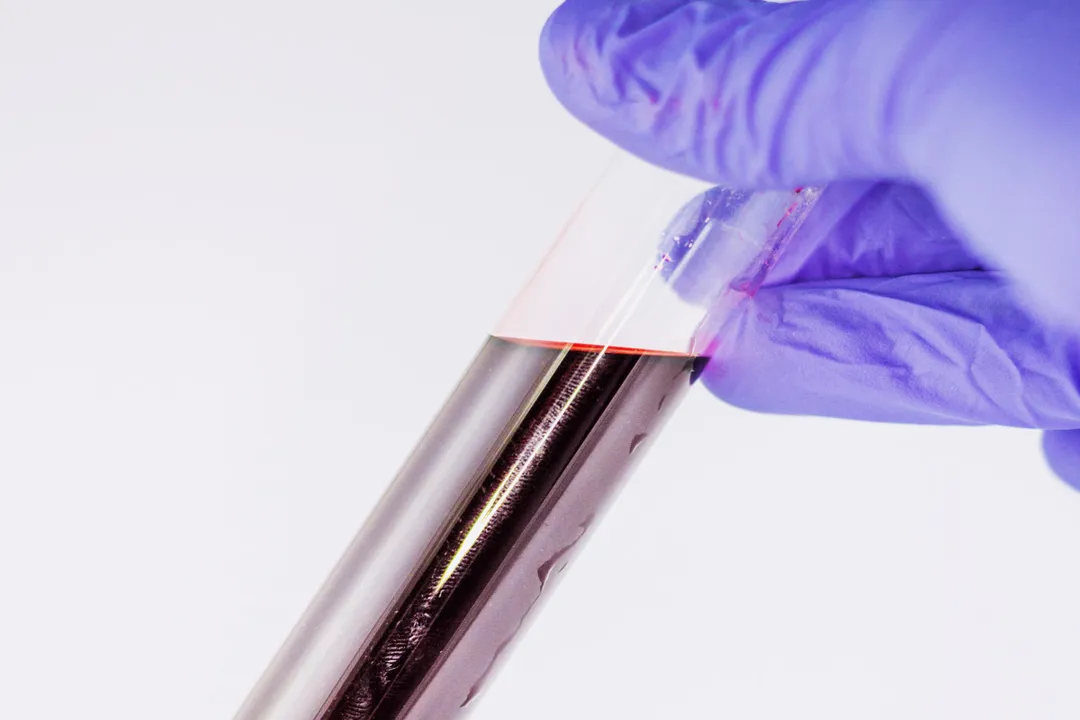
The actual color of blood, whether arterial (oxygen-rich) or venous (oxygen-poor), is always a shade of red. The pigment responsible for this characteristic hue is hemoglobin, the protein inside red blood cells responsible for carrying oxygen throughout the circulatory system.
Hemoglobin’s color changes slightly depending on how much oxygen it is carrying, which is a key differentiator in its appearance. When hemoglobin is fully saturated with oxygen, it tends to reflect light in a brighter, scarlet or crimson red. This is the color typically associated with arterial blood, though even in healthy circulation, venous blood is never truly blue. When oxygen has been delivered to the tissues, the deoxygenated hemoglobin reflects light differently, resulting in a much darker, deeper shade of red, often described as maroon or purplish-red. A common query asks if this deoxygenated blood would bleed blue in a vacuum, but the answer remains that it is simply a very dark red.
# Vein Illusion
To truly understand the color in a vacuum, one must first dismantle the powerful illusion created by looking at blood inside the body. Veins on the skin often appear blue, which leads many people to believe their blood turns blue when it lacks oxygen. This is not the case; the color observed is an optical effect.
The reason for this perceived blueness is rooted in how light interacts with the layers of skin and tissue surrounding the blood vessels. When light hits the skin, the various layers—epidermis and dermis—scatter the light in different directions. Red light has a longer wavelength than blue light. As red light penetrates the skin to reach the relatively dark, deoxygenated blood in the vein, much of it is absorbed. Conversely, the shorter-wavelength blue light is scattered more efficiently by the overlying tissue and reflected back to our eyes before it can be fully absorbed by the blood. Therefore, what we see is the scattered blue light, not the actual color of the blood itself.
This scattering phenomenon requires a medium—in this case, skin and subcutaneous tissue—to operate. In the vacuum of space, or if blood is observed without the interference of skin, this trick of light disappears entirely. The color observed will be the inherent color of the hemoglobin-containing fluid, which, in its deoxygenated state, is that dark, rich maroon-red.
# Color in Vacuum
When blood is exposed to the vacuum of space, several physical processes occur rapidly that influence its appearance, but the base color remains determined by the hemoglobin. A vacuum, by definition, is a space entirely devoid of matter, which means there is no air or tissue to scatter light. This isolation allows the true spectral properties of the fluid to dominate what an observer sees, assuming light is available for reflection.
If the blood is still carrying oxygen (perhaps from an arterial bleed), it will appear bright red. If it is venous blood, it will appear dark red. However, the environment of space introduces rapid physical changes that could complicate the observation of stable color.
# Rapid Physical Change
In the extreme conditions of a vacuum, the lack of external pressure means that the water content within the blood will rapidly vaporize, essentially causing the blood to boil at body temperature (or lower, depending on ambient temperature). This process, known as outgassing, would quickly leave behind a residue composed primarily of the solid components of the blood, like the red blood cells and plasma proteins. This residue would likely coagulate and dry out very quickly.
An important analytical consideration here is the state of the hemoglobin during this transition. Since the vacuum environment is also oxygen-depleted, any oxygen already bound to the hemoglobin will diffuse away, driving the remaining fluid toward its deoxygenated state very rapidly, even if it started as bright arterial blood. The resulting dried film, viewed under direct light, would therefore present as a very dark, almost blackish-red, which is merely the concentrated, deoxygenated form of the fluid, not a fundamentally different color. If the exposure is instantaneous and the blood is illuminated by a white light source, the underlying dark red saturation would be the most accurate color read, stripped of atmospheric or tissue interference.
# Comparison of Earth Blood
It is interesting to pause and consider how different Earth's iron-based blood system is compared to the theoretical possibilities elsewhere in the cosmos. Our entire color scheme—red, dark red, bright red—is tied directly to iron-containing hemoglobin. This makes blood an excellent medium for oxygen transport but dictates its visible spectrum.
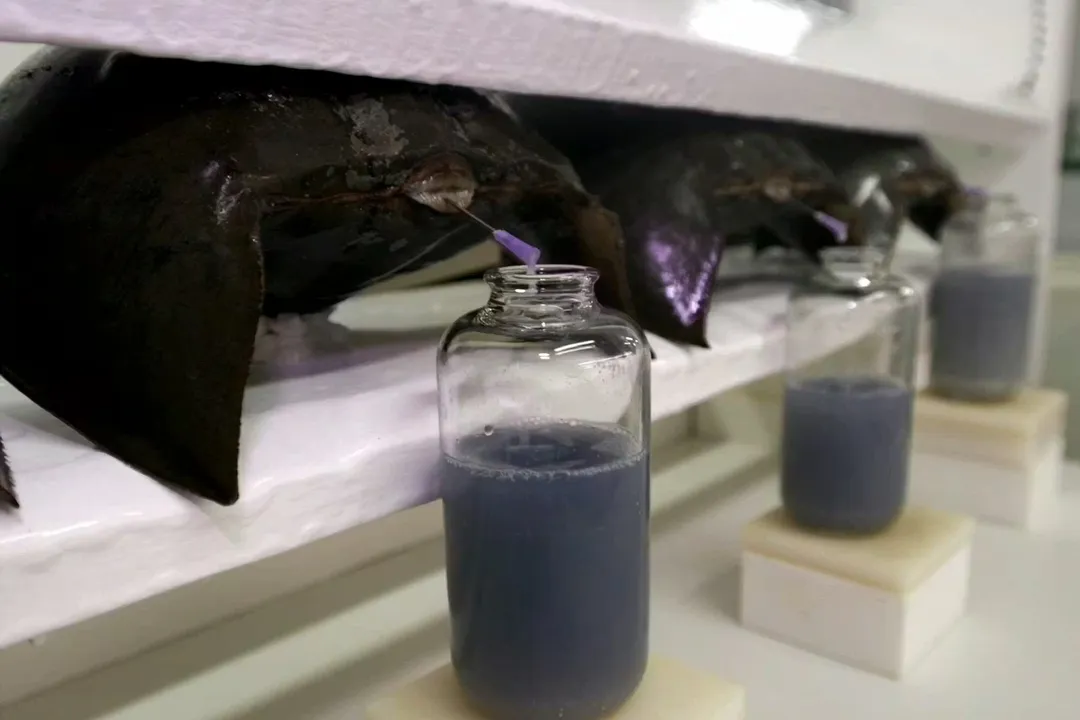
In the field of exohematology, scientists consider alternative chemistries that might support life on other worlds. For instance, some theoretical life forms might use copper-based respiratory pigments, like hemocyanin, instead of iron-based hemoglobin. Hemocyanin turns blue when oxygenated and nearly colorless when deoxygenated. If a creature with such a circulatory fluid were exposed to a vacuum, the color change would be far more dramatic than the subtle shift from bright red to maroon observed in humans.
To provide a stark visual contrast for understanding the physics involved:
| Oxygen State | In Vein (Apparent Color) | In Vacuum (Actual Color) | Chemical Basis |
|---|---|---|---|
| Oxygenated (Arterial) | Bright Red (rarely seen directly) | Bright/Scarlet Red | Oxyhemoglobin |
| Deoxygenated (Venous) | Appears Blue/Greenish | Dark Red/Maroon | Deoxyhemoglobin |
| Post-Vacuum Exposure | N/A (Dried residue) | Dark/Blackish-Red | Concentrated solids |
This table highlights that the apparent color is environment-dependent, while the actual color, whether in a vacuum or seen externally, depends solely on oxygen binding to the iron in hemoglobin.
# Deeper Look at Light Interaction
The concept that different light wavelengths interact uniquely with biological tissue offers an insightful parallel to the vacuum question. When considering how we see color in general, it's not just about reflection but also about transmission and absorption. Think about holding a single drop of pure, deep red wine up to a bright lamp versus looking at the entire bottle. The single drop might look intensely red, but the dense collection in the bottle appears nearly black because the light path is so long that almost all wavelengths, even the reds, are absorbed by the sheer volume of pigment.
Blood in a vacuum is the ultimate "thin film" exposure scenario for color viewing, assuming you are viewing a relatively thin layer before it dries completely. Since there are no tissue structures to randomly scatter the light back toward the observer, the reflection you see is direct from the surface of the liquid, or from just beneath it. If the light source is directly opposite your eye, you see reflection; if the light source is angled, you see the light that has penetrated and been reflected by the dark red material, yielding that deep shade. The vacuum eliminates the "diffuse reflection" component, which is what makes the blue vein effect possible in the first place.
For any future medical or astronautical studies involving blood sampling in space, the immediate exposure to vacuum means that researchers are essentially observing the liquid state only for milliseconds before phase change occurs. This makes isolating the "color" extremely difficult in practice, requiring ultra-high-speed imaging to capture the moment before boiling and desiccation. The critical takeaway remains that if the iron-based color mechanism is intact, the result is undeniably red, just perhaps very dark, due to the loss of oxygen and subsequent concentration of solids.
#Videos
What Color is Blood REALLY? (6 min version) - YouTube
Related Questions
#Citations
What color is human blood in the vacuum of space? - Quora
Is blood blue? - Ask A Biologist - Arizona State University
If Blood Is Red, Why Do Veins Look Blue? - Mental Floss
Is blood blue before oxygenation? - Facebook
If we bleed in a vacuum would it bleed blue? - The Naked Scientists
TIL that unoxygenated blood isn't blue, despite what my ... - Reddit
Blood in your veins is not blue – here's why it's always red
The Color of Blood and “Exohematology” | ASH Clinical News
What Color is Blood REALLY? (6 min version) - YouTube