What causes osmotic pressure?
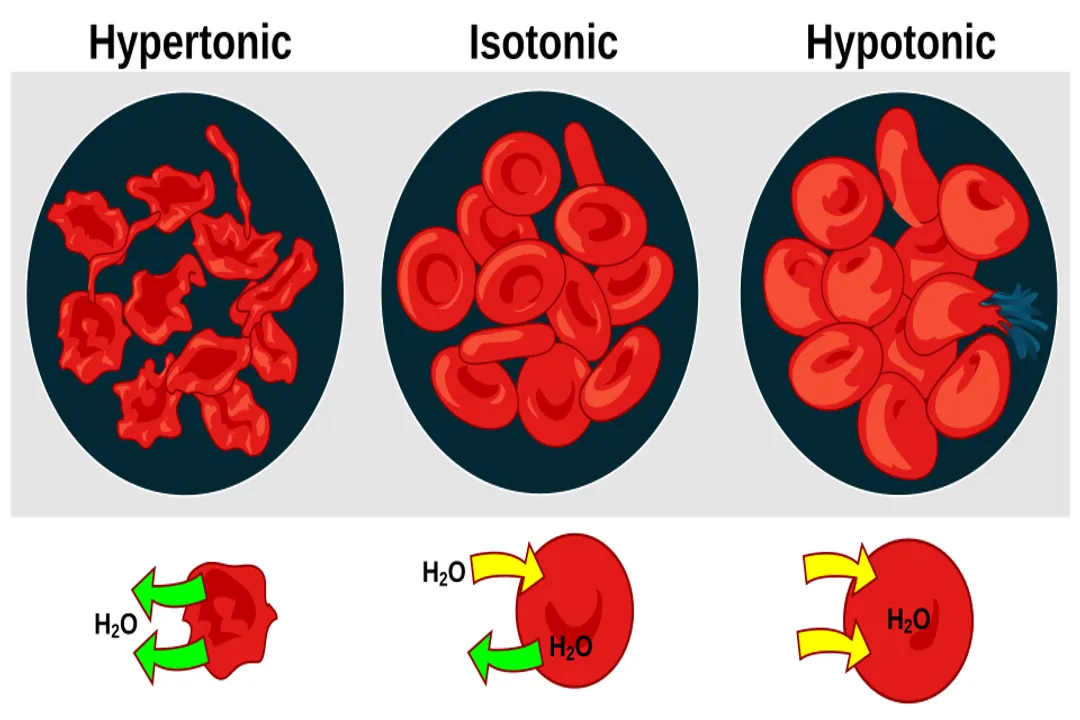
The pressure that drives the movement of water across a barrier is fundamentally caused by a difference in the concentration of dissolved substances—the solutes—on either side of that barrier. [5][6] If you have a system where water can move freely, but dissolved salts or sugars cannot, the water will naturally migrate toward the area holding more of the dissolved stuff. This process is osmosis, and the resulting pressure—the force exerted by this imbalance—is osmotic pressure. [5][7]
To truly understand the cause, we must first establish the environment. Osmotic pressure only manifests when a semipermeable membrane is present. [1][5] This membrane is the gatekeeper: it allows the solvent, almost always water, to pass through its pores, but it blocks or severely restricts the passage of the solute particles. [7] Without this selective barrier, the solutes and solvent would simply mix until equilibrium is reached, and no net pressure gradient would develop. [5]
# Solvent Flow
The driving force behind this phenomenon is the chemical potential of the solvent. [5] Think of it as a drive toward uniformity. If one side of the membrane has a high concentration of solute (say, $2$ Molar glucose) and the other side has pure water ($0$ M), the water molecules on the pure water side have a higher probability of striking and passing through the membrane into the solution side than water molecules on the solution side have of moving back out. [5] The system is trying to achieve a state where the concentration of the solution is equalized across the entire volume. [5]
The actual osmotic pressure () is defined as the minimum external pressure that must be applied to the side with the higher solute concentration to prevent this net influx of water entirely. [1][3][5] If you apply exactly that pressure, the system reaches equilibrium, and the rate of water moving in equals the rate of water moving out. [5]
It is helpful to draw an analogy to gas behavior, which often aids conceptualization. [1][7] In the ideal gas law, gas molecules are in constant, random motion, and the pressure exerted is related to their concentration and temperature. [7] Similarly, osmotic pressure can be mathematically modeled using an equation that looks remarkably like the ideal gas law, treating the dissolved solute particles as if they were exerting pressure by moving around in the available volume, held back by the membrane. [1][7]
# Pressure Equation
The proportionality described by the gas law analogy leads to the van't Hoff equation, which provides a direct mathematical link to the cause of the pressure. [3] For relatively dilute solutions, the osmotic pressure () is directly proportional to the molar concentration () of the solute, the absolute temperature (), and the ideal gas constant (): [3]
This equation highlights the dependency on concentration () and temperature (). Higher concentration means more particles jostling against the membrane, thus requiring more external pressure to stop them. Higher temperature means the particles have more kinetic energy, leading to more forceful collisions and higher osmotic pressure. [1]
However, the true chemical reality is slightly more nuanced than this basic formulation suggests. Osmotic pressure is classified as a colligative property. [1][3] This is a key concept: it means the pressure depends only on the total number of solute particles dissolved in the solvent, irrespective of the chemical identity of those particles. [1][3] A mole of sugar creates the same osmotic pressure as a mole of salt, provided both remain intact. [3]
This is where the van't Hoff factor () becomes essential. [3] When a substance dissolves and dissociates into multiple ions—like sodium chloride () splitting into and —it contributes twice the number of particles compared to a non-dissociating substance like sucrose. [3] The modified equation incorporates this factor:
For non-electrolytes like glucose, is approximately $1$. For , is theoretically $2$. For magnesium chloride (), which yields three ions (, , ), is theoretically $3$. [3]
# Solute Types
The distinction between what a solute is and how many particles it creates fundamentally dictates the resulting osmotic pressure. [3] Consider $1$ mole of glucose versus $1$ mole of table salt () dissolved in a liter of water at the same temperature. The glucose solution contributes one particle per molecule, while the salt solution contributes two particles per formula unit. [3] Therefore, the salt solution generates roughly twice the osmotic pressure, even though the initial molar mass used to prepare the solutions might have been different.
This particle-count dependence versus mass dependency leads to an interesting practical consideration when trying to manage osmotic activity in a solution. If you weighed out $180$ grams of glucose ($1$ mole) and $58.4$ grams of pure ($1$ mole), the resulting osmotic pressures would be roughly equal because both represent one mole of initial substance. However, if you were limited by mass, say you could only add $100$ grams of solute, a substance with a low molecular weight that dissociates heavily (like a salt) will create a much higher osmotic pressure per gram than a heavier, non-dissociating molecule like a complex sugar or protein. [1] This factor is particularly significant in biological contexts where the concentrations of electrolytes far outweigh those of other solutes, making the ions the primary drivers of osmotic behavior. [4]
# Physiological Role
In living systems, osmotic pressure is not just a laboratory concept; it is the mechanism governing the distribution of water throughout the body. [5][8] This is perhaps best observed across the capillary walls where blood plasma interacts with the surrounding interstitial fluid. [5]
Here, the term oncotic pressure is frequently used, which is specifically the osmotic pressure exerted by the large plasma proteins, primarily albumin, that are generally confined to the bloodstream by the capillary membrane. [4][8] While total osmotic pressure in the blood is high due to all solutes (like electrolytes and glucose), the oncotic pressure component—the pressure driven by proteins—is vital for drawing water back into the capillaries at the venous end, counteracting hydrostatic pressure. [8] The concentration of these proteins in plasma is typically around $7%$. [8] If plasma protein levels drop significantly (as in severe malnutrition or liver disease), the oncotic pressure falls, allowing fluid to accumulate in the tissues, resulting in edema. [8]
The maintenance of cell volume and the movement of water across cell membranes—a function critical for nutrient uptake and waste removal—are entirely dependent on maintaining a precise balance of osmotic pressure between the inside of the cell and its external environment. [5]
To relate this to everyday experience, the ancient methods of food preservation—salting meat or pickling vegetables in brine—are direct, ancient applications of controlling osmotic pressure. [6] By creating an environment outside the microbial cells that has an extremely high solute concentration (high osmotic pressure), water is drawn out of the microbial cells faster than it can be replenished. [6] This process, dehydration, kills or severely inhibits the growth of bacteria and fungi, preserving the food. [6] Essentially, the high external salt or sugar concentration creates a massive water potential gradient that pulls the necessary cellular water away, causing the microbes to shrivel and cease metabolic activity.
In summary, the root cause of osmotic pressure is the non-uniform distribution of non-permeating solute particles across a selective barrier. [1][5] This physical imbalance creates a chemical potential gradient that forces the solvent to move, and the resulting pressure required to halt that movement is the measurable osmotic pressure, quantified by the number of particles present, as described by the van't Hoff relationship. [3]
Related Questions
#Citations
Osmotic pressure - Wikipedia
Osmotic Pressure - an overview | ScienceDirect Topics
13.7: Osmotic Pressure - Chemistry LibreTexts
What causes osmostic pressure? : r/chemistry - Reddit
Osmosis, Tonicity, and Hydrostatic Pressure
Physiology, Osmosis - StatPearls - NCBI Bookshelf - NIH
[PDF] Osmotic pressure and mechanics of cell membranes
Osmotic pressure and oncotic pressure - Deranged Physiology
Video: Osmotic Pressure | Definition, Formula & Calculations