What causes action potentials in neurons?

The communication system inside your body, the nervous system, relies on incredibly fast electrical signals to relay information from your fingertips to your brain or instruct a muscle to move. These electrical signals are known as action potentials. [2][6] They are the language of neurons, allowing one nerve cell to rapidly inform the next, forming the basis of everything from a simple reflex to complex thought. [4] Understanding what causes an action potential is essentially understanding how a brain signal is born.
# Membrane Voltage
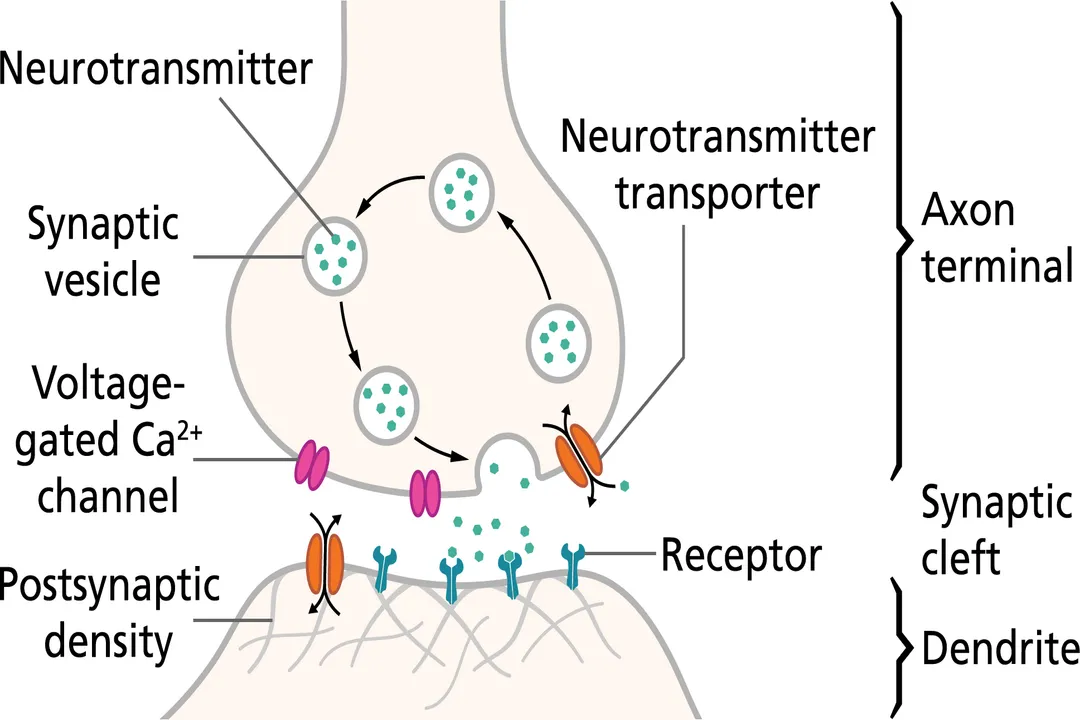
Before any electrical signal can fire, a neuron must maintain a state of readiness. This readiness is defined by its resting membrane potential, a steady electrical imbalance across the cell's outer boundary, the membrane. [1][5] Typically, this potential sits around (), meaning the inside of the cell is electrically negative relative to the outside. [1][2][5]
This resting state is not passive; it requires constant work, primarily by the sodium-potassium pump. [1][5] This molecular machine actively pushes three sodium ions () out of the cell for every two potassium ions () it pulls in. [1][5] This action establishes steep concentration gradients: far more outside and far more inside. [1][5] While the pump maintains the overall gradients, the specific resting potential of is largely due to leak channels in the membrane that are slightly more permeable to than to , allowing some to drift out. [1][5] The overall result is a charged, ready-to-fire battery waiting for the right input.
# Threshold Potential
The transition from a resting state to an active signal is not gradual in its final execution; it is absolute. Neurons receive a constant barrage of incoming signals from other cells, which arrive as small, localized changes in membrane voltage called graded potentials. [1] These potentials can either be excitatory (pushing the voltage closer to zero, or depolarizing) or inhibitory (making the voltage even more negative, or hyperpolarizing). [1]
The cause of a full action potential is the summation of these initial inputs. If enough excitatory graded potentials arrive at the axon hillock (the neuron’s trigger zone) simultaneously or rapidly enough, they push the membrane potential past a critical value known as the threshold potential. [1][5] While this value can vary slightly between neuron types, it is commonly cited as being around . [1][5] Reaching this precise threshold is the causative event that sets the rest of the process in motion. [2][6]
Think of the threshold as a locked door that requires a specific keycard code. Subthreshold signals are like someone swiping a card that doesn't quite work—nothing happens. [1] Once the voltage hits , it’s the equivalent of entering the correct code, and the cell initiates an unstoppable chain reaction. [2] This leads directly to the all-or-none principle: either the threshold is reached and a full action potential fires, or it isn't and no action potential is generated. [2][6]
# Ion Channel Gates
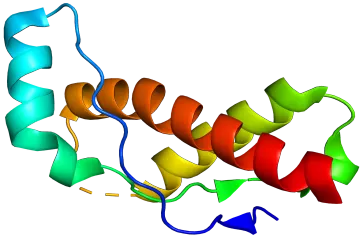
The mechanics of the action potential hinge entirely on specialized proteins embedded in the neuronal membrane: voltage-gated ion channels. [1][5] These channels are incredibly sensitive to changes in the local electrical field across the membrane. When the membrane depolarizes enough to hit the threshold, specific channels react in a precise, timed sequence. [1][5]
# Sodium Entry
The first channels to respond are the voltage-gated sodium () channels. [1][5] Upon reaching the threshold voltage (e.g., ), these channels rapidly shift from a closed to an open conformation. [1] Because the concentration gradient (high outside) and the electrical gradient (negative inside) both strongly favor sodium entry, the effect is dramatic: ions flood into the cell down both gradients. [1][5] This massive influx of positive charge drives the membrane potential rapidly upward, a process called depolarization, often spiking to positive values like . [1][2] This rapid rise is the rising phase of the action potential signal. [5]
# Potassium Exit
This period of intense sodium influx is inherently brief. The voltage-gated channels possess a built-in inactivation mechanism that closes them automatically a millisecond or so after they open, even while the membrane is still depolarized. [1][5] This inactivation prevents the signal from reversing direction and is crucial for establishing the refractory period. [1]
Coinciding with this inactivation, a second set of channels begins to activate: the voltage-gated potassium () channels. [1][5] These channels open much more slowly than the channels do. By the time they open fully, the membrane potential is near its peak positivity. [5] Once open, flows out of the cell, driven by its steep concentration gradient (high inside). [1][5] This efflux of positive charge rapidly drives the membrane potential back toward its negative resting level, which is the repolarization phase. [1][5]
# Potential Phases
The entire sequence of ion movement can be broken down into distinct, chronological phases that define the electrical spike: [5]
- Resting State: Membrane potential is stable, usually around . [1]
- Stimulation/Graded Potential: Local input causes depolarization toward threshold. [1]
- Threshold Reached: Voltage hits the critical point (e.g., ), triggering massive channel opening. [1][5]
- Depolarization: rushes in, making the cell interior positive. [1][2]
- Repolarization: channels inactivate, and slow channels open, allowing to rush out, driving the potential back down. [1][5]
- Hyperpolarization (Undershoot): channels close slowly, causing a brief period where the potential drops below the resting potential (e.g., to ). [1][5]
- Return to Rest: The pump works to re-establish the original ion concentrations, and the membrane returns to the steady . [1][5]
It is interesting to consider that while the action potential is incredibly fast—lasting only a few milliseconds—the actual resetting of the ion concentrations back to the pre-spike gradient takes much longer and is the continuous job of the pump. [1] The spike itself is merely the flow across the membrane, not a significant change in the overall cellular content of sodium or potassium.
# Refractory Limits
A critical aspect of the action potential mechanism, directly tied to the behavior of the sodium channels, is the refractory period. [1] This period ensures that the signal moves in only one direction down the axon and sets a limit on how frequently a neuron can fire. [1][5]
There are two phases to this:
- Absolute Refractory Period: This occurs during the depolarization and most of the repolarization phases. [1] During this time, the voltage-gated channels are either already open or are inactivated. [1][5] Because the gates cannot be reopened, no subsequent stimulus, no matter how strong, can trigger another action potential. [1][5] This absolute block forces the signal to proceed forward, as the segment behind it cannot immediately reactivate.
- Relative Refractory Period: This phase overlaps with the late repolarization and hyperpolarization. [1] During this time, the channels have reset to their closed-but-ready state, but the membrane is often more negative than rest (hyperpolarized) due to excess potassium flowing out. [1] An action potential can be triggered here, but it requires a much stronger than normal stimulus to reach the threshold against the hyperpolarized state. [1][5]
# Signal Travel
The action potential itself is an explosive, self-regenerating event at a single point on the membrane. The question then becomes: how does this local event travel down the length of an axon, which can be meters long in a human body?
The mechanism is based on local current flow. [2][6] When rushes in at one point, the resulting positive charge instantly spreads locally along the interior of the axon membrane. [2] This flow of positive charge depolarizes the adjacent segment of the membrane. If this adjacent segment is still above its absolute refractory period, this local depolarization will push its voltage-gated channels past the threshold, causing them to open and fire a new, identical action potential. [6]
This chain reaction repeats itself continuously down the axon, like a falling line of dominoes. [2] Crucially, because the previous segment is in its refractory period, the signal cannot travel backward toward the cell body. [1][6] This self-regeneration means the action potential does not degrade or lose strength as it travels; it is faithfully reproduced at every point along its path, which is why signals can cross long distances without attenuation. [6] In unmyelinated axons, this happens continuously along the entire length. In contrast, in myelinated axons, the insulating myelin sheath forces the current to "jump" between the gaps in the sheath, known as the Nodes of Ranvier, a process called saltatory conduction, which vastly increases transmission speed. [5] However, the cause of the electrical event—the opening of the voltage-gated sodium channels—remains the same at every active node.

# Summary of Causation
The cause of an action potential is not a single event but a sequence triggered by ionic channel behavior responding to voltage change. [2] It begins with summed input that overcomes a necessary threshold. [1] This threshold then initiates the rapid opening of voltage-gated sodium channels. [5] The subsequent influx of sodium is the depolarization phase, and the delayed closing of these sodium channels combined with the delayed opening of voltage-gated potassium channels dictates the return to resting potential. [1][5] This entire finely tuned, time-dependent sequence of ion movement, governed by the physical properties of the membrane proteins, is what generates the electrical impulse that underlies all neural communication. [2][4]
Related Questions
#Citations
Neuron action potentials: The creation of a brain signal
Action potential
Neuroanatomy, Neuron Action Potential - StatPearls - NCBI
Action potentials and synapses - Queensland Brain Institute
Action potential: Definition, Steps, Phases
Neuroscience For Kids - action potential
How are action potentials spontanous, and where does ...
What causes an action potential to occur?
Chapter 2. Ionic Mechanisms of Action Potentials