neuron articles
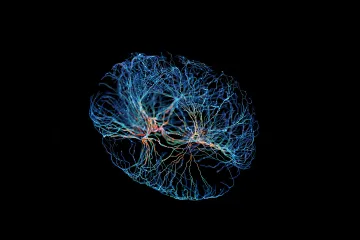
What is the initial process where the brain converts sensory experiences into a storable chemical and electrical format?
Approximately how long can information typically be held in short-term memory?
Memories are primarily encoded not in individual cells, but in the strength of what connections between neurons?
What mechanism describes the persistent strengthening of synapses based on recent patterns of activity?
What is the guiding principle often summarized regarding neurons involved in Long-Term Potentiation?
What term is used for the physical trace of a memory distributed across a network of neurons?
Which brain structure is essential for the initial binding and creation of new explicit memories, like facts and personal experiences?
Which specific subregion of the hippocampus plays a specialized role in encoding memories related to places and events?
Which type of processing, compared to analyzing meaning, results in poorer recall when initially learning a list of words?
What is the name of the process that stabilizes the memory trace after initial acquisition to make it resistant to disruption?
Where do stable, long-term memory traces often migrate to over time, becoming independent of the hippocampus?
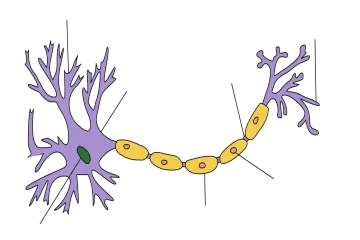
What are the fast electrical signals that relay information through the nervous system called?
What is the typical value for a neuron's resting membrane potential?
What molecular machine is primarily responsible for establishing the steep concentration gradients for $ ext{Na}^+$ and $ ext{K}^+$?
What is the critical voltage level that must be reached to cause an action potential to fire?
Where do the initial graded potentials summate to determine if the threshold is met?
Which channels are the first to respond and open rapidly upon reaching the threshold voltage?
What process is responsible for the rapid, positive spike in membrane potential during the rising phase of the action potential?
What event causes the membrane potential to drive back down toward the resting level during repolarization?
What characteristic of sodium channels ensures the action potential moves only forward down an axon?