What are the uses of a spectrometer?
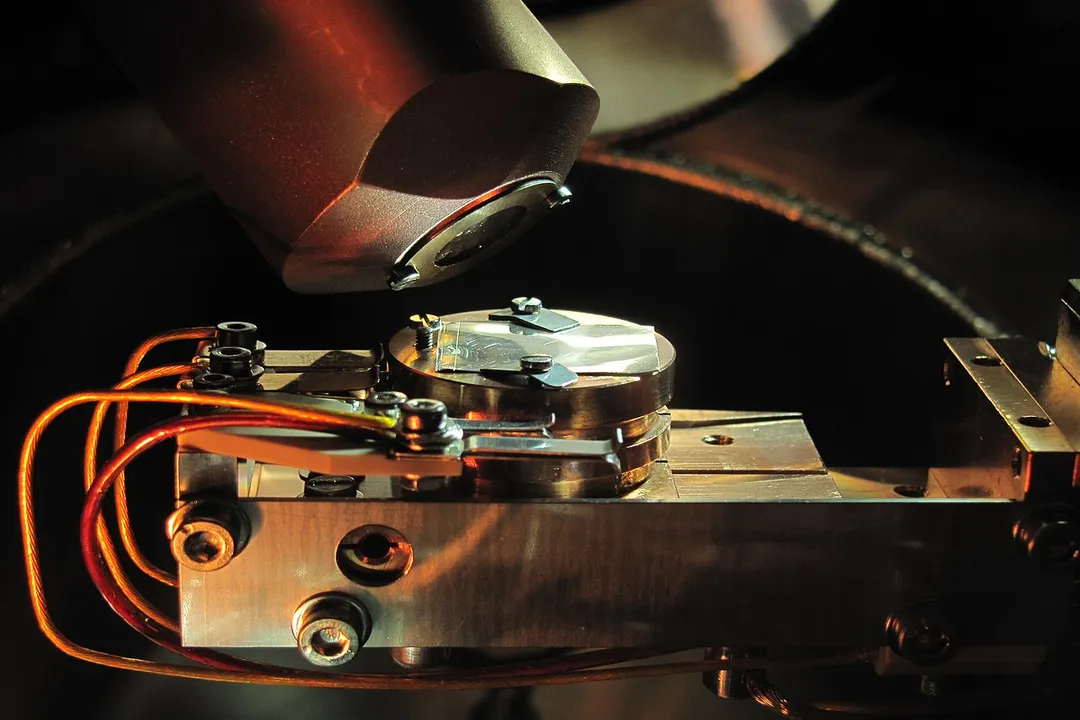
A spectrometer is fundamentally an instrument designed to measure the intensity of light across a specific range of wavelengths, frequencies, or energies. [2][4][5] This capability transforms light, which is often just perceived as color, into a precise dataset that acts as a unique fingerprint for the material interacting with it. [2][5] By dissecting incoming electromagnetic radiation—whether it’s visible light, ultraviolet, or infrared—into its constituent parts, scientists and engineers gain profound insight into the chemical, physical, and structural characteristics of a sample. [1][3] Spectrometers are core tools in analytical chemistry and physics, allowing for identification, quantification, and structural elucidation across countless fields. [2][5]
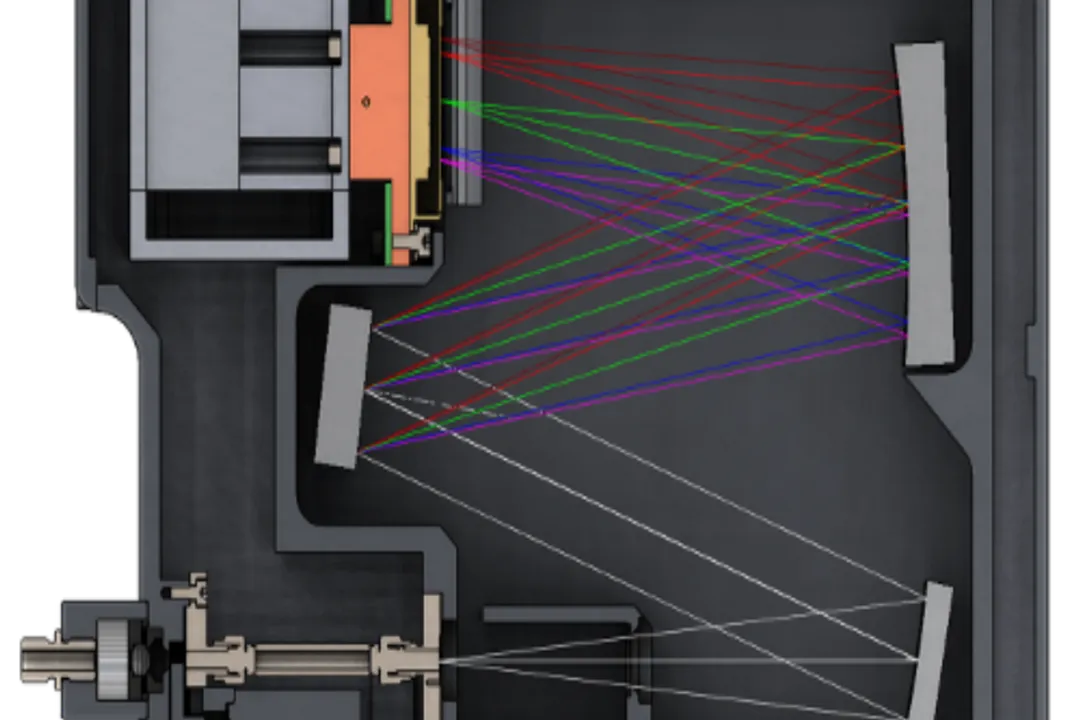
The operational basis of a spectrometer involves separating the incoming radiation, typically using a component like a diffraction grating or a prism, before it hits a detector array. [4][9] This separation process, known as spectroscopy, allows the instrument to plot a spectral profile—a graph showing the signal strength against the wavelength. [5] When this process is focused on measuring how much light a substance absorbs or transmits across these various wavelengths, it is specifically referred to as spectrophotometry. [6] The resulting spectral data is highly specific; for instance, organic molecules often display characteristic absorption patterns in the infrared spectrum related to their bond vibrations, while atomic elements show sharp emission or absorption lines in the visible or UV range due to electron transitions. [2][3][5]
# Light Measurement
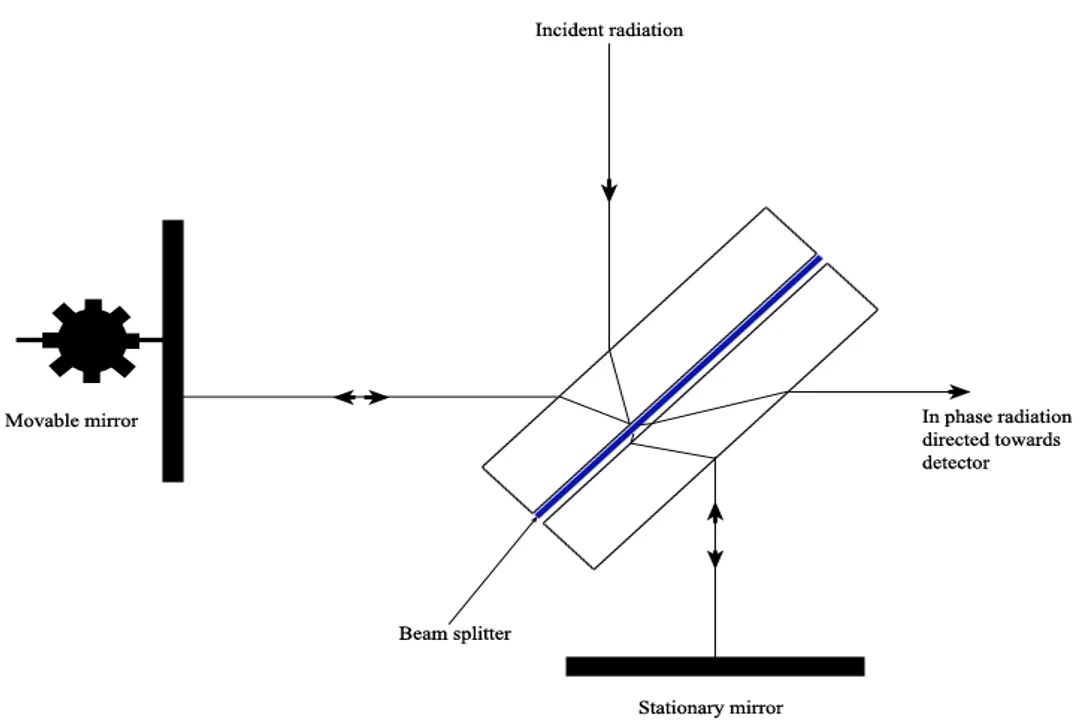
The core function is often simplified down to light measurement, but the nuance lies in how that measurement is used. [9] Different instruments are optimized for different regions of the electromagnetic spectrum, dictated by the analytical task at hand. [3][5] For example, analyzing the concentration of a dissolved chemical might rely on measuring absorption in the Ultraviolet-Visible (UV-Vis) region. [3] Conversely, understanding the structural makeup of a complex polymer might require looking deep into the Infrared (IR) range to detect specific functional groups. [3][5] The detector—the component that converts the separated light signal into an electrical reading—must match the required spectral window, whether it is a simple photodiode or a more complex array sensor. [4][9]
# Composition Identification
One of the most widespread uses of spectrometers is determining exactly what a sample is made of and how much of it is present. [1][2][10] Every chemical species has a distinct spectral signature. When an atom or molecule interacts with light, it either absorbs energy (leading to absorption spectra) or releases energy (leading to emission spectra) at very precise wavelengths. [2][5]
In quality control settings, particularly in chemistry and biochemistry labs, the relative intensity of the spectral peaks allows for accurate quantification. Imagine checking a batch of newly synthesized medicine: a spectrometer can rapidly confirm the presence of the intended active ingredient and simultaneously detect trace amounts of unwanted byproducts or contaminants by looking for their unique spectral footprints. [2] A slight shift or broadening in an absorption peak, even one that appears visually insignificant, can indicate the presence of an impurity or a change in the molecule's physical state, underscoring the necessity of high detector sensitivity over raw light intensity throughput in these critical analytical applications. [2]
# Material Properties
Beyond simple chemical identification, these instruments are indispensable for characterizing materials themselves. [2][3] This extends deeply into materials science, especially in the manufacturing of electronics and advanced components. For semiconductor fabrication, for instance, engineers must precisely measure the thickness and composition of ultra-thin layers of material deposited onto wafers. [2] Spectrometers provide the non-contact, non-destructive means to perform this analysis, ensuring that layers are deposited to within angstrom-level precision. [2]
Furthermore, certain spectroscopic techniques focus on how a material responds to light after being energized. Fluorescence spectroscopy, an application of the spectrometer, is used extensively to characterize materials like specialized polymers, security inks, or even biological samples. [2] By exciting the sample with one wavelength and measuring the weaker light it emits at a longer wavelength, researchers can gain structural information that absorption alone cannot reveal. [2]
# Process Control
The laboratory bench is only one place where spectrometers operate; many modern systems are hardened and optimized for continuous use on the factory floor. [4][6] Integrating these tools directly into manufacturing lines enables real-time monitoring, which is a significant departure from traditional batch testing. [4]
Consider a large-scale chemical reaction: instead of pulling samples and waiting for lab results, an in-line spectrometer probe can constantly analyze the mixture inside the reactor. [6] If the concentration of a reactant begins to drop too quickly or a side reaction starts producing unwanted material, the system can immediately alert operators or even automatically adjust flow rates or temperatures. [4] This immediacy minimizes off-spec product runs, saving resources and ensuring consistency in everything from foodstuffs to petrochemicals. [4][6] Even monitoring the consistent color output of high-powered LED arrays used in general illumination or specialized lighting relies on spectrometers to verify spectral quality against established standards. [10]

# Remote Sensing
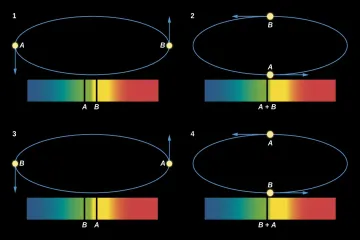
The analytical power of light measurement is not confined by distance. In astrophysics, the spectrometer is perhaps the single most important tool for understanding the universe beyond our immediate reach. [1][2] By pointing a telescope equipped with a spectrometer at a distant star or galaxy, astronomers can decompose that faint incoming light. [1] The resulting spectral pattern reveals the star’s chemical makeup, its temperature, and critically, its speed relative to Earth via the Doppler shift—the stretching or compressing of the light waves. [1][2]
Closer to home, environmental monitoring benefits immensely from this remote capability. [2][3] Spectrometers can be set up to continuously monitor stack emissions from industrial sites for pollutants or analyze light scattered from the atmosphere to track greenhouse gas concentrations. [2] Water quality testing often employs portable or submersible UV-Vis instruments to check for nitrates, dissolved organic carbon, or other indicators of contamination without needing to transport large water samples back to a central lab. [3] The ability to get accurate chemical data from a distance or in a harsh environment is a major advantage these instruments offer. [1]
# Instrumental Diversity
The vast range of applications necessitates a corresponding variety of instrument designs. [3] While they all share the fundamental need to separate and measure light, the choice of hardware changes based on the necessary spectral range and resolution. [5]
| Spectrometer Type Focus | Typical Spectral Range | Primary Analytical Goal |
|---|---|---|
| UV-Vis | Ultraviolet to Visible Light | Concentration measurement, electronic structure [3] |
| Infrared (IR) | Infrared Region | Identifying molecular functional groups and vibrations [3][5] |
| Fluorescence | Excitation/Emission | Characterizing electronic structure, material purity [2] |
| Raman | Visible/Near-IR | Molecular structure and lattice vibrations [5] |
While many associate the technology with large, dedicated laboratory equipment, there has been a clear trend toward miniaturization. [10] Modern advancements have resulted in highly portable, even handheld, spectrometers. [10] These devices sacrifice some of the ultimate spectral resolution found in benchtop models but gain unparalleled field utility. This portability makes them ideal for immediate on-site checks in areas such as art conservation—verifying pigments in a painting without taking a sample—or in agricultural settings for rapid nutrient analysis directly in the field. [10] This accessibility democratizes analytical power, moving spectral data gathering from specialized rooms to the point of need. [10]
Related Questions
#Citations
Spectrometer - Wikipedia
What is a Spectrometer? Definition, Types, and Uses | Ossila
Spectrometer Technology and Applications - AZoM
What Is a Spectrometer - Definition, Types & Uses - tec5USA
Spectrometer - Chemistry LibreTexts
Spectrophotometers: What are the Main Uses? - Industrial Physics
The uses of spectrometers as I know them : r/Optics - Reddit
What is a Spectrometer & its Benefits? - Spectrecology
What is a Spectrometer? - Edinburgh Instruments
The 4 Most Common Spectrometer Applications - Admesy