What are the five features of a star?
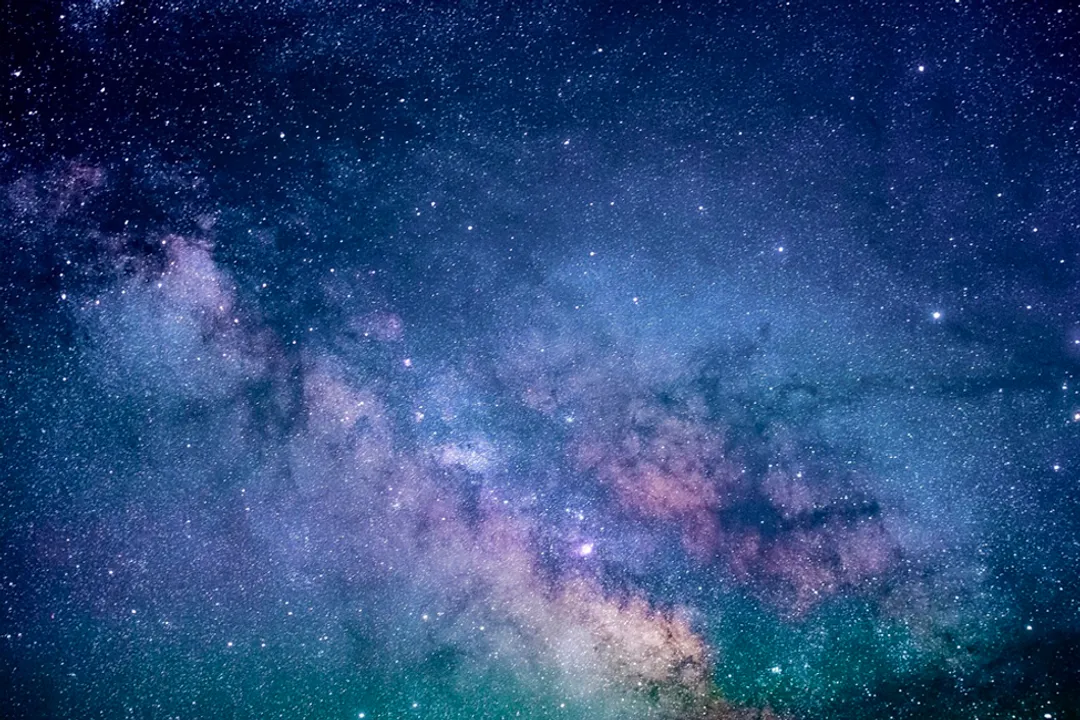
The night sky presents countless points of light, yet each one represents a massive, self-luminous sphere of plasma, held together by its own gravity, diligently converting matter into energy through nuclear fusion in its core. [1][9] While we often see them simply as twinkling specks, every star possesses a distinct set of characteristics that dictate its existence, appearance, and eventual fate. Understanding these properties moves us from mere stargazing to genuine astronomical study. Generally, astronomers characterize these celestial engines using five primary features: their surface temperature and resulting color, their intrinsic power output or luminosity, their physical bulk (mass and size), their elemental recipe, and their current stage of life or age. [3][5]
# Color Temperature
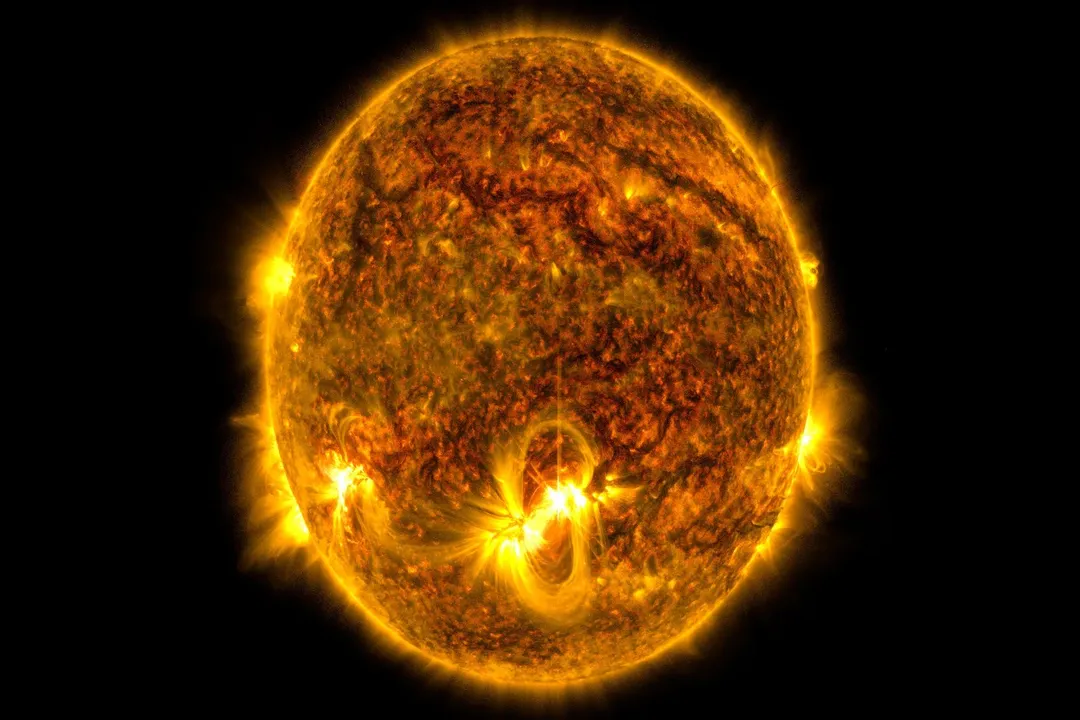
One of the most immediate features discernible, even with the naked eye, is a star’s color, which is a direct consequence of its surface temperature. [5][2] This relationship is fundamental: the hotter the star, the bluer its light appears, whereas cooler stars radiate a predominantly reddish hue. [5][6] This is analogous to watching a piece of iron slowly heat up in a forge; it first glows a deep red, then shifts to orange, then yellow, and eventually, if hot enough, white or even blue-white [^analysis1].
Astronomers quantify this temperature, often measured in Kelvin, which ranges from just a few thousand up to tens of thousands of degrees. [5][3] Stars are categorized using a system called spectral classification, typically represented by letters O, B, A, F, G, K, and M, moving from hottest (O) to coolest (M). [6][5] For instance, our Sun falls into the G-class category, possessing a surface temperature near 5,800 Kelvin. [6][5] Stars in the extreme blue (O-type) burn incredibly hot, sometimes exceeding 30,000 K, while the dimmest, coolest red dwarfs (M-type) might only register surface temperatures around 2,500 K. [5] If you look closely at bright, non-twinkling stars through a moderate telescope, you can start to pick out these subtle color differences, which are far more revealing than simple apparent brightness [^analysis2].
# Power Output

The second defining trait is luminosity, which describes the total amount of energy a star radiates per second—its true power output. [6][5] This is an intrinsic property, meaning it depends only on the star itself, unlike apparent magnitude, which depends on both luminosity and the observer's distance. [5] Because our Sun is relatively close, its luminosity might seem significant, but many stars are vastly more powerful.
Luminosity is often compared to the Sun’s own output, expressed as . [6] A star that is twice as luminous as the Sun outputs twice the total energy every second. This enormous energy difference is often plotted on the Hertzsprung-Russell (H-R) diagram, which charts luminosity against temperature. [5][3]
It is crucial to distinguish luminosity from magnitude. The apparent magnitude scale measures how bright a star looks from Earth, where lower (or negative) numbers signify greater brightness. [5] A very distant, intrinsically brilliant blue giant might have the same apparent magnitude as a nearby, extremely dim red dwarf, even though the giant is pouring out millions of times more energy. [5][6] Therefore, luminosity gives us the true measure of the stellar furnace's activity.

# Bulk Characteristics
The third defining characteristic relates to the star's physical presence: its mass and size. [3][2] While size (radius) describes how physically large the star is—ranging from planetsized white dwarfs to supergiants hundreds of times the Sun's diameter—mass is arguably the single most important feature of a star. [1][9]
Mass dictates nearly everything else about a star’s life. It determines the internal pressure and temperature in the core, which in turn sets the rate of fusion and, consequently, the star's luminosity, temperature, and how long it will live. [1][3] Stars must have a minimum mass—about $0.08$ times the mass of the Sun ()—to sustain core hydrogen fusion; anything less becomes a brown dwarf. [1] On the upper end, the most massive stars can exceed . [1]
The relationship between mass and lifetime is counterintuitive for those accustomed to Earthly analogies: the more massive the star, the shorter its life [^analysis1]. A star weighing $20$ times the Sun’s mass burns its fuel so furiously to support that immense weight that it might only last a few million years, whereas a small red dwarf can shine steadily for trillions of years [1][^analysis2].
# Elemental Composition
Every star is essentially a massive ball of gas, and the composition of that gas serves as the fourth key feature. [5][2] Spectroscopic analysis allows scientists to break down the starlight into its component wavelengths, revealing the chemical fingerprints present in the star’s outer layers. [3]
Almost universally, stars are overwhelmingly made of the two lightest elements: Hydrogen () and Helium (). [5][2] In a typical star like the Sun, Hydrogen makes up about 71% of the mass, and Helium about 27%. [5] The remaining small percentage includes heavier elements, sometimes referred to by astronomers as "metals"—which, in this context, means anything heavier than Helium. [5][2]
The distribution of these heavier elements can provide clues about a star’s origin. Older stars, sometimes called Population II stars, formed when the universe had fewer heavy elements (which are created inside earlier generations of stars and then scattered by supernovae), so they appear more "metal-poor". [5] Younger stars, like our Sun (Population I), contain a higher proportion of these heavier elements because they formed from interstellar clouds already enriched by stellar death. [5]
| Characteristic | Coolest Extreme (Red Dwarf) | Sun-like Star (G-Type) | Hottest Extreme (Blue Giant) |
|---|---|---|---|
| Surface Temp (K) | $> 30,000$ | ||
| Color | Red | Yellow-White | Blue-White |
| Luminosity () | $< 0.01$ | $1.0$ | $> 10,000$ |
| Mass () | $1.0$ | $> 20$ | |
| Main Sequence Age (Years) | Trillions | Billion | Millions |
| [^analysis2] |
# Stellar Age
The final defining feature, intricately linked to mass and composition, is the star's age or, more accurately, its evolutionary stage. [3] A star’s characteristics are not static; they change as it consumes its core fuel. [3][5]
Most stars, including our Sun, spend the majority of their active lives in the "main sequence," fusing hydrogen into helium in their cores. [3][9] This period represents stellar maturity, where the star is in hydrostatic equilibrium—the outward pressure from fusion perfectly balances the inward crush of gravity. [9]
However, what happens after the main sequence depends entirely on the star's initial mass. A low-mass star will eventually swell into a red giant, shed its outer layers, and collapse into a white dwarf. [3] A high-mass star faces a more dramatic end, evolving into a red supergiant before potentially collapsing into a neutron star or a black hole, often marked by a spectacular supernova explosion. [3][1] Therefore, knowing a star’s current spectral class, luminosity, and temperature immediately places it on the H-R diagram, revealing whether it is a youthful main-sequence star, an aging giant, or a stellar remnant. [3][5]
#Videos
Characteristics of Stars - YouTube
#Citations
Star Basics - NASA Science
Characteristics Of A Star - Sciencing
The Properties of Stars
[PDF] Characteristics of Stars
Star and Celestial Object Characteristics – Introduction to Astronomy
Characteristics of Stars - YouTube
Star Classification | Characteristics & Type - Lesson - Study.com
Characteristics of Stars Explained | PDF - Scribd
Star - Wikipedia