How long is a star a nebula?
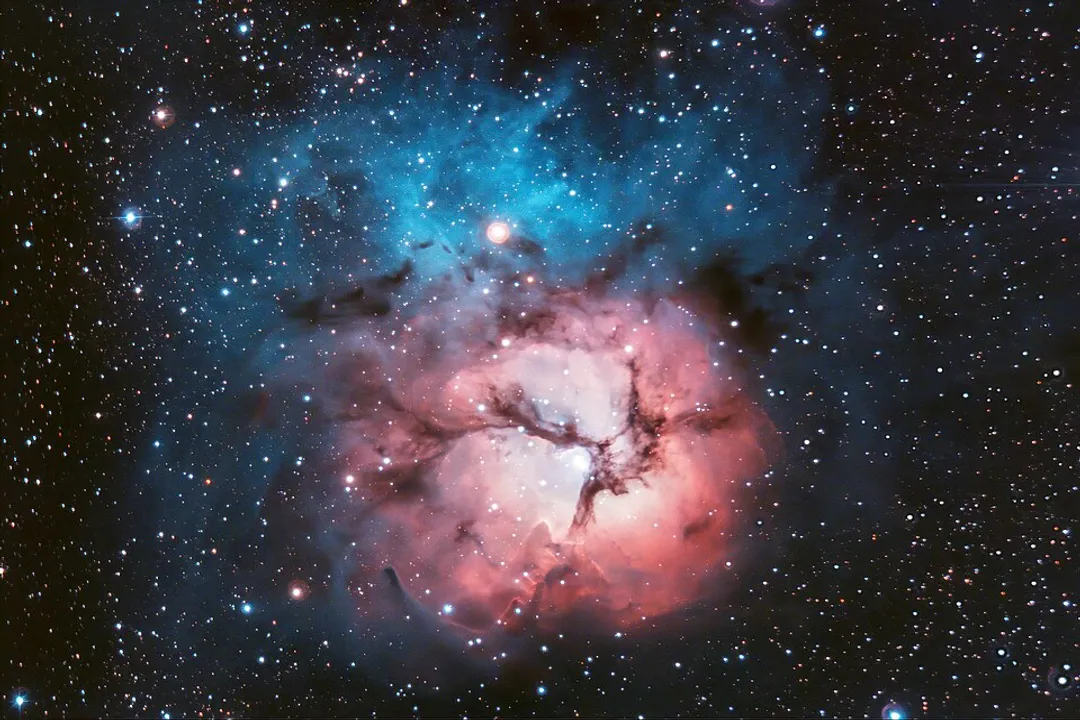
The relationship between a star and a nebula is less about duration and more about definition; a nebula is generally the raw material from which a star is born, or, in a very specific final act, the material shed by a dying star. [2][3][6] Therefore, asking "How long is a star a nebula?" requires us to untangle two distinct phases of cosmic evolution: the nursery phase and the final curtain call. A star, as a defined entity undergoing fusion in its core, is never actually a nebula, which is primarily an interstellar cloud of dust, hydrogen, helium, and other ionized gases. [2] However, the period leading up to star ignition, where the cloud is the dominant structure, is the closest analogy to the concept posed. [4][8]
# Cloud Definition
A nebula, which is Latin for "mist" or "cloud," represents vast clouds of gas and dust spread throughout interstellar space. [2] These cosmic clouds vary enormously in size, density, and temperature, and they are the fundamental building blocks for both new stars and planetary systems. [3][9] Stars initiate their lives nestled within these structures, specifically within what are termed stellar nebulae. [8] These stellar nurseries are immense reservoirs of the material necessary for stellar creation. [4] For instance, the famous Orion Nebula is an active star-forming region, showcasing the raw material in action. [2] The existence of a star is intrinsically linked to the nebula that preceded it, as the star is the localized concentration of mass that ultimately collapses from that diffuse cloud. [3]
# Stellar Genesis Time
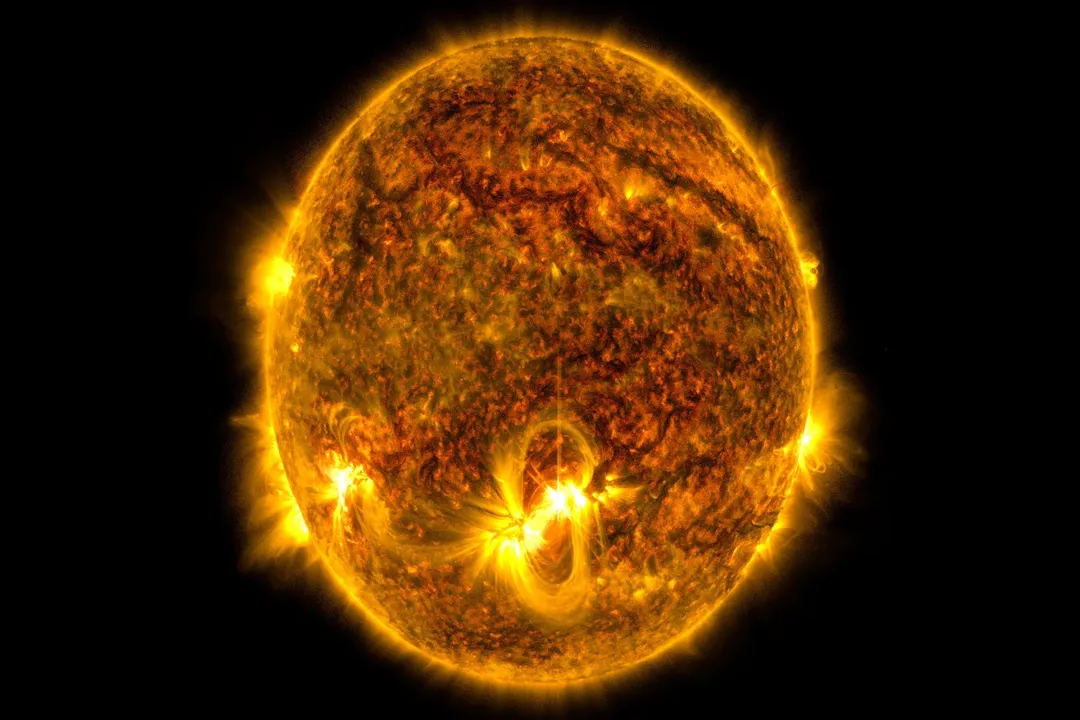
The process of a nebula giving rise to a star is a protracted event, measured not in days or years, but in millions of years, with the initial diffuse state potentially lasting far longer. When we look at the lifespan of a star itself—the phase where it is actively fusing hydrogen—it lasts for billions of years. [7] In contrast, the preparatory phase within the nebula is significantly shorter, though still lengthy by human standards.
The transformation from a diffuse cloud to a recognizable protostar that will eventually ignite fusion involves gravitational collapse, a process that requires immense time scales. [1] According to discussions among astrophysicists online, the collapse of the molecular cloud that forms a star can take anywhere from a few hundred thousand years up to a few million years. [1] This variability is crucial; the time taken is heavily dependent on the initial mass and density of the cloud fragment. [1] A more massive, denser pocket of gas and dust will succumb to gravity and begin forming a star much faster than a less dense region. [1][9]
This phase of active collapse—where the cloud is shrinking rapidly and heating up—is the critical period where the nebula transitions out of its initial state and into the star stage. Before this rapid collapse, however, the material exists as a vast, cold, relatively stable molecular cloud. If we consider the entire duration that the star's eventual mass resides in a specific, gravitationally bound region of a nebula before ignition, that duration can extend far longer than the collapse phase itself. [3]
It is useful to conceptualize the timescale. If a Sun-like star burns for about 10 billion years on the main sequence, the preceding nebula stage, even the active collapse, is a mere blink in comparison—a few million years at most. [7] This observation suggests that the existence of the material as a pre-stellar nebula far outweighs the subsequent luminous lifetime of the star it creates, if we consider the cloud's entire lifespan before it fully commits to fusion. [3] Think of it this way: the cloud spends the vast majority of its existence waiting for the right conditions to compress before the star truly "begins". [1]
# Remnant Nebulae
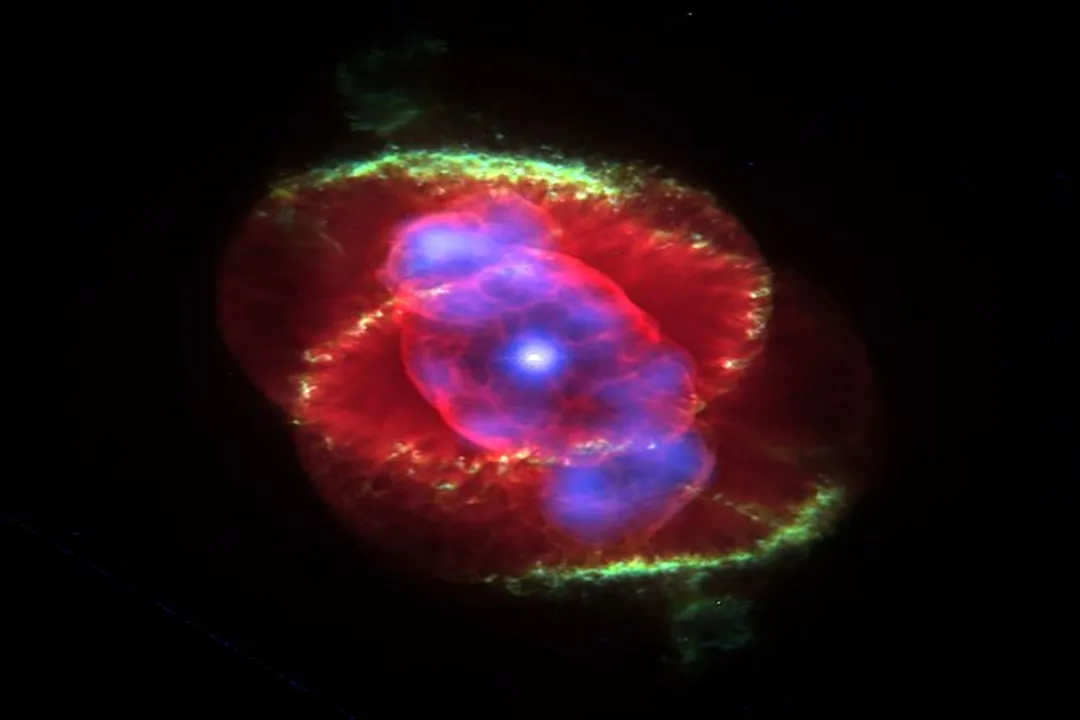
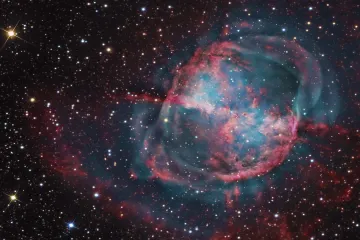
The relationship between stars and nebulae reverses dramatically at the end of certain stars' lives. Once a star, like our Sun, exhausts the hydrogen fuel in its core and enters its late evolutionary stages, it can shed its outer layers into space, creating a specific type of nebula known as a planetary nebula. [6][7] This is the second context where a star is associated with a nebula, but here, the star creates the nebula from its own expelled mass. [6]
Planetary nebulae are not related to planets, despite their name, which originated from early telescopic views suggesting they resembled planetary disks. [6] These structures are shells of gas ejected from the dying, intermediate-mass star at their center, which is contracting into a white dwarf. [6]
The time duration for this phase is quite brief in cosmic terms. The star ejects this material over a relatively short period, perhaps tens of thousands of years, as it passes through the unstable giant phases. [7] Once ejected, the nebula expands and fades as the gas density drops, eventually becoming too diffuse to observe readily against the background stars. [6] In this scenario, the star forms the nebula as a concluding event, contrasting sharply with the stellar nebula, which serves as the precursor. [6][8]
To better visualize this contrast in roles, one might consider the following progression of time related to the visible nebular states:
| Phase | Association with Star | Approximate Duration | Primary State |
|---|---|---|---|
| Stellar Nebula | Pre-formation (Nursery) | Millions of years (Collapse phase) | Diffuse Gas/Dust Cloud |
| Main Sequence Star | Active Life | Billions of years | Stable Hydrogen Fusion |
| Planetary Nebula | Post-Life (Remnant) | Tens of thousands of years | Expanding Shell of Gas |
This table illustrates that the birth nebula phase, encompassing the active collapse, occupies a timescale that is significantly longer than the death nebula phase, yet both are infinitesimally short compared to the star’s main life. [7] The key takeaway remains that the star itself, the fusion engine, is never the nebula.
# Stellar Evolution After Death
The fate of the remnant core after the planetary nebula phase is also linked to subsequent cosmic structures, though perhaps not strictly "nebulae" in the traditional sense. For very massive stars that die in a supernova explosion—a different end than the white dwarf path—the remaining core can become a neutron star. [5] The time it takes for the progenitor massive star to evolve from its initial nebula state all the way to the point of becoming a neutron star is estimated to be between 20 and 40 million years. [5] This figure provides a broad bracket for the entire stellar life cycle for high-mass stars, starting from the moment the molecular cloud begins its gravitational commitment.
When examining the vastness of the cosmos and the timescales involved, we often focus on the bright, luminous parts of a star's life. However, the time spent as a diffuse, cold nebula—the raw state awaiting collapse—is likely the longest period in the matter's history before it settles into a stable, hydrogen-burning star. The initial conditions for star formation, often associated with giant molecular clouds, can persist for epochs until triggered by an event like a shockwave, allowing the material to condense into the stellar nebula stage that lasts only a fraction of that initial cloud lifetime. [3][4]
# Formation Triggers
Understanding how long the cloud exists in a state ready to form a star involves looking at what triggers the collapse. A nebula must reach a critical density threshold, often called the Jeans mass, before gravity can effectively overcome the internal pressure of the gas trying to keep it dispersed. [2] This threshold is not usually met spontaneously across the entire cloud but rather in localized, denser clumps. [1]
Triggers for this collapse often involve external forces. A nearby supernova explosion can send a shockwave ripping through a molecular cloud, compressing regions and pushing them over the critical density barrier, thus kickstarting the millions-of-years-long formation process. [1][3] Alternatively, the collision of two molecular clouds can also induce the necessary compression. Without such an external impetus, a vast nebula might remain structurally intact for geological eons relative to the star's eventual lifespan. [2] This reliance on external events highlights that the time a region spends as a "pre-star" nebula is often determined by cosmic chance and proximity to other violent astronomical events. [9]
The entire narrative surrounding a star's initial connection to a nebula is one of preparation and eventual separation. The star is the nebula only in the sense that the nebula provides the mass, and for a fleeting moment at the end of its life, the star creates a nebula as it sheds its old skin. The bulk of the time associated with the "nebula" stage is the long, quiet accumulation of material that precedes the spectacular ignition of nuclear fire. [4][8] The actual, recognizable, collapsing stellar nebula phase, the one actively giving birth, is relatively quick—a brief, intense transition lasting mere millions of years before the object declares itself a true star. [1]
#Videos
How Long Do Planetary Nebulae Last? - Physics Frontier - YouTube
#Citations
How long does it take a nebula to start the fusion process to form a ...
Nebula - Wikipedia
Stars & Nebulae - MicroObservatory Robotic Telescope Network
Star Basics - NASA Science
What is the average time between a nebula formation and a neutron ...
Planetary nebula | Definition, Temperature, Size, & Facts | Britannica
How Long Do Planetary Nebulae Last? - Physics Frontier - YouTube
Life Cycle of a Star 1. Stellar Nebula All stars begin their lives in ...
A Star is Born: The Life Cycle of Stars | Wisconsin Space Grant ...