How do stars fall if there is no gravity?

The idea that space is a realm utterly devoid of gravity, a vacuum where objects float aimlessly until they crash into something, is one of the most persistent misunderstandings about the cosmos. The truth is much more fundamental: there is absolutely loads of gravity in space, and without it, the universe as we observe it—complete with galaxies, stars, and planets—simply would not exist. [1] Gravity is the invisible architect responsible for creating that structure in the first place, keeping celestial bodies intact, and dictating their positions relative to one another. [1]
This pervasive force isn't just an Earth-surface phenomenon, where we see it as the power that ensures your mug, once pushed off the table, always lands on the floor. [1] Rather, gravity is the mutual attraction exerted between every object in the Universe that possesses mass and every other object with mass. [1] While it is true that the Earth’s immense mass easily wins the tug-of-war against your small mug, that same principle applies across cosmic distances. For instance, the device you are using to read this exerts a gravitational pull on the distant planet Neptune, and vice versa, though the minuscule mass of the device compared to Neptune makes the effect entirely negligible. [1]
# Floating Astronauts
If gravity is everywhere, why then do we see stunning images of astronauts performing spacewalks, seemingly weightless and floating freely outside the International Space Station (ISS)? This visual evidence seems to strongly support the "no gravity in space" theory, but the floating is actually a demonstration of gravity in action, not its absence. [1]
Astronauts appear to float not because the force of Earth’s gravity stops acting on them, but because they, and the ISS itself, are continuously falling around the planet. [1] This state is known as freefall. [1] Imagine throwing a ball; it follows a curve toward the ground. If you could throw that ball so fast that as it curved downward due to gravity, the Earth’s surface curved away beneath it at the exact same rate, the ball would never hit the ground—it would be in orbit. [1] The ISS is moving sideways at incredible velocity, constantly falling towards the Earth but continuously missing it because of that sideways motion. [1] In this constant state of falling, everything inside the station—the people, the equipment, and the air—is pulled downward together, resulting in the sensation of weightlessness. [1]
It is interesting to compare this orbital freefall with an object simply being far away from any significant mass. While the effect of weightlessness can occur in deep space far from planets or stars, the reason for floating in low Earth orbit is precisely the presence of strong gravity that is being constantly countered by orbital velocity. [1] This distinction is crucial: a lack of apparent weight does not equate to a lack of gravitational force. [1]
| Location / Condition | Presence of Gravity | Reason for Apparent Weightlessness (if applicable) |
|---|---|---|
| ISS Orbit | High | Continuous freefall around Earth [1] |
| Deep Space (Far from mass) | Very Low/Negligible | Lack of nearby gravitational pull |
| Earth's Surface | High | Gravitational pull results in weight measurement |
# Apparent Fall
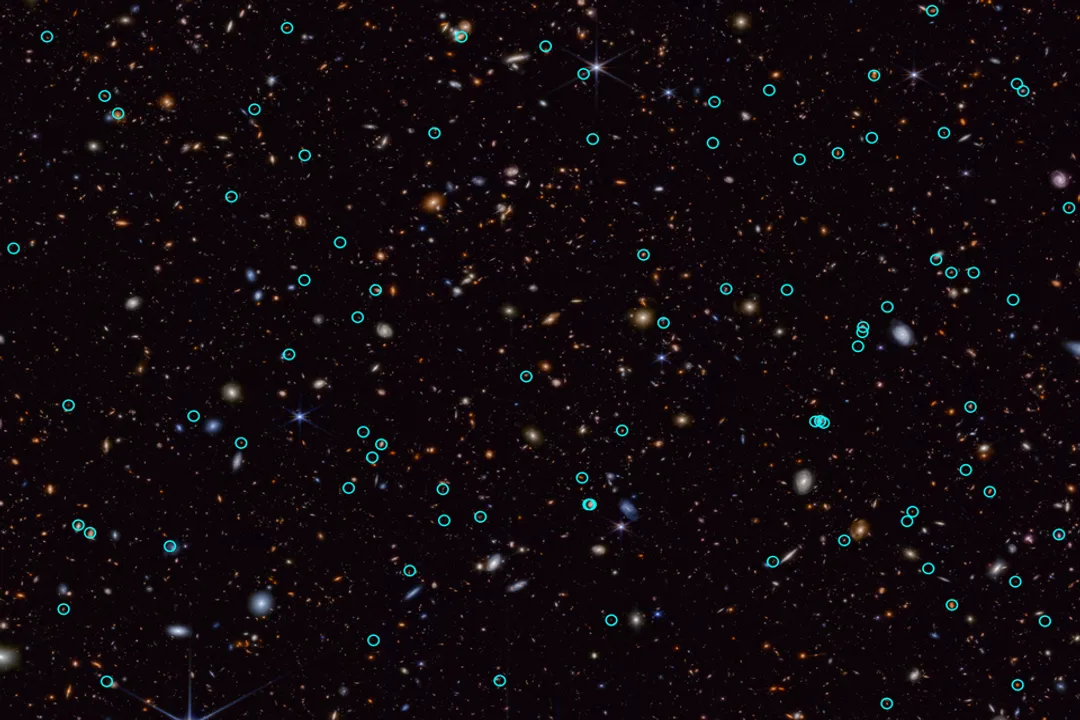
The question of stars "falling" takes on another dimension when we consider what people observe from Earth's surface at night. The casual term "falling star" has nothing to do with a massive star—like our Sun—plunging toward us. Stars are vastly more massive than Earth; for a star to fall onto Earth, it would have to be less massive than the object it is falling onto, which is impossible in that context. If a true star were heading our way, it would be visible for a very long time as it slowly approached, not as a fleeting streak of light.
What people actually see when they observe a "falling star" are meteors. These are small chunks of rock or debris moving through space. As Earth revolves around the Sun, it collides with these particles. When these pieces of rock enter our atmosphere, they strike it at high velocity, causing them to heat up, glow, and burn away. This burning streak of light is what we call a meteor, often referred to as a "shooting star" or a falling star. The overwhelming majority of these burn up completely before reaching the ground; only objects a few feet across or larger have a realistic chance of surviving the atmospheric entry.
The appearance of these streaks is also tied to our vantage point. Since we look out into space as the Earth moves through its orbit, we intercept more of these bits of space debris when we are facing the direction of our orbital travel, which is why they are often most visible at night. The appearance of movement in the night sky, where stars seem to rise and set or "fall" across the horizon, is entirely due to the Earth's rotation, not the stars themselves moving across the sky in a straight fall toward us.
# Cosmic Attraction
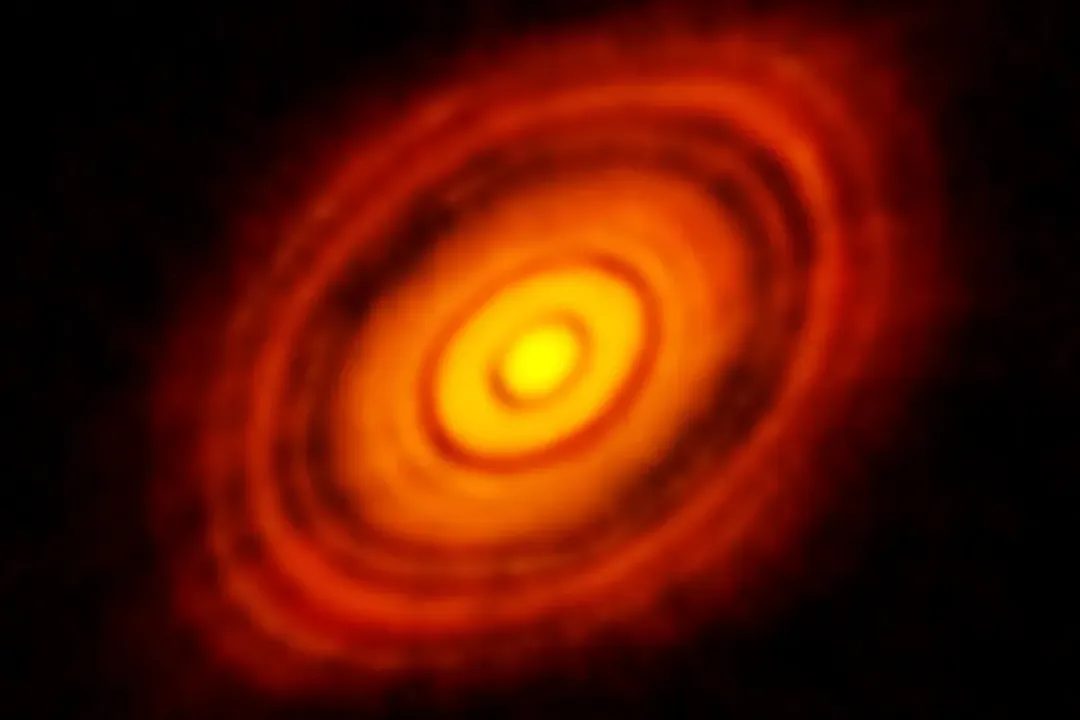
When we shift the frame of reference from a casual observer to a large-scale cosmological view, the concept of "falling" under gravity becomes central to how everything is organized. Gravity is what binds matter together to form a star in the first place. [1] A newborn star pulls in surrounding gas and dust until that inward pull is balanced by repulsive forces from other objects nearby. [1] Once this balance is reached, matter begins to settle into stable orbits around the star, eventually clumping together via collisions to form planets. [1]
Stars, therefore, are not static beacons; they are perpetually moving, held in relationship with other stars by gravitational attraction. [1] While no single distant star will cause a noticeable "fall" onto Earth, the combined gravitational influences of billions of stars and dark matter dictate the path of our entire galaxy. Stars exist within a massive structure—a galaxy—where they are constantly falling in complex, often stable, orbital paths dictated by the total mass enclosed within their orbit.
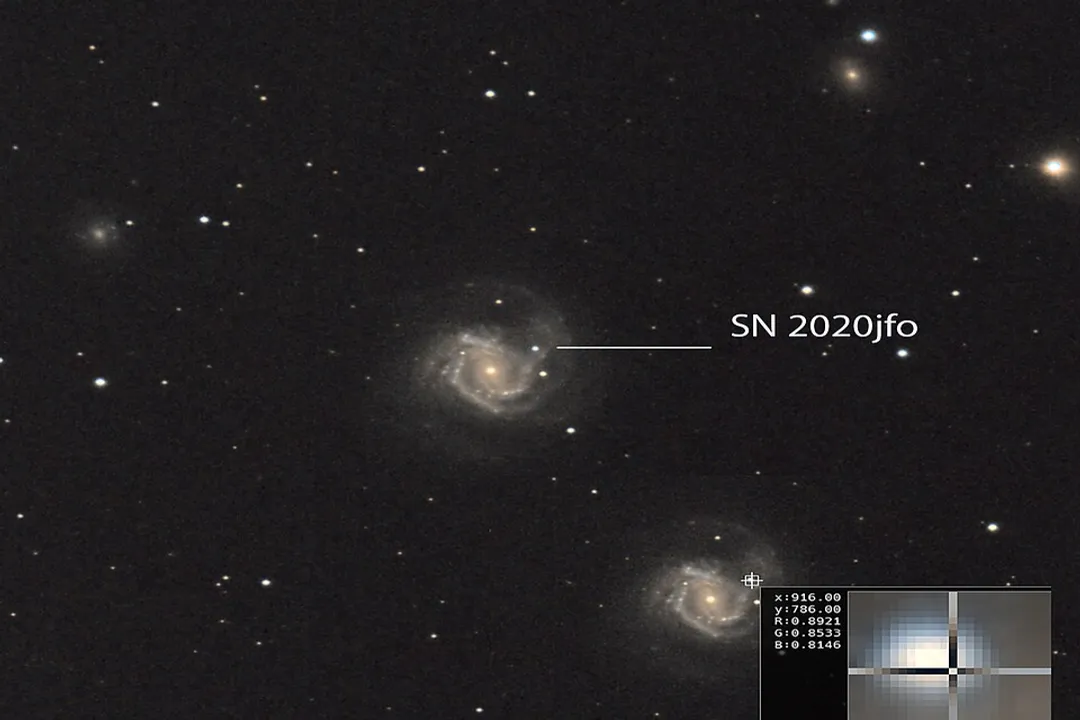
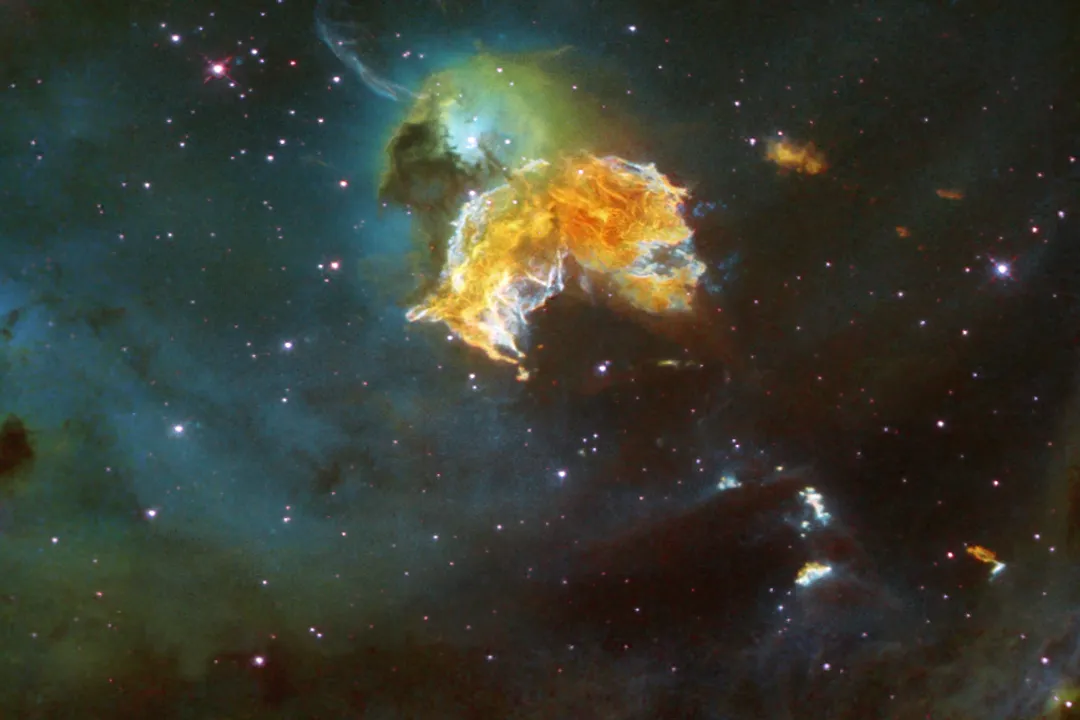
In the context of a star’s life cycle, the term "fall" might be more accurately applied to gravitational collapse, which is a catastrophic, inward fall of matter. For instance, when a massive star exhausts its fuel, its core can no longer counteract its own gravity, leading to a sudden gravitational collapse. This collapse can result in the star either being completely destroyed in a massive explosion called a supernova, or compressing into an incredibly dense object like a neutron star or a black hole. This final, violent rearrangement is the ultimate "fall" dictated by mass and gravity acting on a stellar scale.
Thinking about the vast scale of these events, even the destruction of a star like a supernova can trigger subsequent events elsewhere. The expanding remnants of such an explosion can compress nearby molecular clouds, which in turn can trigger the formation—the beginning of the gravitational clumping process—of a new generation of stars. This illustrates a continuous cycle where gravitational attraction drives both creation and destruction across the universe.
To truly appreciate the scale, consider that a typical star is vastly larger and more massive than Earth. Therefore, any concept of a star "falling" in a human sense is physically absurd; an object cannot fall onto something much smaller than itself. The stars we see are either stationary relative to our observation frame (until the Earth rotates us past them) or are moving within the gravitational architecture of the Milky Way, tracing paths defined by the universal law of attraction. [1] The closest we come to a star "falling" in a destructive, visible sense is when it reaches the end of its life and collapses under its own enormous weight.
# Comparing Cosmic Movers
It can be helpful to formalize the difference between an observed streak of light and the actual motion of a star to solidify the concepts of "falling" in space versus "falling" in the atmosphere.
| Phenomenon | What is Moving? | Primary Force/Cause of Motion | Apparent Speed/Duration |
|---|---|---|---|
| Meteor ("Falling Star") | Small rock/ice chunk | Earth's orbital velocity intersecting the object's path, followed by atmospheric friction | A very brief, fast streak of light |
| Orbiting Astronaut/ISS | Spacecraft/Human | Constant gravitational pull from Earth balanced by high tangential velocity | Appears stationary relative to the spacecraft; orbits every minutes [1] |
| Star's Galactic Motion | A star within the Milky Way | Gravitational pull from the galaxy's total mass distribution | Very slow relative movement over millennia |
| Stellar Collapse (Supernova) | The star's own mass | Overwhelming self-gravity after fuel exhaustion | Rapid inward collapse measured in seconds or less |
Ultimately, the initial question stems from a common but incorrect assumption about the vacuum of space. Gravity is not something turned off once you leave the planet's atmosphere; it is the fundamental structure-builder of the cosmos. [1] Stars do not fall because there is no gravity; they remain in their vast, majestic orbits because gravity is the very force that compels them to move as they do, whether they are orbiting a galactic center or pulling together the dust that will one day form a new world. [1] The only things that "fall" past us quickly are the small, atmospheric hitchhikers we call meteors.
Related Questions
#Citations
Supernova
Is there gravity in space?
Why do some stars fall at night in the sky?