How did Edwin Hubble impact the world?
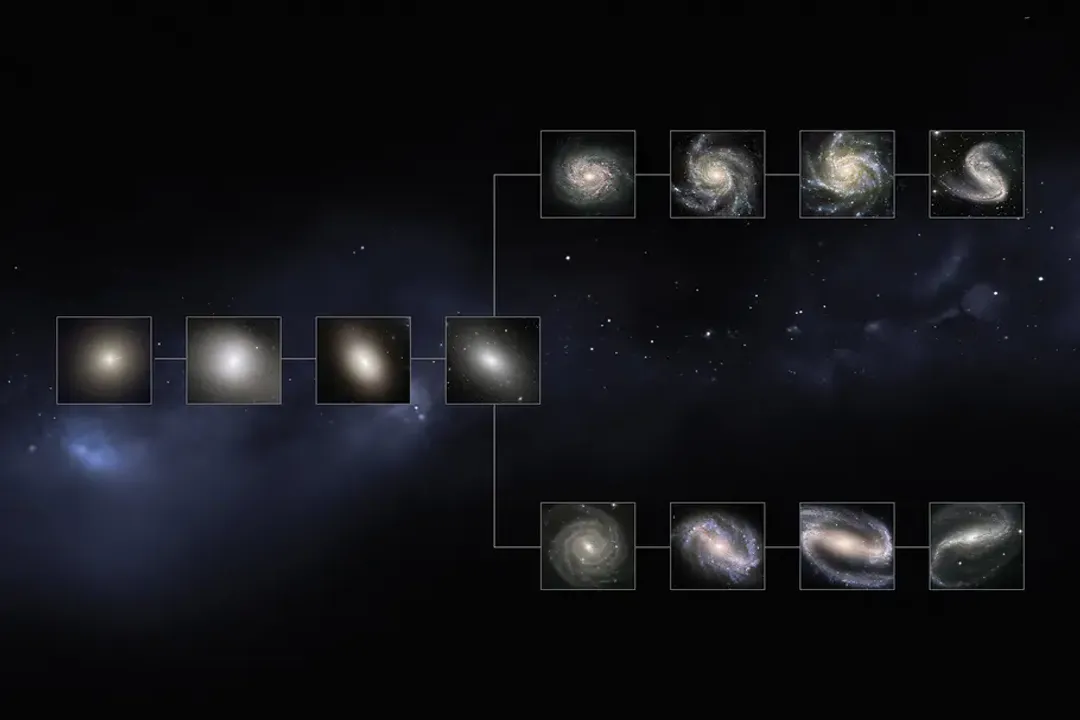
Edwin Hubble did not merely contribute to astronomy; he fundamentally redrew the map of reality, taking humanity’s perception of its place in existence from a cozy, isolated island to an incomprehensibly vast archipelago of galaxies. His impact rests primarily on two monumental shifts in understanding: establishing that the Milky Way was not the entire universe, and proving that the universe itself is in a state of constant expansion. These discoveries, born from meticulous observation and the skillful application of new technology, remain cornerstones of modern cosmology.[1][3][8]
# Athlete Scholar
Before Edwin Hubble turned his gaze to the distant nebulae, his path was anything but certain for a future revolutionary astronomer. Born in Missouri in , Hubble possessed a versatile intellect that led him through diverse fields before settling on the celestial sphere. [1][6] He was an exceptional student, graduating from the University of Kentucky on an athletic scholarship where he excelled in basketball and track and field events. [5][6] His academic achievements were equally impressive, leading him to receive a Rhodes Scholarship to study law at The Queen's College, Oxford, where he earned an M.A.. [1] After returning to the U.S., he practiced law briefly and even coached basketball at a high school in New Albany, Indiana. [5][6] It’s fascinating to consider the mindset that shifts from analyzing legal statutes to cataloging stellar distances. That disciplined, structured approach, honed in the relatively contained environments of law courts and sports arenas, seems ill-suited for the boundless unknowns of deep space, yet it was perhaps this very discipline that allowed him to cut through the confusion surrounding the nature of the spiral nebulae. [6] His trajectory changed again during World War I, where he served in the U.S. Army, reaching the rank of major and working in intelligence before finally committing to astronomy, a pursuit he began studying at the Yerkes Observatory. [1][3]
# Cosmic Scale
When Hubble began his serious astronomical work in the , the scientific community was locked in what historians call the "Great Debate." This argument centered on whether the fuzzy, spiral-shaped objects visible in the night sky—the spiral nebulae—were merely gas clouds existing within our own Milky Way galaxy, or if they were, in fact, entirely separate, star-filled systems far outside the confines of our own stellar neighborhood. [5][9] Leading proponents of the latter view, like Heber Curtis, argued for external galaxies, while Harlow Shapley championed the view that the Milky Way encompassed everything important. [9]
Hubble’s opportunity to settle this contest arrived after the completion of the massive Hooker Telescope at the Mount Wilson Observatory in California. [1][4] This instrument represented a staggering leap in observational capability, gathering light far more effectively than any previous telescope. [7] Using this observational behemoth, Hubble focused on these enigmatic nebulae, determined to measure their true distances. [4]
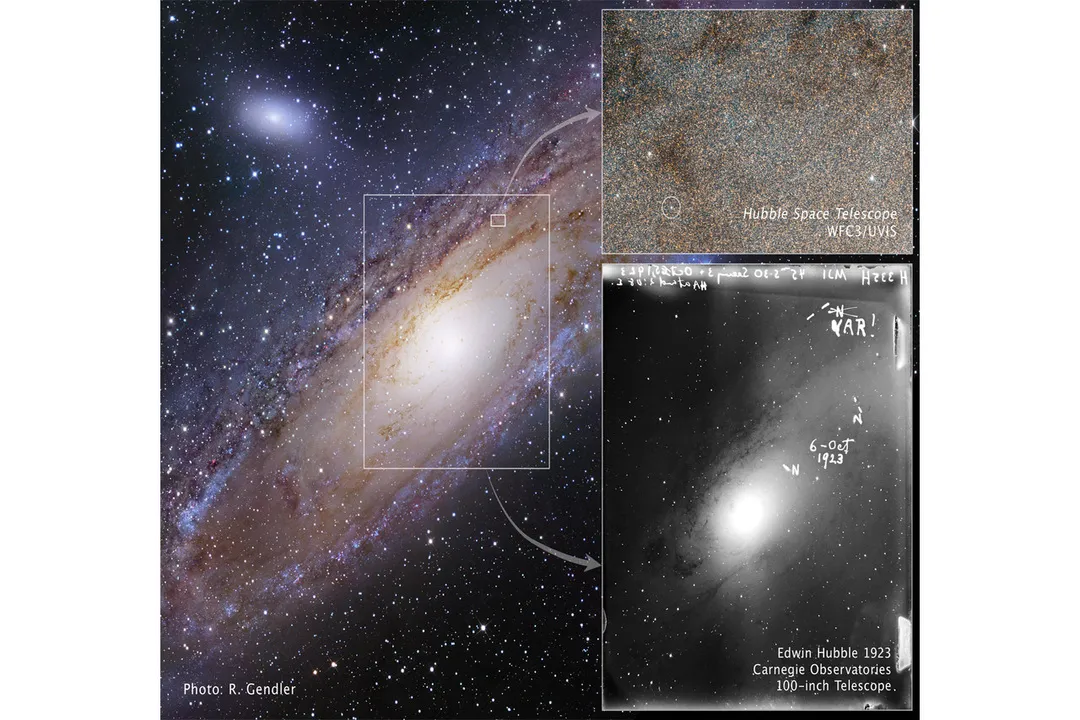
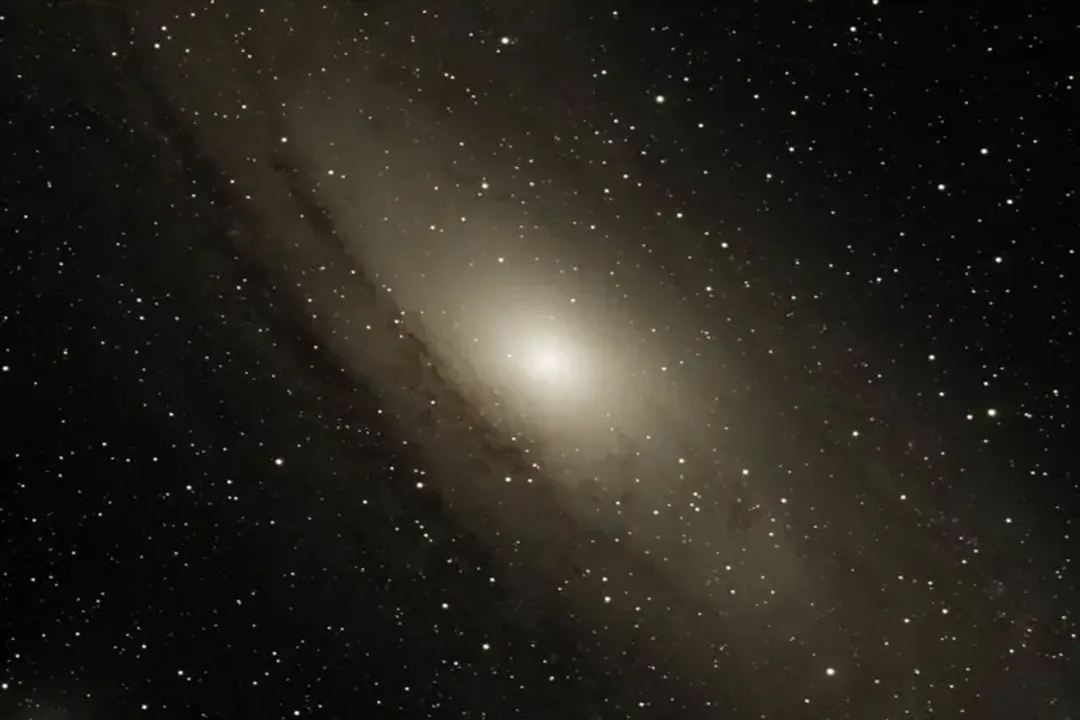
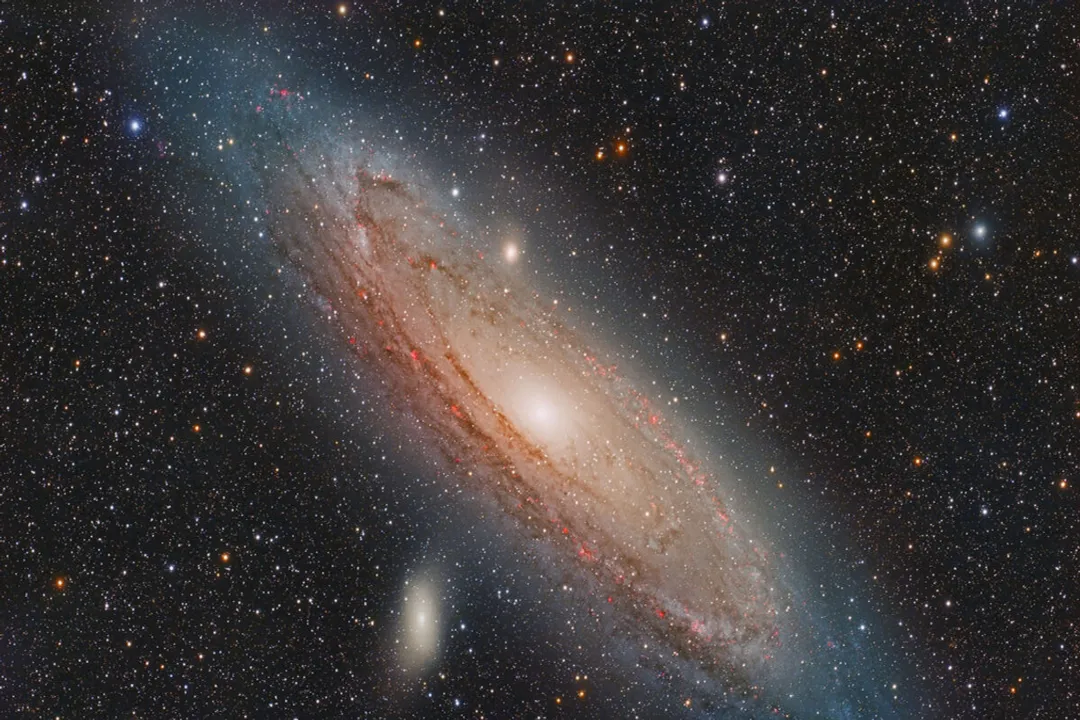
To measure something light-years away, you need a reliable "standard candle"—a type of star whose true brightness is known. Hubble found his yardstick through the work of Henrietta Swan Leavitt. [9] Leavitt had discovered that a specific class of variable star, Cepheid variables, pulsated at a rate directly related to their intrinsic luminosity. [9] By observing the period of brightness change for a Cepheid within a nebula, Hubble could calculate its true light output and, consequently, its distance. [7] In , Hubble successfully identified Cepheids within the Andromeda Nebula (). [4][9] The calculated distance placed Andromeda far outside the previously estimated boundaries of the Milky Way, resolving the Great Debate definitively. The universe had suddenly become immeasurably larger, transforming "nebulae" into "island universes," or what we now call galaxies. [3][5]
# Galaxy Types
With the confirmation that the universe was populated by countless galaxies, a new challenge emerged: how to organize this newly revealed abundance. Hubble, often working alongside his assistant Milton Humason, began a systematic classification of these stellar systems based on their visual morphology. [4][7]
This classification effort resulted in the Hubble Sequence, popularly known as the tuning fork diagram. [7] This system broadly grouped galaxies based on their shape, providing a foundational structure for later theoretical work on galaxy evolution:
- Ellipticals (): Ranging from nearly spherical () to highly elongated (). [7]
- Spirals (): Characterized by a central bulge and distinct spiral arms, further subdivided based on how tightly wound the arms are, and whether they possess a central bar structure (). [7]
- Lenticulars (): Often seen as an intermediate class between ellipticals and spirals, possessing a disk structure but lacking prominent spiral arms. [7]
While this classification scheme is now supplemented by far more complex observational data, the Hubble Sequence provided the first necessary framework for astronomers to study the populations and distribution of galaxies across the cosmos in an organized fashion. [7]
# Expanding Space
Hubble’s most profound contribution came just a few years after establishing the extragalactic nature of the nebulae. By compiling distance measurements for many galaxies with their observed redshifts—the stretching of their light waves toward the red end of the spectrum, indicating recession velocity—he uncovered a striking pattern. [2][5]
In , Hubble published his findings showing a linear relationship between a galaxy’s distance and its speed moving away from us. [2][5] This is now known universally as Hubble's Law: , where is the recession velocity, is the distance, and is the Hubble Constant. [2]
The immediate implication was revolutionary: the universe was not static, as was widely believed, but was actively expanding. [3][8] This observation provided the crucial observational evidence supporting the theoretical work earlier proposed by Georges Lemaître, who had independently suggested an expanding universe based on Einstein's equations of general relativity. [2]
What is often overlooked is the sheer intellectual difficulty of accepting this result. Even though his data pointed directly to a dynamic universe, Hubble himself remained somewhat hesitant to fully embrace the most radical conclusion—that the universe must have started from a single, incredibly dense point, the genesis of what would become the Big Bang theory. [8] It took many more years and subsequent generations of scientists for the implications of a time-evolving cosmos to become fully accepted. [8] For Hubble, the immediate focus was on establishing the measurement and the law itself, providing the factual basis upon which the entire modern cosmological timeline is constructed. [2]

# Lasting View
Hubble’s influence extends far beyond the laws he wrote down on paper; his work permanently altered the human perspective. Before him, we inhabited a universe that was, effectively, the Milky Way; after him, we understood we lived in one of billions of galaxies, adrift in a cosmos that is actively growing larger every second. [3]
This monumental legacy is formally honored by the Hubble Space Telescope (HST), named in his memory. [1] The HST, launched in , was specifically designed to look even deeper into space and time than ground-based instruments ever could, continuing the quest for accurate distance measurements and better understanding the rate of cosmic expansion (). [1] The telescope’s stunning images—from detailed views of stellar nurseries to distant galaxy clusters—are a direct, ongoing validation of Hubble’s original premise: that the most profound truths about our existence lie in understanding the scale and motion of those distant, fuzzy nebulae. [1] The telescope’s very existence represents the modern synthesis of observational power and cosmological theory, a direct descendant of the work done with the instrument nearly a century prior. [7]
Hubble's impact, therefore, is not just historical; it is foundational. His transition from a lawyer and athlete to the man who measured the universe serves as a powerful case study in how diverse backgrounds can feed scientific breakthroughs, provided the right tool—the telescope—and the right theoretical framework—Leavitt's Cepheids—are brought to bear on a central, seemingly intractable question. [9][6]
#Citations
Edwin Hubble - Wikipedia
This Month in Physics History | American Physical Society
Edwin Powell Hubble - The man who discovered the cosmos
Carnegie Science celebrates Edwin Hubble's discovery of the ...
How Astronomers Discovered the Universe Is Expanding - History.com
Case Files: Edwin Hubble | The Franklin Institute
Who is the Man That Discovered the Universe?
Edwin Hubble: The man who discovered the Cosmos - ESA
How Edwin Hubble won the Great Debate - Astronomy Magazine