Which other exoplanet detection method is often used to confirm or refine radial velocity results regarding mass?
Answer
The transit method.
If the transit method confirms a planet passes in front of the star, it implies the system is nearly edge-on ($i ext{ is near } 90^ ext{o}$), allowing the radial velocity measurement to yield the definitive planetary mass.
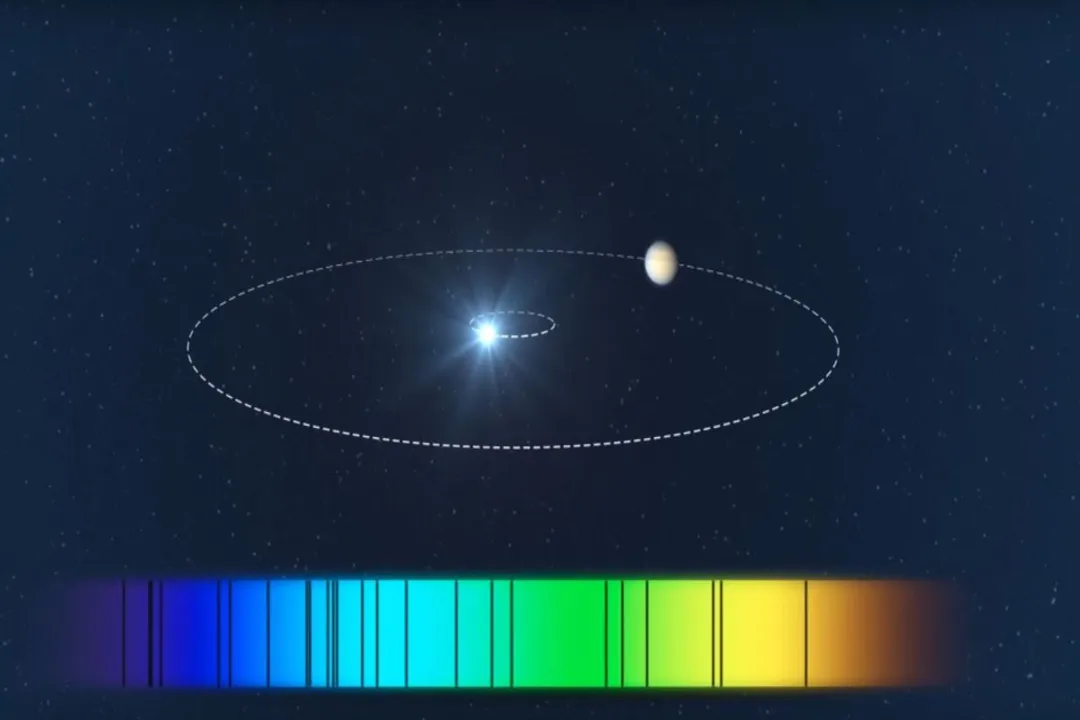
#Videos
Detecting Exoplanets: Radial Velocity Method - YouTube
Related Questions
What does the measurement of radial velocity primarily indicate?What physical phenomenon is the radial velocity detection technique fundamentally based upon?What spectral shift occurs when a star is moving directly toward an observer?When is a star's emitted light characterized by a redshift?In exoplanet detection via radial velocity, what actual motion is detected by astronomers?How do astronomers utilize spectral lines to calculate radial velocity?What orbital characteristic of an unseen planet is revealed by the period of the radial velocity wave pattern?What essential characteristic of a planetary system cannot be determined using only radial velocity measurements?If an orbital system is highly inclined (tilted, with $i$ close to $0^ ext{o}$), what value does the radial velocity calculation yield for the planet's mass?Which other exoplanet detection method is often used to confirm or refine radial velocity results regarding mass?