Do all planets have iron?
The structure hidden beneath the surface of any world, from the smallest rock in the asteroid belt to the largest Jovian giant, is a primary driver of its evolution and character. When we look toward the heavens, the concept of a dense, metallic heart—predominantly iron—is one we often associate immediately with our home world, Earth. [7] This is not an unreasonable assumption; given the principles of planetary differentiation, where the heaviest materials sink to the center, iron, being significantly denser than rock or ice, should naturally congregate there. [2][5] However, the question of whether this iron-centric architecture is universal across all planets, both within our solar system and beyond, requires a closer look at planetary formation and the diverse conditions that shape worlds orbiting different stars.
# Rocky Foundations
For the terrestrial planets—Mercury, Venus, Earth, and Mars—the presence of a substantial iron core is a defining characteristic. [2] Planetary differentiation, the process where heavier elements migrate inward while lighter ones float upward, effectively sorts the planet's initial material into layers: a metallic core, a silicate mantle, and a crust. [3] On Earth, this core is thought to be composed mainly of iron and nickel, with some lighter elements mixed in, perhaps sulfur or silicon, existing in both liquid outer and solid inner states. [2] This massive, convecting iron ocean is responsible for generating our protective magnetic field, a shield vital for retaining our atmosphere and surface water. [7]
Mercury presents an intriguing case study in this metallic abundance. Despite being the smallest planet in the solar system, it possesses an iron core that accounts for an exceptionally large proportion of its total mass—perhaps as much as two-thirds of its mass is metallic. [9] Scientists point toward a dramatic formative event, such as a colossal impact early in its history, as the reason for this disproportionately large core, perhaps stripping away much of its lighter, silicate mantle. [9] This makes Mercury an outlier among the terrestrial worlds, demonstrating that while the presence of an iron core is common, its relative size is highly dependent on specific environmental and collisional histories. [9] Mars, conversely, has a much smaller, largely solid iron-rich core, relative to its size, suggesting a less efficient differentiation process or perhaps the loss of a significant portion of its lighter outer layers early on. [2]
# Giant Worlds
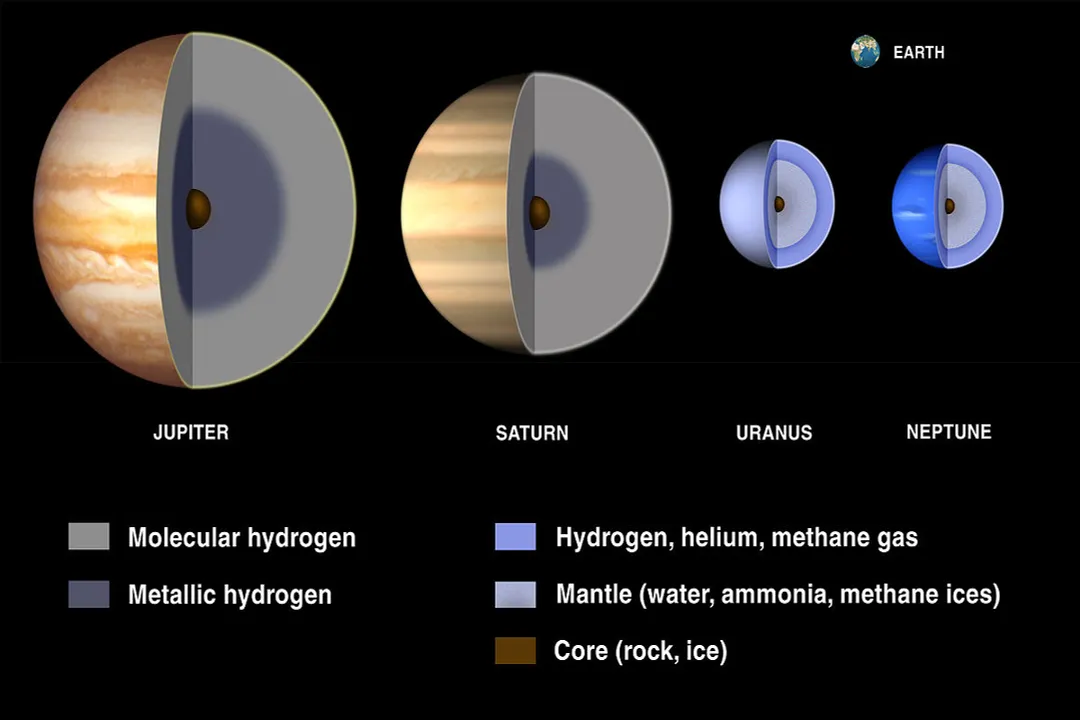
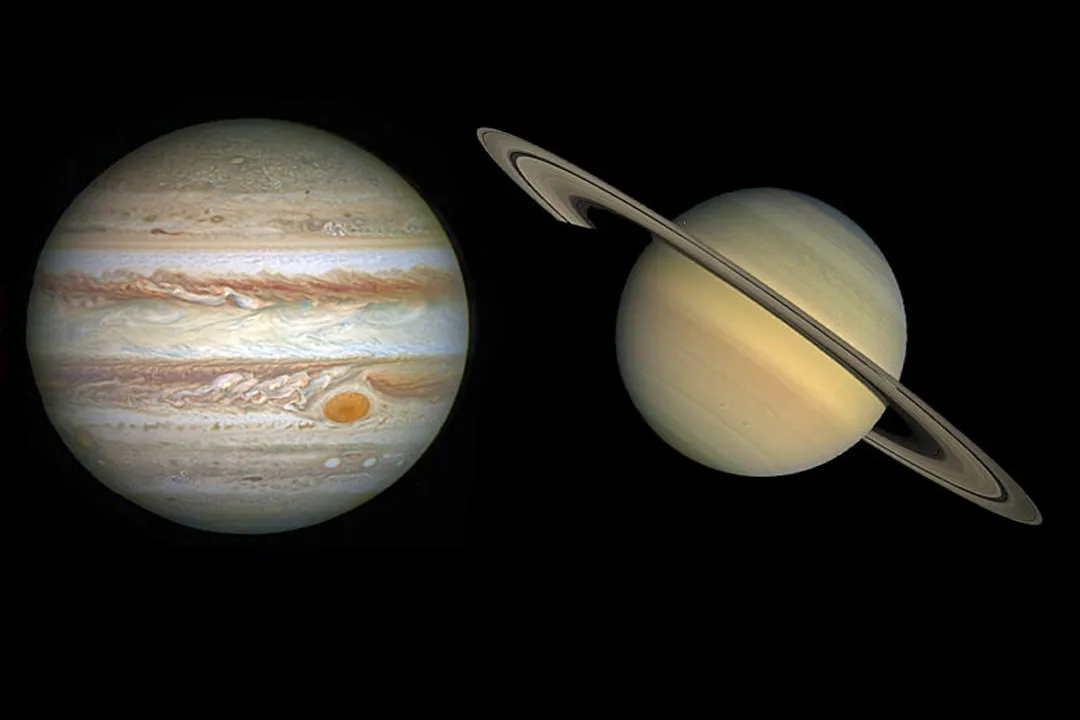
The answer becomes much murkier when considering the giants of our outer solar system: Jupiter, Saturn, Uranus, and Neptune. These worlds are fundamentally different from their rocky inner neighbors. [5] Gas giants like Jupiter and Saturn are dominated by vast envelopes of hydrogen and helium gas, with only a relatively small fraction of their mass being composed of heavier elements. [5] While models suggest they do possess dense cores, the composition of these cores is less certain than that of Earth's. [1] They are likely made of rock, ice, and metal, but the metal component may not be as purely iron-dominated as in the terrestrial planets. [2]
For the ice giants, Uranus and Neptune, the situation shifts again. These planets are thought to contain larger proportions of "ices," referring to volatiles like water, methane, and ammonia, surrounding a core that could be a mix of rock and iron. [5] The sheer scale of these outer planets means that even if their cores contain a significant percentage of iron, the absolute amount of iron compared to the entire planet's mass might be much smaller relative to Earth's proportion. [1] In fact, some models suggest their cores might even be heavily contaminated with, or even primarily composed of, materials like water ice or silicates mixed with metals, rather than a distinct, massive iron sphere. [2][6]
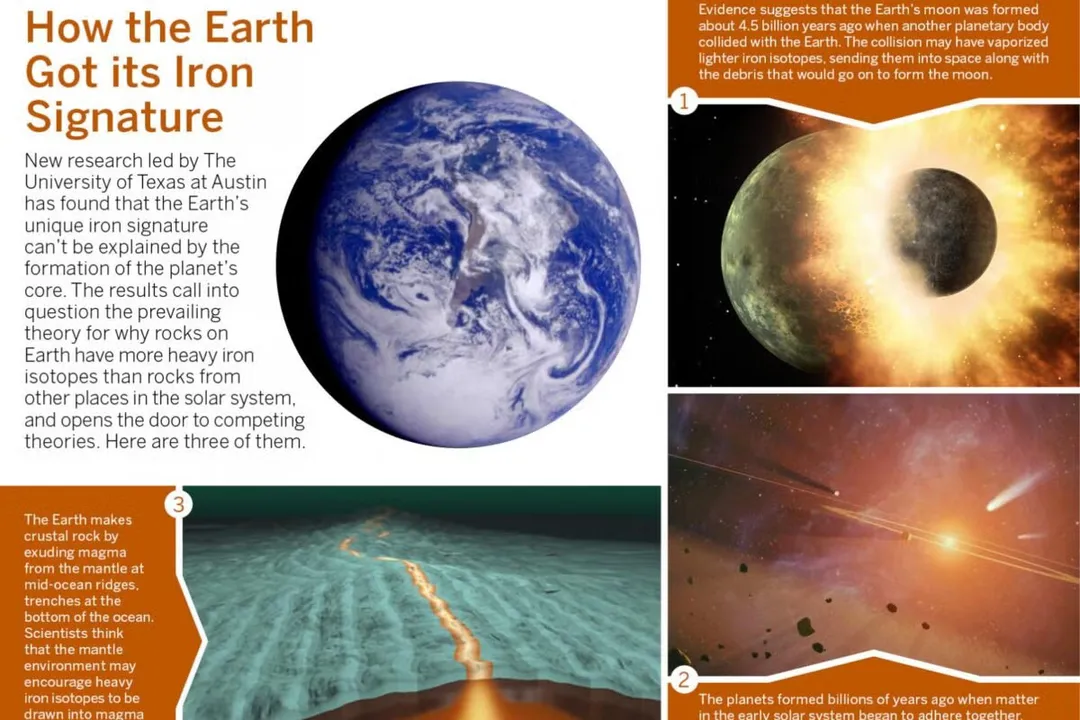
# Formation Influence
The sheer variety in planetary size and composition implies that a one-size-fits-all answer regarding iron cores is insufficient. Planetary formation is not just about gravity pulling heavy things down; it’s deeply intertwined with the conditions of the protoplanetary disk from which the planets accreted. [4] One fascinating area of research connects the host star's properties to the resulting planet's internal structure. [4] Experiments suggest that the activity or magnetism of the star illuminating the disk during planet formation can influence the final elemental mix incorporated into the growing planet. [4] This suggests that a planet forming around a quiet, less magnetically active star might end up with a different ratio of silicates to iron than one forming near a highly energetic star. [4]
It is interesting to consider how the initial elemental budget of the material near the star dictates the final core size. If a planet accretes from material that has already been depleted of volatile iron-bearing compounds due to stellar winds or radiation near the star, its final core mass will be constrained, even if differentiation is perfect. [4] This external, stellar-scale influence is a critical, often overlooked variable when thinking about planetary interiors across the galaxy.
# Alternative Cores
While iron and nickel dominate the discussion for our solar system's rocky bodies, theoretical science allows for worlds with entirely different central compositions, though they would likely require exotic formation scenarios far removed from our Sun’s immediate neighborhood. [6] If a planet formed under conditions where silicates were molten at much lower temperatures, or if it accreted predominantly from materials rich in lighter elements, the core might be composed of something else entirely. [6] One theoretical possibility involves a core made of compressed silicates, or even carbon-rich materials if the planet formed far from the star in an environment rich in carbon compounds, creating a 'diamond core' scenario, though iron remains the most gravitationally favored element for a dense center. [6] In our own system, the presence of significant sulfur within Earth's core—as suggested by some models—demonstrates that even 'iron' cores are rarely 100% pure metal but rather iron alloys. [2] Experiments attempting to recreate conditions deep within Earth have even complicated the narrative of our own core's origin, calling the standard accretion models for Earth's iron component into question, suggesting complex processes of material mixing occurred early on. [8]
# Core Evidence
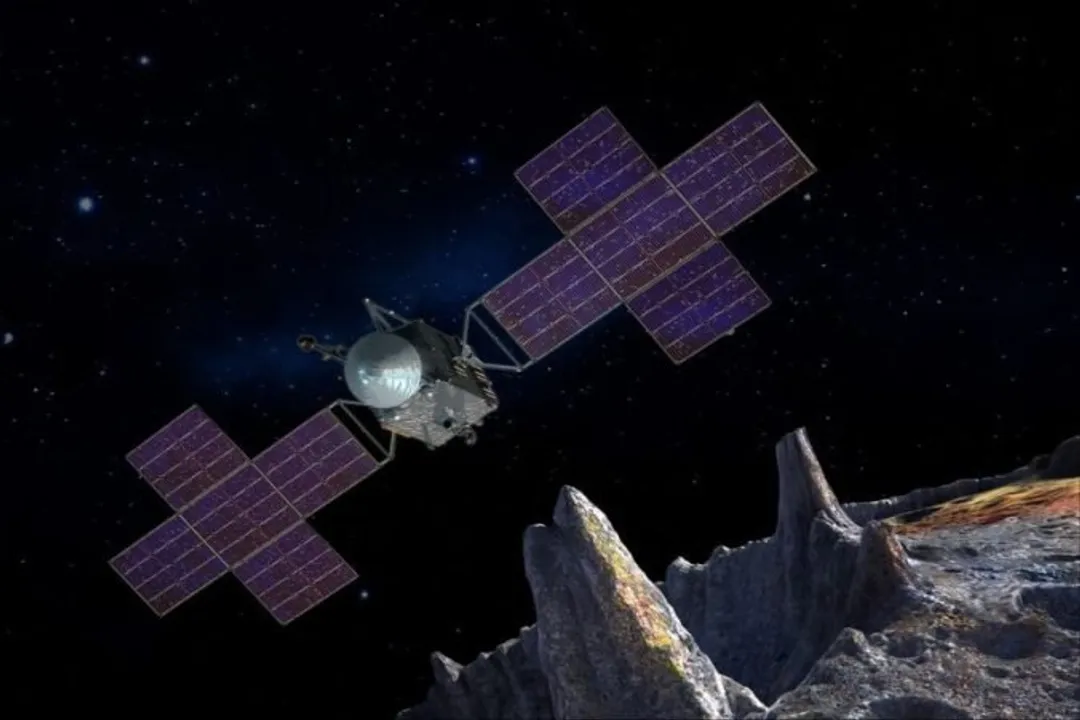
We cannot, of course, drill into distant exoplanets, but we do have astronomical remnants that offer tangible clues about metallic cores: the iron-rich asteroids. [3] Objects like the asteroid Psyche, which is thought to be the exposed nickel-iron core of a protoplanet that lost its mantle through repeated collisions, serve as natural laboratories. [3] Studying these remnants helps planetary scientists validate the models used to predict the size and composition of the cores that should exist inside the remaining intact planets. [3] The fact that we find such large, metallic bodies floating around implies that the process of planetary differentiation—the separation of metal from rock—was highly effective in the early solar nebula, reinforcing the expectation that major planets should have metallic cores. [3]
# Size Ratios
When assessing the ubiquity of iron, it is perhaps more instructive to compare the ratio of core mass to total planetary mass rather than just seeking an absolute presence. [1] For instance, Earth's iron core makes up roughly a third of its mass. [2] Mercury breaks the mold with a core comprising over half its mass. [9] However, the gas and ice giants are predominantly atmosphere and ice/rock mantles, making their core-to-planet mass ratio significantly lower, even if their cores contain hundreds of Earth masses of material. [1][5]
This leads to a synthesis: while nearly every gravitationally significant, differentiated body in our solar system likely contains a concentration of the heaviest elements—iron being the prime candidate—the dominance of the iron core appears to be a hallmark of the smaller, rocky worlds that formed closer to the Sun, where metals were more abundant relative to hydrogen and helium. [1][5] For the larger, more distant planets, the sheer volume of lighter materials overwhelms the metallic center. Therefore, an "iron core" as distinct and massive relative to the whole planet as Earth's might be rare, even if every planet above a certain size threshold has some metallic component sinking to its center. [1] The universe is likely filled with worlds where the central metal concentration is an alloy mixed intimately with high-pressure ices or silicates, a composition dictated by where in the stellar neighborhood the planet happened to form and what it collided with along the way. [4][6]
#Citations
Do all planets have an iron core like Earth or are we unique ... - Quora
Planetary core - Wikipedia
Cores, Planets and The Mission to Psyche | News | Astrobiology
Size of Planet Iron Core Depends on Star Magnetism - Labroots
What are planets made of? | The Planetary Society
Could a planet have a core of anything other than iron?
What's Hiding Inside the Cores of Our Solar System? Ever wonder ...
Experiments Call Origin of Earth's Iron into Question - UT Austin News
Research News - Why Does Mercury Have a Big Iron Core?