Could life exist without a planet?
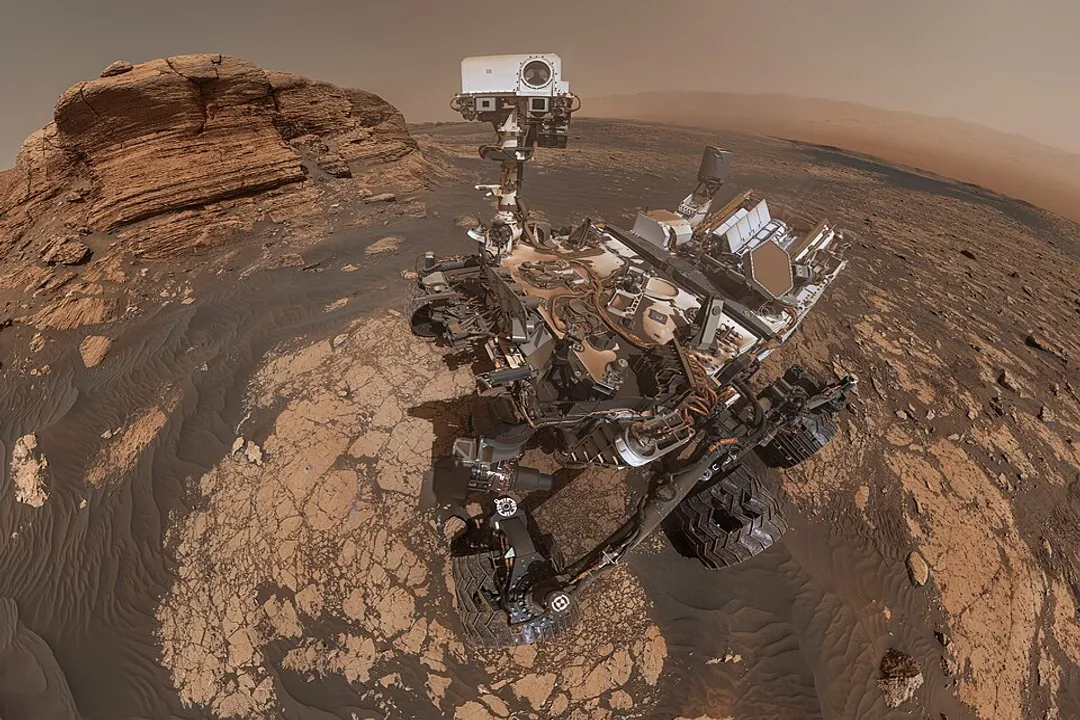
The traditional search for life beyond Earth centers on finding worlds much like our own, orbiting a stable star within the "Goldilocks zone" where liquid water can pool on a surface. [3][4] This paradigm, however, might be too limiting. Scientific discussions are increasingly suggesting that the very definition of a habitable environment could be far broader, potentially allowing biology to thrive even in the vast emptiness of space, completely untethered from a planet or even a star. [1][7][8] If life is tenacious enough, as Earth's own history suggests, then perhaps its cradle doesn't need to be a familiar, rocky sphere revolving around a sun.
# Rethinking Habitats
When astronomers discuss habitability, the concept almost always requires a solid or liquid surface, a stable environment, and an energy source, typically provided by a parent star. [3][4] The assumption is that a planet provides the necessary shielding from harsh space radiation and the gravitational well required to hold onto an atmosphere and liquid water long enough for complex chemistry to evolve. [9] Yet, challenging this assumption means looking for alternatives to these familiar ingredients.
The core requirements for life as we understand it—a solvent (like water), the building blocks of organic molecules, and a source of energy—do not strictly mandate a planet. [8] For instance, the energy required to drive metabolism might be derived from sources other than starlight, such as geothermal heat or radiogenic decay occurring within a self-contained mass. [1][7]
# Energy Without Stars
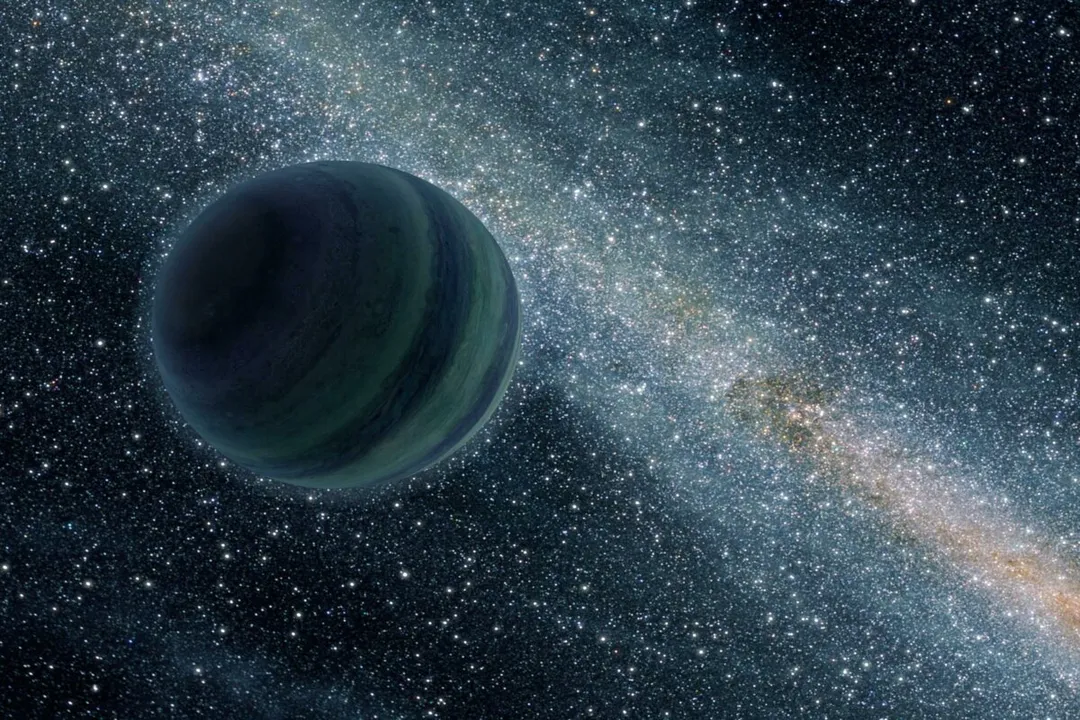
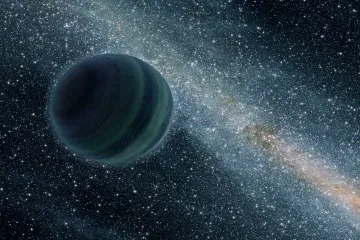
One significant departure from the standard model involves bodies that do not orbit a star—sometimes called rogue planets or free-floating planets. [5][7] These objects wander interstellar space, inheriting none of the gentle, consistent energy input from a nearby star that maintains Earth’s surface temperature. [5]
However, these rogue worlds might not be frozen, inert balls of rock and ice. If they possess sufficient mass, they can retain internal heat generated by their formation and the radioactive decay of elements within their cores, similar to the mechanism that keeps Earth’s mantle molten. [1][5] This internal heat could sustain subsurface oceans or liquid layers, offering a stable, insulated environment protected from the extreme cold and radiation of interstellar space. [7][8] The key, then, is mass; the body must be massive enough to retain its heat and potentially an atmosphere or thick ice shell to trap that warmth. [5]
# Life Adrift
Beyond rogue planets, some concepts propose life existing entirely within space, not merely on a large, isolated body. This stretches the idea of a "world" to include vast clouds of gas and dust, such as nebulae, or even the empty regions between star systems. [1][8]
Consider the resilient nature of terrestrial life forms known as extremophiles. [1] Certain microbes on Earth thrive deep within ocean vents, powered by chemical reactions (chemosynthesis) rather than sunlight, or survive for millennia encased in Antarctic ice or deep within rock miles underground. [4][8] If Earth life can survive these harsh, energy-starved, or high-pressure/temperature conditions, it offers an analogue for how extraterrestrial life might exist outside a defined planetary surface. [1] For example, life forms that evolved to utilize ionizing radiation, perhaps within a dense nebula rich in complex organic molecules, could exist without ever needing a surface to condense upon. [1] Such life would likely be microscopic, perhaps existing as single-celled entities or even complex biological structures suspended in the medium. [8]
# The Challenge of Interstellar Survival

The vacuum of space presents immediate and massive challenges: extreme cold, near-total vacuum, and intense radiation, particularly cosmic rays. [1][8] A planetary surface or a dense atmosphere provides crucial protection.
To survive without this planetary shield, any non-planetary life would need extraordinary adaptations. One possibility discussed is the ability to enter a state of extreme dormancy, essentially pausing metabolism indefinitely until conditions improve or until the organism drifts into a more benign region, like the interior of a dense molecular cloud. [1] This is akin to bacterial spores on Earth, which can survive incredible duress for vast timescales. [4]
Another adaptation involves building robust, self-contained protective shells. If life were to exist in the interstellar medium, these organisms would need exteriors capable of resisting ultraviolet radiation and high-energy particles, perhaps incorporating heavy elements into their structure to act as internal shielding. [8]
It is worth contrasting the energy source viability. While internal heating sustains a rogue planet, life simply drifting in the true interstellar void has a much harder proposition. It would rely either on incredibly slow, radiation-driven chemistry or require the ability to 'harvest' energy from occasional high-energy particle impacts, which suggests a metabolism operating on a vastly different, likely much slower, timescale than anything familiar to us. [1]
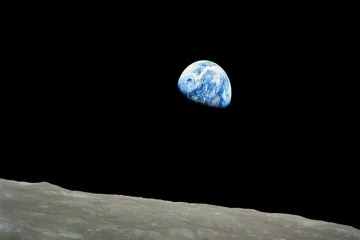
# Planetary Bias in Detection
The focus on planets in the search for extraterrestrial life is not arbitrary; it is largely a reflection of our current technological capabilities and the relative ease of detection. [3][4] Detecting a tiny, free-floating organism bathed in the faint light of the galaxy is currently impossible. We look for biosignatures—gases in an atmosphere or thermal anomalies—that are most easily observed when they are concentrated around a large, orbiting body. [3]
For instance, current methods search for atmospheric components like methane or oxygen that are out of chemical equilibrium, suggesting a biological source. [3] This method inherently requires the life to be localized enough to influence a significant atmosphere, which points back toward a planetary body, even if that body is a super-Earth or a low-mass world. [4]
When we search for life on exoplanets, we are looking for indirect evidence: the modification of a planetary environment. [3] Detecting life that is diffuse across interstellar space, or even living deep within a gas giant without forming an observable atmospheric signature, demands a fundamentally different observational toolkit that we have not yet developed. [7] This limitation creates a selection bias: we are much more likely to find evidence for life on a planet simply because planets are the easiest targets to survey comprehensively. [4]
An interesting consequence of this detection bias is that we might mistake a planet for being sterile when, in fact, its life exists in an interstellar state, having recently been captured by the star system, or conversely, we might miss life on a rogue world because we aren't looking for the very low-level internal thermal signatures that would indicate subsurface activity.
# Comparing Planetary and Non-Planetary Niches
The conditions on a planet versus the conditions in deep space or within a rogue world dictate wildly different biological strategies.
| Environment | Primary Energy Source(s) | Primary Protection Mechanism | Potential Biological Strategy |
|---|---|---|---|
| Terrestrial Planet (Habitable Zone) | Starlight (Photosynthesis) | Atmosphere, Magnetosphere | Surface biochemistry, liquid water cycles [3] |
| Rogue Planet (Subsurface) | Radiogenic/Gravitational Heat | Thick ice shell or rocky mantle | Chemosynthesis, pressure adaptation [5][7] |
| Interstellar Medium (Void) | Cosmic Rays, Trace Chemicals | Self-constructed shielding or dormancy | Extremely slow metabolism, high radiation resistance [1][8] |
The challenge for life without a planet is that it misses out on the planetary stability dividend. Planets, even if geologically dead, offer a relatively constant temperature and pressure environment over geological timescales, allowing for the slow accumulation of complexity. [9] An organism adrift in the void is subject to continuous, random bombardment and changing energy fluxes as it moves through different densities of matter or radiation fields. [8] Life in the void might be chemically simpler or, alternatively, possess an unbelievably complex means of rapidly switching metabolic pathways to cope with rapid environmental shifts. [1]
If we apply a principle of least effort to evolution, the rogue planet scenario—where a large body provides insulation and a stable heat source—is far more probable than life successfully evolving high-level shielding mechanisms to exist completely naked in the galactic wind. It suggests that even if life can survive without orbiting a star, it still benefits immensely from the mass of a planetary-sized object to provide a buffer against the harshness of the cosmos [1][7].
# The Universe's Inventory
The sheer number of objects in the cosmos plays a role here. While the number of stars and confirmed planets is vast, the estimated population of rogue planets is potentially even larger. [5] Some models suggest there could be far more unbound worlds than orbiting ones in our galaxy. [7] If life can arise given the right initial chemical conditions, and if a significant percentage of these rogue bodies retain enough internal heat to support liquid water for billions of years, then the volume of potentially inhabited, non-planetary real estate is enormous. [5][7]
This possibility ties into the broader philosophical question of extraterrestrial life, which, according to some observers, must exist given the sheer scale of the universe, even if it doesn't fit our neat models. [4][9] The ongoing search for life is also a search for understanding the limits of biology itself. [4]
Ultimately, while planets provide the most accessible and seemingly stable laboratory for life as we know it, the existence of extremophiles on Earth and the sheer abundance of planetary-mass objects not bound to stars suggest that life might not need a planet—it might just need a sufficiently massive, warm, and sheltered volume of matter, whether that volume is a planet’s core or a very dense, localized organic cloud. [1][8] The next great discovery might not be another Earth-like world, but evidence of a self-sustaining chemical system existing completely outside the gravitational embrace of a star.
#Citations
Life Could Exist in Space Even Without Planets, Scientists Say
Could life exist on planets we think are 'uninhabitable'? : r/space
Can We Find Life? - NASA Science
Does life exist outside of the solar system? | Center for Astrophysics
Is life possible on rogue planets and moons? | The Planetary Society
We will never be able to live on another planet. Here's why - Aeon
Does Life Really Need Planets? Maybe Not - Universe Today
Does alien life need a planet to survive? Scientists propose ... - Space
Extraterrestrial life - Wikipedia