Can life exist without a star?
The conventional view of life centers around the warmth and light delivered by a parent star, dictating the boundaries of habitability within a narrow orbital band. [8] However, the universe harbors scenarios where planets exist untethered, drifting through interstellar space, raising a fascinating question about sustaining biology when the primary energy source—starlight—is absent. [2][4] These "rogue planets," or unbound worlds, challenge our definition of a life-supporting environment, shifting the focus from surface conditions to internal geophysical processes. [6]
# Rogue Worlds
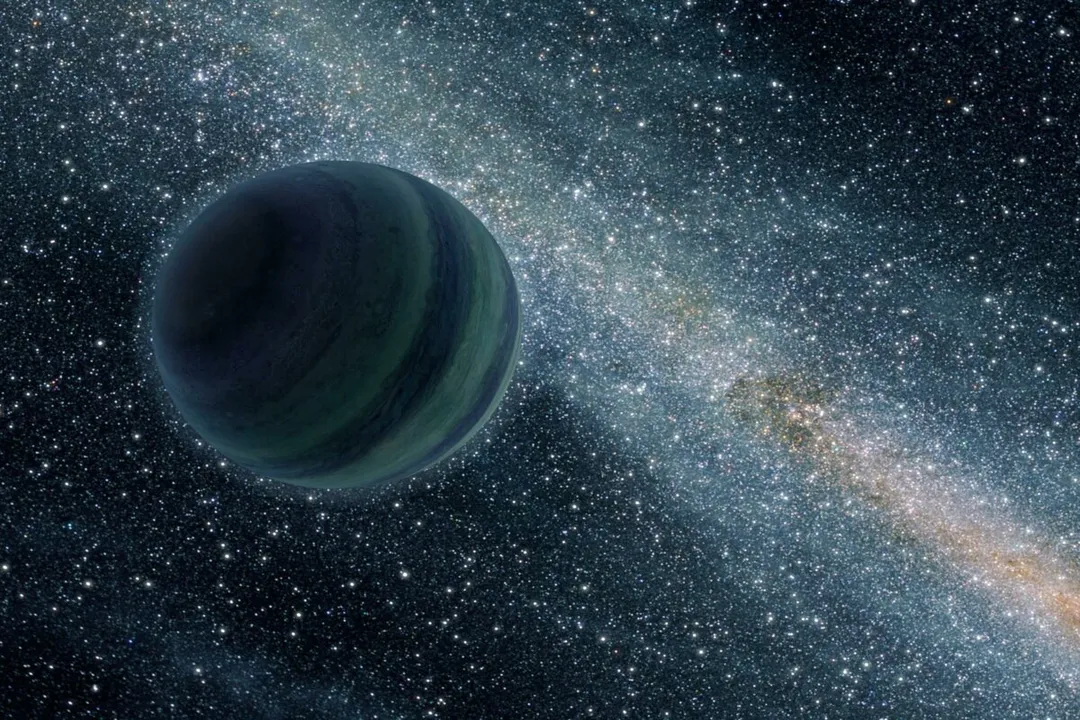
A rogue planet is a world ejected from its original solar system, now wandering the galaxy without orbiting a central star. [2] While we often visualize life being restricted to zones where liquid water can exist on a surface, these isolated bodies offer an alternative stage. [8] The sheer number of such objects is debated, but theoretical models suggest they could be common, perhaps even outnumbering stars in some estimates. [1]
The survival of a rogue planet itself hinges on retaining enough internal heat to prevent a complete freeze-out of its entire mass, a feat that requires significant size or a history of intense radioactive decay within its core. [2] If the planet is massive enough, or if it possesses a substantial subsurface ocean maintained by these internal mechanisms, the conditions for liquid water—a crucial prerequisite for life as we understand it—might persist for timescales far exceeding the lifespan of our own Sun. [1][2]
# Internal Heat
When a star is removed from the equation, the energy budget must be supplied internally. For a rogue planet to maintain any semblance of a habitable environment, it must rely on residual heat from its formation, heat generated by the slow decay of radioactive elements in its mantle and core, or possibly tidal forces if it is gravitationally bound to a massive brown dwarf or black hole, though the latter is less common for a truly starless scenario. [4][6]
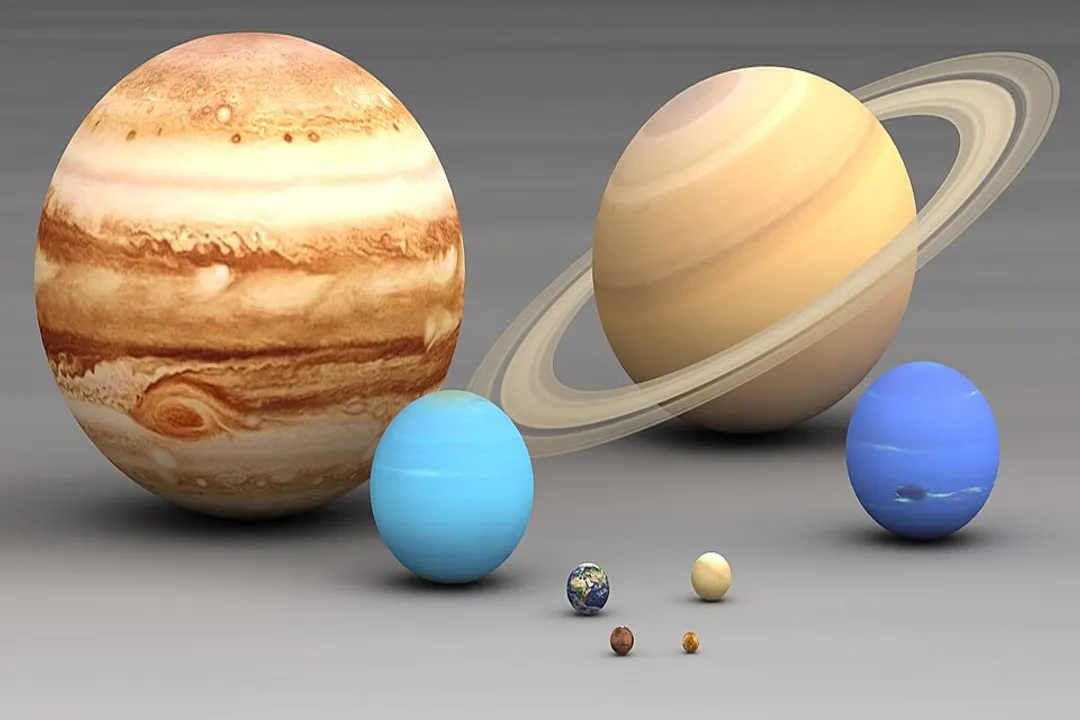
Geothermal activity becomes the cornerstone of this existence. On Earth, deep-sea hydrothermal vents provide energy for vibrant ecosystems entirely independent of sunlight, powered by chemical reactions (chemosynthesis) fueled by the planet's interior heat. [2] A rogue planet could theoretically support vast subsurface oceans where similar chemistry occurs. [2] While Earth’s terrestrial geothermal gradient is relatively modest, a very large rogue world, perhaps a super-Earth, might retain significant heat much longer than smaller bodies like Mars or the Moon. [1] Considering the energetic output of Earth’s most vigorous terrestrial vents, which can reach temperatures well over and drive complex sulfur and methane cycles, the energy density required for a global ocean on a rogue world is substantial, but perhaps not impossible for larger, geologically active planets. [4] The key difference between life near a vent on Earth and life under an ice shell on a rogue world is scale: Earth's surface receives watts per square meter from the Sun (the solar constant), whereas deep-sea vents output energy locally, often measured in megawatts per square meter, but the total global output from a rogue planet's core is far less than the total solar influx hitting Earth. [8]
# Energy Longevity
A crucial point of comparison emerges when considering the duration of habitability. Solar systems have a finite energy timeline dictated by stellar evolution. [10] While a main-sequence star like our Sun offers billions of years of stable energy, the eventual death of the star changes the game entirely. [8][10] In contrast, the heat generated by radioactive decay within a planet’s core can last for trillions of years, far outlasting the stellar era of the universe. [1] A 2023 analysis suggested that many rogue planets could sustain conditions suitable for life for perhaps tens of billions of years, significantly longer than Earth's projected habitability window under the Sun. [1] This longevity suggests that while the intensity of energy available is lower, the duration of potential habitability could be vastly extended, offering an almost incomprehensible timescale for evolutionary processes to unfold.
# Subsurface Oceans
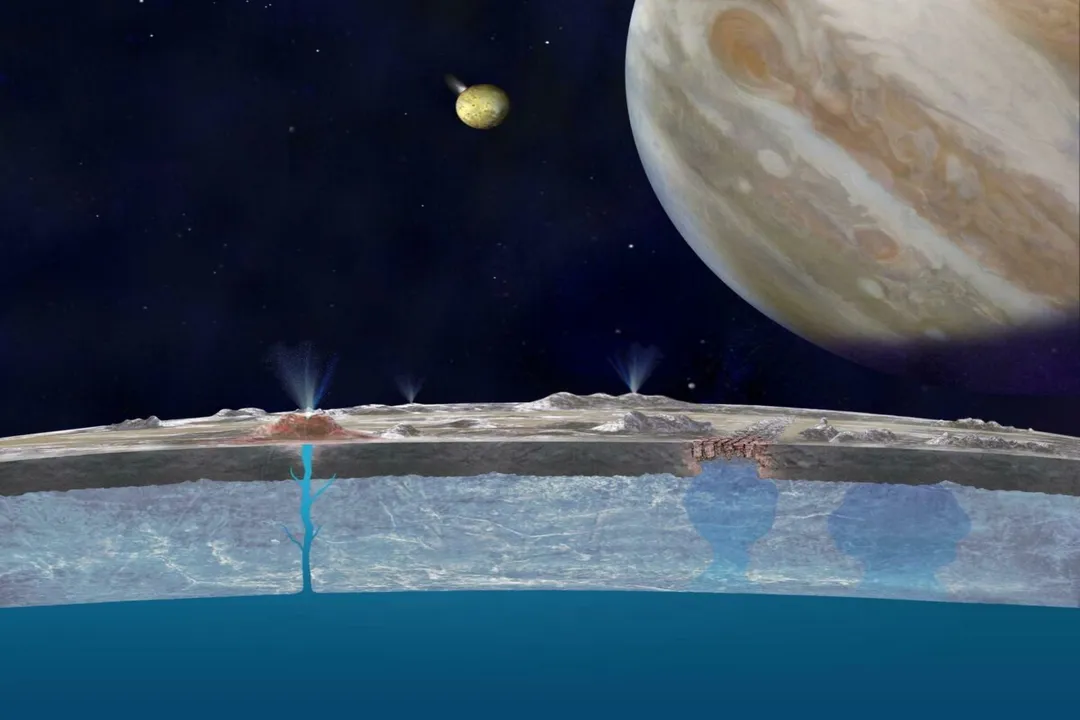
The surface of a rogue planet would be extremely cold, potentially reaching temperatures close to absolute zero if it drifts far from any heat source. [2] Therefore, any potential liquid water must be shielded beneath a thick, insulating layer of ice. [6] This ice shell acts like a planetary blanket, trapping the geothermal heat radiating from the core below. [2]
If a planet is sufficiently large, the pressure and heat gradient within its interior could maintain a liquid layer sandwiched between the core and the ice shell. The thickness of this required ice layer is a critical factor. For a planet to retain a liquid ocean against the ambient vacuum of interstellar space, the insulating capacity must be immense; even a shell of pure water ice only a few kilometers thick provides significant insulation, but a shell potentially hundreds of kilometers thick would be needed to hold in enough heat over cosmological timescales for a truly massive, warm ocean, similar to what is theorized for moons like Europa or Enceladus, but on a planetary scale without the benefit of strong tidal flexing from a nearby gas giant. [2][6] This scenario demands a planetary body large enough to have retained substantial initial heat and/or possess a high concentration of long-lived radioactive isotopes like Uranium-238 or Potassium-40 in its interior structure. [1]
# Life Requirements
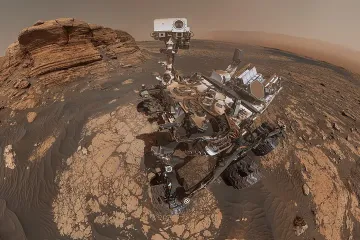
The complete absence of sunlight means that photosynthesis, the primary energy-capture mechanism for nearly all life on Earth’s surface, is impossible. [2] Life on a starless world would be entirely dependent on chemosynthesis. [2] These ecosystems would form around deep-sea vents or geological fissures where dissolved chemicals—hydrogen sulfide, methane, or iron compounds—are expelled from the planet's interior. [2]
This dependency shifts the evolutionary pressures away from light capture and competition for photon energy, focusing instead on chemical gradients and the efficiency of energy extraction from geological byproducts. One can infer that life evolving under these conditions would likely be simpler, microbial, and slow-growing, given the generally lower energy flux compared to a sunlit surface ecosystem. [2] Complexity found in surface biospheres, like large mobile organisms or multicellular structures that require rapid energy turnover, might be restricted unless the internal energy generation proves unexpectedly robust. While the Rare Earth hypothesis emphasizes the need for specific stellar and planetary configurations for complex life, [5] the rogue planet scenario suggests that basic life might be possible under a wider variety of energy regimes, provided the core remains hot and chemically active.
# Isolation Impact
The isolation of a rogue planet presents unique evolutionary hurdles beyond energy sourcing. Earth life benefits from continuous inputs—meteorite delivery of organics, magnetic field protection enhanced by solar wind interaction, and atmospheric replenishment cycles driven by surface interaction with the sunlit environment. [8] A completely isolated world must generate and maintain all its necessary building blocks internally. While impacts from smaller interstellar debris can still occur, the predictable, steady influx of cosmic material associated with a stable solar system is lost. [4]
Furthermore, the long-term stability of a magnetic field is crucial to shield any potential subsurface life from cosmic ray penetration if the ice shell is breached or thin in certain regions. A planet's magnetic field is generated by a rotating, convecting liquid metallic core; the same geological activity powering the heat source is also responsible for this vital shield. [2] If the core cools and solidifies over eons, the magnetic field could vanish, leaving the subsurface environment vulnerable to deep-space radiation, even if liquid water persists for a time. [10] The question then becomes less about if life can start without a star, and more about how long the internal dynamo can sustain the necessary protective and thermal conditions for life to advance past its microbial beginnings.
#Videos
Could Life Survive Without a Star? - YouTube
#Citations
Life Without Stars? A 2023 paper implies that most of the life in our ...
Is life possible on rogue planets and moons? | The Planetary Society
Could Life Survive Without a Star? - YouTube
Can a star system with no visible stars contain life? - Quora
Rare Earth hypothesis - Wikipedia
Could life survive on planets with no star? #rogue #planet - Facebook
Does life exist outside of the solar system? | Center for Astrophysics
The Habitable Zone - NASA Science
Can a planet exist without a star? If yes, how does the planet survive ...
Will the universe end up without stars? - Astronomy Stack Exchange