How many life cycles does a star have?
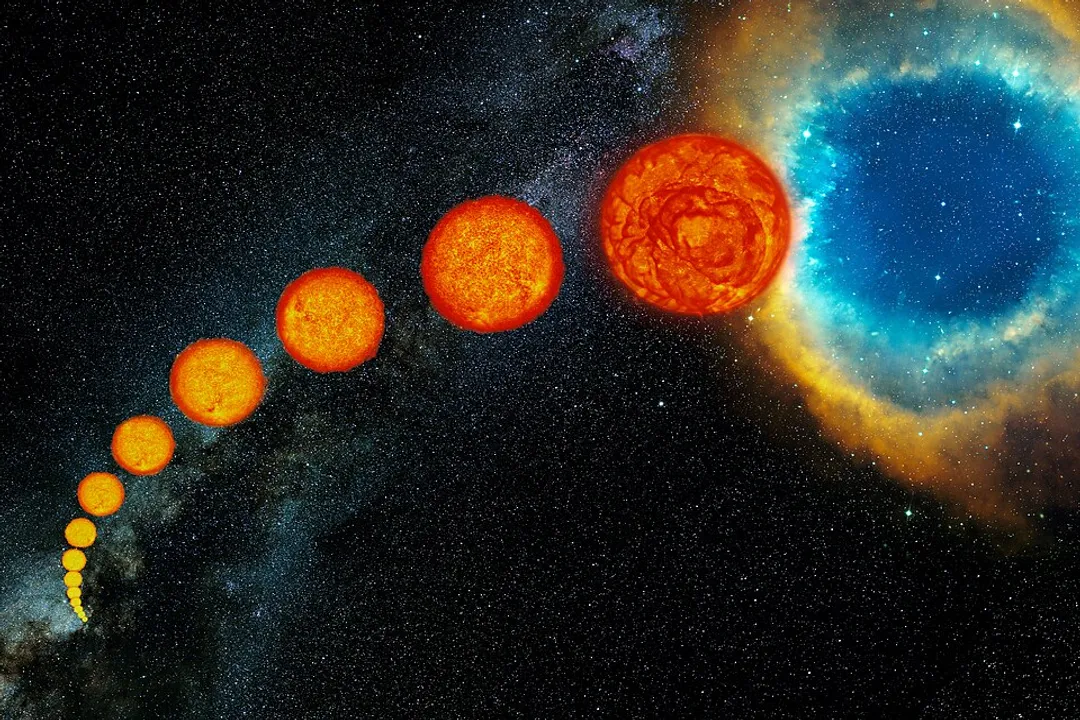
The actual number of "life cycles" a star undergoes is generally considered to be one complete evolutionary track, from birth in a cloud of gas to its final remnant state. [4] However, that single track is not universal; it’s more like a branching river whose final destination—and the speed at which it reaches it—is determined entirely by the star's initial mass. [1][4] A star’s life is a constant, dramatic negotiation between the crushing force of its own gravity and the explosive pressure generated by nuclear fusion in its core. [2][7]
# Cloud Collapse
A star’s existence begins in the vast, cold expanse of space, specifically within giant molecular clouds composed primarily of hydrogen and helium, mixed with tiny specks of heavier elements known as interstellar dust. [3][6][7] These clouds can span hundreds of light-years and are the universe’s stellar nurseries. [7]
Under the influence of gravity, denser pockets within these clouds begin to contract. [2][6] As the material falls inward, the gravitational potential energy converts into thermal energy, causing the center of the collapsing region to heat up significantly. [1][4] This contracting mass is what astronomers call a protostar. [1][2] The protostar phase is relatively quick on a cosmic timescale, lasting only about half a million years for a star like our Sun. [2] Once the core temperature reaches about (), the conditions are finally right for sustained nuclear reactions to ignite. [1][7]
# Main Sequence
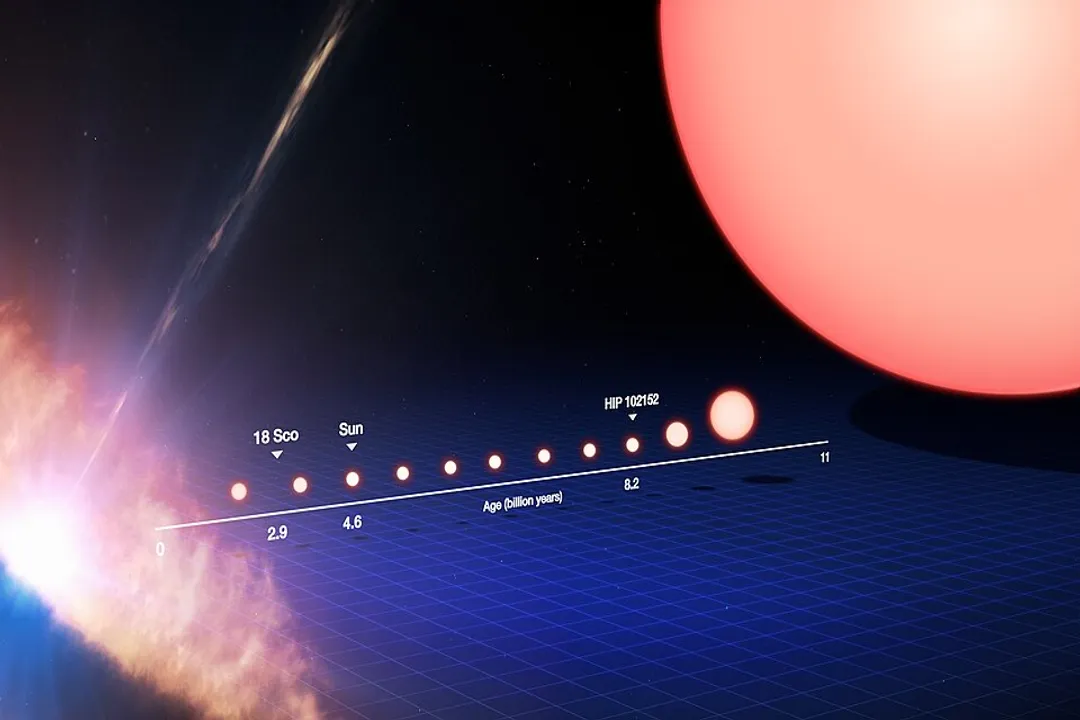
The moment fusion begins marks the star’s entrance into the Main Sequence, the longest and most stable phase of its entire existence. [2][5][7] During this phase, the star fuses hydrogen atoms into helium atoms in its core, releasing enormous amounts of energy. [1][5] This outward pressure perfectly balances the inward force of gravity, creating hydrostatic equilibrium. [2][4] Stars spend about of their active lives in this state. [2] Our Sun has been on the Main Sequence for about and is expected to remain there for another . [7]
The duration of this phase is inversely proportional to the star's mass. A star with about half the mass of the Sun might burn its fuel for or more, taking it easy. [4] Conversely, stars much more massive than the Sun burn their fuel with furious intensity. A star roughly the Sun’s mass might only last a few million years on the Main Sequence before exhausting its core hydrogen. [4][5] This "live fast, die young" scenario illustrates a fundamental principle: the more massive the star, the shorter its stable life. [4]
# Mass Diversions
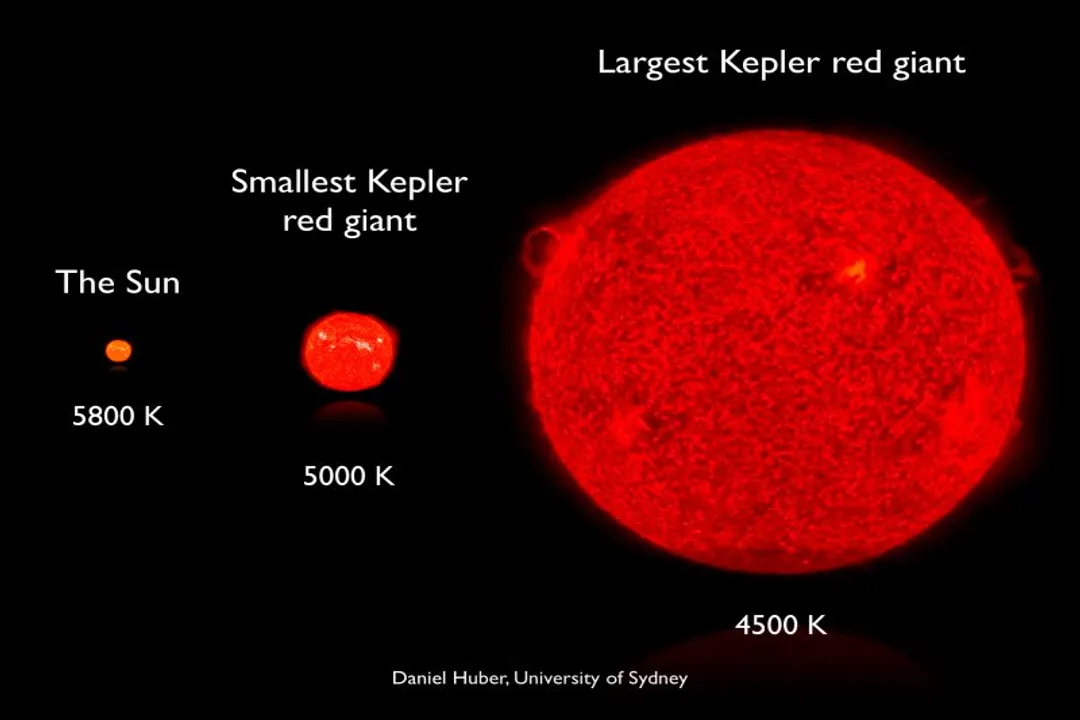
Once the hydrogen fuel in the core is depleted, the balance is broken, and the star leaves the Main Sequence to begin its second, much more dynamic, phase of evolution. [2][4] At this juncture, the star’s path splits dramatically based on whether it is considered low-to-intermediate mass (less than about ) or high mass (greater than ). [1][5]
Here is a simplified comparison of the two primary evolutionary tracks:
| Feature | Low/Intermediate Mass Star (e.g., The Sun) | High Mass Star (Greater than 8 Solar Masses) |
|---|---|---|
| Post-Main Sequence | Red Giant | Red Supergiant |
| Core Fusion | Primarily up to Helium and Carbon | Fuses elements up to Iron (Fe) |
| Final Collapse Trigger | Gentle core exhaustion | Iron core formation (cannot fuse iron) |
| Death Event | Planetary Nebula Ejection | Core-Collapse Supernova |
| Remnant | White Dwarf (cooling ember) | Neutron Star or Black Hole |
| Timescale | Billions of years on Main Sequence | Millions of years on Main Sequence |
| [1][4][5] |
# Gentle Demise
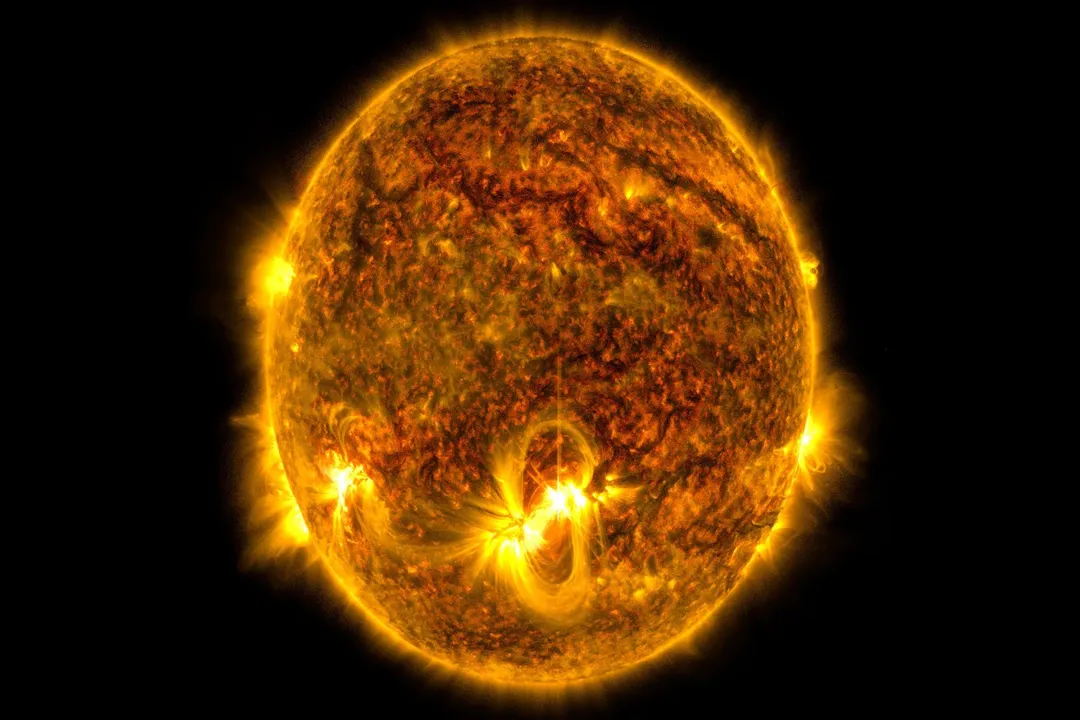
For stars similar in mass to our Sun, the ending is relatively gradual. [1] After running out of hydrogen in the core, the core contracts and heats up, causing the outer layers to expand massively, cooling as they do so—this creates a Red Giant. [2][5] The increased core temperature eventually allows helium fusion to begin, forming carbon and oxygen. [1]
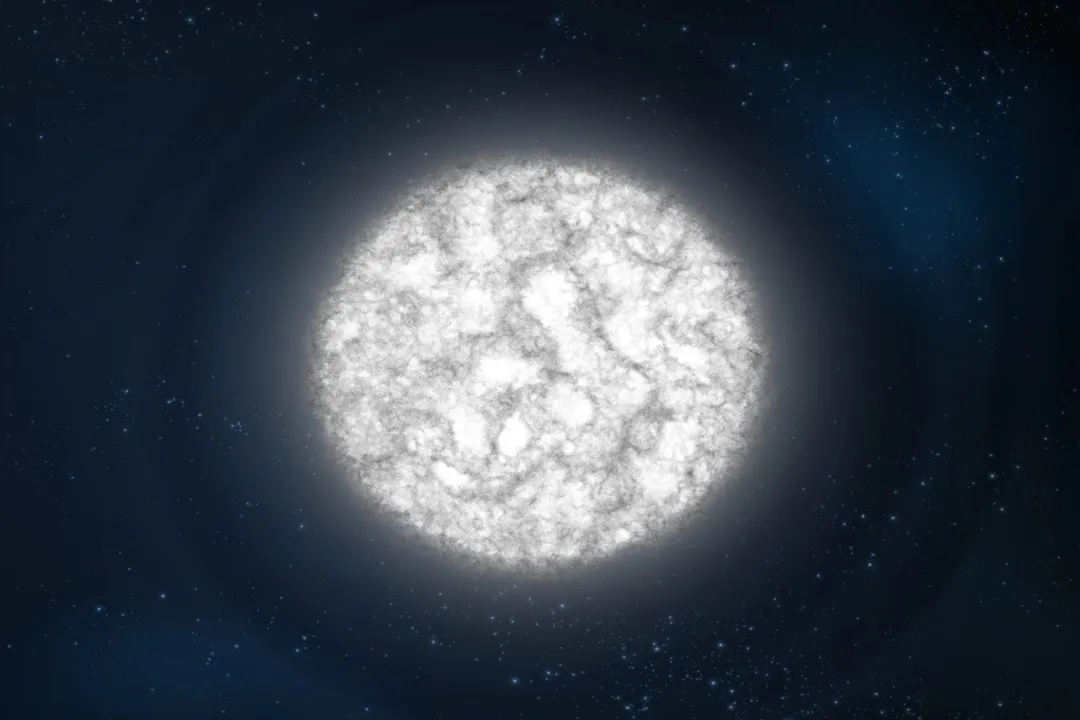
When the helium fuel is eventually exhausted, the outer layers of gas drift away from the shrinking core, illuminated by the remaining heat, forming a beautiful, expanding shell known as a planetary nebula. [1][5] This event is vital for cosmic chemistry, as it distributes lighter elements synthesized during the star's life back into the interstellar medium. [2] The hot, dense, non-fusing core remaining at the center is a White Dwarf. [2][5] A white dwarf is incredibly dense; a teaspoonful of its material would weigh tons. [7] Over untold eons, this remnant will slowly cool and fade into a theoretical, cold Black Dwarf. [2]
One interesting aspect of the Red Giant phase is the internal instability it creates. While the planetary nebula stage seems like a relatively clean shedding of material, the actual expansion process involves complex internal pulsations. Imagine the star inflating so much that its outer boundary sweeps past the orbit of Mercury or even Venus before settling into the final nebula structure—it’s a period where the star’s radius can increase by a factor of a hundred or more, drastically altering its immediate neighborhood. [4]
# Catastrophic End
Massive stars, those eight times the mass of the Sun or greater, experience a far more violent finale. [1][5] After leaving the Main Sequence, they become Red Supergiants. [1] Their immense gravitational pressure allows them to fuse progressively heavier elements in shells around the core: carbon fuses into neon, neon into oxygen, oxygen into silicon, and so on. [4][5] This continues until the core is converted entirely into iron. [4][5]
Iron is the cosmic turning point because fusing iron consumes energy rather than releasing it. [4][5] Once the iron core is formed, fusion ceases instantly, and the outward pressure disappears. Gravity wins, leading to a near-instantaneous collapse of the core in less than a second. [2][5] The core compresses to incredible densities, briefly forming a sphere only a few miles across before violently rebounding. [4]
This rebound generates a shockwave that blasts the star's outer layers into space in a spectacular explosion known as a Type II Supernova. [1][4] These explosions are so brilliant they can briefly outshine entire galaxies. [6] It is within the extreme conditions of a supernova explosion that elements heavier than iron—like gold, uranium, and platinum—are forged and scattered throughout the cosmos. [2][5]
The remnant left behind depends on the original mass of the core after the explosion. If the core mass is between about and solar masses, the collapse is halted by neutron degeneracy pressure, resulting in an incredibly dense Neutron Star. [4] If the remaining core mass exceeds roughly solar masses, no known force can stop the collapse, and the remnant shrinks into a Black Hole, a region where gravity is so strong that not even light can escape. [1][4]
# Cosmic Recycling
While the term "life cycle" suggests repetition, it is more accurate to view this process as evolution leading to recycling. [4] The material ejected from both planetary nebulae and supernovae enriches the next generation of stars and the planets that may form around them. [2][6] Every atom heavier than hydrogen or helium in your body—the carbon in your bones, the oxygen you breathe, the iron in your blood—was manufactured either inside a star during its stable life or during the fiery death throes of a massive star. [6] In this sense, though a single star only lives once, its constituent materials are perpetually cycled, forming the foundation for new stellar nurseries, new planets, and eventually, new life. [2][5]
#Citations
The Life Cycles of Stars: How Supernovae Are Formed
Stellar Evolution
Life Cycle of Stars
Stellar evolution
How Stars Form: A Star's Life Cycle in Six Stages
Star Basics
The Life Cycle of a Star
WWTA | Life Cycle of Stars
Stars and their life-cycle (article)