What is the difference between elliptical and spiral?
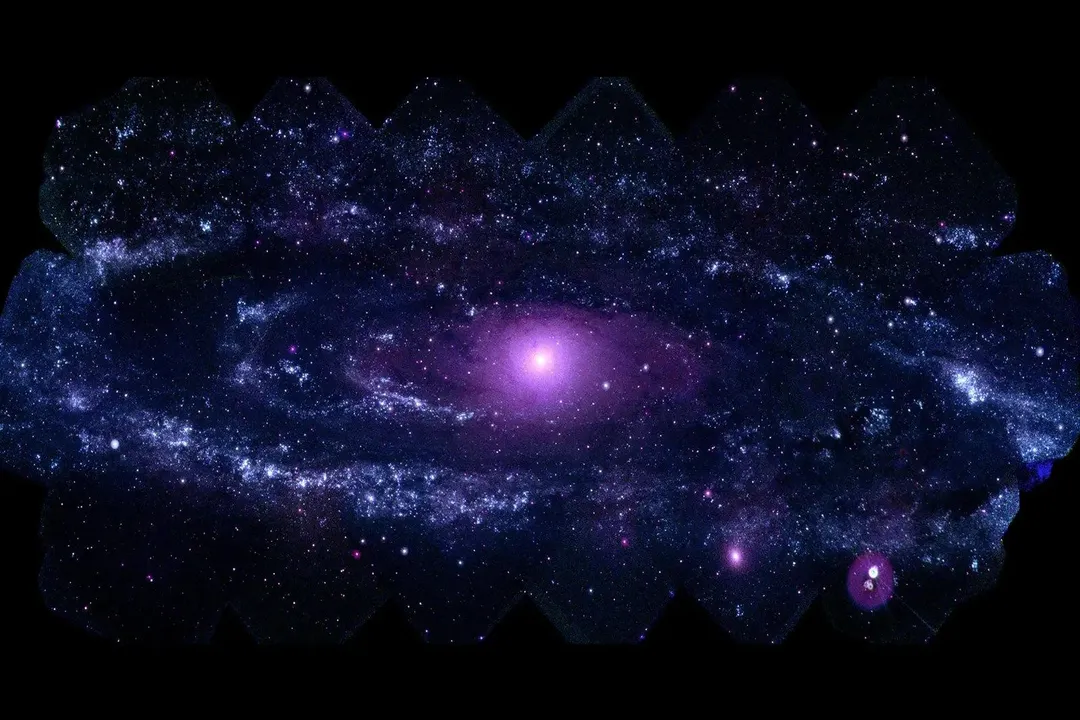
The distinction between the two most famous types of galaxies—spirals and ellipticals—is fundamental to how astronomers map the cosmos. While we often think of galaxies as islands of stars, their internal architecture, chemical composition, and ongoing activity vary dramatically depending on whether they fall into the smooth, spheroidal category or the stately, rotating spiral class. Understanding these differences reveals much about a galaxy's history, particularly the violent events it has undergone, such as mergers and collisions.
# Structural Differences
Visually, the contrast between a spiral galaxy and an elliptical galaxy is stark. Spiral galaxies are characterized by a pancake-like disk of stars surrounding a central, brighter concentration of stars known as the galactic bulge. Extending outward from this center are the defining features: the spiral arms. These arms are regions of dynamic activity, often appearing bright blue due to the presence of young, hot stars. The structure is quite organized; stars within the disk typically orbit the galactic center in the same direction, much like water swirling down a drain. Some spirals feature a central bar structure made of stars and material that cuts across the center, classifying them as barred spirals; about two-thirds of observed spirals fall into this category.
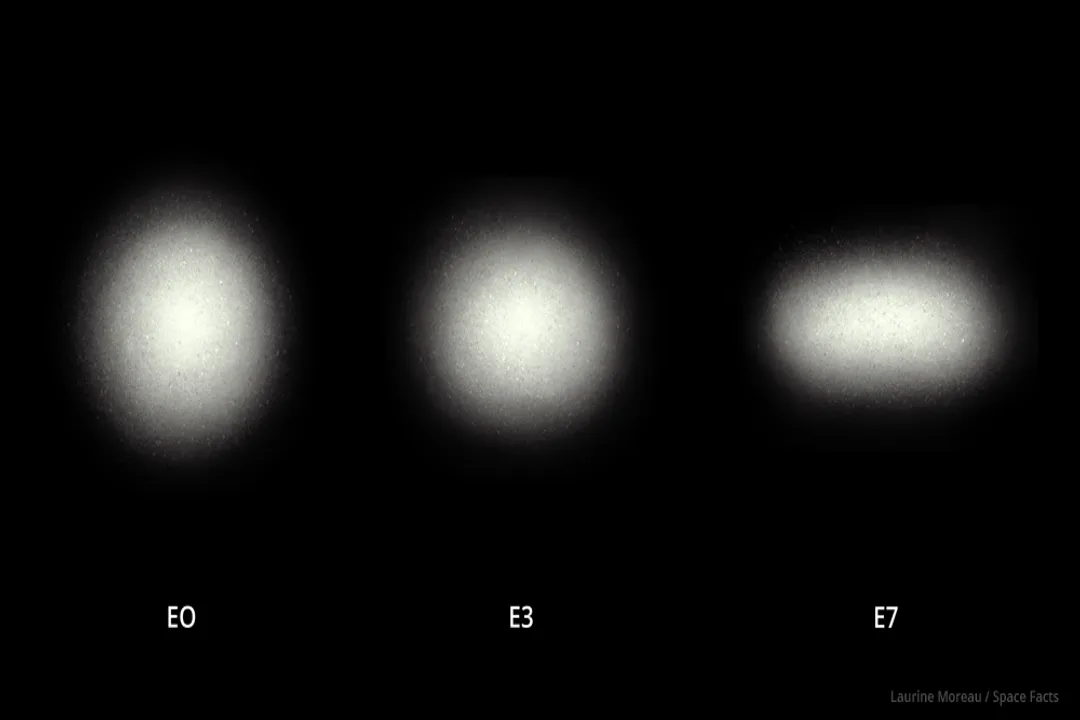
Elliptical galaxies, by contrast, lack this intricate, detailed structure. Their shapes range from nearly perfectly round to quite elongated or oval. Instead of a disk and arms, they present a smooth, ellipsoidal appearance, often described as a fuzzy rugby ball in the sky. The orbits of stars within an elliptical galaxy are not neatly aligned; instead, they move around the core in all different directions without any coherent, large-scale rotation. This randomness in stellar motion is a key physical differentiator from the highly ordered motion seen in a spiral's disk.
# Stellar Content
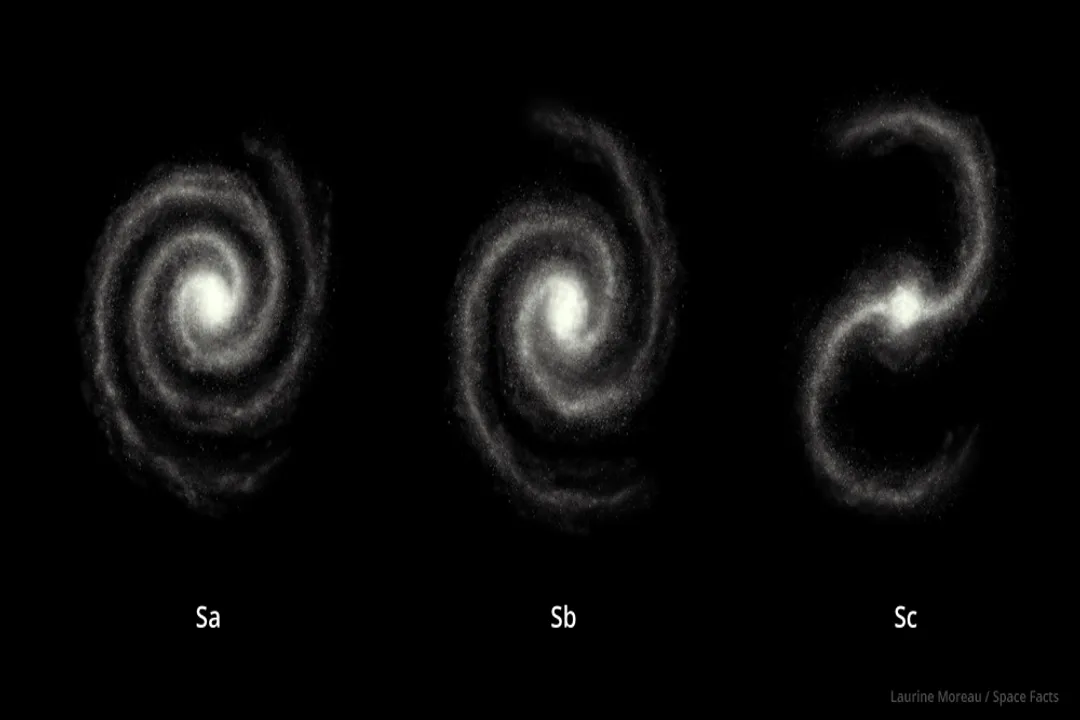
The color and light profile of a galaxy offer significant clues about its age and current state, and this is where the comparison between the two types becomes clearer. Spiral galaxies exhibit a mix of stellar ages. The bright, clumpy areas along the spiral arms are dominated by massive, hot, short-lived stars, which emit intensely bright, blue light. Conversely, the central bulge and older components of the disk often appear redder, housing older, lower-temperature stars that burn more slowly. The overall look of an active spiral is therefore a composite of both young and old populations.
Elliptical galaxies tend to be distinctly redder overall. This is because they predominantly contain much older stars. The intense, short-lived blue stars that signal active star birth have already died out in ellipticals, leaving behind the more mature, longer-lived red stars. This older stellar population, combined with the close packing of stars in the center, can make the core of a large elliptical appear exceptionally bright, almost like one giant star when viewed from within. If an observer were deep inside an elliptical galaxy, the sheer constant light from surrounding stars might mean there is little perceptible day or night.

# Star Formation Fuel
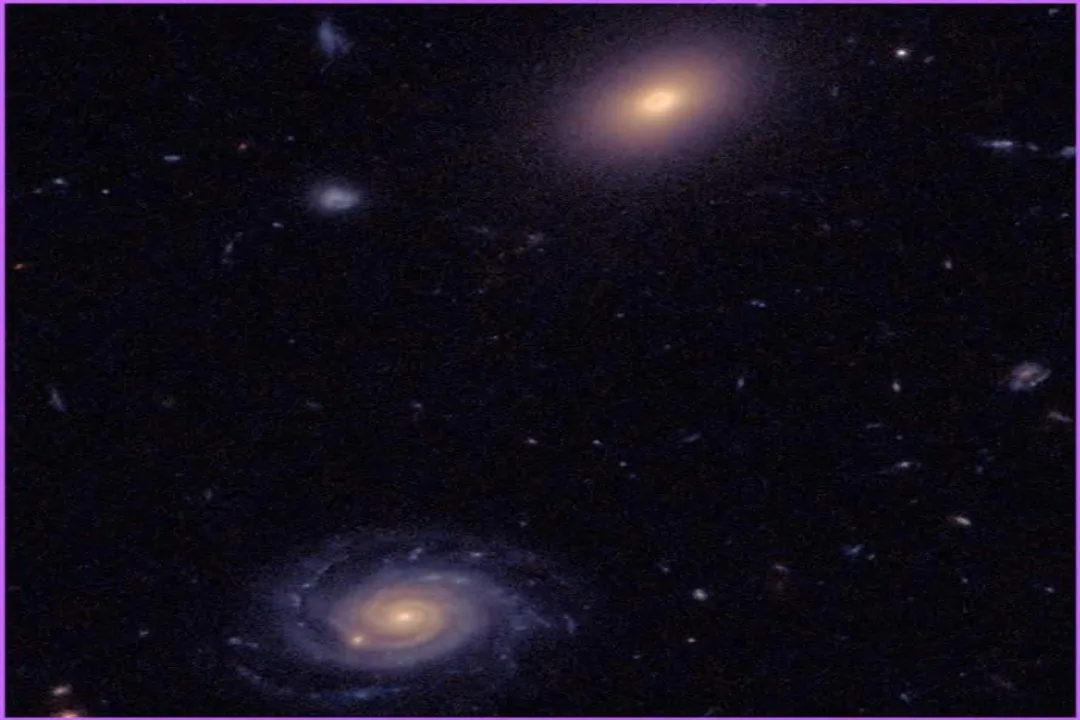
A galaxy’s ability to form new stars hinges directly on the availability of cold gas and dust, the raw material for stellar nurseries. Spiral galaxies are gas-rich environments. The spiral arms are not just patterns of light; they are active sites of intense star formation where cold gas condenses and ignites new stellar generations.
Elliptical galaxies are starkly different in this regard; they generally contain very little cold gas and dust. This scarcity of interstellar material may be the primary reason why they show little to no active star formation. Their stellar populations have effectively aged out because they lack the reservoirs necessary to replenish their star count. While irregular galaxies, which might be in the process of merging, can host significant amounts of these star-making ingredients, the established ellipticals are generally considered "spent" in terms of large-scale birth events.
# A Deeper Look at Orbits and History
The difference in structure—flat disk versus spheroidal—stems from the stars' orbital mechanics, which in turn hints at their evolutionary paths. The organized, co-planar orbits in a spiral galaxy suggest a relatively calm accretion history where the system settled into a state of consistent rotation.
In contrast, the chaotic, multi-directional orbits found in ellipticals strongly suggest a history involving major gravitational disturbances. One prominent theory posits that many elliptical galaxies originate from collisions and mergers between spiral galaxies. When two spiral galaxies collide, the violent gravitational interplay can effectively randomize the stellar orbits, dispersing the ordered disk structure and heating up the gas reservoir until it is too hot or too diffuse to readily form new stars. This process essentially scrambles the angular momentum, transforming a flattened, spinning system into a dense, relatively static, spherical one. This implies that while spirals represent ongoing, orderly evolution, ellipticals often represent the final state after a significant, transformative cosmic event.

# Size and Scale
The range of sizes within these two major categories is also noteworthy. Spiral galaxies, like our Milky Way, are large rotating systems. Elliptical galaxies, however, possess the greatest size variation among all galaxy types. They can range from dwarf ellipticals containing as few as a hundred million stars up to massive giant ellipticals that harbor perhaps a hundred trillion stars. Their physical sizes can span from a few thousand light-years across to over a few hundred thousand light-years in diameter.
# The Hubble Sequence Context
Astronomers often categorize galaxies based on their shape using a system devised by Edwin P. Hubble, often visualized as a "tuning fork" diagram. This framework places spirals on one fork and ellipticals on the handle, with lenticular galaxies (a transitional type possessing a disk but no arms, like older spirals) bridging the gap. The sequence helps place galaxies into a broader evolutionary context. It is important to remember that classification systems, while useful, are always being refined, especially now that multi-wavelength observing allows astronomers to include markers for star-formation rates and stellar age spectra in their sub-classifications.
| Feature | Spiral Galaxy | Elliptical Galaxy |
|---|---|---|
| Primary Shape | Flat disk with central bulge and arms | Spheroidal, ranging from round to oval |
| Star Formation | Active, ongoing in spiral arms | Little to no new star formation |
| Gas & Dust Content | Rich in cold gas and dust | Very little gas and dust |
| Stellar Population | Mix of young (blue) and old (red) stars | Predominantly old, red stars |
| Stellar Orbits | Organized, coherent rotation in the disk | Random, non-coherent motion |
| Common Origin | Relatively undisturbed rotational evolution | Often formed via major mergers/collisions |
When observing these cosmic structures, remember that viewing angle plays a significant role in perception. For instance, if we view a spiral galaxy edge-on, we might miss the defining spiral arms entirely, potentially leading to misclassification if we only judge by the profile of the disk and bulge. Conversely, the classification of an elliptical galaxy, being smoother, is less dependent on viewing angle, though the degree of elongation (how thin it appears) is still used for sub-classification. The chaotic nature of the stellar orbits in ellipticals means that the galaxy's overall shape is a more stable long-term characteristic compared to the active, transient appearance of spiral arms.
The existence of transitional types, like lenticular galaxies, further underscores that galaxy evolution is a continuum, not a set of rigid boxes. Lenticulars have the disk and bulge structure of a spiral but the older stellar population and lack of arms characteristic of an elliptical, suggesting they might be spirals that have exhausted their star-forming fuel or are the result of specific types of mergers. While the main focus here is the spiral versus elliptical dichotomy, recognizing these intermediates is key to a complete picture of cosmic growth and change.
#Videos
Differences Between Spiral And Elliptical Galaxies? - YouTube
What Is The Difference Between Spiral And Elliptical Galaxies?
#Citations
Galaxy Types - NASA Science
The two main galaxy families: spirals and ellipticals - AEGIS
Differences Between Spiral And Elliptical Galaxies? - YouTube
Three Shapes of Galaxies | Elliptical, Spiral, and Irregular | Britannica
Types of Galaxies - Spiral, Elliptical & Irregular Galaxies - Space Facts