What defines an emerging infectious disease?
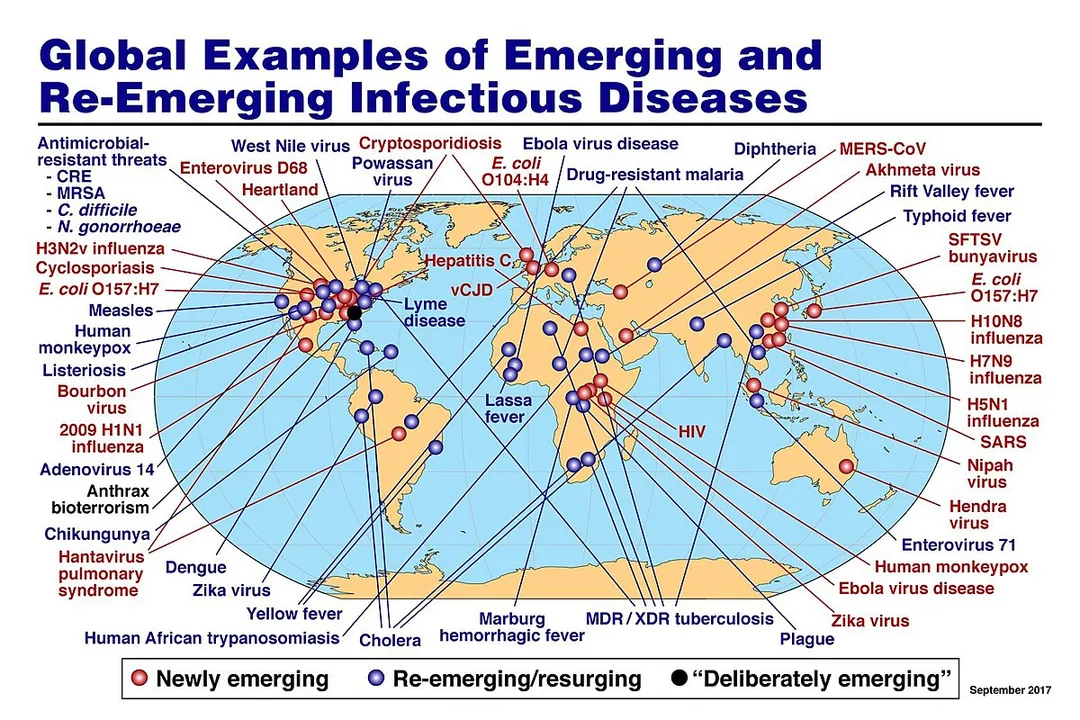
Defining an infectious disease that is considered “emerging” requires looking beyond simply the discovery of a brand-new pathogen. The concept encompasses a broader spectrum of threats to human health, marked by recent appearance, rapid spread, or unexpected resurgence in effectiveness. [6][8] Generally, an emerging infectious disease (EID) is one that has recently appeared as a new infection or a known infection whose incidence or geographic range has recently increased. [1][5][6][9] This definition is dynamic, meaning a disease currently controlled might shift into the emerging category if the necessary medical interventions suddenly fail or if the pathogen evolves to overcome existing defenses. [6]
The World Health Organization (WHO) emphasizes that emerging diseases include those that are entirely new to humans, previously known infections that have spread to new geographic locations, or known infections that have become newly resistant to treatment. [4] For instance, a virus that has circulated in animals for decades but has only recently made the jump to human populations is classified as emerging. Similarly, a disease that was once thought to be eliminated in a specific country, like measles, can re-emerge if vaccination rates drop too low. [6] This dual nature—novelty and resurgence—is central to understanding the category. [5]
# Classification Types
To fully grasp what defines an EID, it helps to break down the ways a threat manifests. While the term is often used synonymously with new disease, the reality is more nuanced, typically involving three main categories: newly identified agents, diseases spreading into new territories, and the return of old foes. [6][8]
# Novel Threats
The most straightforward definition involves the introduction of a pathogen that has never before been documented to cause human illness. The emergence of coronaviruses, such as those responsible for Severe Acute Respiratory Syndrome (SARS) and COVID-19, fits this description perfectly. [1][7] These agents require the immediate deployment of the entire public health arsenal—surveillance, diagnostics, therapeutics, and vaccines—because there is no pre-existing population immunity or established treatment protocol. [10] Identifying these novel threats is often the result of intense clinical suspicion followed by advanced laboratory investigation, frequently involving molecular techniques to characterize the unknown agent. [5]
# Geographic Expansion
A second pathway involves a pathogen that is already known but begins to spread into a naive population or a new region where it was previously absent. [8] This expansion often occurs due to global travel, trade, or, critically, changes in the environment that allow vectors, like mosquitoes or ticks, to survive in previously inhospitable climates. [1][6] For example, the West Nile virus, endemic in parts of Africa, the Middle East, and Europe, emerged in the Americas in the late 1990s, representing a significant geographic jump that immediately classified it as an emerging threat in the new host regions. [5] The emergence is defined not by the virus itself, but by its novel interaction with a previously unexposed human community. [8]
# Changing Dynamics
The third and perhaps most insidious category involves known diseases whose behavior has changed dramatically enough to warrant reclassification as an emerging threat. [6] This change is frequently driven by antimicrobial resistance (AMR). [7] When a bacterium that was once easily treatable with a common antibiotic suddenly gains resistance to multiple drug classes, it effectively emerges as a new clinical problem, even if the microbe itself is ancient. [2] This dynamic shift places immense pressure on healthcare systems, as the established medical approach becomes obsolete. [10] Similarly, an infection can become "emerging" due to changes in host susceptibility; for instance, the rise of opportunistic infections in immunocompromised populations, such as those living with HIV/AIDS, caused several previously well-managed agents to take on an emerging profile within that vulnerable group. [6]
# Underlying Drivers of Emergence
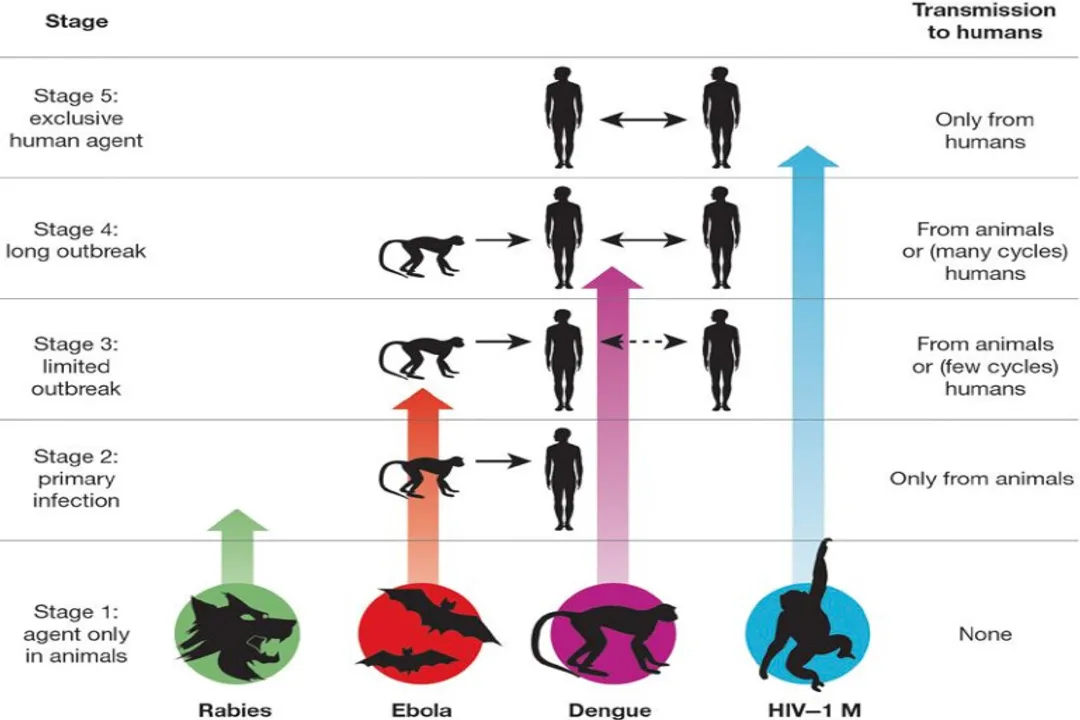
Understanding what constitutes an EID is only half the battle; appreciating why they emerge is essential for prevention. The drivers are multifaceted, often involving a complex interplay between human activity, environmental shifts, and microbial evolution. [1][2][6]
# Ecological Factors
Human encroachment into natural habitats is a major catalyst for emergence. [1][6] When forests are cleared for agriculture or development, humans and domestic animals come into closer contact with wildlife reservoirs that harbor novel pathogens. [2] This process, known as spillover, is the mechanism by which many zoonotic diseases—those transmitted from animals to humans—make their initial jump. [1][7] Furthermore, shifts in climate, such as increased temperatures or altered rainfall patterns, can expand the habitat range for disease vectors like mosquitoes and ticks, bringing diseases like dengue or Lyme disease to higher latitudes or altitudes where populations lack immunity and public health infrastructure is unprepared. [6]
# Societal and Global Connectivity
Modern human society has created an unparalleled network for pathogen dissemination. [6] Rapid international travel means that a novel outbreak in one continent can reach a major metropolitan area on another within twenty-four hours. [1] This speed compresses the timeline available for containment and response. [10] Moreover, urbanization, overcrowding in cities, and inadequate sanitation, especially in rapidly growing urban centers, create ideal conditions for person-to-person transmission once a pathogen has established a foothold. [2][6]
# Microbial Evolution
Microorganisms are inherently adaptable, possessing mechanisms for rapid genetic change that often outpace human scientific and medical countermeasures. [7] Viruses, in particular, have high mutation rates, allowing them to quickly alter their surface proteins to evade host immune responses or to jump between species. [7] This natural evolutionary pressure, exacerbated by the widespread, sometimes improper, use of antimicrobials and antivirals, drives the emergence of drug-resistant strains. [2][10] One original observation in tracking EIDs is that the speed of pathogen evolution often appears to move faster than the pace of systemic public health infrastructure adaptation; while a virus can mutate in weeks, establishing global, unified surveillance and regulatory systems can take years, creating a persistent vulnerability gap. [7]
# Re-emergence Versus Novelty
It is critical to distinguish re-emerging diseases from those that are entirely new, as the control strategies differ significantly. [5] Re-emerging diseases are those that were once under control, perhaps through successful vaccination programs or effective public health measures, but are now increasing in incidence again. [6]
A prominent example is tuberculosis (TB). While TB has existed for millennia, the emergence of multi-drug-resistant TB (MDR-TB) and extensively drug-resistant TB (XDR-TB) in recent decades effectively re-classified it as a new, emerging threat requiring entirely different, more toxic, and longer treatment regimens. [2] This re-emergence is often directly attributable to failures in the delivery side of public health—interrupted supply chains, lack of adherence to treatment protocols, or declining vaccination coverage. [5]
In considering preparedness, this difference is actionable. For novel threats, the focus must be on rapid identification and initial containment based on limited data. For re-emerging threats, the focus shifts to strengthening existing surveillance systems, ensuring universal vaccine access, and rigorously monitoring drug efficacy profiles. Thinking about it from a local governance perspective, a community should audit not just its ability to spot a new virus, but its maintenance of known controls—are childhood immunization records complete? Are water treatment protocols being audited weekly or just annually? This level of operational rigor is the true defense against the return of the known. [5][6]
# Characteristics of Emerging Diseases
Emerging infectious diseases tend to share certain epidemiological and clinical characteristics that make them particularly challenging to manage. [8] They often exhibit high morbidity (illness rates) or mortality (death rates), especially in initial outbreaks where the population has no acquired immunity. [1][3]
Key characteristics often include:
- Zoonotic Origin: A significant proportion of emerging human pathogens originate in animal populations before crossing the species barrier. [1][2][7]
- Novel Transmission: Initial outbreaks may involve unclear transmission routes, complicating contact tracing and quarantine measures until the method (e.g., respiratory droplets, fomites, vector-borne) is confirmed. [8]
- Diagnostic Difficulty: Early on, existing diagnostic tests may not recognize the new agent, leading to delays in confirming cases and understanding the true scale of the outbreak. [5]
- Global Spread Potential: Due to modern interconnectedness, an agent with a short incubation period and efficient transmission mode can achieve global distribution rapidly. [6]
The impact of these characteristics means that the initial response is often characterized by high uncertainty and rapid escalation. [10]

# Global Preparedness and Response
The nature of EIDs necessitates a coordinated global approach, as a threat arising anywhere can swiftly become a problem everywhere. [4][6] International agreements and organizations like the WHO play a part in setting standards for disease surveillance and reporting, ensuring that outbreaks are not hidden for fear of economic or political repercussions. [4]
Effective preparedness against EIDs relies on a multi-sectoral effort that integrates public health, veterinary medicine, environmental science, and social policy—often termed a "One Health" approach. [1][2] This acknowledges that human health is intrinsically linked to the health of animals and the environment. [1] Surveillance systems must be active and sensitive enough to detect anomalies before they become widespread epidemics. [8] Furthermore, the infrastructure for vaccine and drug development must be adaptable, capable of pivoting quickly from research bench to mass production when a new threat materializes. [10]
The challenge is that the resources available to monitor and control these diseases often lag behind the rate at which new threats arise. [8] The characteristics of emerging diseases—their novelty, speed, and potential for severe outcomes—demand that public health strategies shift from reactive containment to proactive risk assessment. [9]
| Disease Type | Primary Definition Change | Common Driver | Initial Response Focus |
|---|---|---|---|
| Newly Identified | Never before seen in humans [5] | Zoonotic spillover, environmental change [1][6] | Novel diagnostics, immediate containment [10] |
| Geographic Spread | Appearance in a new, naive population [8] | Travel, climate shift allowing vector survival [1] | Border screening, local vector control [4] |
| Re-emerging | Resurgence after being controlled [6] | Drug resistance, declining vaccination rates [2][5] | Strengthening established programs, drug stewardship [10] |
| This table summarizes the distinct facets of emergence based on how the threat is redefined in a public health context. [1][5][6][8] |
In summary, an emerging infectious disease is not merely a list of exotic illnesses; it is a classification that describes a state of instability in the equilibrium between humanity and the microbial world. [6] It signals that the established rules of pathology, epidemiology, or immunology have been broken or bypassed by a pathogen, driven largely by the profound and accelerating impact of human societies on the planet’s ecology. [1][2] Addressing these threats requires constant vigilance, an admission that microbial evolution is perpetual, and a commitment to global data sharing, ensuring that what is an anomaly today does not become tomorrow’s accepted, endemic tragedy. [4][10]
Related Questions
#Citations
Emerging Infectious Diseases | BCM - Baylor College of Medicine
Emerging Infectious Diseases - PMC - PubMed Central
Emerging Infectious Diseases | Johns Hopkins Medicine
Emerging diseases - WHO EMRO
Factors in the Emergence of Infectious Diseases - CDC
Emerging infectious disease - Wikipedia
Emerging infections: characteristics, epidemiology and global ...
Emerging Infectious Disease - an overview | ScienceDirect Topics
Emerging infections & infectious threats - IDSA