What causes clouds to sink?
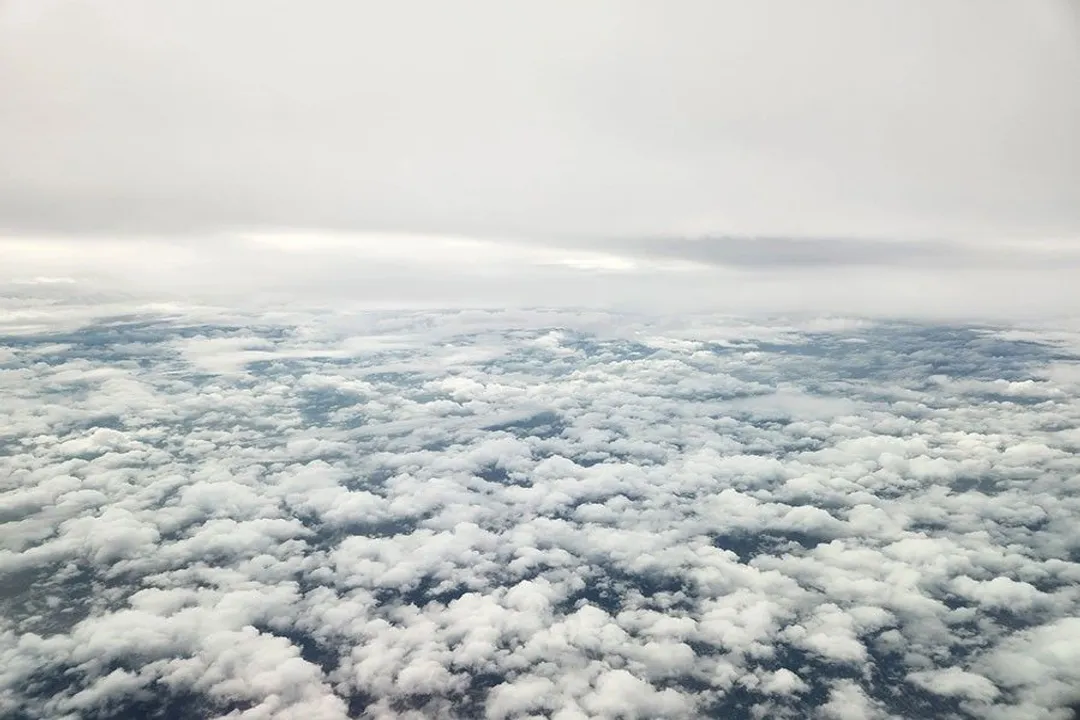
The sight of a fluffy cumulus cloud suspended overhead naturally prompts curiosity about how such massive structures stay aloft when they are clearly composed of liquid water or ice. If you drop a glass of water, it falls; so why doesn't a cloud, which is essentially suspended water, simply descend to the ground? The answer lies not in defying gravity entirely, but in the scale of its components and the delicate balance of atmospheric forces acting upon those components. [4][8] Clouds do not usually sink in a uniform mass; rather, they disappear from the bottom up when the conditions that support their existence disappear. [2]
# Tiny Droplets
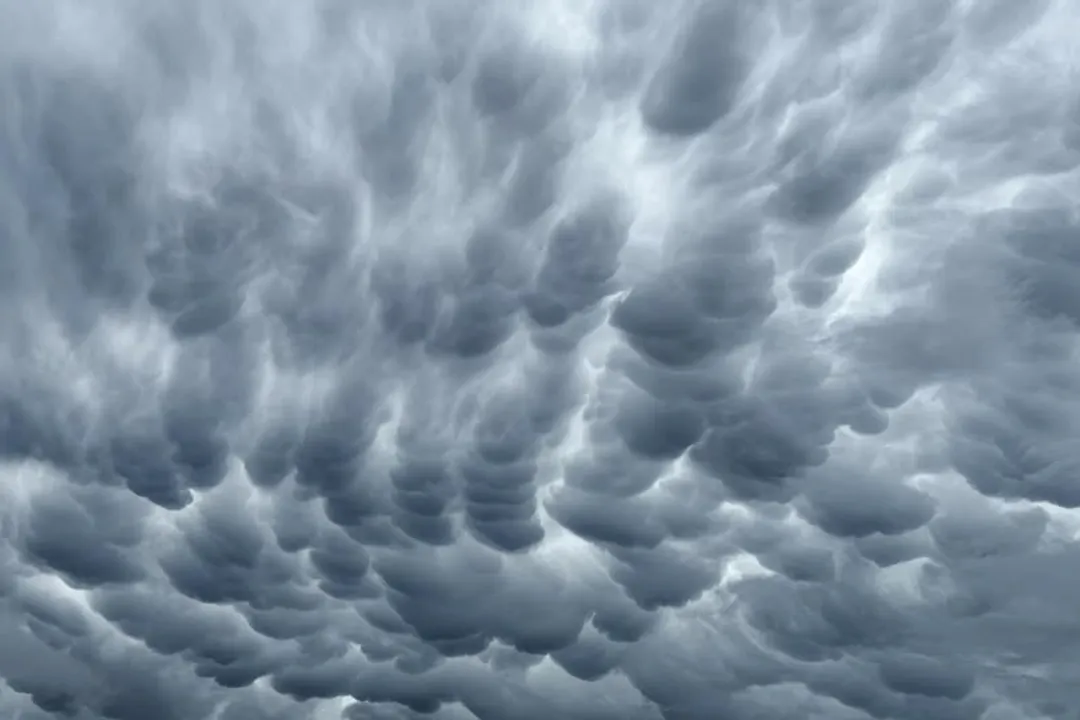
A cloud is not a solid object, nor is it a continuous body of water. Instead, it is an immense collection of extraordinarily small particles—either liquid water droplets or ice crystals—suspended within the air. [8] These droplets are minuscule, often measuring only about 20 micrometers in diameter, which is far smaller than a grain of sand or a speck of dust visible on a table. [4]
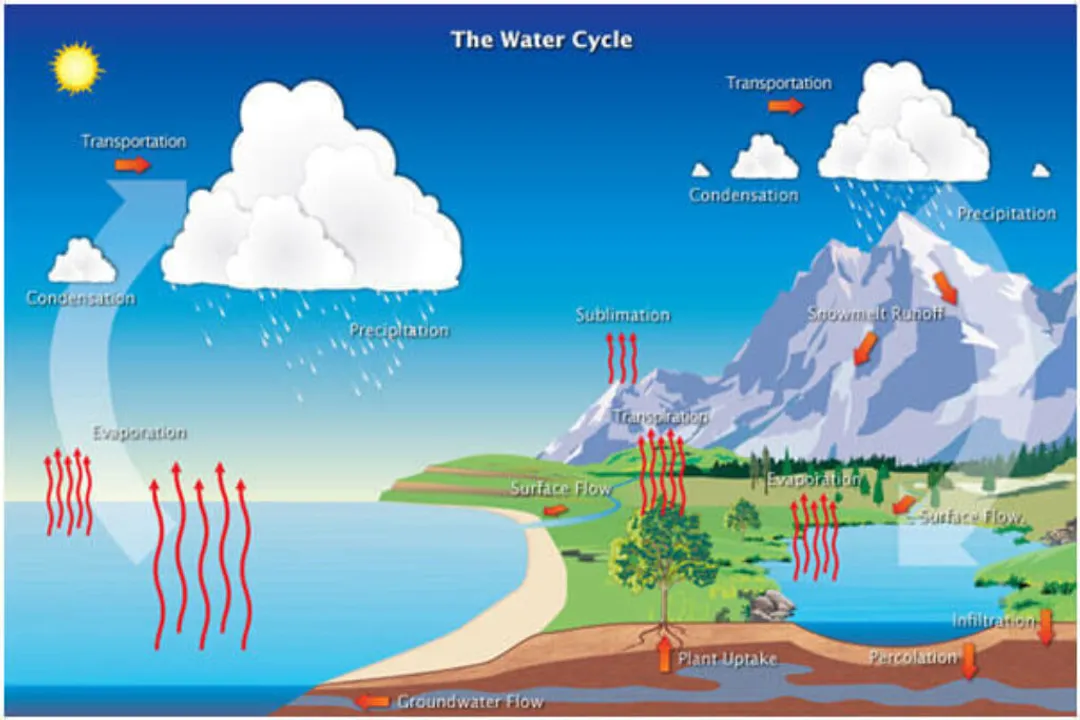
The creation of these droplets requires water vapor to condense onto microscopic particles called condensation nuclei, which can be dust, pollen, or pollution. [5][10] For a cloud to form in the first place, warm, moist air must rise, expand, and cool until it reaches its dew point, triggering condensation. [9][10] This initial lifting mechanism is what sets the stage for the cloud's existence high above the ground. [9]
# Buoyancy Balance
When considering why a cloud doesn't immediately crash down, we must look at the relationship between the mass of the droplets and the air resistance they encounter. [4] Although the water droplets themselves are heavier than the volume of dry air they displace, they fall incredibly slowly. [4][8] This slow descent is due to the drag created by the surrounding air. Because the droplets are so tiny, their surface area relative to their mass is enormous, meaning air resistance dominates over the pull of gravity for each individual particle. [4]
If you imagine the terminal velocity of these minuscule droplets, it is often less than one centimeter per second. [4] While this rate is slow, it is not zero, meaning every droplet is technically falling towards Earth. [4] For the cloud structure to persist, the rate at which the droplets fall must be offset by an upward motion within the cloud. [4] In many developing clouds, this upward motion comes from the continuous rising of warmer, moist air, counteracting the slow downward drift of the accumulated water. [4][9]
It is interesting to consider that while the tiny water molecules are individually heavier than an equivalent volume of surrounding dry air, the overall cloud system—the water mixed with the air—experiences a net effect that keeps it suspended as long as the air remains saturated or near-saturation. [8] When we observe a cloud seemingly hanging still, we are witnessing a dynamic equilibrium where the very slow downward drift of water is perfectly balanced by upward currents of air. [4]
# Dry Air Mixing

If the mechanisms keeping the droplets suspended are dynamic upward motions, what causes the cloud to "sink" or, more accurately, disappear? The primary cause is the introduction of drier air into the cloud structure. [7] Clouds are fundamentally defined by saturation; they exist where the air is holding all the water vapor it can at that temperature. [2]
When the air surrounding the cloud mass, or the air infiltrating the cloud base, is drier, it acts like a sponge, demanding the liquid water droplets turn back into invisible water vapor. [2][7] This process is evaporation. [7] As the droplets evaporate, the visible cloud structure dissipates, effectively "sinking" as it loses its visible mass from the bottom or edges inward. [2] The entire cloud doesn't fall; rather, the physical state of the water changes back to gas, removing the visual evidence of the cloud. [7]
This mixing is crucial. Think of a layer of fog or a low stratus cloud sitting on the ground. If the sun rises and warms the ground, or if a gentle breeze brings in air that is even slightly less humid, the cloud layer will visibly shrink and lift away, not by rising as a whole, but by evaporating from the bottom boundary where the dry air intrusion is greatest. [2]
# Environmental Shifts
Beyond simple mixing with ambient humidity, large-scale atmospheric movements dictate whether a cloud layer will lower or disappear altogether. A significant factor in cloud dissipation or lowering is subsidence, which is the slow, large-scale sinking of an entire layer of air. [2]
When an upper-level high-pressure system builds, it forces air downward over a broad region. [2] As this air sinks, it compresses and warms adiabatically. This warming increases the air's capacity to hold water vapor, effectively lowering the relative humidity of the environment surrounding the cloud. [2] If the air warms enough, the delicate balance of saturation is broken, and the cloud base will descend as the lower parts of the cloud evaporate into the warmer, drier air layer beneath. [2] The sinking air acts as a lid, preventing the necessary uplift that sustains the cloud's vertical growth. [2]
We can observe this relationship when comparing high-altitude cirrus clouds to low stratocumulus layers. Cirrus clouds, composed of ice crystals, often exist in very cold, dry upper regions and can persist longer unless they encounter an inversion or significant warming aloft. Conversely, low stratus clouds are highly susceptible to surface heating or slight subsidence because they exist closer to the boundary layer where temperature and moisture fluctuations are most pronounced. [2]
A helpful way to think about the stability—and thus the fate—of a cloud, is through its temperature relative to its surroundings. A cloud forms because the air parcel inside is cooler than the surrounding air at the same altitude, making it buoyant. [8] If external forces (like subsidence) warm the surrounding air, the temperature difference shrinks. When the air parcel temperature matches the surrounding air temperature, the buoyancy driving the upward motion ceases, and the droplets begin their slow, gravity-driven descent without immediate upward support, leading to rapid evaporation and dissipation at the cloud base. [2][8]
# Observing the Process
To truly appreciate what causes a cloud to sink, one must observe the boundaries. In a common scenario, a cumulus cloud might be vigorously growing upwards on a sunny afternoon, but simultaneously, its base appears flat and perhaps a little ragged. [4] That ragged base is the visual evidence of continuous evaporation into the slightly drier air just below the cloud deck. [7] If the updraft weakens—perhaps because the sun is blocked, or the ground cools in the late afternoon—the falling velocity of the droplets (which is always occurring) finally outpaces the upward air current, and the entire visible structure collapses as it dries out. [4]
This leads to a slight nuance in terminology: clouds rarely "sink" like an anchor; they dissipate from the bottom up due to unfavorable moisture or temperature profiles in the lower atmosphere, which is often caused by air subsidence or boundary layer warming. [2][7] If a cloud layer remains intact for hours, it suggests the air column above and below is relatively stable and saturated enough to maintain the delicate balance between condensation, evaporation, and air movement. The moment that stability is broken by drier, warmer air mixing in, the cloud's visible structure yields to the environment, causing what appears to be sinking. [2]
Related Questions
#Citations
Sinking Clouds - Examples and Properties | CK-12 Foundation
How Do Clouds Dissipate?
ELI5: What keeps the clouds from settling down to the Earth's surface?
How Do Clouds Float? - Peggy Notebaert Nature Museum
How Do Clouds Form? - NASA Science
Mammatus Clouds in Virginia - Facebook
Why do clouds dissipate when mixing with dry air?
Why do clouds float in the sky as they are in air and surely ... - Quora
How Clouds Form | National Oceanic and Atmospheric Administration