Is the Moon more radioactive than Chernobyl?
The notion that the surface of our closest celestial neighbor might harbor a radiation environment comparable to, or even exceeding, one of Earth’s most notorious disaster zones certainly sparks curiosity. When we think of the Moon, we often imagine sterile, dusty plains, yet its environment is constantly bombarded by energy that Earth simply filters out. The comparison between the ambient, space-weather-driven radiation on the lunar surface and the localized, heavy contamination left behind by the Chernobyl disaster forces us to think about radiation not just as a single threat, but as a complex spectrum of hazards. [1][3]
# Shielding Absence
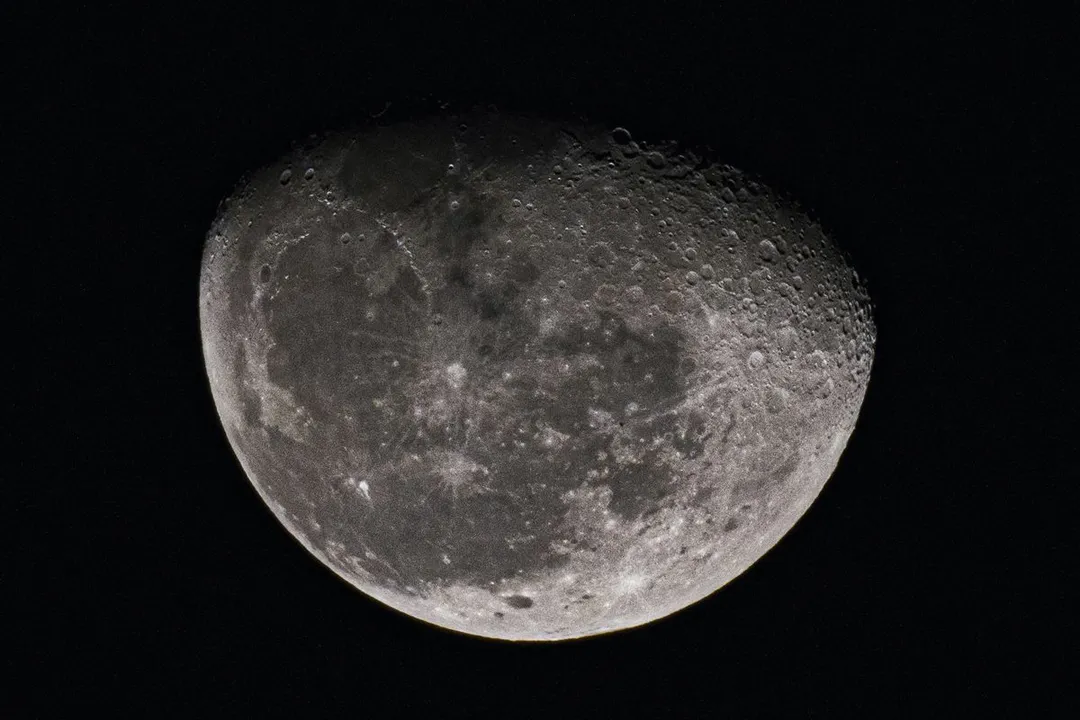
The fundamental difference between the radiation exposure on Earth, the Moon, and inside the protective bubble of the International Space Station (ISS) boils down to shielding. Earth benefits immensely from its magnetic field and thick atmosphere, which deflect and absorb most of the harmful particles originating from space. [4] The Moon, however, possesses neither a global magnetic field nor a substantial atmosphere to offer this protection. [4]
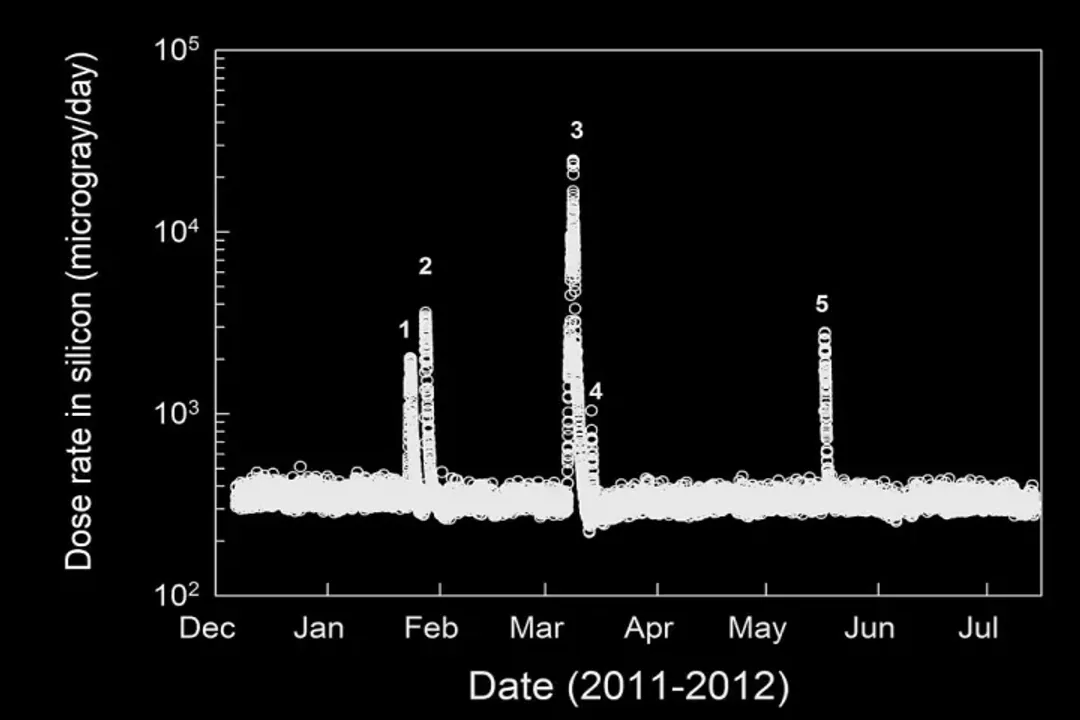
This lack of a protective blanket means that the lunar surface is continually bathed in radiation originating from two primary extraterrestrial sources: Galactic Cosmic Rays (GCRs) and Solar Particle Events (SPEs). [1][3] GCRs are high-energy particles, mostly atomic nuclei, accelerated by supernovae and other events across the galaxy. SPEs are sudden, intense bursts of protons and other particles ejected by the Sun during solar flares or coronal mass ejections. [3]
While the Moon’s surface radiation isn't as high as in deep space or during an extreme solar storm, it is consistently elevated compared to Earth’s surface. [2] Astronauts on the Apollo missions experienced radiation doses that were generally considered acceptable, though they were still significantly higher than what mission control dealt with on Earth. [9] The radiation environment on the Moon is therefore active—it’s the result of continuous exposure to primary cosmic particles interacting with the lunar regolith. [3]
# Disaster Zone Levels
Chernobyl presents a drastically different hazard profile. The radiation here is terrestrial, the result of a catastrophic nuclear accident in 1986. [8] The danger is not primarily from GCRs or the Sun, but from the fallout of fission products—radioactive isotopes like Cesium-137 and Strontium-90 settling on the ground. [8]
The radiation levels in the Chernobyl Exclusion Zone are not uniform; they vary wildly based on location, topography, proximity to the reactor, and the time elapsed since the disaster. [8] In the most contaminated areas, the dose rates can be extremely high, potentially lethal in a short period, especially shortly after the event. [8] For instance, certain areas near the sarcophagus or in the "Red Forest" experienced levels far exceeding the established safety limits for occupational exposure on Earth. [8]
What is crucial to understand is the nature of the emission. Chernobyl’s fallout releases intense gamma rays and beta particles from decaying isotopes in the soil and structures. [8] This contrasts sharply with the Moon’s constant flux of high-energy primary particles. Near the reactor core, the radiation is localized and isotopic; on the Moon, it is pervasive and energetic. [1]
# Dose Rate Contrast
Directly comparing the two environments requires looking at the rate of exposure. Sources suggest that the radiation dose rate on the lunar surface, away from any terrestrial contamination, is generally on the order of millirem per hour, influenced by solar activity. [2][9] For context, background radiation exposure on Earth for most people is significantly lower, often measured in millirems per year. [5] While a few areas in the most contaminated parts of the Chernobyl zone have exhibited dose rates many times higher than the Moon’s ambient surface levels, these hotspots are geographically confined. [8]
Consider the difference in particle types. The Moon’s hazard comes primarily from high-energy GCRs which are highly penetrating and cause complex cellular damage. [1] Shielding against GCRs is difficult, often requiring significant mass. The fallout at Chernobyl, while containing high levels of activity, involves particles (like beta emitters) that are often stopped by clothing or a thin layer of material. However, the long-lived isotopes present a chronic internal hazard if ingested or inhaled, which is not a factor on the airless, vacuum-sealed lunar surface environment unless an astronaut tracks regolith into their habitat. [8]
Here is a simplified way to frame the type of radiation hazard experienced:
| Location | Primary Hazard Type | Source | Shielding Effectiveness | Duration |
|---|---|---|---|---|
| Lunar Surface | High-Energy Particles (GCRs/SPEs) | Space/Sun | Minimal (Regolith is poor shield) | Constant, Chronic |
| Chernobyl Hotspot | Gamma/Beta Emitters | Localized Isotopes | Moderate (Dependent on isotope) | Decays over time |
If we were to imagine a visitor spending a standard Earth year on the Moon, their total accumulated dose from cosmic sources would be substantial and unavoidable, given current mission profiles. [9] Conversely, a researcher visiting a moderately contaminated zone in Chernobyl for a few weeks might receive a comparable, or even higher, acute dose, but that exposure would cease upon departure. [8]
# Astronaut Experience
The experience of Apollo astronauts provides a real-world data point for lunar surface radiation. Their estimated total radiation dose for the entire mission was often cited as being comparable to the annual dose received by an airline pilot, which is generally considered manageable. [9] This measured exposure accounted for the surface conditions and the transit through the Van Allen belts. [9]
When comparing this to current ISS astronauts, who orbit in Low Earth Orbit (LEO), the difference is telling. LEO benefits from the Earth's magnetic field, significantly attenuating the radiation. [9] Astronauts on the ISS receive a higher dose than people on Earth, but it's generally lower than the dose an astronaut receives on a full lunar mission. [9] This implies that while the Moon’s surface radiation is a genuine concern requiring specific planning—especially during solar events—it is not instantly catastrophic in the way standing next to the exposed core of the reactor would have been in 1986. [1][8]
The real trick for long-term lunar habitation isn't surviving the trip; it’s finding enough material to effectively shield habitats from the constant, relentless bombardment of GCRs that penetrate even a few feet of soil. [5] When considering a future habitat, a few meters of lunar regolith might be necessary to reduce the deep-space dose down to an Earth-normal level, which is a monumental engineering challenge. [5]
# Hazard Profile Shift
The core takeaway revolves around a fundamental shift in the type of protection required. At Chernobyl, the primary engineering challenge was containing and isolating highly active fission products, and managing the high flux of localized gamma radiation. This involves dense, static shielding materials designed to stop specific forms of energetic particles—a solved problem, albeit an expensive one, in terrestrial nuclear management. [8]
For lunar explorers, the challenge is one of volume and energy. You cannot simply erect a dense shield against GCRs without building an immense structure. The high energy of these galactic particles means they interact with shielding material to create secondary radiation (spallation products), which can sometimes be just as damaging as the primary beam. [1] This means that simply piling up lunar dirt might not be the perfect solution; the depth and material composition of that shielding matter greatly in mitigating secondary particle showers. [5]
This difference in radiation character suggests that while Chernobyl is a place one avoids due to intense, localized contamination, the Moon requires a permanent, deeply engineered solution to maintain chronic, low-dose exposure for inhabitants, much like designing a permanent underground facility on Earth against natural background radiation, but with a much higher baseline influx. For instance, if a planned lunar surface stay requires keeping an astronaut’s annual dose below 1000 millirem (a common career limit benchmark), the necessary overhead of regolith shielding to counter the GCR flux is far more demanding than just avoiding a few contaminated areas on Earth. [5]
Ultimately, while the peak radiation measurements found in the most restricted zones of Chernobyl are undeniably higher than the average ambient radiation on the Moon, the Moon presents a guaranteed, unremitting hazard that permeates the entire surface. The danger at Chernobyl is episodic and geographically limited by historical events; the danger on the Moon is a constant feature of its orbital mechanics and lack of atmosphere. [1][4]
#Videos
How Much Radiation Would You Get By Going to the Moon?
#Citations
Comparing radiation levels - Chernobyl vs Moon
Radiation levels on the surface of the moon are 2.6 times greater ...
The Moon is more radioactive than you might expect
With the moon not having any atmosphere or magnetic core, would ...
OMG space is full of radiation, and why I'm not worried
What's the radiation dose rate on the Moon? - Facebook
How Much Radiation Would You Get By Going to the Moon?
Radiation levels now | The Chernobyl Gallery