How does Earth's position in the solar system support life?
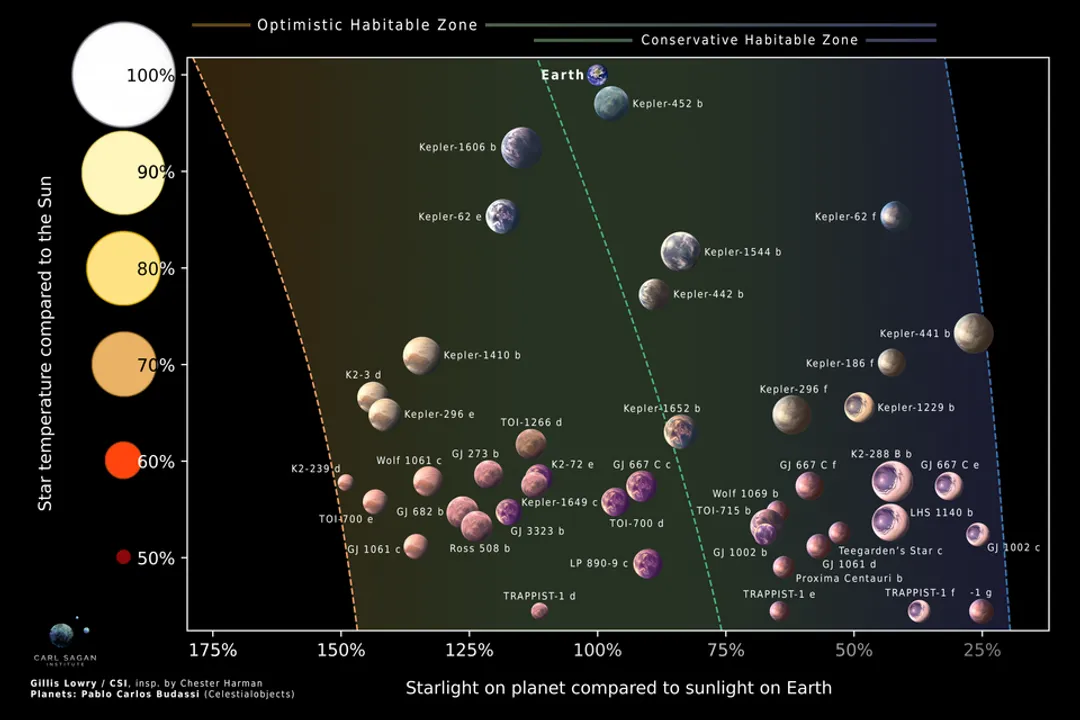
The question of what allows our world to host the incredible diversity of life is inextricably linked to where it sits within the solar system. It’s not just about being in space; it's about the specific, mathematically precise relationship Earth maintains with its star, the Sun, and the unique physical parameters that result from that placement. Life as we know it requires liquid water, and Earth's location is the primary guarantor of that essential state. [2][6] This sweet spot, often called the Habitable Zone or the Goldilocks Zone, defines the range of orbital distances where a planet receives just enough warmth—not too much, not too little—for water to remain liquid on the surface under sufficient atmospheric pressure. [4][7]
# Goldilocks Orbit
The concept of the Habitable Zone is central to understanding Earth's luck. This zone is defined by the stellar flux—the amount of solar energy received—that permits water to exist in its liquid phase. [2] If Earth orbited much closer to the Sun, like Venus, the heat would cause oceans to boil away into steam, creating a runaway greenhouse effect that sterilizes the surface. [3] Conversely, if we were much farther out, like Mars, the temperatures would plunge, causing all surface water to freeze solid, rendering complex biochemistry impossible. [2][6]
Earth orbits at an average distance of about 93 million miles (or kilometers) from the Sun. [1] This specific distance places us firmly within the region where liquid water can be maintained, a state believed to be fundamental for life’s complex chemistry to occur. [5][7] While the HZ concept is a powerful filter in the search for exoplanets, it is important to remember that it is merely a starting point. A planet can orbit perfectly within the HZ and still be uninhabitable due to factors like atmospheric composition or the magnetic field shielding it from stellar flares. [3]
# Rotation Balance

While distance governs the temperature ceiling and floor, how quickly Earth spins—its rotation—dictates the daily experience of that temperature. Earth completes a rotation, defining our day, in roughly 24 hours. [1] This rotational speed offers a critical thermal balance. If our planet spun significantly faster, the resulting centrifugal force and Coriolis effect would generate sustained, planet-wide super-hurricanes, making the surface environment violently unstable and hindering the formation of stable biospheres over geological timescales.
On the other hand, a much slower rotation would lead to extremely long days and nights. Imagine a day lasting weeks; the sun-facing side would bake under relentless heat, evaporating surface water, while the night side would freeze solid. [6] The current rate allows for a recognizable cycle of heating and cooling, permitting heat to redistribute globally without causing catastrophic temperature swings between day and night. This stability is further aided by our atmosphere, which acts as a thermal blanket, moderating the extremes that a slow rotation would otherwise create. [7] It is a delicate equilibrium: the spin must be slow enough to allow for the necessary atmospheric heat transport but fast enough to prevent one side from cooking while the other freezes absolutely.

# Axial Tilt
Another crucial geometric feature tied to our solar system placement is Earth's axial tilt, which currently measures about 23.5 degrees relative to the plane of its orbit. [1] This tilt is the direct cause of our seasons. As Earth travels around the Sun, the tilt ensures that different hemispheres receive more direct sunlight at different times of the year.
Seasons are more than just a change in weather; they are a vital mechanism for global climate regulation. Without seasons, one hemisphere might experience long, continuous periods of intense solar radiation while the other remained locked in a deep freeze. The seasonal cycle encourages the movement of heat from the equator toward the poles, helping to prevent massive, permanent ice sheets from developing across the majority of the planet. [6] Furthermore, the seasonal variation can encourage biodiversity, as different life forms adapt to or benefit from the changing environmental conditions throughout the year.
To illustrate the critical nature of these positional parameters, consider the interplay between orbital distance and axial tilt, two variables that are mostly independent of each other. If Earth were slightly closer to the Sun (e.g., Mars's orbital distance but with Earth's current tilt), we might still experience seasons, but the baseline temperature would be too high, potentially leading to a permanent supercritical fluid state for water rather than stable liquid oceans.
| Parameter | Earth Value | Significance to Life | Source Support |
|---|---|---|---|
| Average Distance from Sun | 93 million miles | Places it in the Habitable Zone (liquid water possible) | [1][2] |
| Rotation Period (Day) | 24 hours | Balances temperature extremes between day and night | [1][6] |
| Axial Tilt | 23.5 degrees | Creates seasons, facilitating global heat distribution | [1] |
| Orbital Eccentricity | Low (nearly circular) | Minimizes extreme temperature variations based on orbital position | Derived from general orbital mechanics informed by [1] |
# Size and Gravity
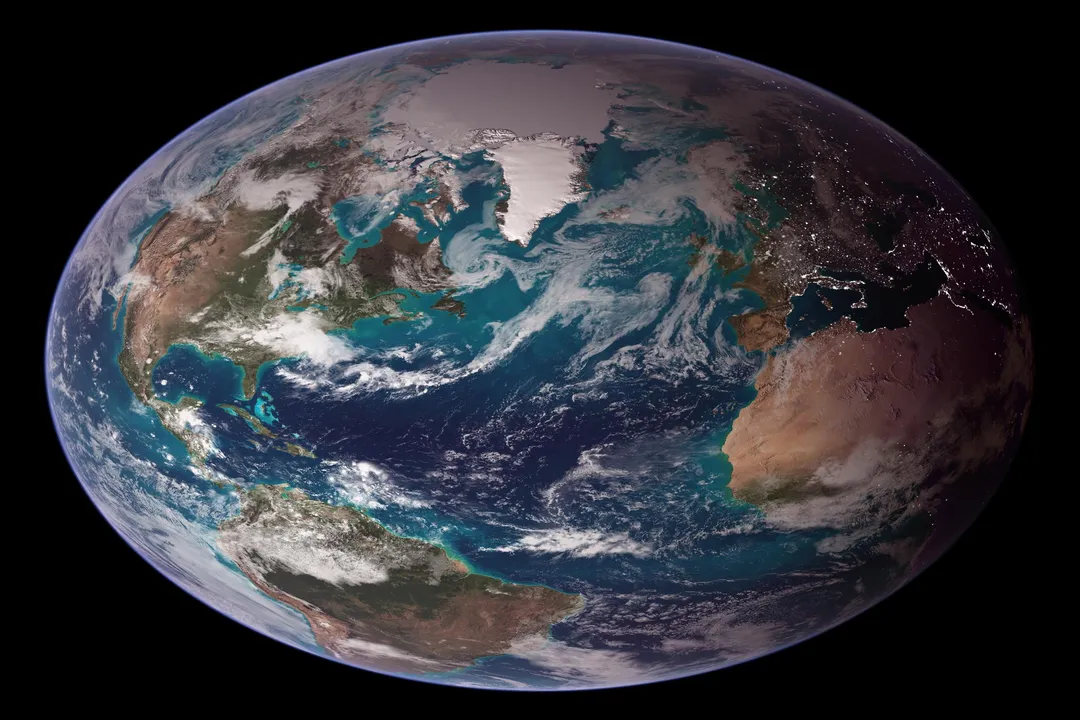
While the focus often remains on the orbital mechanics, Earth’s physical size is an equally non-negotiable factor supported by its formation at this specific distance. Earth is the largest of the inner, rocky planets, possessing enough mass and gravity to hold onto a substantial atmosphere. [7] This atmosphere, in turn, is vital for maintaining surface temperature via the greenhouse effect and shielding life from harmful cosmic and solar radiation. [3][7]
If Earth were significantly smaller, like Mercury or the Moon, its weaker gravity would allow atmospheric gases—especially lighter ones like water vapor—to escape into space over geological time. The loss of the atmosphere would result in the loss of liquid water and exposure to sterilizing radiation. [7] Conversely, if Earth were much larger, like Neptune, it would likely have accreted a massive, crushing hydrogen-helium envelope, resulting in a gas giant environment completely hostile to life as we define it. [3] The current mass, around kilograms, [1] is perfectly suited for fostering the necessary geological processes, such as plate tectonics, which help cycle essential nutrients and carbon dioxide, keeping the climate stable over billions of years. [3]

# The Magnetic Protector
An outcome of Earth’s size and its position relative to the Sun is the maintenance of its internal heat, which drives the liquid iron outer core. This motion generates a powerful magnetosphere that surrounds the planet. [3] This magnetic field acts as an invisible shield, deflecting the solar wind—a stream of high-energy charged particles constantly flowing out from the Sun.
Without this magnetic defense, the solar wind would slowly strip away the protective atmosphere, much like what is believed to have happened to Mars. [3] Therefore, the planet's position allows for a temperate climate (the HZ), but its internal dynamics, sustained by its size, allow it to keep that environment safe from solar stripping. It is a two-part defense system where orbital placement sets the temperature range, and planetary physics ensures the air stays in place.
# Context for Habitability
When astronomers scan the cosmos for life, they look for worlds orbiting stars within the HZ. However, Earth’s story demonstrates that location is only the opening chapter. Our planet is unique because it has remained in its life-sustaining orbital band for billions of years, allowing evolution the time needed to produce complexity. [7] Furthermore, it exists around a very stable type of star, the Sun, which is an average G-type main-sequence star. [1] Had Earth orbited a more volatile star, like a small, flare-prone M-dwarf, any life on the surface would constantly be bombarded by intense radiation bursts, perhaps preventing the evolution of surface-dwelling organisms regardless of the planet’s temperature profile. Earth’s position within a relatively quiet neighborhood of the galaxy, far from galactic centers rife with supernovae, adds another layer of temporal stability to its habitability. The confluence of a stable star, a stable orbit within the HZ, and the self-sustaining protective mechanisms of the planet itself creates the rare conditions observed today. [3]
#Videos
What Makes Earth Habitable? Atmosphere, Greenhouse Gases, and ...
#Citations
Facts About Earth - NASA Science
What Is the Habitable Zone? | The Planetary Society
Why Earth? Looking for Life on Other Worlds
Habitable zone - Wikipedia
What Makes Earth Habitable? Atmosphere, Greenhouse Gases, and ...
Why Earth Supports Life | CK-12 Foundation
What makes a planet habitable - SEEC - NASA
The Search for Life in the Solar System - PMC - NIH
Why is Earth the only planet with life in the Solar System? - Facebook