Did a comet bring life to Earth?
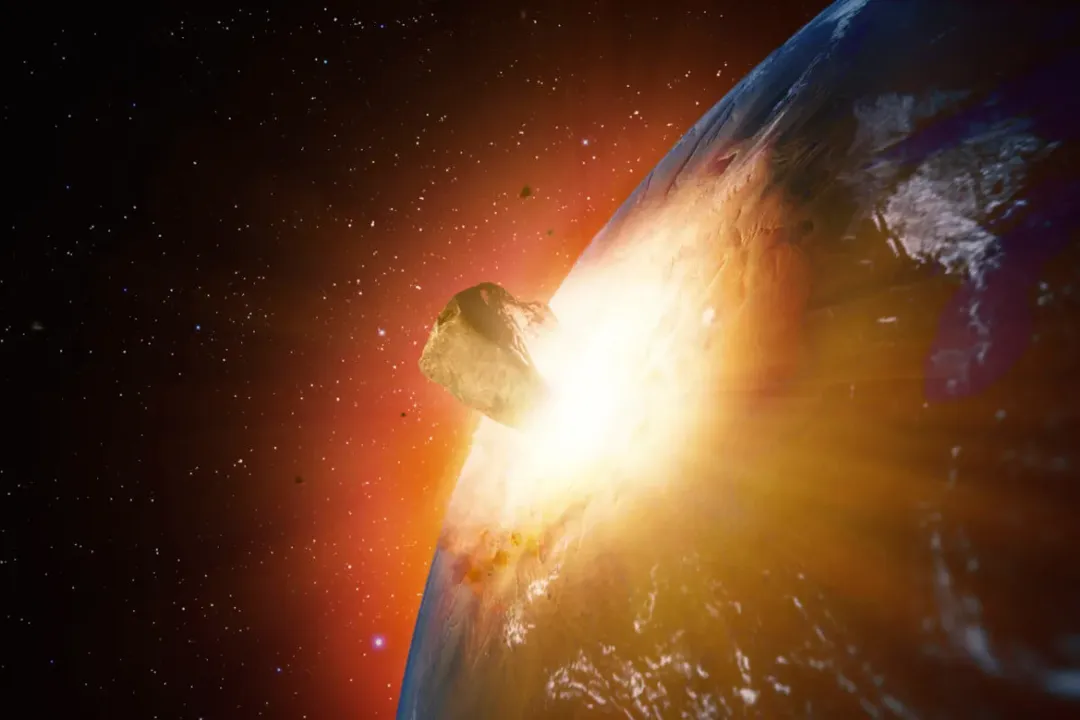
The idea that our beginnings were seeded by visitors from the void captures the imagination, suggesting that the first spark of life on Earth wasn't homegrown but delivered from the cold expanse of space. Scientists have long investigated whether comets, those icy, ancient remnants from the solar system’s formation, acted as celestial delivery trucks, transporting the necessary chemical components for biology to arise on our planet. [1] This inquiry delves into the realm of Panspermia, the hypothesis suggesting that life, or at least its fundamental building blocks, is distributed throughout the cosmos and can spread between planets and star systems. [2]
# Cosmic Delivery
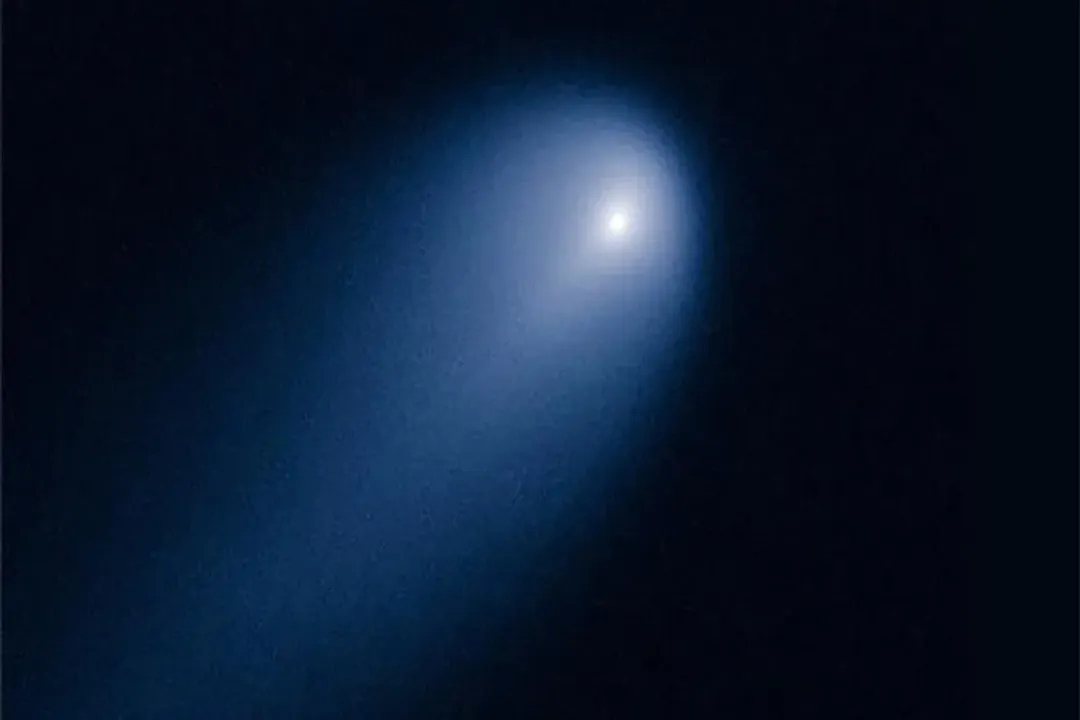
For a long time, the prevailing view held that all the necessary materials for life formed right here on Earth over billions of years. However, a growing body of evidence points toward a significant contribution from external sources, specifically comets and meteorites. [3] These objects, having formed much farther out where temperatures were lower, retained pristine samples of the early solar nebula, including complex organic materials. [3]
Comets are particularly interesting because they are essentially dirty snowballs—mixtures of ice, dust, and rock. When they swing in close to the Sun, the ice vaporizes, releasing gas and dust, which occasionally brings these materials into Earth's orbital path. [8] The sheer volume of material that has struck Earth throughout its history—especially during the Late Heavy Bombardment period—suggests that these impacts weren't just geological events; they were crucial chemical infusion events. [1] While asteroids (meteorites) are also major contributors, comets often carry more volatile compounds, including water ice, which was essential for the early Earth environment. [3]
# Key Ingredients
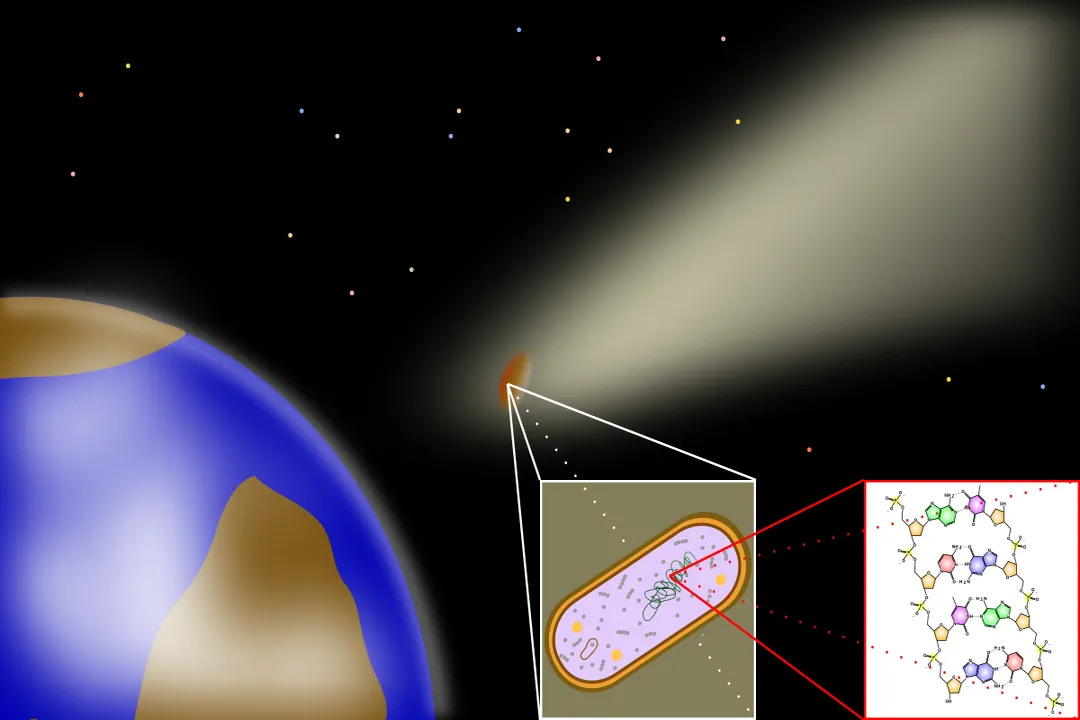
The most compelling argument for cometary delivery centers on the presence of amino acids in extraterrestrial samples. [3] Amino acids are the fundamental units that link together to form proteins, the workhorses of all known life forms. [3] Finding these particular organic molecules inside space rocks provides a direct chemical link between the cosmos and terrestrial biology. [8] Studies confirm that comets are capable of delivering these crucial building blocks to a nascent Earth. [3][8]
One perspective suggests that the delivery of these precursors, rather than fully formed bacteria, explains the origin of life—a concept often described as soft panspermia or seeding. [5] If the chemical recipe was provided ready-made, the process of abiogenesis (life arising from non-living matter) on Earth would have had a significant head start. [5] The alternative, that intact, living microbes hitched a ride, presents a much higher bar for survival, which leads to significant scientific debate. [4]
# Mission Evidence
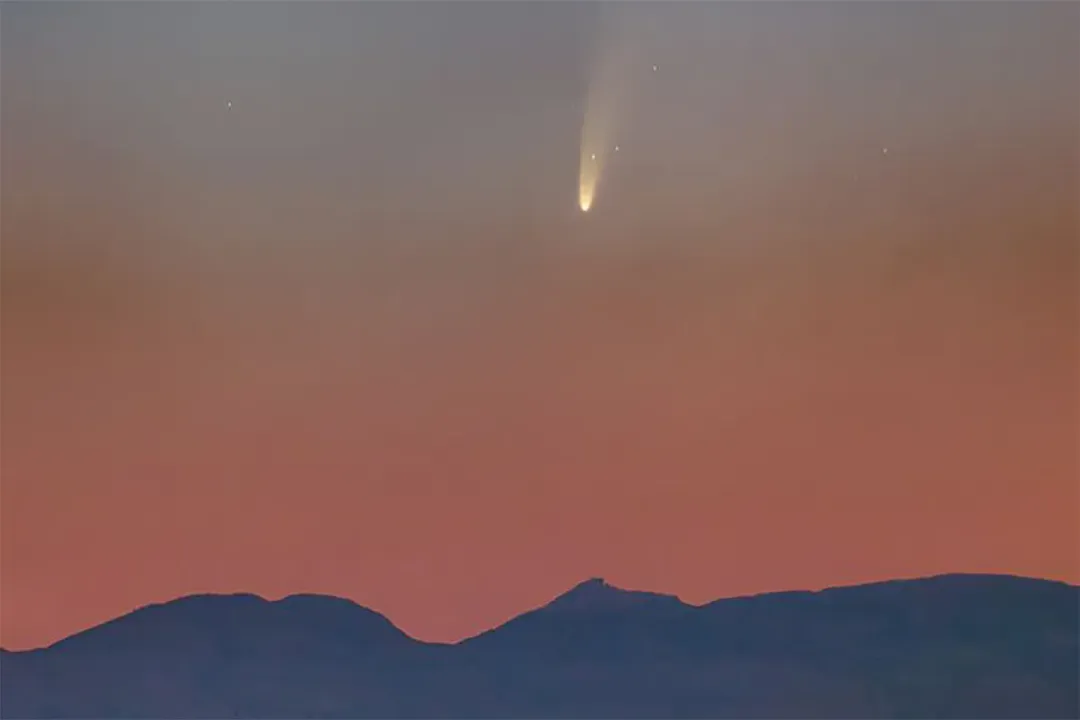
Direct observation has moved this discussion from pure theory to testable science. The European Space Agency’s Rosetta mission provided unprecedented data by studying Comet 67P/Churyumov-Gerasimenko up close. [7] While the mission did not find definitive proof of life itself, it confirmed the presence of numerous organic molecules, including glycine (the simplest amino acid), within the comet's coma and on its surface. [7] This provided concrete validation that comets do, in fact, harbor the complex carbon-based chemistry necessary for life's origins. [7]
This contrasts slightly with findings from meteorites, such as the Murchison meteorite, which famously contained many amino acids. While both comets and meteorites contribute, the icy nature of comets means they might have preserved different inventories of organic compounds, having formed in colder regions of the early solar system compared to most rocky asteroids. [3][9]
# Survival Question
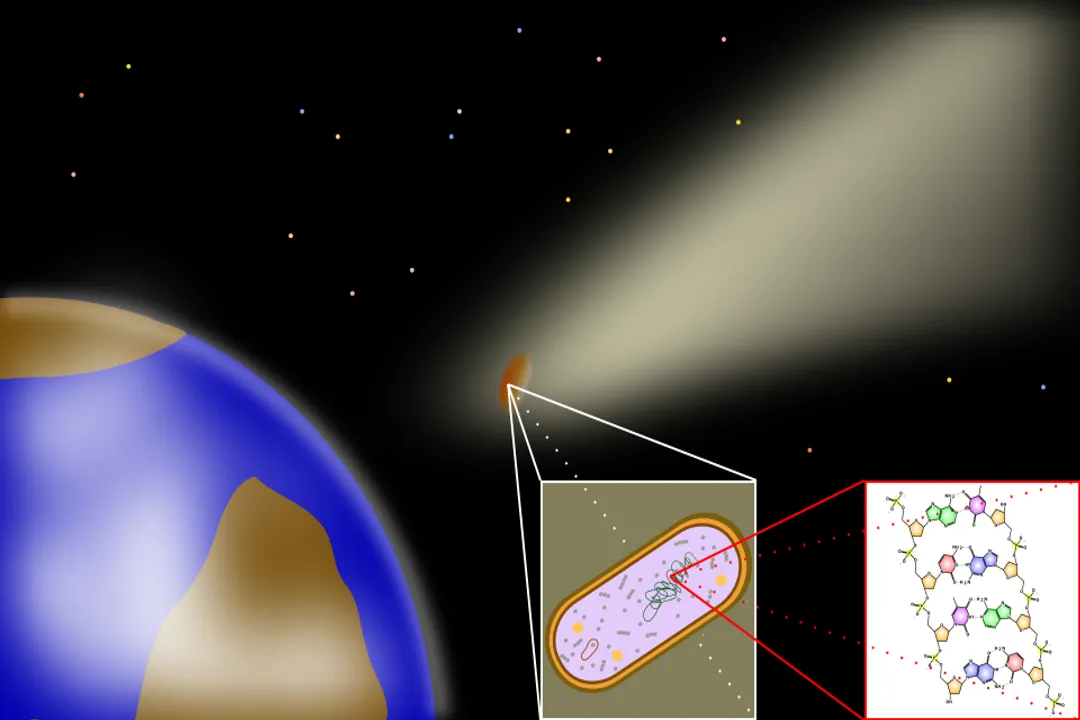
What scientists wrestle with is the transition from delivering ingredients to delivering life. If the theory requires bacteria or simple life forms to survive the journey—a concept sometimes called lithopanspermia when applied to rock fragments—the physics of impact become a serious obstacle. [4]
A major challenge for interplanetary transport is the immense energy involved. A high-velocity impact generates extreme temperatures and pressures, generally believed to be sufficient to destroy delicate biological molecules or kill living cells. Even if the material originates from a comet, the final impact onto Earth’s surface is catastrophic. [4]
However, innovative theories suggest ways around this destruction. One model proposes that life could survive by bouncing between planets or exoplanets. [9] In this scenario, impact velocity might be lower, or the material could be ejected inside protected rock fragments, insulating the biological payload from the worst of the heat and radiation damage during transit. [9] This "bouncing comet" idea is more relevant when discussing the spread of life between distant star systems, but it highlights the need for a protective medium, whether it's ice or rock, for any biological cargo. [9]
We must also consider the sheer timescales. If life originated on Earth through strictly terrestrial abiogenesis, it took hundreds of millions of years after the planet cooled sufficiently for the first confirmed microbial traces to appear. [5]
An interesting point for terrestrial geologists is the timing. If the window between the end of the intense bombardment phase (approximately 3.8 billion years ago) and the first appearance of simple life is extremely narrow, it lends powerful, albeit circumstantial, support to the idea that life did not have enough time to evolve from scratch on Earth and must have arrived ready-made from space. [5] The speed of life’s appearance puts pressure on the purely in situ origin model.
# Panspermia Theory
The broad theory of Panspermia has several variations. Lithopanspermia suggests microbes are transported inside meteorites or cometary debris. [2] Directed Panspermia suggests intelligent beings intentionally seeded life. [2] The most plausible for the comet discussion remains the transport of either chemical precursors or extremely hardy, dormant life forms. [4]
While the delivery of organic chemistry is highly probable and supported by missions like Rosetta, [7] proving that any living organism survived the trip remains one of astrobiology’s great unsolved problems. [1] A study published in the early 2000s noted that while certain spores might endure radiation exposure for extended periods, the cumulative stress of an interplanetary voyage—radiation, vacuum, and impact shock—is enormous.
If we think about the delivery mechanism locally within our solar system, the protection offered by a comet’s icy mantle is key. Unlike rocky bodies, which heat up rapidly, ice can absorb and dissipate energy through sublimation. A piece of organic material embedded deep within a comet might only experience minimal thermal stress until the comet breaks apart or impacts a planet, providing a comparative advantage over material ejected from, say, Mars or the asteroid belt. [3][9]
| Delivery Agent | Primary Composition | Potential Advantage | Limitation/Challenge |
|---|---|---|---|
| Comet | Ice, Dust, Rock | High concentration of volatiles (water/ice) aids preservation of organics. [3][7] | Impact heat upon arrival is extremely high. |
| Asteroid/Meteorite | Rock, Metal | More thermally stable casing (rock/metal) might offer better shielding during transit. [3] | Lower initial content of primordial ices and volatiles. [3] |
# Seeding the Planet
Ultimately, whether a comet brought life or just the instructions for life, the impact of this material on early Earth was transformative. [1] The consensus leans toward extraterrestrial matter providing the necessary complex organic soup that accelerated terrestrial evolution. [3] The planet needed carbon, nitrogen, and other essential elements, and comets appear to have been a reliable source for these materials when Earth was young and volatile. [8]
Even if the ingredients arrived via comets, the environment of the early Earth—liquid water, volcanic energy, and time—was still essential to assemble those bricks into the first self-replicating systems. [5] The comet provided the high-quality lumber; Earth still had to be the construction site. It is fascinating to realize that the water in our oceans and the carbon in our bodies might owe their existence to icy travelers that zoomed past the Sun billions of years ago. [1][7] The mystery isn't entirely solved, but the icy travelers from the outer reaches of our solar system have earned their place as major suspects in the greatest story ever told: the origin of life on Earth. [1][2]
#Citations
Did comets bring life to Earth? | BBC Sky at Night Magazine
Panspermia - Wikipedia
Life on early Earth could have been seeded by comets, meteorites
That theory that says life began when bacteria arrived on comets ...
Evidence that comets could have seeded life on Earth - Berkeley News
The seeding of life by comets - PubMed
ESA - Where life began - European Space Agency
Comets Deliver Amino Acids to Earth | NOVA: Finding Life Beyond ...
'Bouncing' comets could deliver building blocks for life to exoplanets