What is Einstein's biggest discovery?
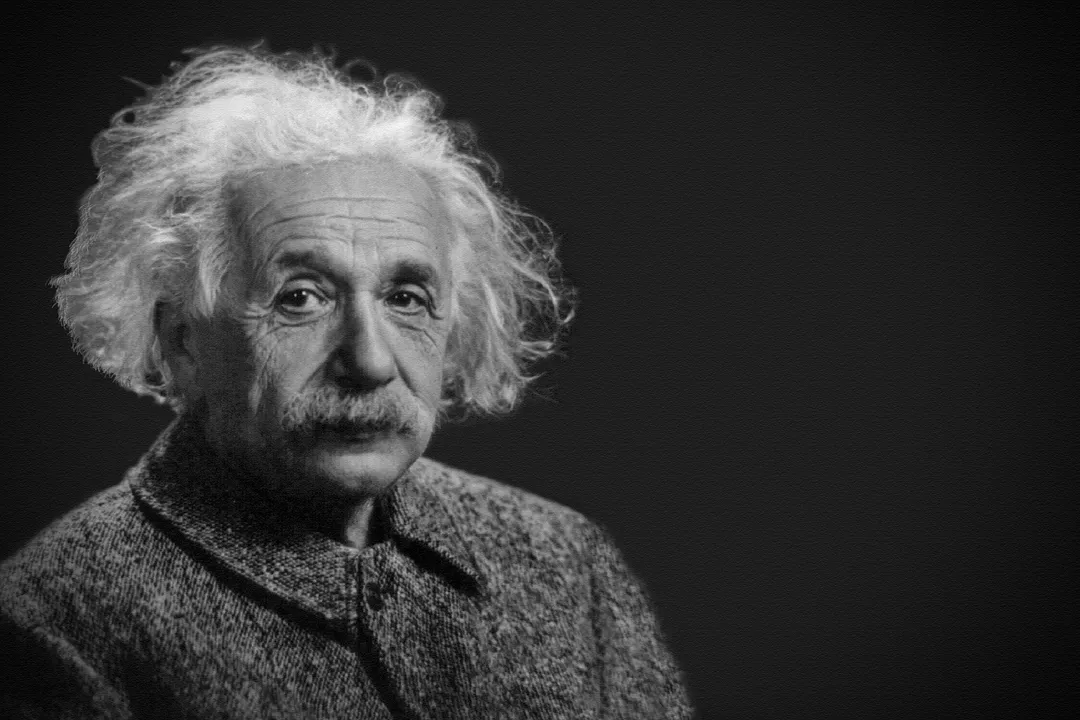
The assertion that one single discovery eclipses all others in Albert Einstein’s career is deceptively difficult to settle, much like the universe he strove to describe. While his name is synonymous with genius, his towering legacy is built upon several revolutionary concepts published across two distinct phases of his career: the Annus Mirabilis of 1905 and the subsequent development of his theory of gravity. Many would immediately point to the equation , but that is merely a consequence of the Special Theory of Relativity. Others champion the General Theory of Relativity for completely reframing gravity and the structure of the cosmos. Yet, the discovery that earned him the 1921 Nobel Prize in Physics was actually his work on the photoelectric effect. To truly understand his biggest contribution, one must examine these pillars and the subtle, unifying philosophy that supported them all.
# The Nobel Foundation
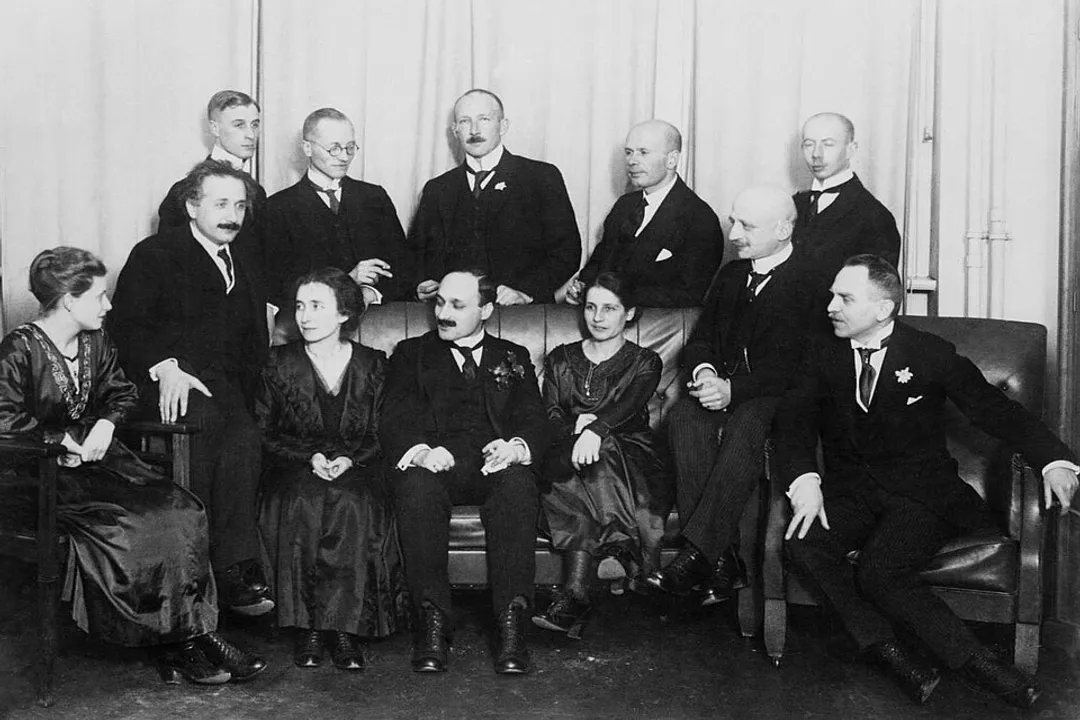
Einstein was awarded the Nobel Prize not for relativity—which remained too controversial for the committee at the time—but for his 1905 explanation of the photoelectric effect. This work involved proposing that light, previously understood purely as a wave, is actually composed of discrete packets of energy, which he termed quanta (later called photons). This concept was a foundational step into the strange world of quantum theory. The photoelectric effect describes the emission of electrons from a material when struck by light, and Einstein's model explained experimental results that wave theory could not. While this idea helped establish a new branch of physics, the reception was mixed; most physicists, including Max Planck, initially resisted the particle-like nature of light, even though Einstein himself would later express deep skepticism about the randomness inherent in quantum mechanics as it evolved.
# Special Kinematics

The annus mirabilis also saw the publication of the Special Theory of Relativity. This theory resolved conflicts between Newtonian mechanics and Maxwell’s equations for electromagnetism by postulating two fundamental invariants: the laws of physics are the same for all observers in uniform motion, and the speed of light in a vacuum, , is constant regardless of the observer’s motion. This constancy required a radical consequence: measurements of space and time must be relative to the observer, leading to time dilation and length contraction.
A powerful way to visualize this breakthrough is through one of Einstein’s early thought experiments, conceived when he was just 16: chasing a beam of light. If he could catch up to the light, he reasoned, he would see it frozen, which is impossible since light must move. The only way for the speed of light to remain constant for all observers—even one moving alongside it—is if time itself changes for the moving observer.
This theory also yielded the world’s most famous equation: . This mass–energy equivalence formula demonstrates that a small amount of mass () contains an enormous amount of energy () because it is multiplied by the speed of light squared (). This established the basis for controlling atomic energy. It is important to remember that this was just the start; it took Einstein another decade of intense mathematical work to incorporate acceleration and gravity into this framework.

# Gravity Reimagined

If Special Relativity deals with steady motion, the General Theory of Relativity (published in 1915) addresses accelerated motion, which is equivalent to gravity. This theory proposed that gravity is not an external force, as Newton described, but rather the result of massive objects warping the fabric of space-time. A nearby object, like a falling key or ball, simply follows the curvature carved out by the Earth’s mass; it is not being pulled by a force, but rather following the "straightest possible" path in curved geometry.
This concept was profoundly abstract and strange, but Einstein suggested empirical tests. The key confirmation came during the 1919 solar eclipse, when Sir Arthur Eddington observed that the Sun’s gravity bent the light from background stars exactly as Einstein had predicted. This moment catapulted Einstein to global celebrity, as newspapers announced that Newtonian ideas had been "overthrown". General Relativity’s predictions extend far into modern astrophysics, underpinning our understanding of black holes, gravitational waves (ripples in space-time observed a century later), and even the bizarre phenomenon of relativistic jets spewing from galaxies like M87.
# The Core Principle
When contrasting these monumental achievements, one might overlook the simple, underlying thread that pulled them together. According to some analysis, the truly revolutionary part of Einstein's legacy is the deceptively simple idea of symmetry—the notion that "some changes don't change anything," or that fundamental relationships remain invariant despite apparent changes in the components.
For Special Relativity, the invariant was the speed of light. For General Relativity, the focus shifted. The struggle to incorporate gravity was solved by demanding that the laws of physics remain the same (invariant) for all observers, not just those moving uniformly. This structural requirement led directly to the equivalence principle (gravity equals acceleration) and the geometric description of gravity as space-time curvature. It’s worth noting that while Special Relativity relied on the invariance of the speed of light, General Relativity was constructed by demanding that the laws of physics appear the same regardless of one's state of motion. This structural demand, formalized through the equivalence principle, is what makes General Relativity a unified geometric description rather than just a correction to Newtonian mechanics, showing a clear progression in his application of invariance. This focus on underlying mathematical structure, which honors conserved quantities like energy, was cemented by the work of mathematician Emmy Noether, who proved that every symmetry corresponds to a conserved quantity.
| Discovery Framework | Core Invariant/Symmetry | Primary Implication |
|---|---|---|
| Photoelectric Effect | Quantization of Energy (Light Quanta) | Birth of Quantum Theory |
| Special Relativity | Constancy of the Speed of Light () | Relativity of Time and Space; |
| General Relativity | Equivalence Principle (Invariance under acceleration) | Gravity as Spacetime Curvature |
| Underlying Philosophy | Symmetry/Invariance | Conservation Laws (Noether's Theorem) |

# Modern Echoes and Unforeseen Impacts
Einstein was not an inventor in the mold of Edison, yet his theoretical work is the bedrock of modern engineering. The practical impact of his theories is impossible to overstate, which arguably makes General Relativity the "biggest" discovery in terms of its continued indispensability today.
For instance, the Global Positioning System (GPS) in your car or phone absolutely requires corrections based on both Special and General Relativity to function. Due to Earth’s gravity, time moves slightly faster for satellites than for receivers on the ground (General Relativity effect). Conversely, because the satellites move so fast, their clocks run slightly slower (Special Relativity effect). Without correcting for these relativistic time shifts—which amount to millionths of a second per day—GPS positioning would drift by miles daily.
Furthermore, his 1917 work on stimulated emission laid the principle for the laser, essential for everything from barcode scanners to fiber optic communication. His 1905 insight on light quanta (photons) underpins the operation of modern solar cells and semiconductor devices. Even his refrigerator design, patented with Leo Szilárd, showed an early interest in practical, energy-efficient applications.
However, the fame derived from relativity was sometimes a double-edged sword. While it made him a worldwide celebrity—the very image of "genius"—it also obscured his Nobel-winning work on the photoelectric effect. Furthermore, as a pacifist and a Jew, his success was sometimes viewed suspiciously by rising political factions in Germany, though his work was already highly regarded internationally by the time he left the country permanently in 1933. A strange historical note is that in 1917, when applying General Relativity to the entire universe, Einstein introduced the cosmological constant to force a static universe, a move he later reportedly called his "biggest blunder" after Hubble proved the universe was expanding; however, newly uncovered manuscripts suggest he briefly considered a steady-state model using that constant years before others did.
If one evaluates "biggest" by sheer paradigm shift, General Relativity is the winner, entirely replacing the Newtonian concept of gravity with geometry. If one evaluates it by official recognition, it is the Photoelectric Effect. But if one seeks the profound, subtle idea that allowed him to move from mechanics to geometry, it is the realization that the essential reality lies in the relationships that remain unchanged—the symmetries—even when the visible players like space, time, mass, and energy appear to be morphing. This insistence on finding the invariant core, rather than simply accepting the apparent description of reality, is the singular quality that allowed Einstein to ask the questions that redefined physics.
# Enduring Intellectual Framework
Einstein's career was marked by intellectual confidence, even when challenging bedrock assumptions that had stood since Newton. His later years were spent fruitlessly seeking a unified field theory, which isolated him somewhat from the quantum mechanics mainstream he helped initiate. Yet, his very objections, such as famously stating, "God does not play dice," pushed contemporaries like Niels Bohr to clarify and perfect the probabilistic interpretations of the new quantum reality. Even his thought experiment concerning entangled particles, which he dismissed as "spooky action at a distance" (the EPR paradox), has become a cornerstone for modern quantum information theory.
The persistent lesson from Einstein’s work is not just what he found, but how he found it. He excelled by questioning what others took for granted—like the need for a constant "aether" to carry light, or the absolute nature of time. To appreciate his full impact, one must see the progression: first, proving the existence of atoms via Brownian motion; second, quantizing light to kickstart quantum physics; third, linking energy and mass via Special Relativity; and finally, reimagining the architecture of the universe with General Relativity. The ability to see past the immediate sensory data—to trust the mathematical invariance over the physical appearance—is the common thread, proving that sometimes, the most valuable discoveries are those that require us to abandon the things we thought were most solid.
#Videos
Lean all about Einsteins life and his major discoveries - YouTube
Related Questions
#Citations
10 Things Einstein Got Right - NASA Science
A Science Odyssey: People and Discoveries: Albert Einstein - PBS
Albert Einstein - Wikipedia
What exactly is it that makes Albert Einstein so important ... - Reddit
Albert Einstein's Greatest Discoveries | Chemistry And Physics
How Albert Einstein's inventions shaped everyday technology
The Simple Idea Behind Einstein's Greatest Discoveries
What Did Albert Einstein Invent? - Science | HowStuffWorks
Lean all about Einsteins life and his major discoveries - YouTube
5 of Einstein's thought experiments that changed science