What determines battery capacity?

Understanding battery capacity is far more nuanced than looking at a single number on a product label. It dictates how long a device will run, how much power it can deliver, and ultimately, the cost and size of the energy storage solution you choose. At its simplest, battery capacity is a measure of the total electrical charge a battery can deliver under specific conditions. [2][8] However, the devil—and the longevity—is in the details of how that capacity is measured and the operating environment it faces.
# Defining Metrics
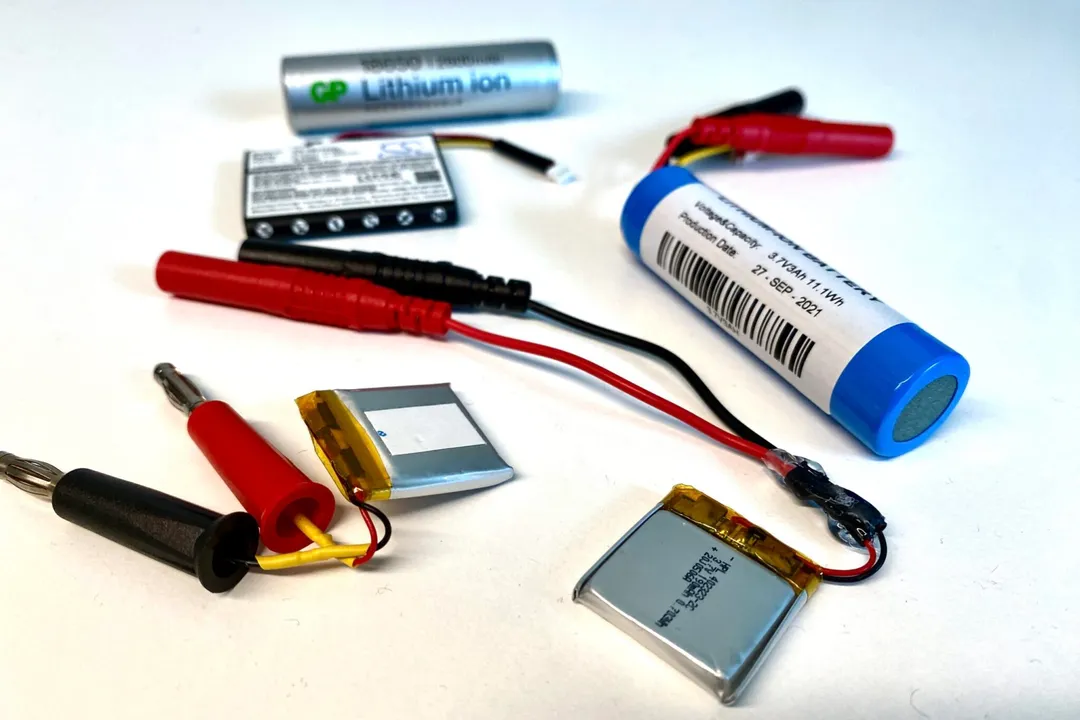
When consumers shop for batteries, they typically encounter terms like Amp-hours (), milliamp-hours (), and Watt-hours (). These units describe the battery's ability to store and dispense energy, but they aren't interchangeable, especially when comparing batteries with different internal voltages. [6]
Amp-hours () or milliamp-hours (, where ) quantify the charge capacity. [7] This number tells you how many amperes (amps) of current the battery can deliver over a specific duration, often expressed as a rate. [7] For example, a 10 battery might be rated to deliver $0.5$ amps for 20 hours (). [2][7] The specification of the discharge rate is critical; without it, the rating is incomplete. [1]
Watt-hours (), on the other hand, measure the energy capacity. This is calculated by multiplying the capacity by the battery's nominal voltage (). [6] This metric provides a more universal comparison across different battery chemistries or cells that operate at varying voltages. [6] If you are comparing a battery bank to a system, using alone is misleading. A battery at stores , whereas a battery at stores —four times the actual usable energy. [6]
For general portable electronics, like smartphones or power banks, is common, as these devices often run on a standardized low voltage, making the figure an easy proxy for runtime. [7] For larger, fixed systems or electric vehicles, or kilowatt-hours () become the necessary standard for accurate energy budgeting. [6]
# Core Determinants
The maximum theoretical capacity of a battery is fundamentally determined by its physical and chemical makeup. [1][4] This is the inherent potential built into the cell during manufacturing.
# Chemical Composition
The materials used in the cathode, anode, and electrolyte dictate how many charge carriers (ions) can be stored and moved during a charge/discharge cycle. [4] Different chemistries inherently offer different energy densities. For instance, modern Lithium-ion cells can store significantly more energy per unit of mass or volume than older lead-acid technologies. [4] The number of active materials in the battery electrodes directly correlates with the potential number of electrons that can be transferred, setting the upper bound for capacity. [1]
# Size and Mass
Simply put, a bigger battery holds more active material, which generally means higher capacity. [1][4] Capacity is often expressed in two ways related to size:
- Gravimetric Energy Density: How much energy () is stored per unit of mass (), often expressed as .
- Volumetric Energy Density: How much energy () is stored per unit of volume (), often expressed as .
Manufacturers constantly strive to increase these densities, packing more active material into the same physical space or reducing the weight of inactive components like casings and separators. [4]
# Internal Structure
The physical architecture within the cell matters immensely. In lithium-ion batteries, this often involves the configuration of the electrodes—whether they are wound, stacked, or layered. How tightly and efficiently these materials are packed influences the surface area available for the chemical reactions that store and release charge. [1] The thickness of the electrodes is a trade-off: thicker electrodes mean more material (higher capacity), but they also increase the distance ions must travel, which can negatively impact high-rate performance. [5]

# Operating Conditions
While chemistry and size set the nameplate capacity, the realized capacity—what you actually get when you use the battery—is heavily influenced by external and usage factors. [4] These factors can cause the effective capacity to be significantly lower than the stated maximum.
# Temperature Effects
Temperature is a major driver of electrochemical performance. Extremely cold temperatures slow down the chemical reactions inside the battery, hindering the speed at which ions can move through the electrolyte. [4] This slows down the rate at which the battery can be discharged, meaning that if you try to draw a high current in the cold, the available delivered capacity will drop sharply. [5] Conversely, while very high temperatures can increase instantaneous power output, they accelerate degradation, reducing the battery's long-term capacity. [4]
# Discharge Rate (C-Rate)
The C-rate describes the rate at which a battery is discharged relative to its capacity. A -rate of means the battery is theoretically discharged completely in one hour. [7] If a battery is rated for at a rate ($1$ amp draw for 10 hours), drawing current much faster—say, at ($20$ amps)—will likely yield less than of total energy delivered. [1][4] This phenomenon occurs because high currents lead to greater internal resistance losses, which manifest as heat and reduce the voltage faster than expected, prematurely hitting the low-voltage cutoff. [5]
To better manage expectations in variable-load scenarios, it is helpful to standardize expectations. For instance, when selecting a battery for an off-grid cabin powered by solar, you might calculate the expected load for the longest expected dark period (say, three days) and then deliberately choose a battery with $1.2$ to $1.5$ times that calculated capacity to account for inefficiencies and expected lower winter performance. This practical oversizing mitigates the impact of the C-rate on runtime predictions. [2]
# Depth of Discharge (DoD)
The Depth of Discharge () refers to how much of the battery’s capacity has been used in a single cycle. [2] If a battery is discharged until only has been removed, the is $50%$. While technically a battery could be discharged to $0%$ (or ), doing so consistently severely limits its lifespan. [2]
For Lithium-ion cells, operating at a shallow (e.g., $80%$ or less) drastically increases the cycle life, sometimes by orders of magnitude, compared to routinely draining them near empty. [2] This isn't a change in the battery's nameplate capacity, but it is a major factor in determining usable capacity over the product’s lifetime.
# Capacity Measurement Variations
The process used to test and rate capacity fundamentally impacts the resulting number. This is where a lack of standardization can cause confusion between manufacturers. [2]
# Testing Standards
Battery capacity testing usually involves two main parameters: the discharge rate (-rate) and the cutoff voltage. [2]
- Rate Dependence: As mentioned, a battery might be rated at a slow $20$-hour rate () or a faster $1$-hour rate (). [2] A manufacturer rating a cell at will almost always report a higher number than if they rated the same cell at . [1] Always check the specified rate on the datasheet.
- Cutoff Voltage: The test must specify the minimum voltage before the discharge is stopped. Discharging lower than this voltage can damage the cell, particularly in Lithium-ion chemistries. [2]
# Voltage Impact on
The voltage of the cell dictates the energy density () for a given charge capacity (). [6]
| Chemistry Example | Nominal Voltage () | Capacity | Total Energy () |
|---|---|---|---|
| Lead-Acid (Deep Cycle) | |||
| Lithium Iron Phosphate () | |||
| Lithium-Ion Cell (Single Cell) |
This table clearly illustrates why comparing alone is insufficient; the inherent cell voltage is a critical component of the stored energy. [6]

# Longevity and Capacity Fading
Battery capacity is not static; it decreases over time and usage, a process called capacity fade or degradation. [4] The key factors driving this inevitable decline are cycle count and calendar aging.
# Cycle Count
A battery cycle is generally defined as one full discharge and recharge, though many modern battery management systems (BMS) track partial cycles. For instance, discharging $50%$ one day and $50%$ the next counts as one full cycle. [2] As the number of cycles increases, structural changes occur within the cell—such as the growth of the Solid Electrolyte Interphase () layer in -ion batteries—which consume active lithium and reduce the amount of charge the cell can hold. [4]
# Calendar Aging
Even if a battery is never used, its capacity will slowly decline simply due to time, temperature, and its State of Charge () while stored. [4] Storing a Lithium-ion battery at $100%$ charge for long periods, especially in warm conditions, accelerates this calendar aging far more than storing it at a mid-range like $50%$. [4] Understanding this means that a battery purchased today might already have slightly less capacity than its nameplate rating suggests if it has been sitting on a shelf for a year.
# Practical Application and Real-World Limits
Translating the nameplate capacity into actual runtime requires accounting for system losses and operational constraints. This is a common area where consumer expectations often diverge from reality.
# Inverter and Losses
The stated capacity of a battery pack () is the energy stored within the cells. However, to power devices, this energy must pass through an inverter, which has its own efficiency rating, typically $85%$ to $95%$. [3] Furthermore, the internal Battery Management System () used in packs to protect cells consumes a small amount of power constantly. [1] If an inverter is only $90%$ efficient, you immediately lose $10%$ of the battery's potential energy before it even leaves the system.
For example, if you have a battery bank and run a load through a $90%$ efficient inverter, the actual draw from the battery cells must be . This higher draw rate effectively shortens the runtime compared to calculations based only on the battery's internal capacity.
# Usable Capacity Checklist
When planning an energy storage setup, move past the nameplate rating by following these steps to determine the true deliverable capacity:
- Identify Nameplate Capacity: Determine the manufacturer's rated or value, noting the test conditions (-rate and temperature). [2]
- Apply Depth of Discharge Limit: Decide on a sustainable . For long life in -ion, use $80%$ or $90%$; for lead-acid, limit to $50%$. [2]
- Usable Capacity = Nameplate Capacity Max Percentage.
- Derate for Temperature: If the typical operating temperature is below (), apply a derating factor. For example, at near-freezing temperatures, a $20%$ derate might be appropriate, meaning you only count $80%$ of the capacity found in Step 2. [4][5]
- Account for System Losses: Factor in the expected efficiency of the power conversion stages (inverter, chargers). [3] If efficiency is $92%$, multiply the result from Step 3 by $0.92$.
This systematic reduction provides a much more reliable estimate of the energy you can actually extract before the system shuts down or permanently damages the battery cells. A battery rated for that you plan to discharge to $80%$ at might realistically only offer of usable, safe energy (). [2]

# Cell Configuration
Finally, the way individual cells are connected—in series or parallel—determines the final pack's capacity and voltage, which is crucial for system design. [1]
# Series Connection
Connecting cells in series increases the total voltage of the pack while the capacity remains the same as a single cell. [1] If you connect four cells in series, you get a pack that is still rated for .
# Parallel Connection
Connecting cells in parallel increases the total capacity () while the voltage remains the same as a single cell. [1] If you connect four cells in parallel, you get a system rated for . [1]
Understanding these building blocks allows designers to tailor the voltage and capacity precisely to the application's needs, ensuring the system operates within the optimal voltage window dictated by the cell chemistry to maximize efficiency and longevity. [2] The inherent chemical capacity of the smallest unit—the individual cell—is the foundation upon which all these system-level characteristics are built. [4]
#Videos
Battery capacity and voltage explained - YouTube
Related Questions
#Citations
What exactly determines the capacity of a battery? : r/electrical - Reddit
Battery Capacity - PVEducation.org
Battery Capacity: Overview and Guide to Understanding - Anker SOLIX
What Determines Battery Capacity and How Different Capacities ...
Battery capacity and voltage explained - YouTube
Ampere-hours vs watt-hours - how to assess battery capacity - Qoitech
Understanding mAh - The Basics of Battery Capacity - EcoFlow
Battery Capacity | Umbrex