How can there be a fire in space if there is no oxygen?
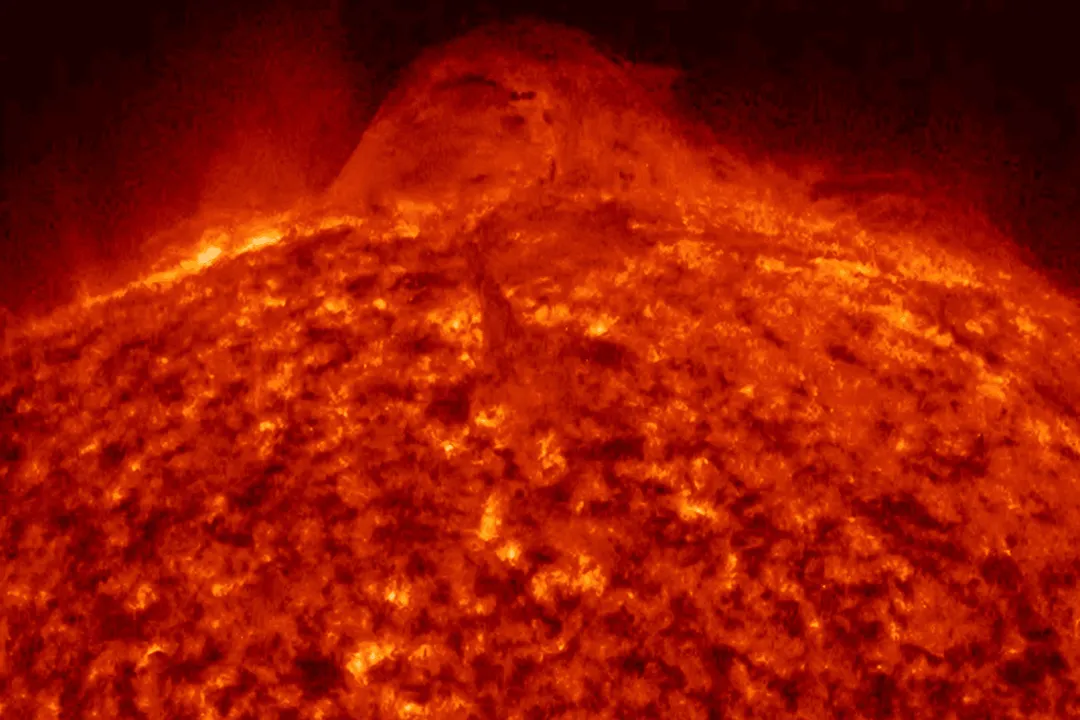
The common notion that fire requires air, and specifically oxygen, creates an immediate paradox when we look up at the stars or consider astronauts working in the vacuum of space. It seems logically impossible for any flame to exist where there is virtually no atmosphere to feed it. Yet, we observe immense, fiery displays like the Sun, and we must also account for the very real, though contained, danger of fire within orbiting habitats. The explanation rests on understanding exactly what combustion is and recognizing the critical difference between chemical burning and other processes that generate extreme heat and light.
# Combustion Basics
Fire, as we experience it daily on Earth—a candle flame, a campfire, a burning match—is a chemical reaction called combustion. For this reaction to occur, three elements are typically required, forming what is often called the fire triangle: fuel, heat, and an oxidizer. The fuel provides the material to be oxidized (burned), heat supplies the activation energy necessary to start the reaction, and the oxidizer—almost always gaseous oxygen in our terrestrial environment—is the element that chemically combines with the fuel.
Space, being a near-perfect vacuum outside of artificial enclosures, lacks the necessary ambient oxidizer. There is plenty of fuel floating around in the universe, such as hydrogen and dust clouds, and there are certainly sources of heat, but without readily available, dense oxygen molecules to rapidly combine with that fuel, a classic chemical fire cannot propagate in the void.
# Solar Power
Perhaps the most compelling counter-example to the "no oxygen, no fire" rule is the Sun itself. It blazes across space, appearing as a massive, constant fire. If oxygen were required, the Sun would have extinguished itself billions of years ago. The reason the Sun shines is because it is not burning chemically; it is powered by nuclear fusion.
Fusion is a vastly more energetic process than chemical combustion. In the Sun’s core, the immense gravitational pressure creates temperatures exceeding degrees Celsius. Under these extreme conditions, light elements, primarily hydrogen nuclei, are smashed together with such force that they overcome their natural repulsion and fuse to form heavier elements like helium. This process converts a small amount of mass directly into enormous amounts of energy, released as heat and light. This continuous, self-sustaining reaction, powered by gravity and density, makes the Sun a furnace operating under entirely different physics than a wood fire, completely independent of atmospheric oxygen.

# Cabin Environment
If the vacuum of space prohibits fire, how is there any risk aboard the International Space Station (ISS) or other spacecraft? The danger arises because these vehicles are essentially sealed bubbles of Earth’s environment floating in the vacuum. Astronauts require air to breathe, meaning the cabin atmosphere is pressurized and contains both the necessary oxygen (the oxidizer) and various fuels (insulation, plastics, fabric, etc.).
If an electrical short circuit occurs, or a piece of equipment overheats, the necessary heat can be generated to initiate combustion if fuel and oxygen are present in sufficient quantities. The critical difference from Earth is not if a fire can start, but how it behaves once it does begin, due to the lack of gravity.
# Gravity Effects
The behavior of flames is strongly dictated by gravity on our home planet. When Earth-bound fuel burns, the heat generates combustion products (like and water vapor) and heats the surrounding air. These hot gases are less dense than the cooler ambient air, causing them to rise in a current known as buoyancy or convection. This constant upward movement pulls fresh, oxygen-rich air into the base of the flame, sustaining its typical teardrop shape and its vigorous burn rate.
In the microgravity environment of an orbiting station, that buoyancy effect vanishes. Hot gases do not rise; instead, they stay suspended around the burning material because there is no differential density to drive movement. This creates a bubble of hot exhaust gas that rapidly depletes the local oxygen supply. As a result, a fire in space burns much differently. Flames tend to be spherical or globular, spreading slowly outwards until the local oxygen is consumed, after which they may self-extinguish unless forced air circulation replenishes the supply. Research has shown that flames in microgravity can burn cooler and less intensely than their counterparts on Earth due to this poor mixing of fresh oxygen into the reaction zone.
When considering fire suppression in space, the traditional method of smothering a fire with a heavy gas like must be adapted. While works by removing the oxidizer, the lack of gravity means that the won't naturally sink and pool around the base of the fire like it would on Earth. Therefore, suppression systems must rely on high-velocity delivery or specialized agents that can disperse rapidly in zero-g to overcome the slower mixing characteristic of microgravity combustion.
# Nonoxidizing Reactions
While most everyday fires are oxidation reactions, it is important to recognize that intense chemical reactions generating heat and light do not always require external oxygen. Certain materials are chemically reactive enough, or carry their own internal oxidizer, that they can react vigorously simply upon contact with a different material or upon reaching a certain temperature threshold. For example, some rocket propellants are hypergolic, meaning they ignite immediately upon contact with each other without any external spark or atmospheric gas required. In these specialized, highly energetic contexts, the reaction releases the requisite heat and light conventionally associated with "fire," even though the definition of combustion is technically altered because no external oxygen was drawn in.
It is useful to create a simple mental comparison between the Sun's energy generation and a spacecraft fire. The Sun converts mass into energy through fusion, a self-sustaining process powered by gravity over eons, releasing gamma rays and light. A spacecraft fire, conversely, is a rapid, low-energy chemical oxidation that relies on a finite, stored supply of gas and fuel, posing an immediate, localized hazard that can be physically extinguished by cutting off the local supply of air or fuel. The scale and mechanism are entirely different, which prevents confusion when people observe both phenomena occurring in the general vicinity of "space."
#Citations
eli5 If there is no oxygen in space, how do our rockets produce fire ...
How can fire burn in space when in space there's no air for ... - Quora
How does burning occur in space without oxygen? - Facebook
People Are Asking If There Is No Oxygen In Space, How Is The Sun ...
Why can there be fire in space while there is no oxygen?
We know that fire needs oxygen in order to burn.Then how come ...
Fire in Microgravity | American Scientist
If theres no oxygen in space then how does the sun produce flames ...
Can Fire Burn When There's No Oxygen? - ScienceABC