Who was the first astronomer to win a Nobel Prize?
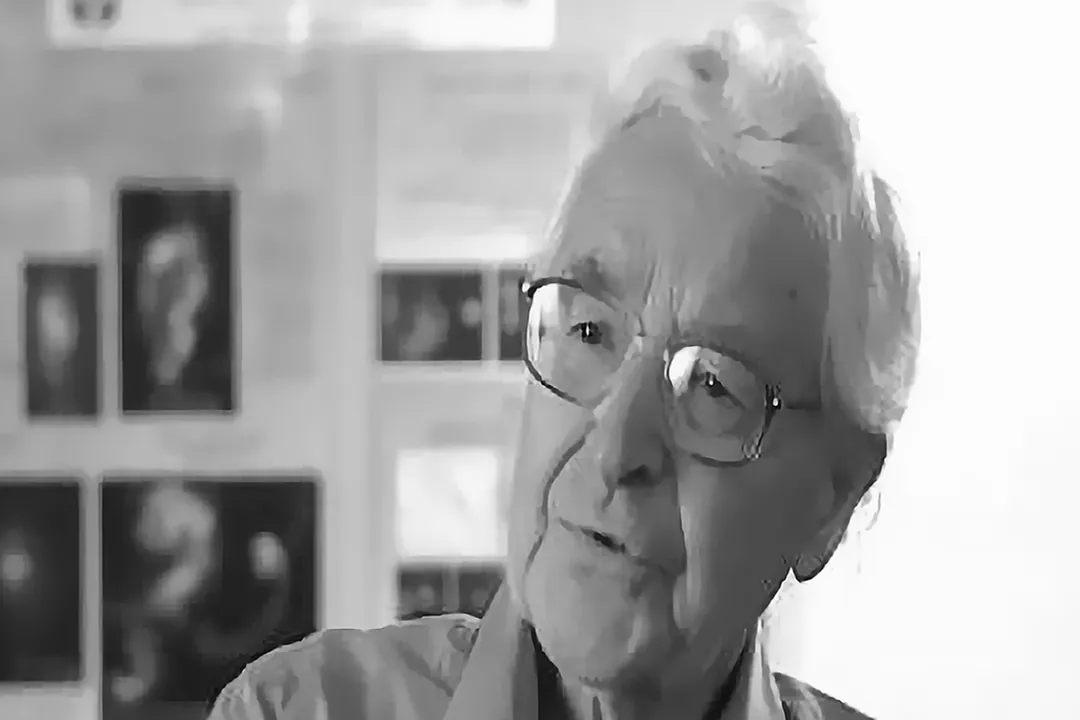
The annals of scientific achievement are often marked by moments of undeniable brilliance, but sometimes, the recognition granted by the Nobel Committee casts a long shadow of controversy. When discussing astronomy and the Nobel Prize, one of the most frequently cited—and contentious—events centers on the 1974 award in Physics, which honored groundbreaking work on pulsars, a discovery intrinsically tied to the meticulous observation of a graduate student. The recipient who was an astronomer at the time of the award was Antony Hewish, who shared the prize with Martin Ryle. This event remains a significant touchstone in the history of astrophysics, precisely because of the person who made the initial observation but was omitted from the honor: Jocelyn Bell Burnell.
# Radio Source Puzzler
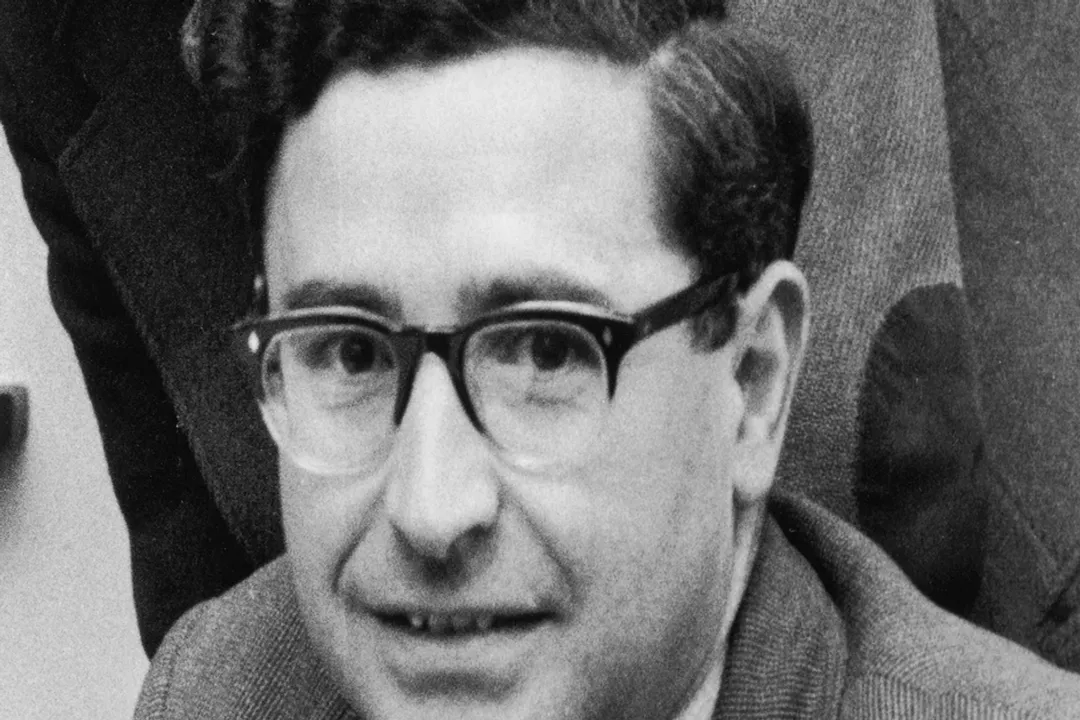
The story begins not with a telescope pointed at the stars, but with an array of antennas designed to map the sky in radio waves. Jocelyn Bell Burnell, as a postgraduate student at Cambridge, was tasked with analyzing vast amounts of chart paper generated by the radio telescope. This work, which she began in 1967, was part of a larger project supervised by Antony Hewish, aimed at studying quasars and scintillations in radio sources.
The data was incredibly dense, leading to mountains of printouts that needed careful examination for unusual signals. Bell Burnell systematically checked the data, looking for sources that showed unusual twinkling or flickering effects. Most signals were random noise, but in June 1967, she noted a peculiar, regular signal that was not expected. It was a recurring signal with a precise periodicity, appearing in a pattern that strongly suggested a natural phenomenon rather than terrestrial interference.
# Identifying Pulsars
The regularity of the signal was what made it so extraordinary. Bell Burnell charted this repeating radio source—dubbed the first pulsar—as LGM-1, short for "Little Green Men," due to its unnervingly precise, almost artificial pulse rate. She logged the signal repeating every 1.34 seconds. The precision was startling; it was far too steady to be a quasar or a conventional star exhibiting typical variation.
When she first presented her findings in Cambridge, the reaction from her supervisors and colleagues, including Antony Hewish, was immediate skepticism. The suspicion was that the signal was interference from ground-based sources, perhaps even from equipment within the university itself. The team meticulously ruled out terrestrial causes, including signals from cars or other machinery. Bell Burnell recalls that they checked for any local electronic noise that might mimic the pattern. The need to eliminate all human-made sources was paramount before presenting the signal as a genuine astronomical object.
After weeks of rigorous checking and cross-referencing with other radio observatories, the signal persisted, confirming it was extraterrestrial. This led to the realization that they had discovered a new class of astronomical object: rapidly rotating neutron stars, remnants of massive stellar explosions. The initial discovery by Bell Burnell was quickly followed by the identification of other similar sources.
# The Physics Prize
The discovery of pulsars fundamentally altered astrophysics, providing scientists with a new type of cosmic clock and laboratory to test theories of gravity and matter under extreme conditions. The work surrounding the detection and interpretation of these signals was recognized by the Royal Swedish Academy of Sciences.
In 1974, the Nobel Prize in Physics was awarded jointly to Antony Hewish and Martin Ryle. Ryle, an expert in radio astronomy techniques, was recognized for his development of radio-telescope interferometry. Hewish received his share of the prize specifically for his "decisive role in the discovery of pulsars".
This recognition placed Hewish, an astronomer, squarely within the domain of a Nobel laureate in Physics, illustrating how profound observational discoveries born in astronomy can lead to the highest accolades in physics. The awarding of the prize to Hewish highlighted the importance of supervision and the organizational direction of research projects in major discoveries.
# A Graduate's Omission
The decision to exclude Jocelyn Bell Burnell from the 1974 award sparked immediate and enduring debate among scientists. The Nobel Prize statutes, at that time, stipulated that awards could only be shared among a maximum of three people. Given that Ryle was recognized for his instrumental work in radio astronomy, the award to Hewish and Ryle left no room for Bell Burnell, despite her making the actual physical detection of the signal.
The general consensus among those familiar with the situation was that the Committee overlooked the graduate student who performed the detailed, painstaking work. It is widely considered an example of the systemic failure to credit women in science adequately during that era. Bell Burnell herself has maintained a gracious public stance regarding the decision, often stating that she was simply happy the discovery was recognized, though she acknowledged that she was perhaps in the wrong place at the wrong time—as a student rather than a senior faculty member.
Observing this pattern, one might analyze that the Nobel Committee historically favored the senior researcher who conceptualized and directed the project (Hewish) and those who developed the foundational technology (Ryle), often sidelining the junior researcher whose direct, diligent observation yielded the raw data.
| Key Individual | Role in Pulsar Discovery | Nobel Prize Recognition (1974) |
|---|---|---|
| Jocelyn Bell Burnell | Graduate student; analyzed data and identified the regular signal | None at the time |
| Antony Hewish | PhD Supervisor; directed the research; shared in the discovery credit | Yes (Physics) |
| Martin Ryle | Pioneer of radio-telescope interferometry; provided key instrumentation expertise | Yes (Physics) |
This historical split—between the person who saw the data anomaly and the senior personnel who validated and interpreted its significance within the established scientific structure—is not unique to physics, yet it stands out sharply in the pulsar case due to the unambiguous nature of Bell Burnell's initial observation.
# Later Acclaim
While the 1974 Nobel Prize went to her supervisor, the scientific community, outside the constraints of the Nobel statutes, continued to acknowledge Bell Burnell’s fundamental contribution over the ensuing decades. This lack of initial recognition did not halt her distinguished career in astronomy and science communication. She went on to become a professor at The Open University and later a professor of Astrophysics at Princeton.
Decades later, a significant attempt to rectify this historical oversight occurred. In 2018, Jocelyn Bell Burnell was awarded the Special Breakthrough Prize in Fundamental Physics. This prize, sometimes referred to as the "pioneering Nobel," carries a substantial monetary award, reportedly $3 million.
It is quite telling that this later, massive award was given not just for the pulsar discovery, but also for her subsequent work in mentoring future scientists and promoting diversity in physics. The structure of this later recognition, which seems to value the entirety of a career alongside the initial breakthrough, stands in stark contrast to the highly specific, past-focused criteria of the Nobel Prize. If one were to compare the recognition, the Breakthrough Prize allowed for an award commensurate with the impact of the discovery plus a reward for her sustained contribution to the field, something the 1974 Nobel could not accommodate.
# Astronomy's Nobel Place
The Nobel Prize is awarded in Physics, Chemistry, and Medicine/Physiology, with no dedicated category for Astronomy or Space Science. Consequently, discoveries made primarily within the field of astronomy must fall under the umbrella of Physics to be considered, as was the case with Hewish and Ryle for their work on pulsars.
This structural limitation is a frequent talking point among astronomers. Edwin Hubble, for instance, made perhaps the most profound discovery in 20th-century astronomy—the expansion of the universe and the realization that galaxies exist outside our own—but he never received a Nobel Prize. Hubble’s work, which demonstrated that the universe is expanding, was foundational to modern cosmology. His omission, like Bell Burnell’s, serves as a reminder that the Nobel Committee’s scope is narrow, focusing typically on discrete, experimental breakthroughs recognized within the existing framework of the three sciences.
The path of the astronomer to Nobel recognition is thus indirect, requiring their findings to fit neatly into the definition of a "great discovery" in physics. Pulsars, being rapidly rotating physical objects governed by the laws of general relativity and extreme nuclear physics, easily qualified for the Physics award. Hubble’s discovery, while equally monumental, dealt more with the large-scale structure and dynamics of the cosmos, which sometimes proves harder to fit into the traditional boundaries the Physics prize enforces.
For any aspiring scientist working in astrophysics today, this history offers a vital lesson: the quality of the work may ensure future acclaim, but the timing and institutional setting of the discovery can dictate immediate honors. Securing recognition often involves aligning novel findings with the Nobel statutes, or, as Bell Burnell eventually found, waiting for newer awards designed to offer a broader acknowledgment of scientific impact. The discovery of pulsars, though tainted by the Nobel snub, remains a testament to the value of meticulous observation, whether performed by a seasoned professor or a determined graduate student poring over chart paper late into the night.
Related Questions
#Citations
Jocelyn Bell Burnell - Nobel Run Stories - Gearing Roles
Edwin Hubble - Wikipedia
I Changed Astronomy Forever. He Won the Nobel Prize for It. (2021 ...
In 1974, They Gave The Nobel To Her Supervisor. Now She's Won A ...
Jocelyn Bell-Burnell | The Schools' Observatory
Jocelyn Bell Burnell - Linda Hall Library
This Month in Physics History: | American Physical Society
Antony Hewish, astronomer who won Nobel Prize for the discovery ...