What year will the big freeze happen?
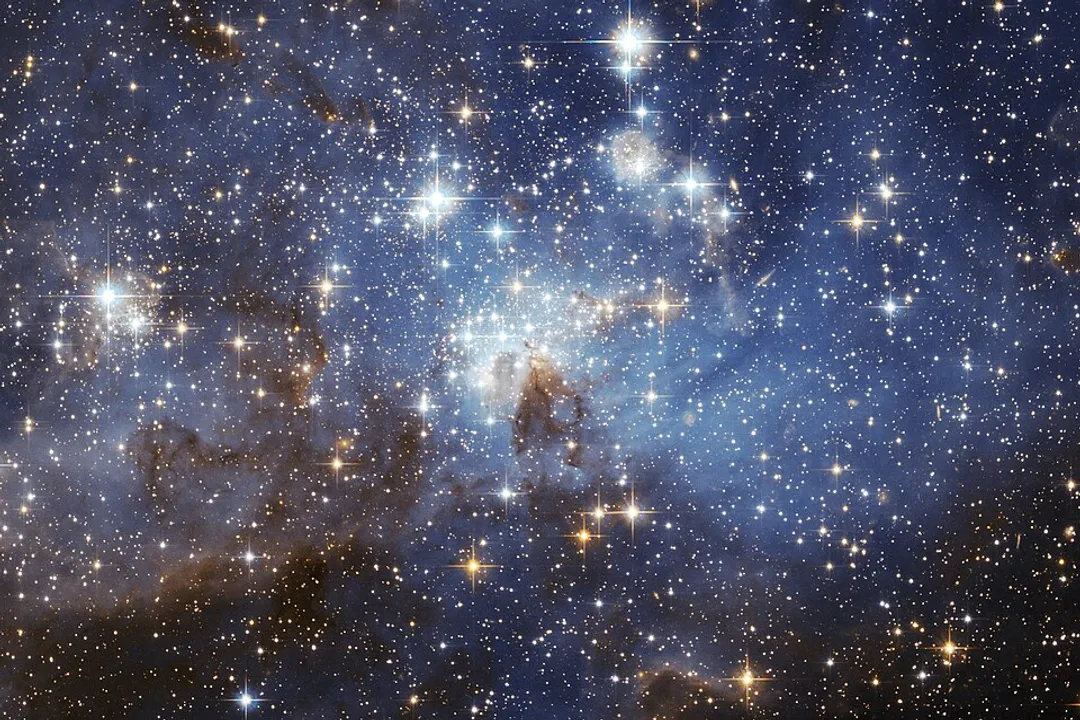
The concept of the universe concluding, a subject of deep physical cosmology, often conjures images of fiery collapse, but the leading scientific theory points toward a quiet, frigid demise known as the Big Freeze. This scenario is closely intertwined with the observed, accelerating expansion of space itself, suggesting a final state where energy is so dispersed that activity ceases entirely. However, the term "Big Freeze" carries an intriguing duality, sometimes referring to a profound shift in Earth’s own climate history, leading to potential confusion regarding its timescale and context.
# Terrestrial Cooling
Before considering the cosmic scale, it is worth noting that the phrase "Big Freeze" has been applied to a dramatic, though much more localized, event in Earth's past. Approximately $12,000$ years ago, following a lengthy Ice Age, temperatures in the Northern Hemisphere rapidly plunged back into extreme cold. This period, known scientifically as the Younger Dryas, lasted for about $1,300$ years, with glaciers in some regions even regrowing to their peak Ice Age extent.
The hypothesized cause for this terrestrial Big Freeze involves the complex interaction between melting ice sheets and ocean currents. As massive North American glaciers melted, a massive reservoir of freshwater, known as Lake Agassiz, began draining, with evidence suggesting this meltwater poured into the North Atlantic. This influx of freshwater is thought to have partially or entirely shut down the thermohaline circulation, which is the global conveyor belt that normally transports warm tropical waters northward. When this circulation stalls, warming in the Northern Hemisphere ceases, and cold polar conditions can take hold. This ancient event serves as a powerful, if localized, reminder that a warming trend can, due to planetary complexity, abruptly flip into a period of rapid freezing.
# Cosmic Expansion
When cosmologists discuss the Big Freeze, they are dealing with a phenomenon operating across timescales that dwarf human comprehension. The fate of the cosmos hinges on factors like the amount of dark matter and dark energy present, which dictates the overall geometry of space—currently believed to be flat—and the continuing rate of expansion [cite: 3 (from first set)]. Since the late 1990s, observations of distant supernovae have indicated that the expansion of the universe is not slowing down, as gravity might suggest, but is instead accelerating, driven by a mysterious component known as dark energy, estimated to comprise about $69$ percent of the universe's total mass-energy content [cite: 4 (from first set)].
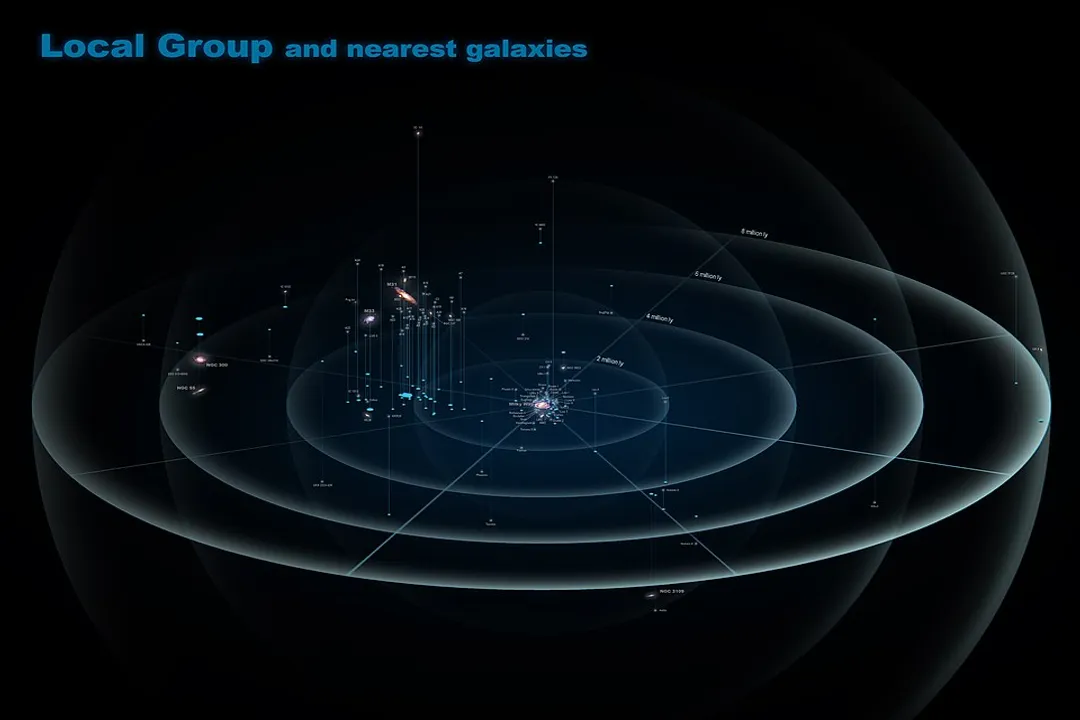
This accelerating expansion strongly favors the Big Freeze, also called the Heat Death or Big Chill [cite: 1 (from second set)][cite: 4 (from first set)]. In this scenario, the space between galaxy clusters grows at an ever-increasing rate [cite: 1 (from second set)]. Over vast stretches of time, this pushes everything outside our local gravitational neighborhood beyond a causal horizon; eventually, light from distant galaxies will be redshifted so severely that they become completely undetectable [cite: 1 (from second set)].
# Eras of Darkness
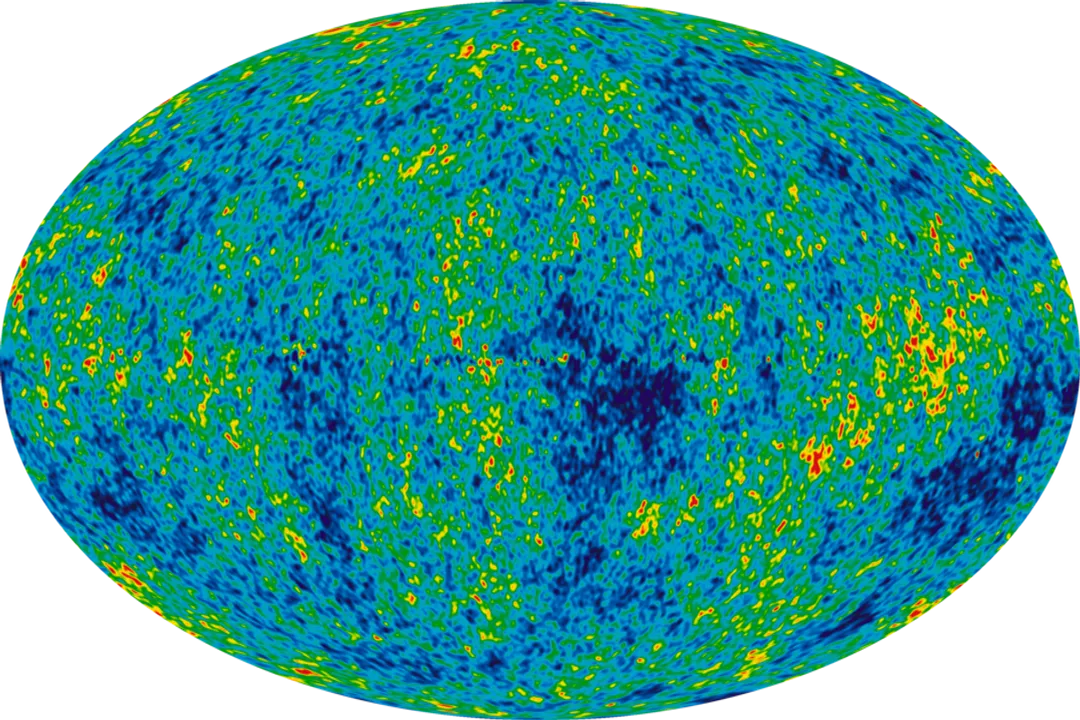
The cosmological Big Freeze unfolds across several immense eras marked by the exhaustion of usable energy. Stars, which currently illuminate the universe, form from available gas clouds [cite: 1 (from second set)][cite: 4 (from first set)]. This Stelliferous Era, the time of active star birth and shining, is currently underway but will eventually end when the supply of star-forming gas is depleted [cite: 4 (from first set)]. Stars are expected to form normally for a relatively brief window of about to (one to one hundred trillion) years [cite: 1 (from second set)][cite: 4 (from first set)].
After this, the universe enters the Degenerate Era. The stars that remain will be the dense, cooling stellar remnants: white dwarfs, neutron stars, and black holes [cite: 1 (from second set)][cite: 4 (from first set)]. Even these objects will not last forever. Under the influence of quantum mechanics, matter itself may be unstable. If proton decay is true—a concept supported by some Grand Unified Theories—the remaining baryonic matter will slowly disintegrate into fundamental particles and photons over timescales ranging from to potentially years, or even longer depending on the specific model [cite: 3 (from first set)].
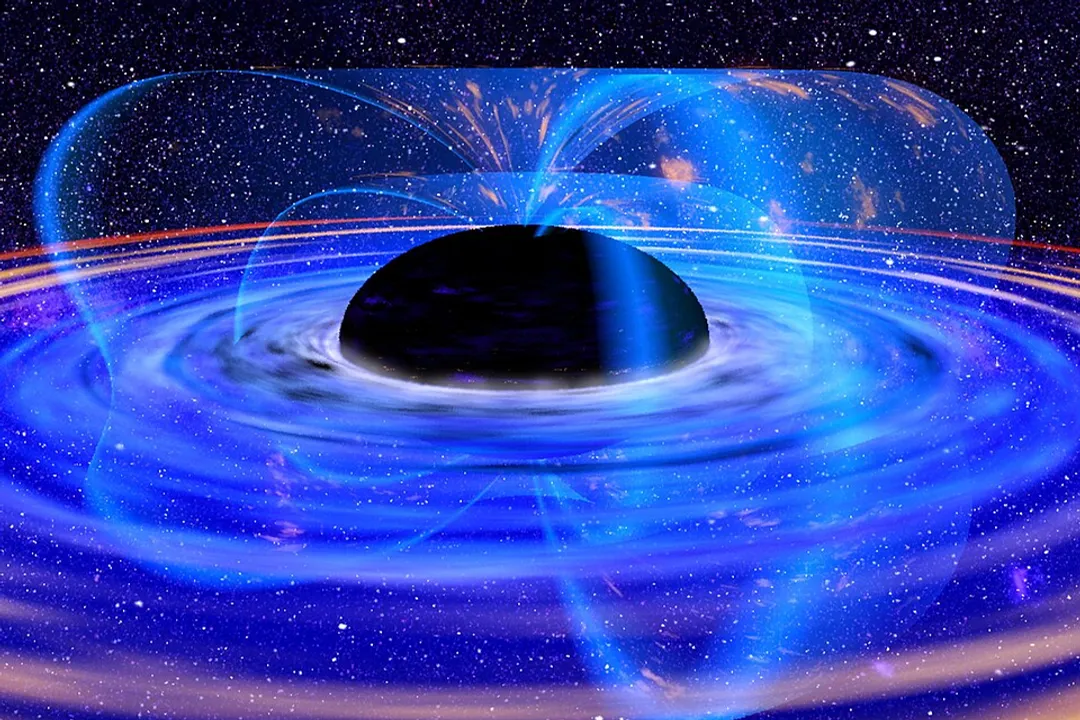
Following the slow burnout of stellar remnants and any proton decay, the universe transitions into the Black Hole Era. These titanic objects will be the last significant structures remaining, slowly evaporating via Hawking radiation [cite: 4 (from first set)][cite: 5 (from second set)]. A solar-mass black hole would take about years to vanish, while the supermassive ones residing at galactic centers could take as long as years, or even longer, to fully dissipate [cite: 1 (from second set)][cite: 4 (from first set)].
# Equilibrium Attained
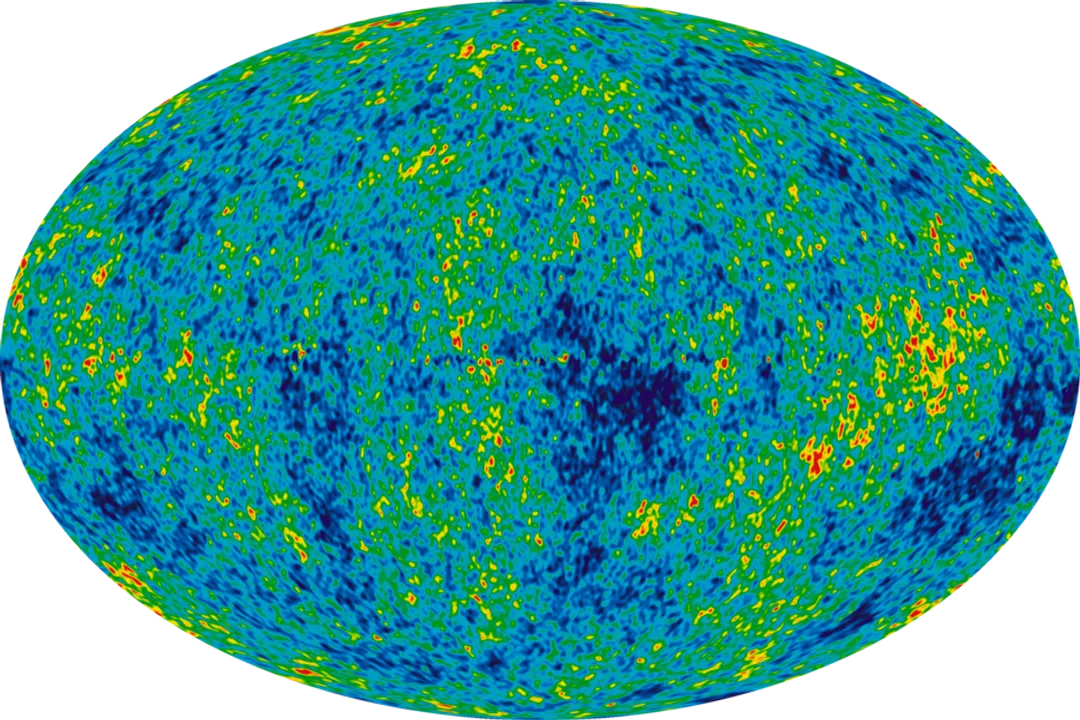
The final stage is the Dark Era or Photon Age, which begins after the last black hole evaporates [cite: 1 (from second set)]. At this point, the universe will contain little more than a diffuse soup of photons, neutrinos, electrons, and positrons, flying apart in near-perfect isolation [cite: 1 (from second set)]. The universe will asymptotically approach thermodynamic equilibrium, meaning the temperature across all space settles to a uniform value [cite: 1 (from second set)][cite: 3 (from second set)]. This final resting temperature will be incredibly close to absolute zero ($0$ Kelvin) [cite: 4 (from first set)].
This state of maximum entropy is the definition of Heat Death: no energy gradients remain, meaning no work can be done, and thus, no change or process—including life as we understand it—can occur [cite: 3 (from first set)][cite: 5 (from second set)]. The utter exhaustion of energy gradients, making energy unusable, is key; while total energy is conserved, its quality degrades over time, spreading thinner and thinner [cite: 2 (from second set)].
# Precision of Temperature
An interesting subtlety arises when comparing the "Big Freeze" with "Heat Death." The Big Freeze specifically suggests an approach toward absolute zero, the theoretical minimum temperature [cite: 1 (from second set)]. However, some modern understanding suggests this might not be perfectly achieved. If the universe maintains its accelerating expansion driven by dark energy, the constant stretching of space results in horizon radiation—a background temperature that, while extremely cold, is finite and non-zero (around K) [cite: 3 (from second set)]. Therefore, while the universe reaches thermodynamic equilibrium (Heat Death), the temperature might asymptote to a very low, but not zero, value [cite: 3 (from second set)]. Whether you call it Big Freeze or Heat Death, the functional result—a universe incapable of further action—remains the same under current models [cite: 3 (from second set)][cite: 5 (from second set)].
If you were to track the time from the Big Bang to the cessation of star formation ( years), and compare that to the time it takes for the last black holes to evaporate ( years), you gain an appreciation for the immense depth of cosmic time. The era where life could potentially exist, even by utilizing the energy from decaying remnants or black holes, lasts an incomprehensibly long time compared to the $13.8$ billion years that have already passed [cite: 2 (from second set)]. The present era we inhabit is merely the opening overture to an infinite, cold denouement.

# Alternate Paths
While the Big Freeze is favored based on current measurements suggesting a flat or open universe with a positive cosmological constant (dark energy), other fates remain theoretically possible should our understanding of dark energy change [cite: 3 (from first set)].
- Big Crunch: If the universe were closed () and dark energy's repulsive effect were somehow overcome by gravity, the expansion would halt and reverse, leading to a collapse back into a singularity, mirroring the Big Bang [cite: 1 (from first set)]. Current evidence suggests this is unlikely [cite: 3 (from first set)].
- Big Rip: This more violent end requires a specific form of dark energy (phantom energy where ) that causes expansion to accelerate so strongly it eventually overcomes all fundamental forces, tearing apart galaxies, stars, planets, and eventually even elementary particles in a finite amount of time [cite: 1 (from second set)][cite: 3 (from second set)].
The current data supports indefinite expansion leading to the cold end. For example, if the universe is structured such that dark energy is merely a cosmological constant (), the expansion becomes exponential, locking in the Big Freeze scenario over the longest term [cite: 1 (from second set)].
# Long-Term Focus
The sheer duration of the Big Freeze scenario offers a perspective shift regarding immediate concerns. We are currently living during the brief period where energy is concentrated enough to drive complexity through nuclear fusion. Considering the universe has trillions upon trillions of years of potential, even post-star death, waiting for black holes to decay, one might find that current, short-term terrestrial crises seem temporary in the grand scheme of cosmic history. The energy that sustains us now is locked in concentrated, highly ordered states—the fuel of stars—which is the antithesis of the maximum disorder characterizing the Big Freeze. Understanding the thermodynamic arrow of time—that the universe moves from order (the Big Bang) to disorder (Heat Death)—is central to why the Big Freeze is considered inevitable under current physics, barring a major paradigm shift in our understanding of dark energy's nature [cite: 2 (from second set)].
Related Questions
#Citations
Ultimate fate of the universe - Wikipedia
eli5: What is the Big Freeze and why and when will it happen? - Reddit
The Big Freeze: How the universe will die - Astronomy Magazine
Will the Heat Death scenario ever occur or just the Big Freeze?
The Big Freeze: Rapid Cooling During the Younger Dryas