What are the cons of the transit method?
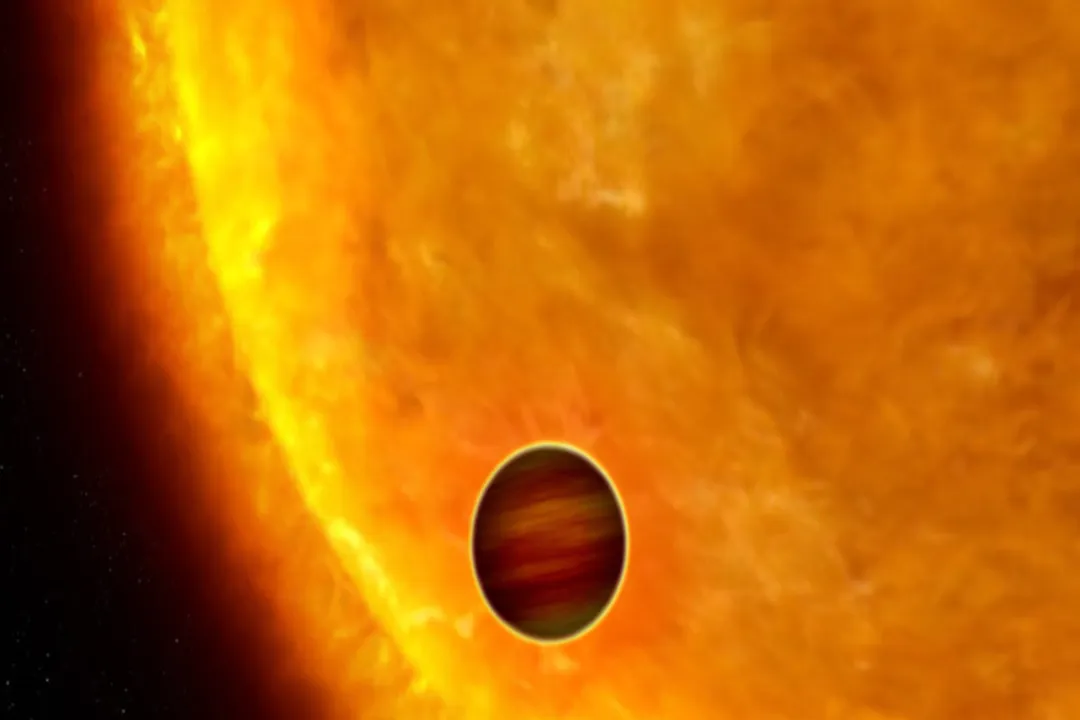
The transit method, while brilliant for its ability to survey vast numbers of stars quickly and accurately determine a planet's size, carries several intrinsic limitations that shape what kind of exoplanet systems we discover and what we can know about them. [1][3] It is not a universal tool; rather, it is exquisitely sensitive to very specific orbital alignments and planetary characteristics. When astronomers talk about the "cons," they are often discussing the inherent statistical hurdles and the incomplete nature of the data the method yields on its own.
# Alignment Bias
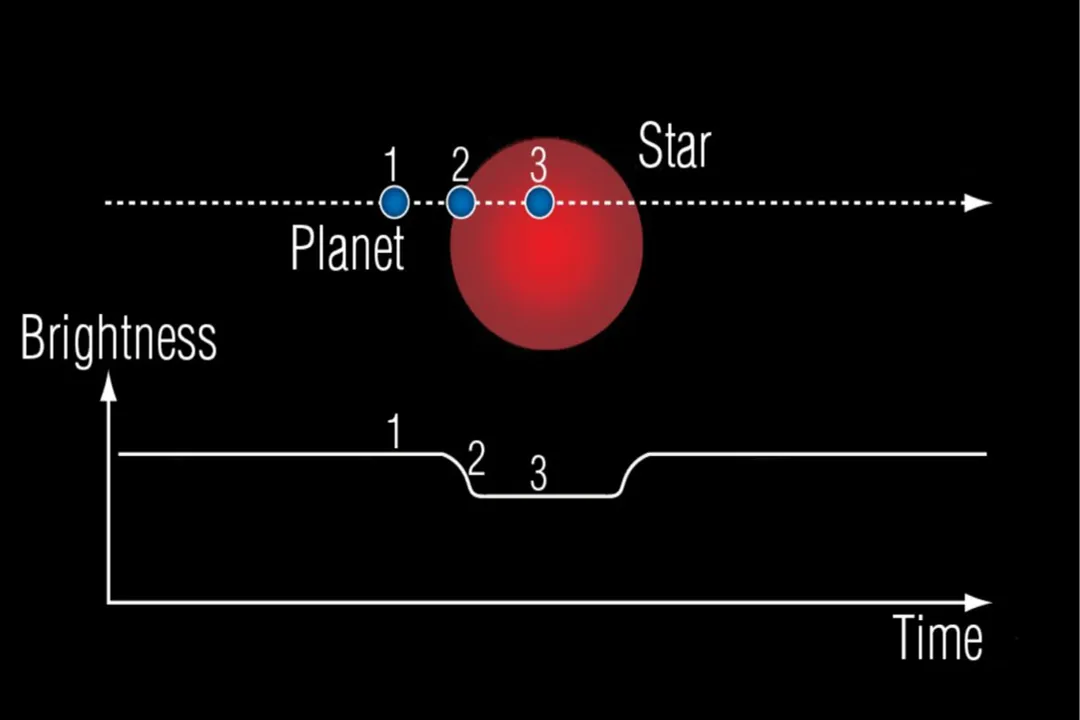
The most fundamental drawback of looking for planetary transits is the strict geometric requirement: the orbiting body must pass directly across the face of its host star as seen from our vantage point on Earth. [3][5] If the planet's orbit is even slightly tilted—if it passes just "above" or "below" the star from our perspective—no dip in starlight will be registered, and the planet will go entirely undetected by this technique. [5]
This alignment constraint means the method inherently favors systems where the planets orbit nearly edge-on relative to us. [5] Consider our own Solar System: if we were observing it from a distant star, the probability of all eight planets having an orbit perfectly aligned for us to see them transit would be vanishingly small. This necessity for a near-perfect line of sight results in a strong observational bias, meaning the transiting planets we find are not necessarily representative of the statistical distribution of all planets that actually exist in the galaxy. [4] We are only catching the ones that are already facing us in the right posture.
# Signal Faintness
Another significant challenge arises from the sheer scale of the phenomenon being measured. Detecting an exoplanet transit relies on measuring a minute dimming of the star's light while the planet crosses in front of it. [3] The fractional drop in brightness is directly related to the ratio of the planet's area to the star's area. [1]
For gas giants like Jupiter orbiting distant stars, this drop might be noticeable, perhaps around one percent or slightly more. [1] However, the true prizes for habitability studies—Earth-sized planets—produce an extremely small signal. For an Earth-sized world orbiting a Sun-like star, the light decrease is less than one one-hundredth of one percent. [1] To put that into perspective, if the Sun's total brightness were represented by the full height of a standard sheet of printer paper, an Earth transit would be a dimming equivalent to the thickness of about one-third of a human hair crossing the paper. [1] Detecting such a minuscule change requires incredibly precise instruments and extended periods of continuous, undisturbed observation. [1]
# Star Activity
Even if an instrument is precise enough to measure a tiny dimming, distinguishing a genuine planetary transit from other astrophysical noise presents a major hurdle. [1][6] Stars are not static light bulbs; they are dynamic, active objects. One of the primary sources of false positives comes from the star's own surface features, specifically starspots. [1]
Starspots are cooler, darker regions on the star's surface, akin to sunspots on our Sun. [1] As the star rotates, these dark spots move across the visible face. If a large starspot happens to drift into the line of sight, it causes a temporary dip in the total measured light that can look remarkably similar to the shape of a planetary transit signal. [1] Furthermore, stellar flares—sudden, intense bursts of radiation—can also distort light measurements, making confirmation difficult. [6] Distinguishing between a spot mimicking a transit and an actual transit often requires monitoring the star for extended periods to see if the feature reappears exactly on schedule, which is an investigative process built around ruling out non-planetary causes. [1]
# Data Acquisition
The transit method demands patience and consistent data collection, which adds practical difficulties to large-scale surveys. [1] To confirm that a dip in light is caused by a repeating, orbiting object and not a random stellar event or instrument glitch, astronomers must observe multiple transits to establish a reliable period. [4]
If a planet is in a wide, distant orbit—say, one that takes many years to complete, similar to Jupiter's 12-year orbit—it could take decades of dedicated observation to gather enough data points for high-confidence confirmation. [4] While missions designed for transit surveys look at thousands of stars simultaneously, the follow-up needed for individual candidates can tie up valuable telescope time. For astronomers interested in potentially habitable worlds, which tend to have longer orbital periods analogous to Earth's year, the time investment required for certainty is substantial, contrasting sharply with the rapid confirmation possible for hot Jupiters in very close orbits. [4]

# Mass Missing
Perhaps the most significant scientific limitation of the transit method by itself is that it yields only one primary characteristic of the planet: its radius, or physical size. [4] While knowing the size is vital, it doesn't tell us what the planet is made of. To understand composition, astronomers must determine the planet’s mass to calculate its density (Mass/Volume = Density). [4]
The transit method cannot measure mass directly because mass relates to the gravitational tug the planet exerts on its star, not the light blocked. To get mass, astronomers must pair transit observations with measurements from a different technique, most commonly the radial velocity method (Doppler spectroscopy). [4] This pairing is critical; without the radial velocity mass measurement, we are left with a physical size but no context for density—a planet 1.5 times the size of Earth could be a rocky super-Earth or a puffy mini-Neptune, a distinction that is impossible to make from transit data alone. [4] The transit method, therefore, often serves as a highly effective filter to find candidates, but rarely as the complete characterization tool.
# Orbital Selection
As noted under alignment bias, the technique inherently selects for certain types of orbits, creating a distinct sample bias in the confirmed exoplanet catalog. [4] Because the probability of alignment is higher when the orbital path is shorter, the method is naturally biased toward finding planets that orbit very close to their stars—the so-called "hot Jupiters" or "hot Neptunes". [4]
This means that systems like our own Solar System, where the small, rocky planets orbit relatively far from the star compared to the star's overall light output, are statistically harder to detect via transit unless the star itself is very small and dim. If a star is an M-dwarf (a small, cool red star), an Earth-sized planet in an orbit similar to Mercury's will produce a relatively large, easy-to-detect transit signal. Conversely, finding a Jupiter-sized planet orbiting at 5 Astronomical Units (AU) around a Sun-like star is exceptionally difficult because its transit probability is low, and the required observation time to confirm it is prohibitive for current large-scale surveys. [1][4] Therefore, the "con" here is not just about the difficulty of the observation but the resulting demographic imbalance in the discovered planets.
If we were to calculate the probability of transit for a planet in a given system, for a very distant, wide orbit around a Sun-like star, the chance of alignment might be less than 1 in 10,000 observations, whereas a planet orbiting every three days might have a 1 in 50 chance. This discrepancy heavily skews early detection catalogs toward the short-period worlds, even if those worlds are not the most common type overall. [5]

# System Complexity
Finally, the method struggles when dealing with multi-planet systems, especially if those planets have different sizes or orbital periods. [1] While modern analysis can untangle complex transit signals, an unexpected timing variation in the arrival of a transit might not immediately point to gravitational interaction with an unseen companion; it could, alternatively, be an artifact of stellar rotation or magnetic cycles affecting the apparent size of the starspot that caused the initial signal. [1] Interpreting these complexities requires deep atmospheric modeling and a high level of expertise to avoid misattributing a physical effect to a statistical artifact or vice versa.
#Videos
What Are the Limitations of the Transit Method? - YouTube
What Challenges Does the Exoplanet Transit Method Face?
#Citations
Down in Front!: The Transit Photometry Method | The Planetary Society
What Are the Limitations of the Transit Method? - YouTube
What is the Transit Method? - Universe Today
What is an important difficulty with the transit method of detecting ...
[PDF] ExoPlanets and Transits - Exploratorium
ELI5: What are the pros and cons of Spectrometry/Spectroscopy ...
Observational biases for transiting planets - Oxford Academic
Comparisons of Detection Paradigm of Planet: Transit and Radial ...