Why does the Orion Nebula glow if it is just a gas and dust cloud?
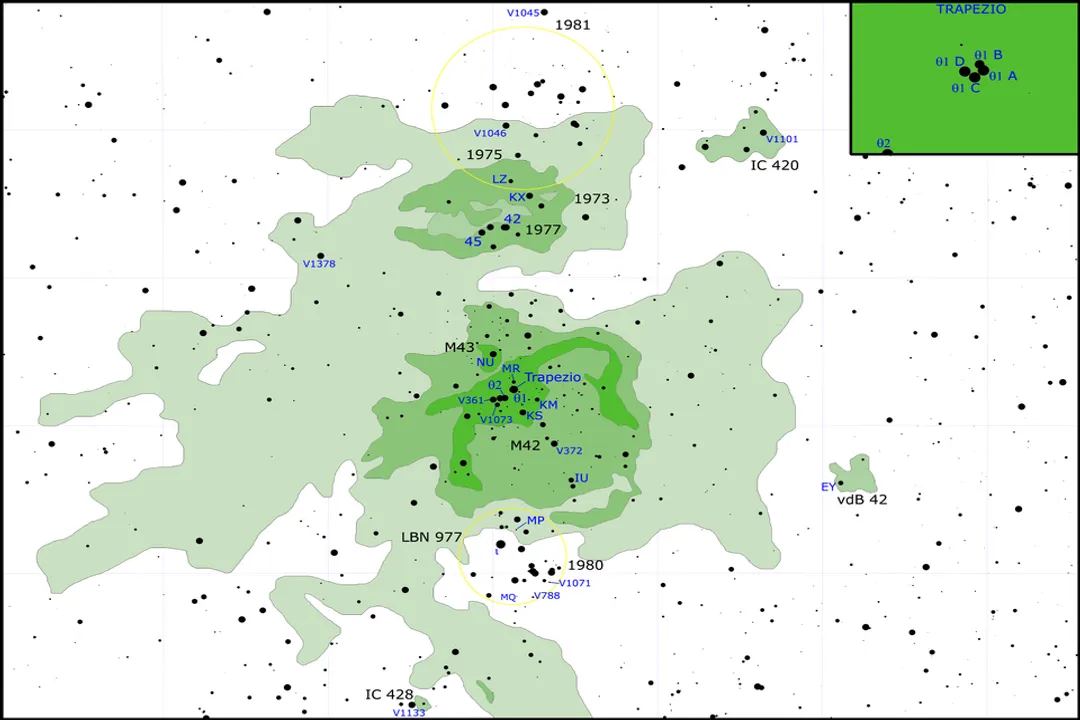
The Orion Nebula, officially cataloged as M42, is arguably the most famous celestial object beyond our immediate solar system, captivating sky-gazers for centuries with its swirling, luminous structure. It appears as a magnificent glow, a vibrant cloud splashed across the constellation of Orion. At first glance, the idea that this brilliant light originates from a mere collection of gas and dust seems counterintuitive. If it is just a cloud, why doesn't it resemble the dark, opaque dust lanes seen elsewhere in the Milky Way? The answer lies in an extremely violent and energetic process happening deep within that cloud: the fiery birth of massive stars. [1][2]
# Nebula Composition
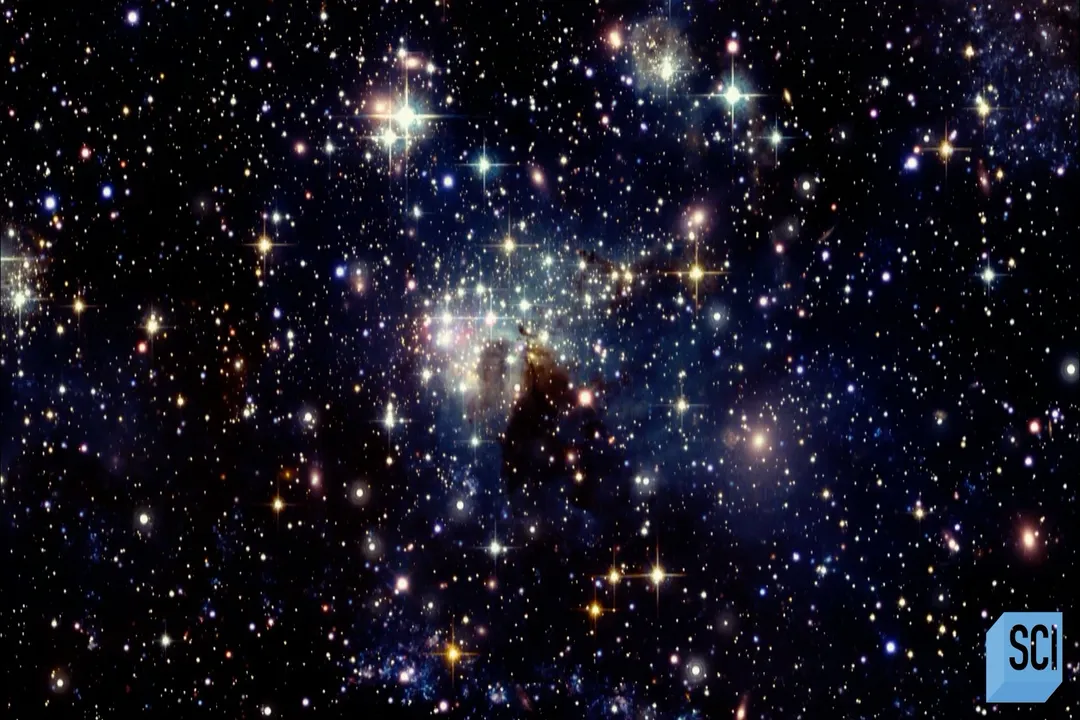
To understand the glow, one must first understand the raw material. The Orion Nebula is an immense, diffuse cloud, situated about 1,344 light-years away from Earth. [2] Its primary constituents are gas, overwhelmingly composed of hydrogen and helium, mixed with microscopic solid particles known as cosmic dust. [1][2] This mixture isn't static; it is a dynamic, evolving stellar nursery where gravity is actively drawing material together to form new suns. [6] In its resting state, this material would simply reflect the light of nearby stars, or remain invisible against the black background of space. [8]
# Stellar Ignition
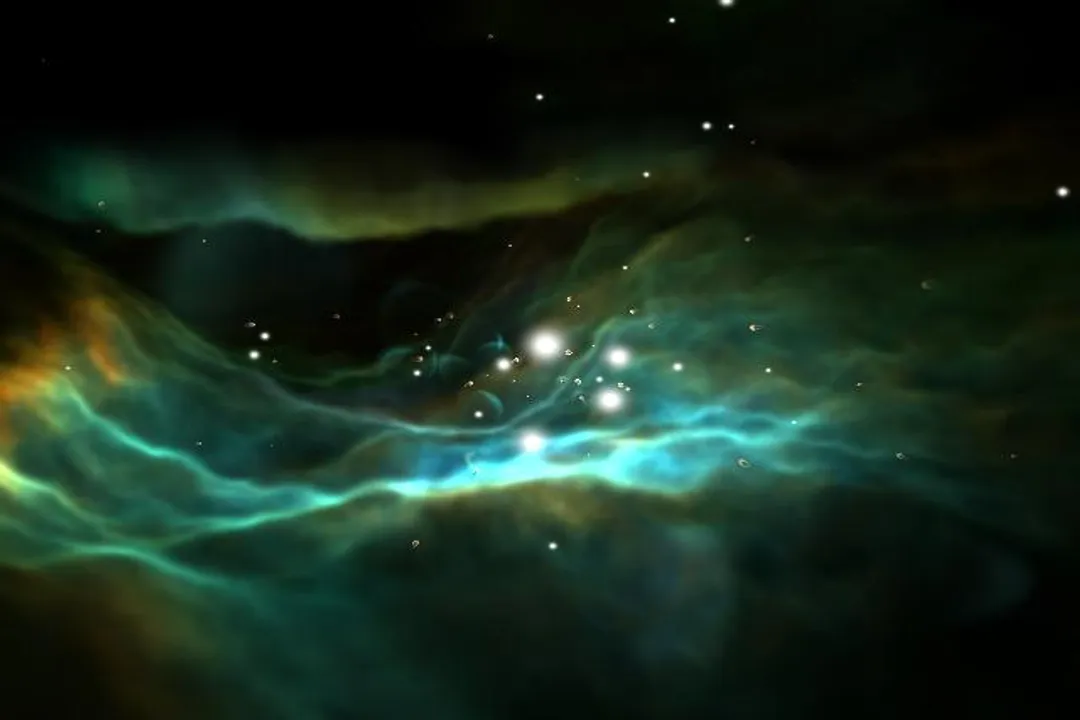
The key to the illumination is not the gas itself, but the colossal energy being generated by the hottest, newest residents of the cloud. [1][5] Nestled near the heart of the nebula is a tight cluster of extremely young, massive stars known as the Trapezium Cluster. [1][2] These stars are newly formed and possess surface temperatures that burn incredibly hot, making them excellent sources of high-energy radiation, particularly ultraviolet (UV) light. [5] The intense UV radiation streaming from these few massive stars is what powers the entire spectacle, effectively turning the surrounding gas cloud into a giant, natural neon sign. [1][2]
# Gas Illumination
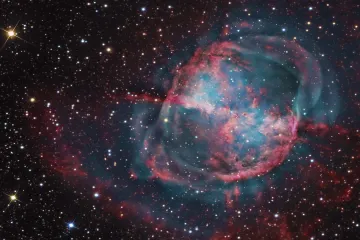
The mechanism converting this invisible, high-energy UV radiation into the visible light we perceive is called photoionization. [1] Imagine the hydrogen gas atoms in the nebula as tiny, stable structures. The powerful UV photons emitted by the Trapezium stars possess enough energy to violently strip the electrons away from these hydrogen atoms, leaving behind bare protons—a state known as ionized gas, or plasma. [2][5] This process is energetic and instantaneous on a cosmic timescale.
What follows is the essential step that creates the light show. These free electrons do not remain free for long. They are captured, or recombine, with the protons. When an electron settles back into a lower energy state around a proton, it must release the excess energy it absorbed. This released energy manifests as a photon of light. [1][5] Because the most abundant element is hydrogen, the light signature is dominated by transitions within hydrogen atoms.
For instance, when an electron drops to the second-lowest energy level, it emits light at a specific wavelength: 656.3 nanometers, which registers to our eyes as a distinct, rich red. [1] This specific emission line is called Hydrogen-alpha (), and it is the dominant color responsible for the nebula's signature fiery appearance. [2] The entire volume of gas surrounding the hot stars is continuously ionizing and recombining, leading to a steady, brilliant emission that can be observed across vast distances. [5]
One interesting way to visualize the energy budget here is to compare the power source to the medium being lit. The Trapezium stars are mere specks compared to the vast, diffuse cloud they inhabit, yet their output of ionizing radiation is so concentrated and powerful that it overpowers the ambient light from the rest of the galaxy, essentially painting the entire region with their energy signature. It’s a demonstration that intensity matters far more than bulk volume when it comes to exciting gas clouds. [1]
# Color Signature
While the nebula shows hints of other colors, the overwhelming impression is reddish-pink. [1] As noted, this is the hallmark of emission from ionized hydrogen. [2] If we could somehow remove the light from the hydrogen gas, we would see a much fainter structure. The presence of other elements, like oxygen and sulfur, which require different amounts of energy to ionize, contributes lesser, often greenish or bluish hues, but these are generally swamped by the dominant emission. [5] Observing M42 through a simple telescope immediately reveals this characteristic hue, which signals, without ambiguity, that this is an emission nebula—a place where stars are actively heating their surroundings into incandescence. [9]
# Scattered Light
It is important to note that the glow isn't only from ionized gas. The dust component, which is always intermixed with the gas, contributes to the overall visual effect through reflection. [8] When starlight hits these dust grains, the light is scattered in various directions. [8][9] This process is known as a reflection nebula. [8]
Reflection nebulae typically appear blue because the tiny dust particles scatter shorter wavelengths (blue light) more efficiently than longer wavelengths (red light), much like Earth's atmosphere makes the daytime sky look blue. [8][9] In the Orion Nebula, regions slightly farther away from the intensely hot Trapezium stars, or areas where the dust is denser and the radiation less ionizing, exhibit this bluish tint. Therefore, the Orion Nebula is technically a complex object: primarily an emission nebula powered by extreme heat, but overlaid and sometimes tinted by reflection from its own dust content. [2]
# Cosmic Nurseries
The reason we see this grand light display is fundamentally tied to astrophysics—the process of star birth itself. [6] The glowing gas is the raw material that has not yet collapsed into stars, or the material that is being blown away by the radiation pressure of the newly formed stars. [2] It is a snapshot in time of stellar evolution.
Consider a hypothetical scenario where the Trapezium Cluster had formed only smaller, Sun-like stars. Those stars would emit far less damaging UV radiation, and the surrounding gas might remain cool, only reflecting light faintly. In that case, M42 would look much more like the fainter, bluer reflection nebulae seen elsewhere. The intense, fiery glow is a direct marker of the presence of massive stars, which are rare but astronomically powerful. [1][5] The energy needed to ionize hydrogen across such a vast expanse means that the local energy flux from the central stars is orders of magnitude greater than what is required just to illuminate dust grains for simple scattering. The contrast between the two lighting mechanisms—the energetic injection of emission versus the passive redirection of reflection—is what gives M42 its spectacular, multi-layered appearance when viewed with sensitive instruments. [9]
Ultimately, the Orion Nebula glows not because it is an independent light source, but because it is being illuminated by the explosive energy of its own infant stars. The gas acts as a gigantic screen, absorbing the harsh, invisible output of newborn suns and re-emitting that energy as the beautiful, visible reds and pinks that define this stellar nursery. [2][5]
#Videos
Nebulae: Crash Course Astronomy #36 - YouTube
#Citations
Why does the Orion Nebula glow? - Quora
Orion Nebula - Wikipedia
ELI5: Where does the light that makes the Orion nebula visible come ...
Hubble's Nebulae - NASA Science
Nebulae: Crash Course Astronomy #36 - YouTube
Visualizing Stars and Emission Nebulas - UAF CS
Nebulas: Uncovering the Cosmic Circle of Life | How the Universe ...
Nebula