What role do microbiomes play in health?

The recognition that humans are not solitary organisms but rather complex, mobile ecosystems has fundamentally shifted our understanding of biology and health. We host trillions of microorganisms—bacteria, fungi, archaea, and viruses—that reside primarily on our skin and within our digestive tracts, especially the large intestine. [1][8] This vast, invisible population, collectively known as the human microbiome, functions almost as an auxiliary organ, contributing essential services that our own cells cannot perform alone. [5][9] In fact, the genetic material contributed by these microbes—the microbiome—can vastly outnumber the genes within our own human genome, highlighting their profound biological significance. [1]
# Microbial Numbers

The sheer scale of this internal community is difficult to grasp. While older estimates often cited a ten-to-one ratio of microbial cells to human cells, more current thinking suggests this ratio is closer to one-to-one, meaning we carry roughly as many microbial cells as human cells. [2] Regardless of the exact count, the impact is undeniable. The majority of these microbes settle in the gut, creating a dense, active community within the intestines. [8] This microbial presence is established early in life, often beginning at birth, and the collection of species present continues to mature and shift based on diet, environment, medications, and lifestyle throughout a person's life. [1]
# Nutrient Processing
One of the most immediate and tangible roles these microbes play involves nutrition. While we provide them with a steady supply of food, they repay us by performing critical chemical reactions necessary for our survival. [9] Many of the complex carbohydrates and fibers found in plant-based foods are indigestible by human enzymes alone. The gut microbiota possess the necessary enzymes to break down these complex molecules, extracting calories and essential nutrients that would otherwise pass through unused. [2][5]
This digestive assistance yields significant byproducts. Microbes are essential factories for synthesizing several crucial vitamins, including specific B vitamins and Vitamin K, which are vital for blood clotting and bone health. [2] This cooperative relationship illustrates a deep evolutionary partnership: we provide the housing and raw materials, and they provide the chemical processing power. [5][9] When this system functions correctly, digestion is efficient, and our body receives a constant supply of necessary micronutrients synthesized directly within our digestive tract.

# Immune Education
Perhaps the most sophisticated role of the microbiome is its involvement in the development and ongoing maintenance of our immune system. The constant interaction between gut microbes and the immune cells lining the intestinal wall serves as a continuous educational process. [1][4] From early life, the presence of a diverse microbial community helps "train" the immune system to distinguish between harmless foreign substances, beneficial symbiotic bacteria, and genuine pathogenic threats. [1]
This training is critical for preventing overreaction—the hallmark of allergies and autoimmune conditions. A well-established, diverse microbial community acts as a barrier, physically occupying space and consuming resources that would otherwise be available to incoming invaders. [7] This phenomenon is often called colonization resistance; a healthy, thriving local population makes it difficult for opportunistic pathogens, like Clostridium difficile, to gain a foothold and cause infection. [7] The competition for resources and direct signaling between the resident microbes and host immune cells essentially keeps the body's defense forces vigilant but appropriately regulated. [1]
This regulatory function means that disruptions to the microbial community can have far-reaching consequences for immunity. If the diversity drops, the immune system loses its reference library, making it harder to respond appropriately to novel threats or causing it to misidentify harmless elements as dangerous. [3]
# Systemic Links
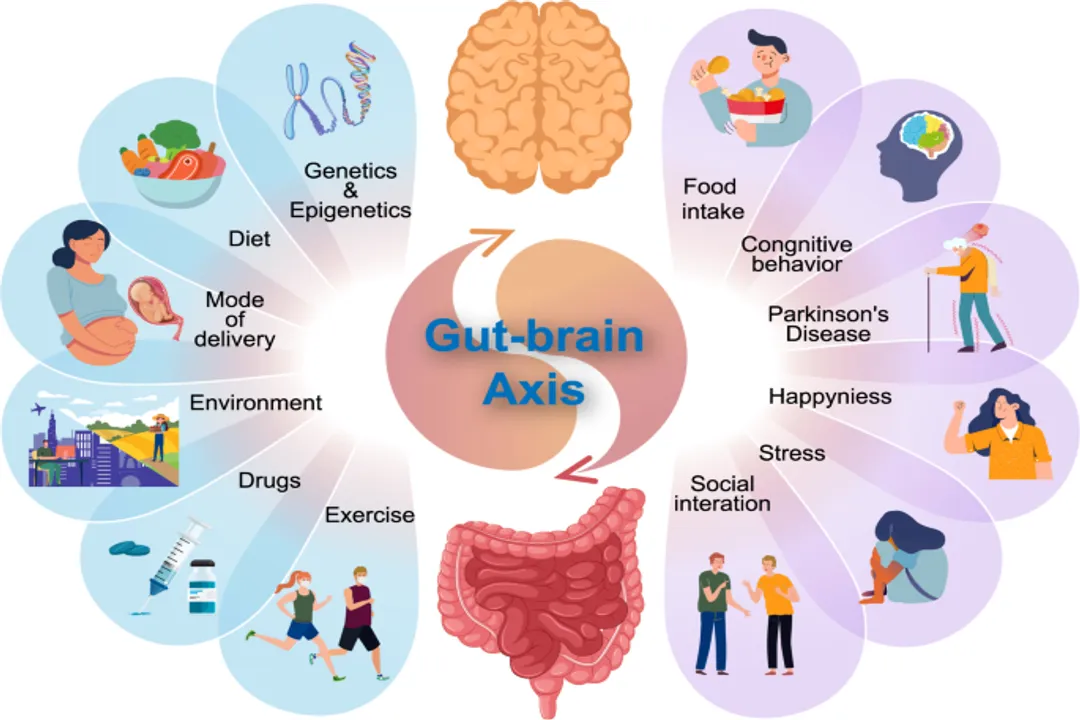
The influence of the gut community is not confined to the digestive tract. There is extensive communication between the gut and other organ systems, most notably the brain, in what is often termed the gut-brain axis. [4] Microbes produce various signaling molecules, including neurotransmitters or their precursors, which can travel via the bloodstream or through direct neural pathways, such as the vagus nerve, to influence brain function, mood, and behavior. [4]
Furthermore, the composition of the gut flora has been implicated in metabolic health, directly affecting how the body stores fat, manages blood sugar, and responds to insulin. [3] This suggests that the microbial makeup may influence susceptibility to conditions like obesity and Type 2 diabetes, illustrating that the ecosystem within us impacts systemic physiology far beyond basic digestion. [3][5] The developing host also relies on these microbial partners for the proper maturation of certain organs, including the gut lining itself. [4]

# State Dysbiosis
When the balance of the internal ecosystem is disrupted—a condition known as dysbiosis—the positive contributions can turn negative. [3] Dysbiosis occurs when there is a significant shift in the composition and functional capacity of the microbial community, often characterized by a loss of beneficial species or an overgrowth of potentially harmful ones. [7]
This imbalance is strongly associated with a wide array of health challenges. Research continually links dysbiosis to inflammatory conditions within the gut, such as Inflammatory Bowel Disease (IBD), as well as systemic issues like metabolic syndrome and even neurological changes. [3] For instance, if protective bacteria decrease, the gut barrier integrity can weaken, potentially allowing microbial products to leak into the bloodstream, triggering chronic, low-grade inflammation throughout the body. [4] Conversely, shifts in the microbiome are also being investigated in relation to mental health conditions, suggesting that the signals traveling along the gut-brain axis may become skewed when the microbial population is unbalanced. [4] It is vital to remember that microbial ecology dictates that health is about the balance between populations, not just the presence or absence of any single species. [7]
When considering these health outcomes, it is fascinating to compare the functional redundancy within the gut ecosystem to the specific needs of the host. For example, while the sheer number of bacteria is staggering, true health seems to depend less on having the highest count and more on maintaining a wide variety of functional capabilities—meaning one strain might be able to perform a task, but if that strain disappears, another needs to be ready to step in, providing a biological backup system. [6] This redundancy is a hallmark of a stable, mature ecosystem. A simplified microbial community, even if large, might lack the necessary backup systems to adapt to a sudden dietary change or antibiotic course.
To maintain this ecological stability, we must support the resident populations actively. One overlooked factor, often lost in the noise about specific "superfoods," is the consistent variety of plant fibers consumed. Think of dietary fiber not just as roughage, but as bespoke, individually formulated menu items for your specific microbial clientele. A plate focused only on broccoli and rice feeds one subset of microbes very well, while a plate including lentils, apples, and almonds feeds several different groups, promoting a wider array of short-chain fatty acid production. [9] This continuous, varied stimulation reinforces the protective barriers and trains the immune system consistently, rather than through sporadic, high-dose interventions.
The role of antibiotics in this landscape deserves careful consideration. While life-saving, they act as a broad environmental shock to the microbial community, wiping out both the targeted pathogens and many beneficial residents. [7] The environmental consequence of antibiotic use is a temporary, or sometimes long-term, shift in ecology. [7] Understanding this ecological impact emphasizes the need for judicious use, as the resulting gap left by the cleared bacteria can be quickly colonized by resistant or opportunistic species if the native beneficial community is too slow to recover. [7]
# Analyzing Diversity
When scientists study the health of a microbiome, they often look at two main features: richness (how many different types of species are present) and evenness (how equally abundant those species are). [10] A high richness and evenness generally indicate a resilient community. For instance, in studies involving specific host responses, researchers might find that the presence of certain butyrate-producing bacteria is strongly correlated with reduced intestinal inflammation, even if those bacteria only make up a small percentage of the total biomass. [3] This shows that who is there matters more than how many there are overall.
Consider an analogy for daily microbial management: imagine your gut is a garden. Simply adding more soil (biomass) won't guarantee a good harvest. You need the right types of seeds (diversity) to bloom at different times, ensuring that all necessary soil nutrients (metabolic byproducts) are continuously produced. If you only plant one type of fast-growing weed (a pathogenic overgrowth), it chokes out the slower-growing, essential vegetables (beneficial commensals), leading to an overall unhealthy garden state. [7]
To promote the necessary complexity, focusing on the sheer volume of bacterial cells is less productive than focusing on the complexity of the input. If a person relies heavily on highly processed foods, the available "menu" for their microbes is extremely limited, favoring those few species adapted to readily available simple sugars and fats, starving the majority who thrive on complex, hard-to-break-down fibers. [2][9] Therefore, maintaining a healthy microbiome is less about introducing specific probiotics as a quick fix and more about creating a sustainably diverse, fiber-rich environment that supports the native, beneficial residents long-term. This requires consistent dietary choices that offer novel, undigested compounds day after day, ensuring that the entire functional capacity of the community remains active and ready to perform all necessary tasks, from vitamin synthesis to immune signaling. [5]
The influence of microbes extends right down to the molecular level, where the chemicals they produce can directly interact with host cell receptors. [4] This complex interplay suggests that the human body is, in essence, a highly regulated chemical reactor whose output is significantly modulated by the enzymes and metabolites produced by its microbial tenants. [1] As research progresses, understanding the specific metabolic pathways contributed by microbial communities promises to open new avenues for treating diseases rooted in host metabolism or immune dysfunction. [10] The next phase of health science will likely involve diagnostics that map not just the genes present in the microbiome, but the function those genes are actively expressing at any given time, giving a clearer picture of the current state of our internal ecology.

# Maintaining Ecosystems
Protecting this vital internal community is paramount for long-term health. While we cannot—and should not—live in a sterile environment, recognizing the fragility of the gut ecosystem guides better health choices. [7] Beyond dietary fiber, lifestyle factors like stress management and quality sleep play indirect but important roles, as chronic stress can alter gut motility and local immune signaling, which in turn affects microbial composition. [4]
The foundation of this maintenance rests on moderation regarding anything that drastically alters the local environment: avoid unnecessary antibiotic use, manage chronic stress, and prioritize a diet rich in diverse, whole, plant-based foods. [2][7] By viewing ourselves as a living landscape rather than a single entity, we begin to appreciate the continuous effort required to keep our microbial partners thriving, ensuring they continue their essential work of digestion, defense, and systemic support. [1][8]
Related Questions
#Citations
Microbes in us and their role in human health and disease
Your Microbes and You | NIH News in Health
Microbiota in health and diseases - Nature
The Gut Microbiome, explained - UChicago News
Role of Microbes in Human Health - Longdom Publishing
[PDF] The Influence of Microorganisms on Human Health - PDXScholar
About Microbial Ecology | Antimicrobial Resistance - CDC
What Is Your Gut Microbiome? - Cleveland Clinic
Essential for life – Bacteria - ReAct - Action on Antibiotic Resistance
Impact of the microbiome on human, animal, and environmental ...